
Kill the Buddha
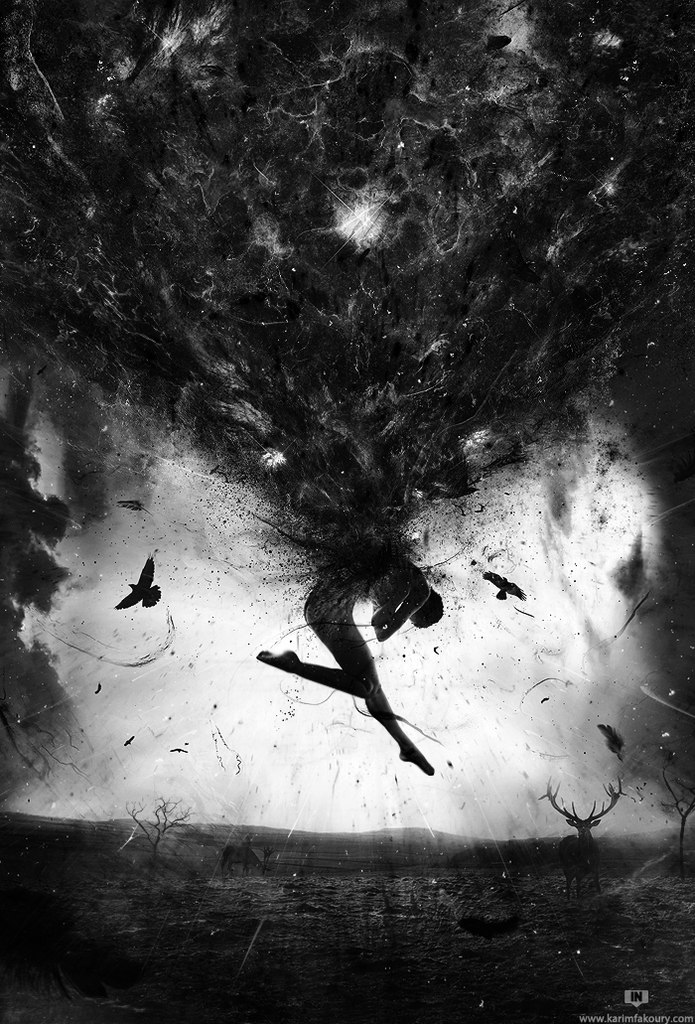
The tendency to follow, to repeat strategies that appear successful and advantageous, is a natural consequence of the flow of the mind.
Indeed, the mind is always embedded in one current or another: logoi, egregores, lineages, schools, families, and so on. Being at once part and whole, the individual mind is constantly interacting with these currents, being drawn into them, and finds itself only when it can balance and find the middle way between total absorption and total separation.
We have already said that a vast number of distractors arise from the breach of this balance in either direction, and they all lead away from effectiveness, resulting in the loss of self, one’s individuality, one’s unique Way.
Both by wholly opposing itself to the currents and by completely dissolving in them, the mind loses flexibility and integrity.
Another distractor that leads to such losses is the condition traditionally called the “shadow of the Master”.
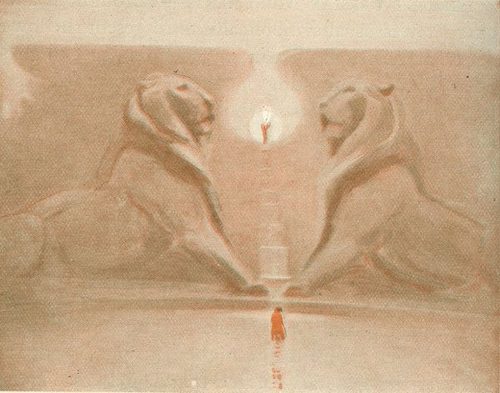
When a person meets a Master whose Way seems more or less consonant with the person’s own Way, the person enters the field of the Master’s baraka, and risks, if they lose control, being drawn into that baraka‘s stream.
The images of all great Teachers and Masters are extraordinarily attractive, yet that attractiveness conceals the danger of losing one’s light in the “shadow of the Master.” Instead of seeking and developing their individuality, the student risks becoming merely an imitator, reproducing the Teacher’s words or deeds, replacing their own battles with a replay of the Teacher’s battles, and their own decisions with commentary on the Teacher’s decisions.
Note that there are four different possible modes of interaction between the student and the Master’s current.
The first is acquaintance. In this mode the Seeker becomes acquainted with the Master’s pattern of thought and action, gains experience through interaction with the Master’s current, and critically and creatively incorporates that experience into the construction of their own Way.
The second is entanglement. Here the student falls under the power of the Master’s current (or of the Teaching) and becomes a fan, losing their individuality.
The third is study. This occurs when the Master gives personal instructions to a particular student in a particular state, but does not assume responsibility for how the student will perceive and apply those instructions. The Master says what he must say before the Face of Power, but leaves the student free to interpret his words.
The fourth is teaching. This takes place when the student accepts the Master as their source of Power, and the Master regards the student as their heir. In this case their energies unite and the Chains of succession are closed.

It is obvious that the first and third options are the most common constructive modes of interaction, the second is the fruit of a distractor, and the fourth is rare and needs no general discussion.
Nevertheless, the boundary between the different modes is often blurred, and the student does not notice how acquaintance slips into study, or how they fall into entanglement, mistaking their illusions for constructive change.
However, unless the chain of succession among disciples has been closed — that is, unless a personal and unequivocal union of the Master’s and the student’s energies has occurred — any lowering of critical discernment is destructive.
Any Way, any Teaching, with which a student becomes acquainted or which they study, must undergo the student’s creative analysis, be measured against their personal experience, and against the voice of their heart.
Any compelling influences, whether they come from demons or from the teacher’s baraka, must be carefully monitored and cut off. The Magus’ Way is the Way of individualization, and any copying, any uncritical acceptance must be excluded.
It is clear that “blind following” is equally ruinous for student and Master alike. Nevertheless, one often encounters a situation where someone who has taken a few steps along the Way strives to be a teacher and draws others into their current, thus doing harm to themselves and to those around them.
A Magus has no authorities except their own heart and their personal Master.
All sages, all masters, all enlightened ones, all buddhas for him are experiences to be analyzed and understood.
It is precisely this cutting off of uncritical acceptance that in Zen Buddhism is called the “killing of the Buddha.”
The point is that any authority, any teaching, any energy must be accepted only after analysis and only insofar as it corresponds to the individual tasks and the Way of the individual. No authority deserves trust merely because it is an “authority.” The only measure and criterion can be the traveler’s own heart.

Indeed, getting involved is not that hard, especially if one is used to copying rather than generating their own. Once, after spending enough time on this blog, I noticed that I increasingly rely, speak, write, and act according to the author’s experience without having my own measure in any given topic. Then it became clear that it was time to track thoughts, actions, and check the source from which they come; then I jokingly called it ‘Kill Enmerkar’ 🙂 But this pertains to all knowledge, a simple check: do you have personal experience in this matter or not? If not, then discussing it will be pointless. The main expression of this is the desire of everyone to teach ‘how to do it right’, yet it’s funny that oneself does not actually know ‘how’. The hardest part at such moments is to notice this emotional impulse and extinguish it.
It seems that in the modern world, a more pressing problem is when there is too much information, and many are trying to explain Magic. Each person approaches it with their own system, terminology, and general view. Those who attempt to piece the whole puzzle together have to sift through an increasing number of false paths. Yes, sometimes you feel it when the Force leads, and the necessary books, ideas that complete the meaningful composition literally fall into your hands, and it’s certainly true that with development, the number of used elements increases, but if you compare Magic to painting, then intuitive development always provides a much greater response alongside academic foundations, which, in Magic, are increasingly harder to find. This ever-increasing influx of incoming information, often conflicting, needs a channel, direction, a thread for one’s beads of knowledge, and that’s why I love this blog: it refuses to impose its Path as the only true one 🙂 Short sentences, like independent fibers, from which one can weave something of their own, do not carry such a strong personal shade of the speaker as whole systems proposed by some and pose less danger of dependency. A far greater danger now, it seems, lies in the exponential growth of the internet and the rampant growth of various scams that pretend to be tunnels of Force while actually becoming its anchors.
Very useful and constructive material. As practice shows, a Student still needs to periodically inject a dose of Force for stimulation and evolutionary movement. Unfortunately, as experience has shown, not many are capable of truly individual movement, unlike many who take a consumer position towards the Path. Therefore, as the Teacher has the right to stimulate (‘kick’) stuck Students, there is no more comforting picture than a self-sufficient Student who is following their own Path.
My friend and I were just pondering this topic. Besides the solid local definition – Students, there are those who just cling to our heels. Students that life throws at us. They behave differently and often even quarrel and fight out of a desire to know and have at least some relation, actually. And this is yet another bind – to throw them off is, as it feels, like throwing yourself off. One representative of the Eastern path told me on my research, ‘don’t pay attention; this is their nature – they are like flies.’ But this is also my nature, and I’m not a fly and have no need for an icy heart. These people wish to live and learn, even if it’s in such an unpleasant way. One cannot just throw them off – that’s one side of the bind; one cannot pity them – that’s the other side. Pretending they don’t exist is also not possible) And the matter is not even in the bind but in the fact that the problem for the person is unresolved and remains unresolved for those they cling to. Because the flow doesn’t dry up – there is always someone reaching out. I wanted to find out how to deal with them. To find a pure way of interacting. On the technique – the answer turned out to be simple – to initiate the thought process and awareness. Which cannot be done simply through sentences and logical explanations. Awareness happens from questions, creating situations (for those wanting to dig deeper) or tales with plots; preferably based on their own lives. This zen-like method) We also discussed whether to ‘feed’ them, meaning whether to support them in some way because here again, it’s acrobatics. We concluded that if we do praise—give them positive reinforcement in any form, then inconsistency is key. So they would know the taste of normalcy while seeing the problematic nature. We were reading Serkin’s book parallel, and remembered how there a person freezes in winter from a meager and inappropriate supply. ‘Feed them, but irregularly and without a system. So they won’t wait for you.’ So, for those who love to ask questions and check everything – I’ll preemptively answer the question ‘How do you know?’ I know; I’ve been teaching people for 10 years, managing to speak without duality and being effective. I even successfully taught one makeup artist from the opera, without using makeup myself. And this is not one person but a whole bunch of people who got what they wanted. I just asked questions and sometimes threw in something.
Also, from experience, I believe it’s worthwhile to teach those who came on their own. Sitting on eggs and seeking out students indicates that the ego is searching for them. If a person were ready, students would have appeared long ago. Just like vice versa. And then the result becomes the growth of Force, with the right approach, I think for all participants in the process. I also note that the educational interaction is one of the healthiest, in my opinion, possible ways in this space. And an important component of things like friendship and love. And that there are simply companions, and in fact, everyone we crossed paths with in a prominent form relates to us somehow. And that recognition often happens because of symptoms; I recognized one of my best friends and most successful ones by observing a state that was very familiar to me. But after three years of close interaction and mutual learning, we no longer share a common path – that segment was traveled and everyone lives their own life. Regarding this mythical fourth way of learning, it is not so mythical after all; just breaking it down and seeing it can often be very difficult. It can be a person with unfamiliar symptoms at the moment) and actually seeing and knowing everything differently. The question, in the end, is about where he is headed. And in the courage to start that interaction. Common paths are not that rare – it’s just that few look at it that way; mostly, we peek out of the window of the current stage of the path and look for someone with similar stories.
Good day. Without clarification of the conceptual apparatus, the quotes you provide have little meaning and power. Just like misinterpreting the ‘Kalama Sutta’ (the postulate regarding the need to test theoretical propositions, teachings, commandments, dogmas, and theories for their usefulness to practitioners, when misinterpreted turns into an erroneous postulate about the necessity of constantly checking everything and being skeptical) can cause more harm than good, quoting words from the Rinzai Roku (Linji) can only make sense in the context of Buddhist teaching and solely within the context of accepting the Four Noble Truths and aligning views with the Four Characteristics of Buddhist teaching (otherwise, it has little strength and meaning, and can be misunderstood by the ignorant and the profane). Furthermore, you are quoting words that originally pertain to Chan Buddhism during the Tang era. In Chan (Zen) teaching, texts are important, but even more important is the personal interaction between mentors and learners, without which neither koans, fables, nor words have meaning. The question of the permissibility of discussing closed Buddhist methodologies without sufficient initiations and foundations remains open.
Is it possible to feel the shadow related to Chan Buddhism from the Tang era while feeling no light yet? Interestingly, the word ‘profane’ means one who has not been admitted into the temple. Why are they not admitted? For what? Is it only because the ignorant cannot quote the Rinzai Roku?
Knowledge of past incarnations already suggests a good state of consciousness to some extent.
The word “profan” only makes sense in the context of magic. In the context of Buddhism – it does not. Since all living beings strive for good and avoid evil. Therefore, all living beings have the right to study Dharma – provided they have a perception-free from defects consciousness.
Admission or denial is not always related to the degree of clarity of consciousness: even in the Tang era, there are known cases when some people denied others simply out of envy (as was the case with Huike).
A big thank you to the author of this blog. The knowledge you share evokes no criticality from me. You indeed write about what you go through. This is evident from the style of your presentation. You masterfully weave the unweavable. At the same time, you impose nothing on anyone… and don’t prove anything. The path is arduous, and the presentation is easy.
I join with gratitude..! – Wishing you a Good, Bright Path…
Thank you, the topic has clarified some aspects of my Teacher’s behavior for me. I clearly lack criticality 🙂
Regarding the article’s topic, I would like to add that similar concepts are present in Kabbalah, namely the state of katnut, when a student consciously does not use the three highest sephirot of their partzuf, replacing them with what comes from a higher level – the Teacher (Master).
A good article; in some places it’s a bit rough, but the idea is good. Nowadays, people jump into extremes without thinking and believe in all sorts of nonsense – and then complain that life is terrible. The world of energies is complex.
Thank you, Enmerkar. The article, in my opinion, is useful, but only for those who are following their Path. A person seeking knowledge through their heart, considering others’ experiences and external knowledge but using it to create their own method of understanding and applying gained knowledge is protected from idol worship but always open to reasoned cooperation for the sake of achieving common humanitarian goals.
No matter what anyone says or what one invents. No matter how one composes or embodies their thoughts, no matter how they realize their ideas and perspectives… Everything starts with the first step. From the first Step. And En is not simply inviting everyone to the seminar.
What about quotes and thoughts) It’s written down below “if a thought is spoken, embodied – how important is it – whose words?” The main thing is that it should be conscious… But what about the problem of following authority – disobedience) Sometimes it happens that at first everything is fine… Student – Teacher – idyll, and then some opposition kicks in (I have observed this from the side) and this can be explained as “killing the Buddha”, as a desire to free oneself from the shadow of the teacher, but in reality, it will have other roots…