Archons and Fatigue
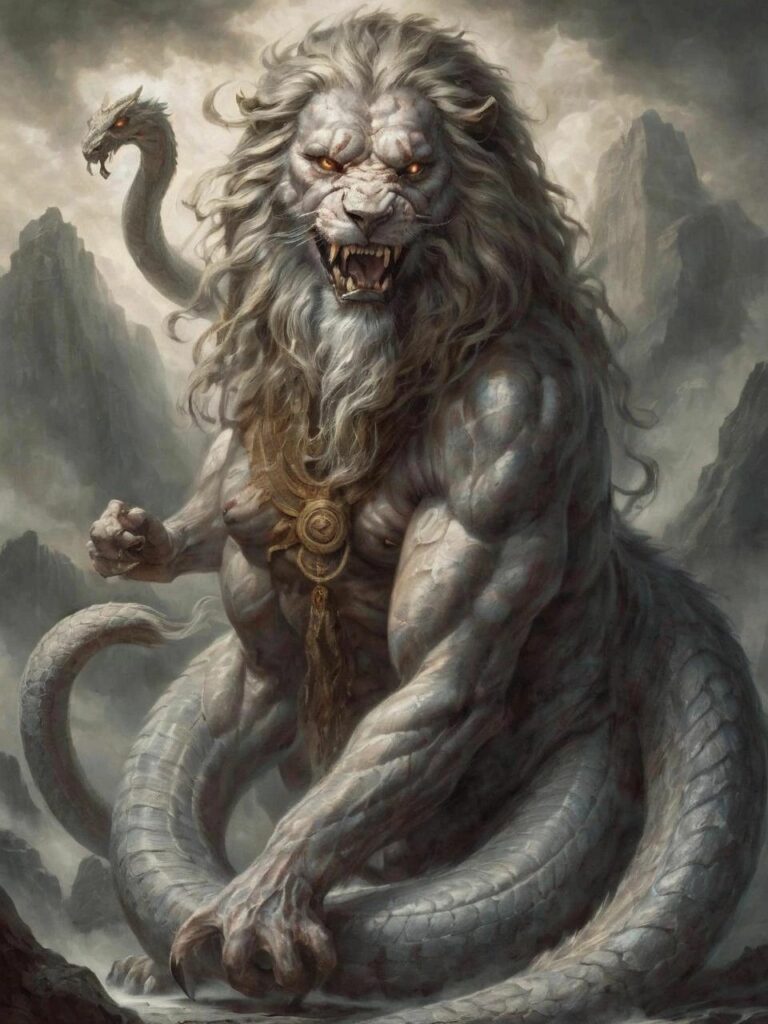
We have already said more than once that the Archontic forces, in relation to inhabitants of the manifested worlds, can be regarded as tendencies of consciousness to remain in a chronically asthenic or near‑depressive state, in which it generates much “raw,” low‑tonic pneuma, while at the same time hardly producing any stable energy of awareness.
On the subjective level, the “fatigue” of heimarmene looks like an almost constant background: a person seems neither ill nor in an obvious crisis, but lives with the persistent feeling that I just don’t have enough energy — to begin, to finish, to rejoice in what already exists. This chronic asthenia is also beneficial to the Archons: the being is functional enough to maintain the given reality, but not sufficiently composed or self‑aware to seriously question its rules.
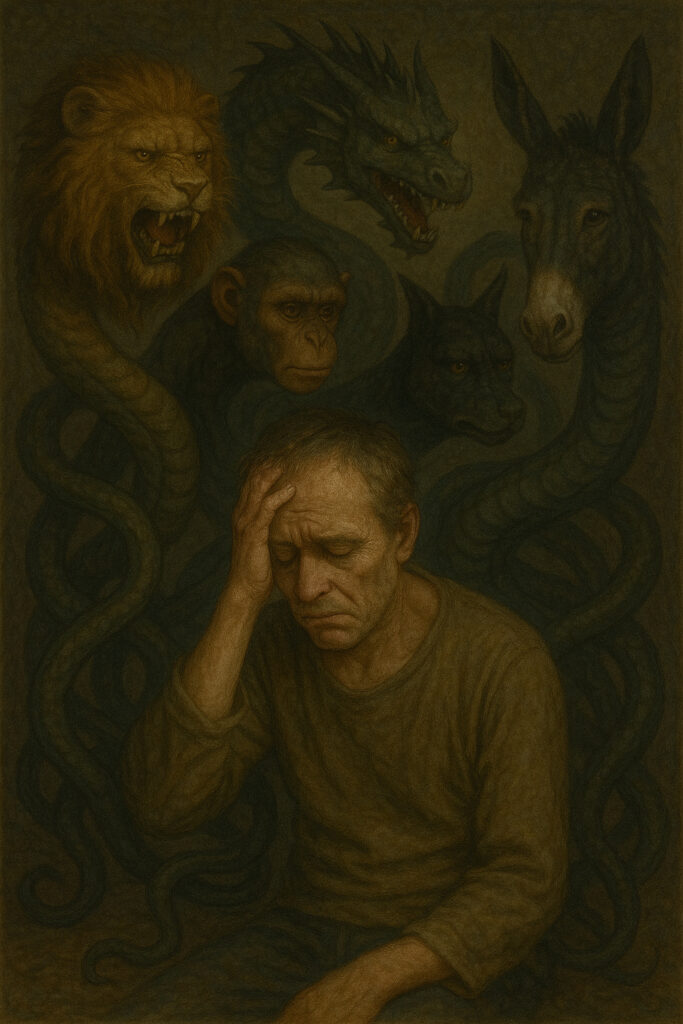
The first can be dealt with by a conscious effort, the second only through special training, and the third requires proper rehabilitation, consisting of several completely different components — laziness, “paralysis of will,” and a real lack of energy. In other words, to exit the Archontic matrices, we sometimes need a “feat” or “overcoming,” sometimes inspiration, and sometimes only rest can help — and it is important not to confuse these types of activity so as not to undermine one’s strength completely.
Laziness is the simplest variant of such “false fatigue.” In this state, the mind “can, but doesn’t want to.” The body has enough resources, the psyche has enough clarity, but the focus of attention and will functions in a “minimal mode,” striving to do exactly enough to avoid punishment, criticism, or acute discomfort — where any step beyond the “comfort zone” causes a disproportionate sense of effort, as if one were being asked not merely to clear the table but to climb Everest. This form of asthenia is supported by a culture of small pleasures and instant rewards. Laziness acts as the natural mode of heimarmene, where any step beyond the “comfort zone” causes a disproportionate sense of effort, as if one were being asked not merely to clear the table, but to climb Everest.
In this case, a “feat” is quite appropriate and useful, because it is enough to perform small, deliberate actions against inertia again and again — and the feeling of fatigue noticeably dissipates. At the same time, no deep damage to the inner mechanisms of the psyche develops; it needs precisely determination and training. And it is worth starting to truly do at least something in the direction of the goal — and suddenly there is more strength, a taste for activity appears, and a “second wind” opens up.
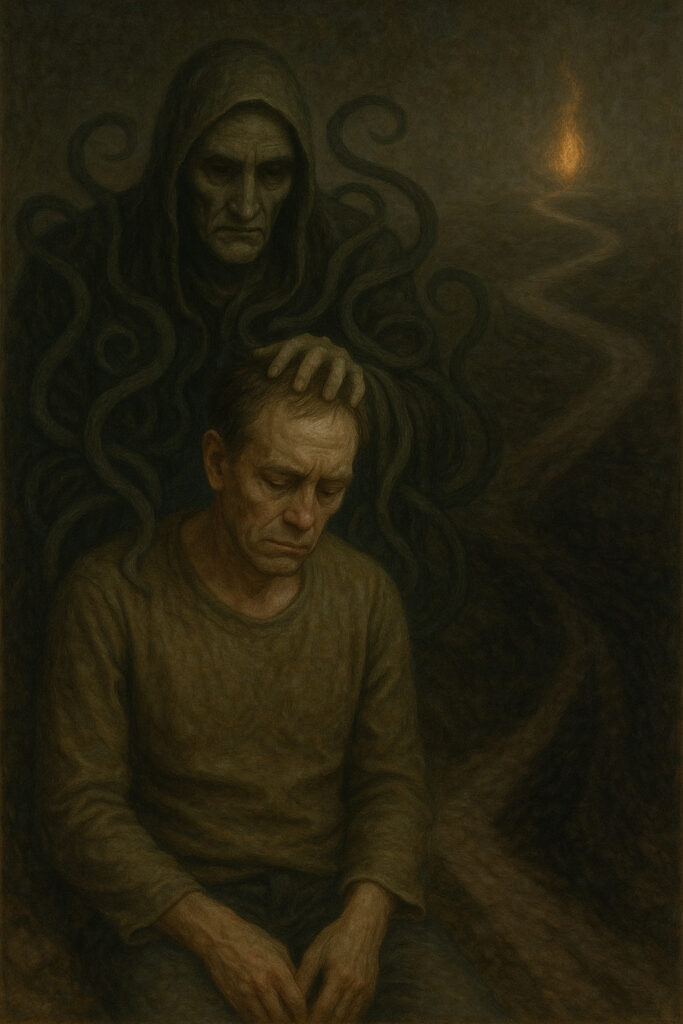
However, paralysis of will acts in a completely different way. This is a state in which a person wants and even clearly understands what needs to be done, but is simply not able to act. Fatigue is felt here as viscosity, as an invisible but almost insurmountable barrier between intention and realization.
We have already said that the Archons primarily paralyze the will, weakening the inner structure of consciousness and disrupting its ability to choose and to stand by the consequences of that choice. This is precisely their role as “administrators” of heimarmene: any paths that lead to liberation become energetically overloaded, whereas the lines of adaptation and capitulation are sloping and easy.

From the point of view of the mind, archontic paralysis of will can be described as a splitting of the mind’s orientation, when one part strives for change, another is afraid, a third is ashamed, and a fourth already rehearses the future failure in advance within itself. As a result, no real action takes place, and a person is forced to pretend, to play the role of someone active and “strong‑willed,” while in reality continuing to live in a masked feeling of powerlessness.
Therefore, to overcome such a state, special training is required: exercises in micro‑steps in which the action is something small but carried through to completion. Developing trust in one’s own decisions can also be very useful, as well as training oneself not to promise (even to oneself) what will obviously not be fulfilled.
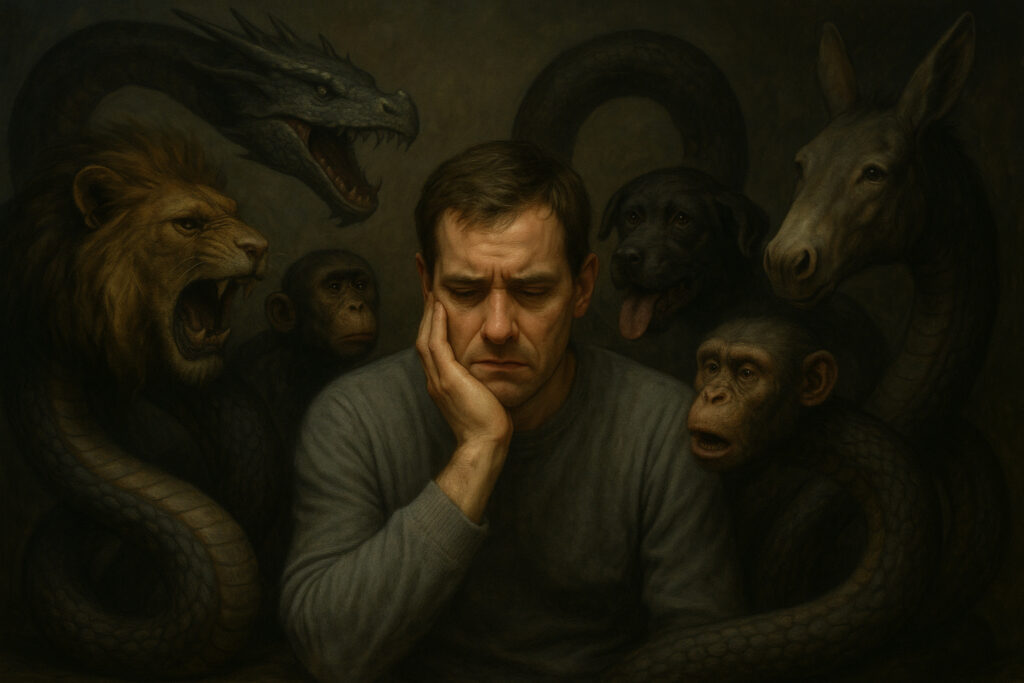
Paralysis of will is the Archons’ favourite and most effective tool also because it produces the greatest quantity of low‑tonic pneuma: the person continually blames themselves, experiences shame and anxiety, and yet changes almost nothing externally. Such a producer is perfectly suited to the archontic economy: they suffer much, act little, and scarcely ever step outside the prescribed scenario.
The third variant is real fatigue, that is, a lack of resources. This state is experienced as burnout, overexertion, exhaustion, when the nervous system and the body are truly no longer able to sustain the required level of activity. And although outwardly such a state may resemble laziness or paralysis of will, with it, even after an attempt to “pull yourself together,” it only gets worse: trembling, headache, apathy, and sometimes clear somatic symptoms.

In energetic language, this means that the basic flow of life energy is weakened, and access to pneuma is not merely redistributed, but truly depleted. In such a situation, demanding “feats” means only intensifying exhaustion and attracting various predators, who will gladly use the culture of heroic self‑exploitation to bring the being to a complete collapse of structure.
In this case, rest is genuinely necessary — and not the “false rest” of the archontic environment (endless social‑media feeds, TV series, mechanical consumption), but true recovery that gradually restores wholeness: sleep, careful work with the body, silence, real human contact, and practices that do not overstimulate but gradually and gently deepen presence in being.

However, Archontic traps operate at this level too: the genuine need for recovery can be replaced either by guilt (“I must pull myself together; I can’t relax”) or by withdrawal into passivity, which does not restore but only continues to dissipate the remaining energy.
To avoid confusing these states, one can use a few simple criteria.
If, after starting, a person feels that they have more strength, and as they implement the task of the Magus it is appropriate.

If, at the very thought of action, inner panic, confusion, “stupor” arises, and countless arguments “for” and “against” spin in the head — then we are most likely dealing with paralysis of will. In this case, small, structuring steps and gradual work with internal prohibitions may be useful, rather than self‑beating.
If, however, any attempt at effort leads to a sharp deterioration of the condition, and even after long sleep and rest a person wakes up with a feeling of heavy emptiness — there is a high chance that real exhaustion is taking place, and the primary task becomes recovery, not a feat.
The influence of heimarmene strives to erase these distinctions, imposing an amorphous state of “I am weak / bad / lazy.” And the task of the Magus is to return to oneself the ability to identify one’s states correctly, to see where a step over inertia is needed, where painstaking work with the inner structure is needed, and where — an honest recognition of the limit and care for the restoration of resources.

In this sense, fatigue, chronic asthenia, the mental sluggishness, the feeling of the pointlessness of efforts — these are all indications that the mind is drawn into the scenarios of heimarmene, in which any way out upward “costs more” than passive sliding down an inclined plane.
However, that same fatigue can also become a signal to continue the Way, if one stops perceiving it as something homogeneous. By distinguishing between laziness, paralysis of will, and a genuine lack of energy, a person step by step regains freedom, learns to spend strength correctly where it is truly needed, without playing along with archontic schemes of self‑suppression.
Great article!
Thank you for the article! A very relevant problem in the modern world, and good strategies to overcome it!