
Deadly Bliss
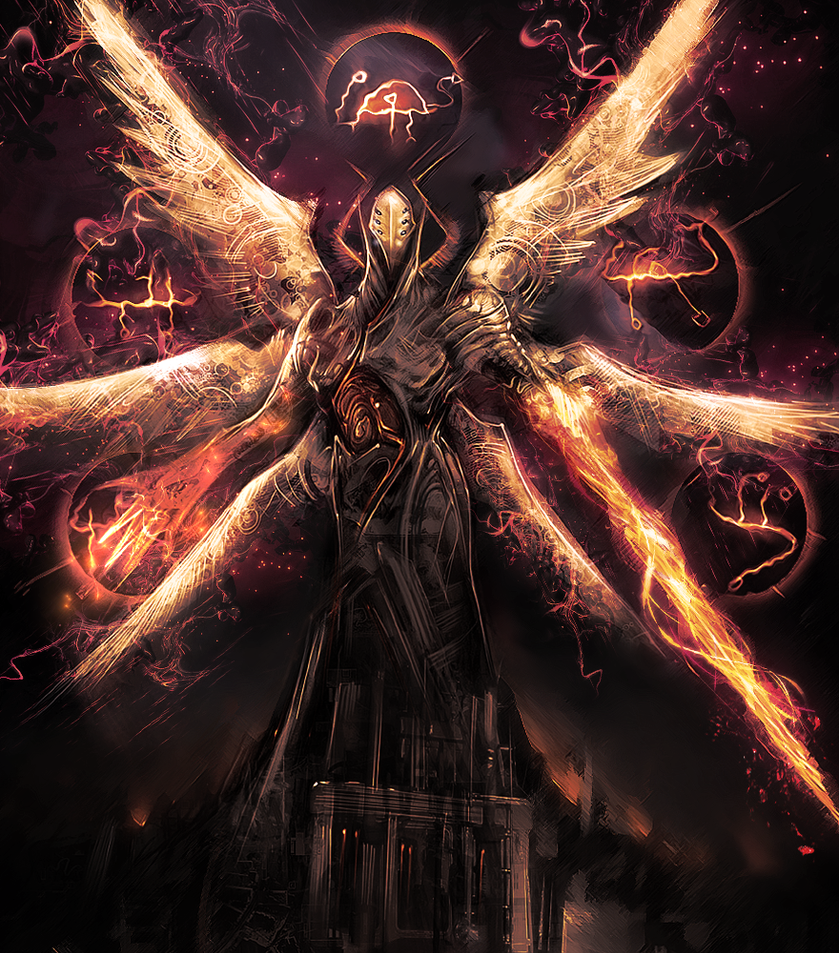
Aeon Bliss (ἡδονή, Hedone) is the potential to achieve equilibrium, a harmony between pre-existing entities.
From it originates the sefirah Tiferet and the principle of manifested harmony it expresses; also born from it is the Archon of the Kingdom — Oh (וה) or the “Dark Lord” (Adonai Aphel, אֲדֹנָי אפל) — and the potential for ‘heat death’ he brings, together with the qlippah Tagirion.
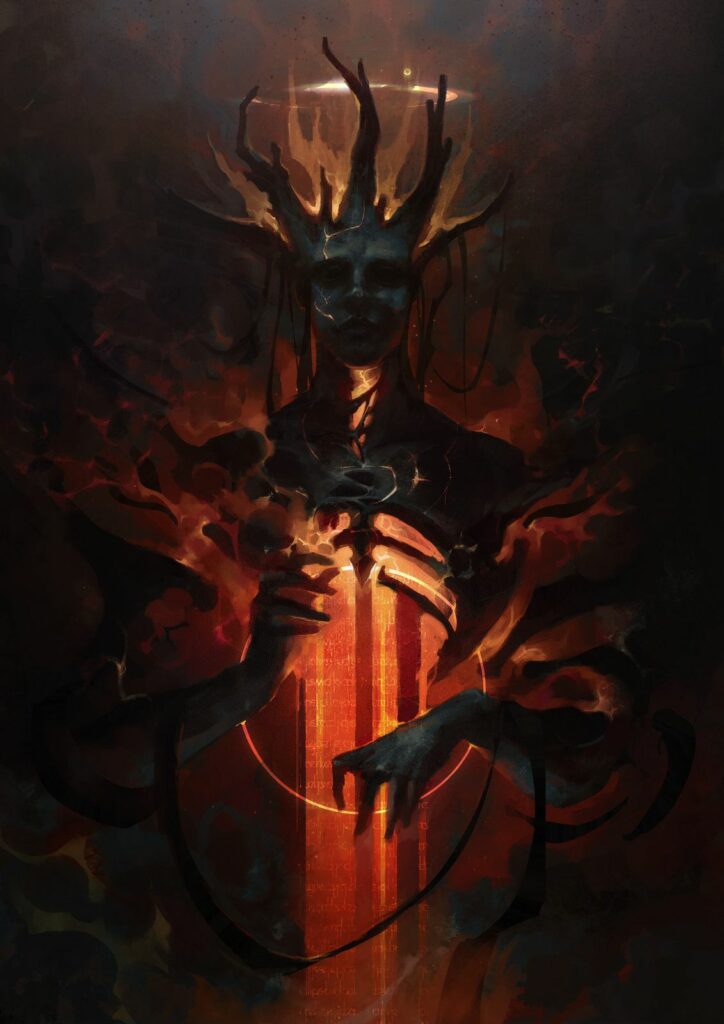
The ancients were well aware of this ambivalence of the Solar principle, expressing it in divine images such as Tammuz (Dumuzi — Mesopotamia), Adonis (the Greeks, borrowed from the Near East; the name derives from the same word “Adonai”), and Shamish (from Akkadian Šamaš, among the Mandaeans). Each of these deities embodied a dichotomy between harmony and passivity, a positive and passive influence.
In other words, Hedone can be realized both as synarchic harmony, where all forces are “on the same side,” and as sterile dissipation, an empty release of tension and the disappearance of potential differences.
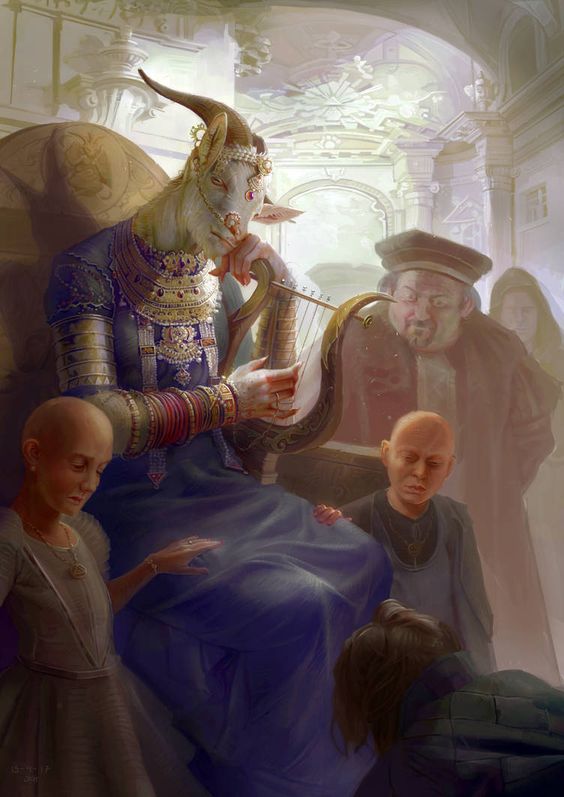
We have already said that the relationships between Archons and demons are ambiguous and non-linear; however, they are undoubtedly linked by origin. For example, in this case the notion of Tagirion’s “strife” reduces to an exhausting, self-contained cycle of contradiction that gradually drains itself and its surroundings of potency, as opposed to the radiation of the Sun — Tiferet — which, conversely, endows its surroundings with vitality.
As in other cases, it is impossible to determine unambiguously the genealogy of such a destructor — whether the “Son of Life” (בן החיים, i.e. וה) gives birth to the Black Sun, or whether Belfegor replaces fertilization with pollution — yet the result is the same: apathy, exhaustion — all of this falls under a deadly sin — Despondency (acedia, ἀκηδία).

Thus, the Black Sun not only distorts the emotional expression of unity and harmony (which is precisely a demonic influence); it destroys the very motivation for achieving active equilibrium, since it also exerts an archontic influence.
Already in the Old Testament, such a “symbiosis” of Oh and Belfegor is called the “Noonday demon” (Merikhem), and is held responsible for causing listlessness and lethargy — that which in today’s world, not without a touch of romanticism, is called “depression.”
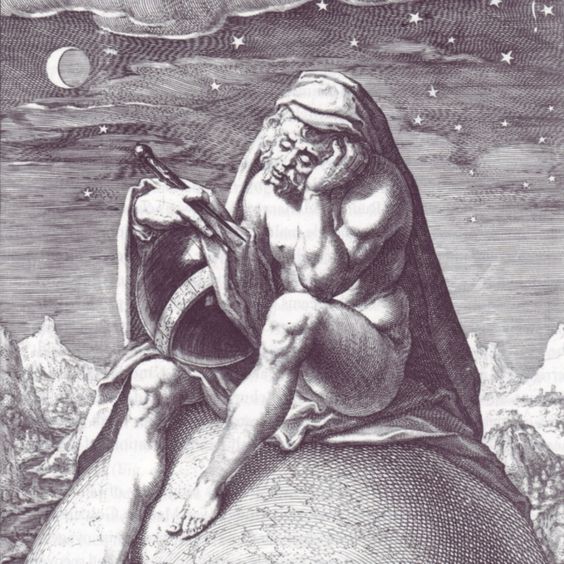
Thus, Psalm 90:6 says: “מִ֭דֶּבֶר בָּאֹ֣פֶל יַהֲלֹ֑ךְ מִ֝קֶּ֗טֶב יָשׁ֥וּד צׇהֳרָֽיִם”: “…from destruction that lays waste at noon.” (In the Septuagint: “[you need not fear] the pestilence that walks in darkness, or the destruction that lays waste at noon”; in the Vulgate: “Non timebis… ab incursu et daemonio meridiano”). It is precisely demonic despondency is being described, and Belfegor is credited with the power to inspire acedia (“daemon qui etiam meridianus vocatur”), often attacking monks between ten and two o’clock. Such an attack produces a state characterized by fatigue, sluggishness, sadness or despondency, restlessness, aversion to the cell and ascetic life, and a longing for family and former life.
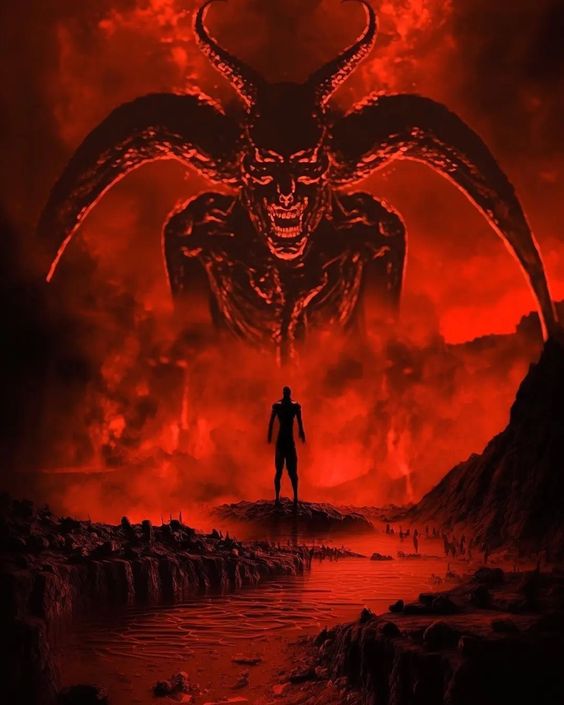
Guides to monastic life note the following features of demonic despondency:
- Inability to remain in one place. Manifests as a desire to change surroundings constantly, to settle down. Afflicted monks were described as “runaways,” those who “fled the field of spiritual battle.”
- Heightened preoccupation with one’s health and safety, in particular the temptation of gluttony. Monks fasted until noon, and it was easier to distract them from their duties with worries about their health and stomachs.
- Loss of motivation for physical labor. Manifests mainly in the hotter afternoon hours of the day, when it is hottest and monks must struggle with the daytime heat.
- Neglect of rules and duties. In monks afflicted by the Noonday Demon, the temptation often arose to neglect prayer, producing the inward sense that their duties have become “too heavy.”
- General disillusionment. The demon of noon often produced in monks a feeling of complete despondency, to the point that their very vocation was questioned, ultimately manifesting as total apathy.
The result of the “noonday” influence of Oh/Belfegor is a state in which “There are no desires except one — to do nothing. There are no aspirations except the aspiration into nonbeing.”

Despondency understood in this sense — acedia — is one of the most widespread pathologies of modern times. Loss of motivation, the refusal of “inner burning,” and the replacement of striving with apathy is not only tolerated by modern morality, it is often proclaimed wisdom — that very “non-doing” about which Eastern philosophy speaks so much.
The destructive force is obvious: instead of the Sun, which organizes space, holds its planets on stable orbits and centers harmony, there appears an “isothermal” process, devoid of inner conflict yet utterly unproductive.
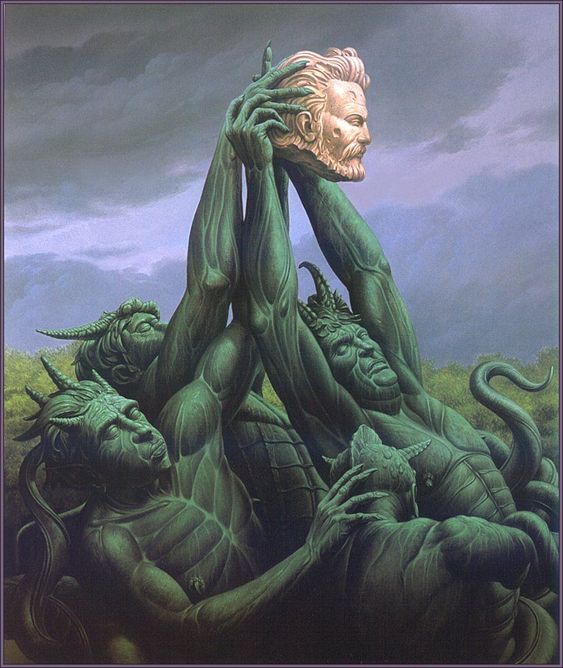
Thus, in many cases it is difficult to separate demonic and archontic influence, and it is not useful in practice, since the distortion of feelings and the blockage of will often go hand in hand.
Nevertheless, comparing destructive manifestations of the mind with the properties of certain matrices, certain “generators of destruction,” is undoubtedly as useful as identifying the physical forces behind phenomena: just as the study of physical forces allows one to predict a system’s behavior and influence it, the study of the driving forces behind psychic processes makes mental processes more controllable, opening paths toward harmonization.
Thank you for your answer! And yet it seems to me that the genealogy of this distractor should be sought in astrology/astronomy.
So what is happening now in the world—the attack of the Archons—is this the work of Adonai? Can a post about him be written in more detail? I searched the site, and found nothing about him. And I still do not understand about the kingdom of OX, that is, there are other Archons there, are they all in cahoots or what? I mean, what are their plans regarding our planet?
When you speak of the Black Sun—do you mean that which was depicted on the floor in Wewelsburg? How can one understand—whether it is a realization symbol?
The Black Sun is a stage of nigredo, the force of growth and annihilation, the opposite side of the daylight Sun. It is also the energy of the Shadow, the repressed part of the psychocosmos. Regarding symbols—by formal signs, it is hardly possible to distinguish a realization symbol from a meaningful one, only by the manner of use.
Thank you. I incorrectly phrased the first question; I apologize. Is the symbol of the Black Sun (the depiction on the floor) a graphic expression of the stage of nigredo, or are they (the stage and symbol) just ‘namesakes’?
The symbolic meaning of the Black Sun is broader than one level; it includes both nigredo, the unconscious, and potential chaos.
Hello, Enmerkar. What do you think: is a willful impulse and the knowledge that despair is a lie enough to escape this state? Or are there any other methods?
Hello. In principle, of course, desire is enough. But in practice, both recognizing the desire and actualizing it into a correct willful impulse can be very difficult. So, in reality, efforts and persistent work are usually required.
Does a person in such a state need external help? Or are they capable of handling it themselves?
As I understand it, everyone or almost everyone resides in this state. The Sun is precisely the Sun. But these are just my thoughts.
Eleven. A strong number. Master, I see that you are in search of a successor. It is not my will, I am being led. I would be very grateful if you would teach me what People should know.
I’m not sure I can do it on my own. Understanding the system and its distortions requires extensive internal work. And if the desire to step onto the path of magic arises, it entails finding and transforming within the flow, the teacher’s explanation, performing practices, communicating with forces, etc. It’s a constantly new perspective on a world mired in empty consumption. When you understand that it’s more important to learn to refuse the unnecessary and see what is truly valuable.
But Hedone produces not only Ocha, Baphomet, and Tagirion? Bliss also produces Michael, Malakim, Sorath, Nakiel, and so on, right?
Yes, indeed, the Aeons are sources of both sephirot and clipot.