Anchoring in Materiality
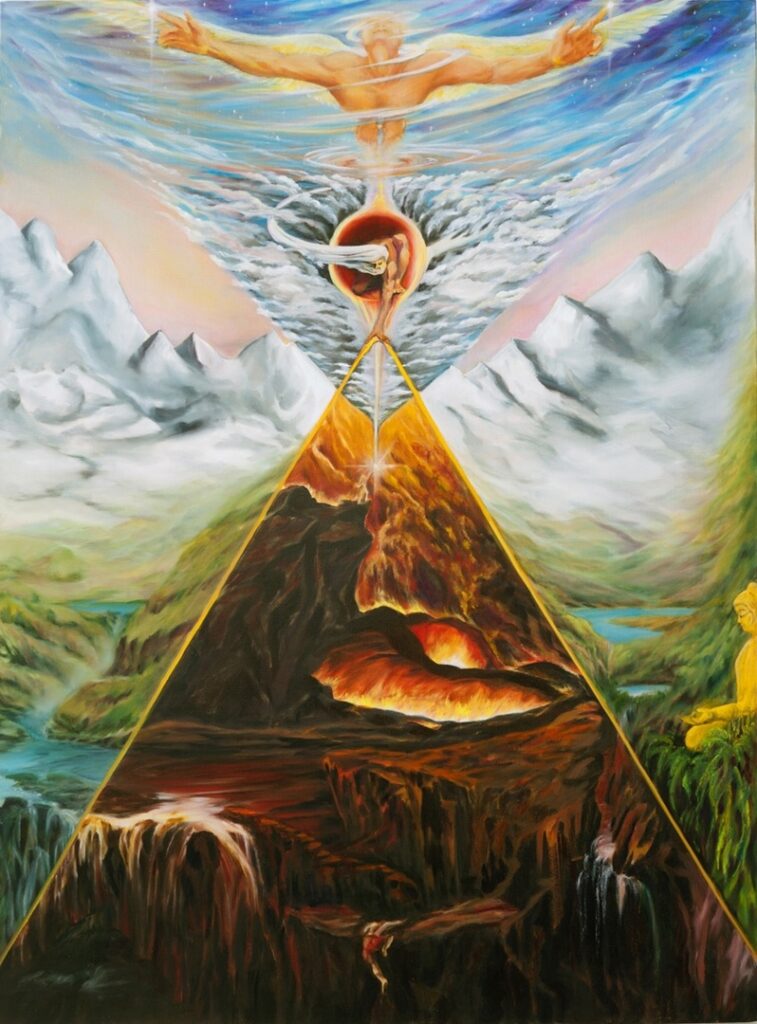
The usual placement of emphasis, characteristic of most “expanded” descriptions — magical, occult, esoteric myths — considers the “descending” order of forces and hierarchies, and therefore assigns the manifested world, the material plane a lower position than the ‘spiritual’ levels.
And although such a description is largely valid and reflects the process of creating or “unfolding” reality, it can create a false impression of the “insignificance” or a sense of defectiveness of the material worlds.
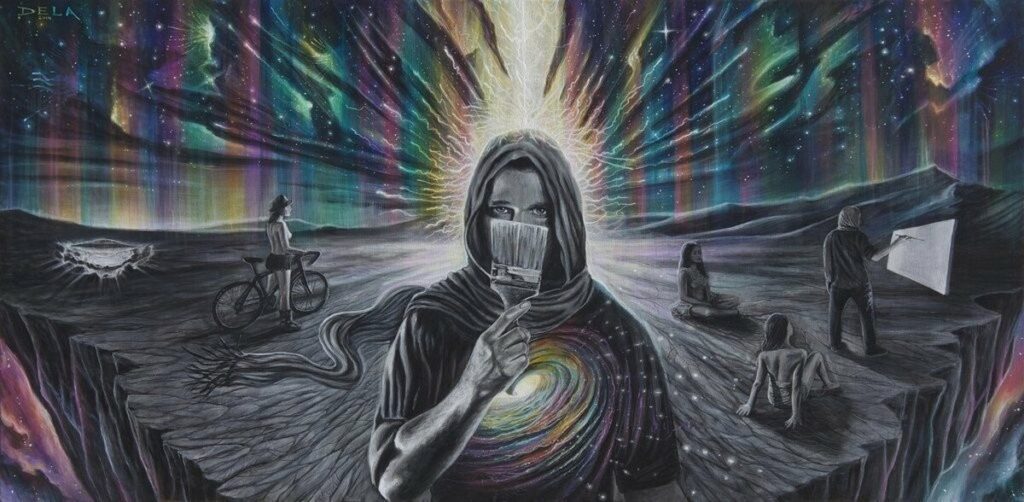
Indeed, when mystics or esotericists speak of the need for “liberation” from the “shackles of matter,” one may quite reasonably get the impression that matter is “evil” in itself, or, at the very least, hopelessly “spoiled.”
However, the traditional-magical description of the world is far from those conclusions, because it strives for a holistic, integral perception of the universe, in which each element or aspect finds its justification and purpose.
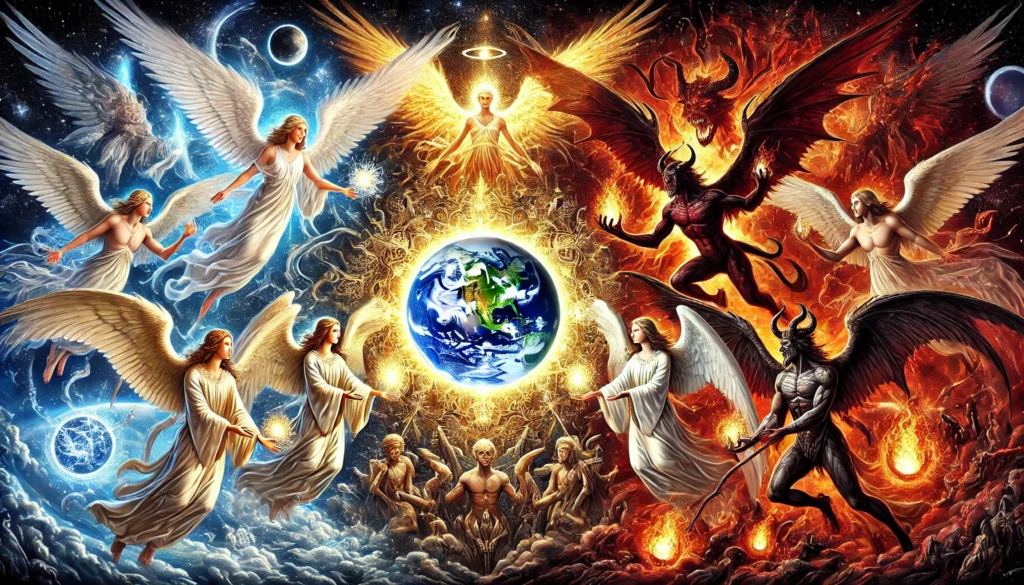
From this position, the gross material level of existence is indeed perceived as a great battleground of forces, yet this duality, the ambivalence of physical reality, does not make it something bad and undesirable; on the contrary, it endows it with unique properties and a special place, the understanding and use of which are absolutely necessary for the evolution of consciousness.
The material levels of existence are spaces of greatest condensation of consciousness, energies, and ideas, of their closest interaction, which makes, first, possible the final “materialization” of ideas, allowing them to be tested in great detail, studied, and reveal their strengths and weaknesses, and second, achieve equally close energy interaction of energies, which is important both for the correct formation of their sources and for identifying those features of their interaction that are not visible in a more “rarefied” form.
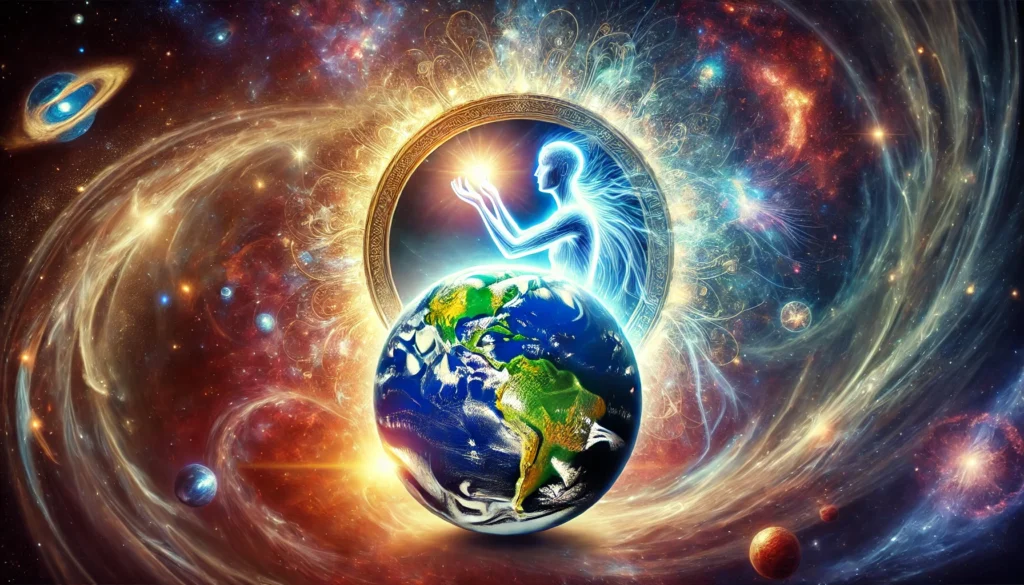
Thus, “dense” reality is, on the one hand, a “turning point” of the development and self-knowledge of reality, where the world process changes its direction — from differentiation, the separation of individual properties — to their integration and re-synthesis; and on the other, it is also a state of maximum condensation, concentration, and intensity of interactions, necessary for such a “turn” and the final stages of unveiling potential.
In other words, the transition from spiritual involution to material evolution is possible only when all forces are shaped and manifested, all actors have taken their positions, and observers are able to register all the details of what is happening.
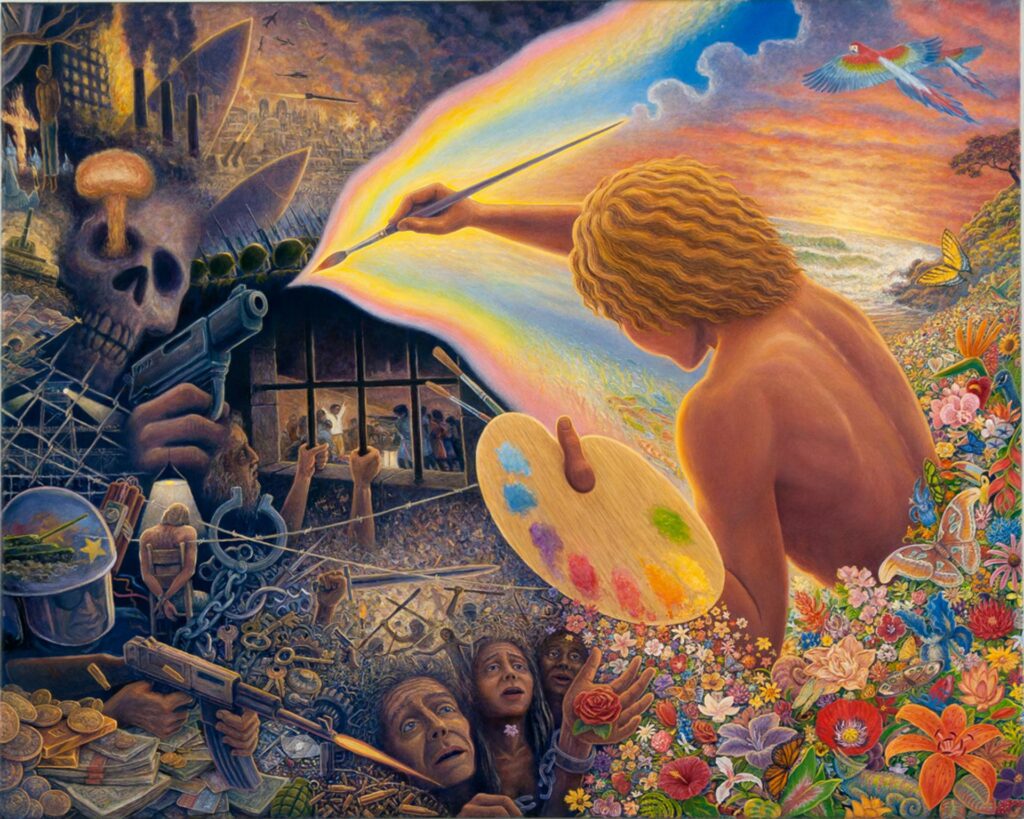
When the Traditions say that the material world is “spoiled” and subject to “correction,” they do not mean a “moral” aspect of these words, but speak only of the physical fact of disharmony or imbalance, for the detection of which the dense level is intended.
In the material world there is no destruction that doesn’t crystallize into it from subtler layers and aspects of the universe; there is no “independent” disharmony in it. It simply arises as a manifestation of imperfect consciousness, which has no other way to discover — and therefore correct — this imperfection except by finally revealing it, “crystallizing” it into imperfect forms of hyle.
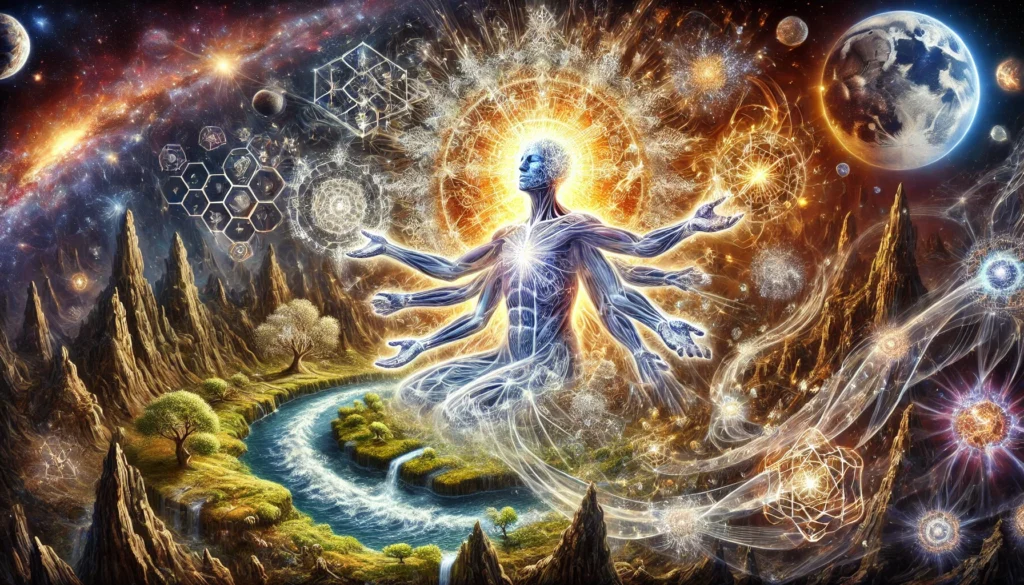
This understanding is what assigns the manifested worlds the status of a “cultivated garden,” which Traditional worldviews emphasize. The physical worlds are a substrate, raw material for processing and transformation, and not merely a “prison” or a “spoiled” reality. Of course, spirit feels constrained in it. However, the only way of liberation from the “shackles” of materiality is to use it as a “mirror” to reveal one’s imperfections and obscurations and correct them.
However, Beyond that conclusion, several important implications follow from what has been said.
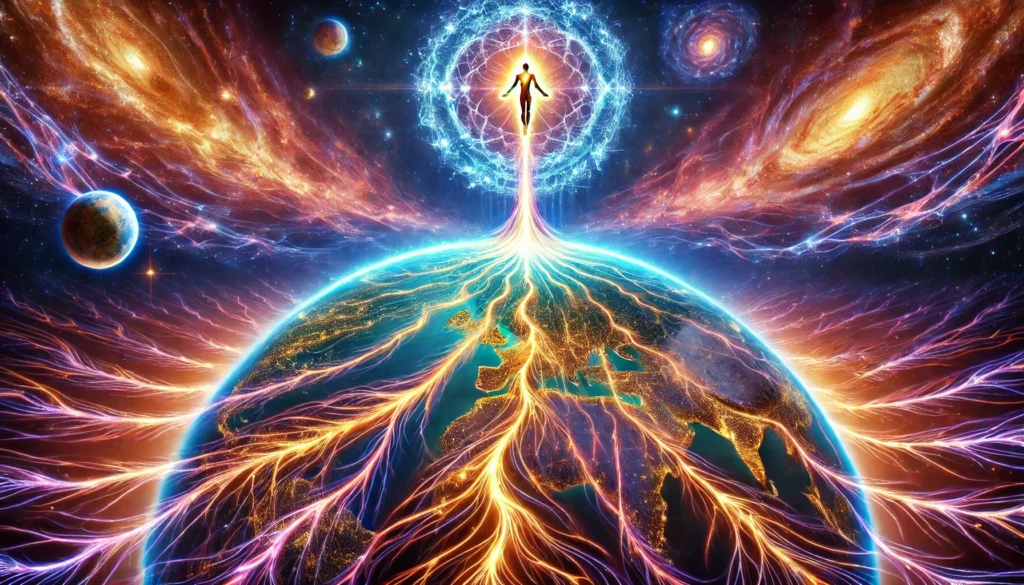
One of them is the idea of materiality as a unique support, “bottom” from which, pushing off, spirit turns its fall into flight, descent into ascent. Precisely in order to make such a push possible, materiality contains extremely high concentrations of energy at every point. And although this energy, due to its condensed nature, is usually inaccessible, one should not underestimate its scale. For example, it is well known that in the explosion of the nuclear bomb that destroyed Hiroshima, only a tiny part of the plutonium entered into a nuclear reaction; however, the scale of the energy released was colossal, and thermonuclear fusion generates 4 million times more energy than the process of burning.
In other words, even the most inconspicuous piece of matter is, in fact, a colossal source of energy, and although this energy is usually inaccessible to a human being, it is quite obvious to more “subtly” organized entities.
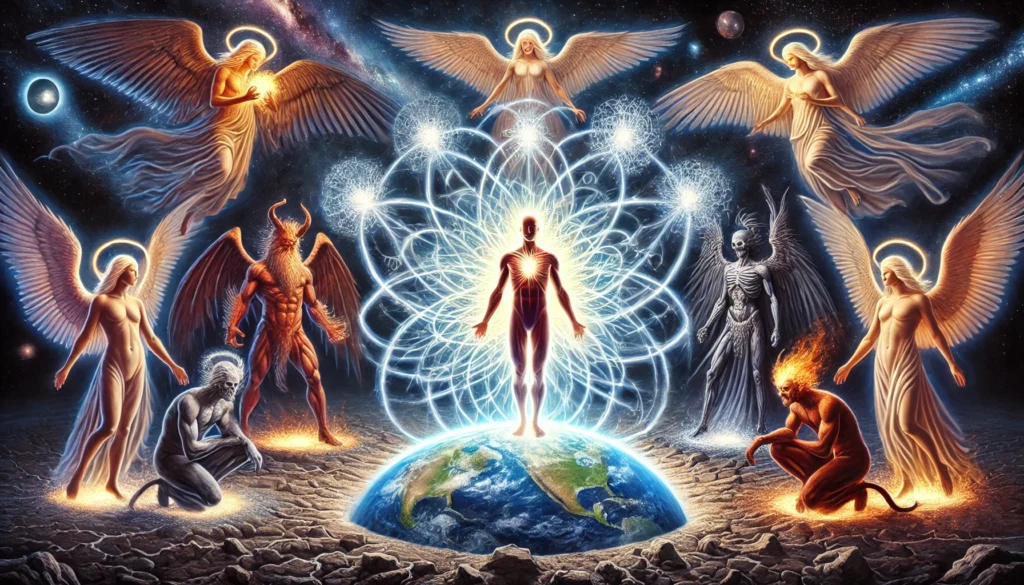
These two facts — the enormous concentration and highly structured energy in material objects — are what make the physical body and the objects of the dense plane those unique support points, “levers,” that allow one to “move forces on a gigantic scale.” We have already said that a Magus is able to command universal actors, and his embodied state contributes more than his personal merits. These “merits,” that is, the Magus’s Authority, to a large extent consist in the ability to choose the correct points of support for work for one’s realizations.
Thus, for a Magus, his ideas about the role and significance of the manifested world must take into account three important facts: 1) materiality is the final stage in revealing the properties of reality, enabling their most complete study and imprinting on consciousness; 2) the imperfections and destructive forces revealed at that level are a substrate for correction, and the “work” on the imperfection of the world is, first and foremost, the overcoming of the obscurations and delusions of the mind; 3) the high energy saturation of the physical level makes it a unique support for consciousness, the use of which makes it possible to achieve global transformations that are inaccessible at any other level.
Thank you.