Interweaving of Forces
According to the magical myth, the manifested world is not a collection of objects but a collection of flows and interactions. Accordingly, any realization — understood broadly as a principle of manifestation, and narrowly as a magical act — boils down to ensuring the interaction and coordination of several energy flows.
At the same time, it is clear that each flow has its own properties — its source (or the impulse that spawned it), its power (that is, the intensity of its flow), its direction (that is, which potential difference it neutralizes). This means that to effect any realization one must 1) find suitable sources for the flows; 2) fill them; and 3) set the flows in motion. As mentioned, this is precisely what any Ritual is for: an ordered, structured realizational action.
The methods for managing realizational flows can vary, and understanding the specifics of each method allows one to use it most effectively.
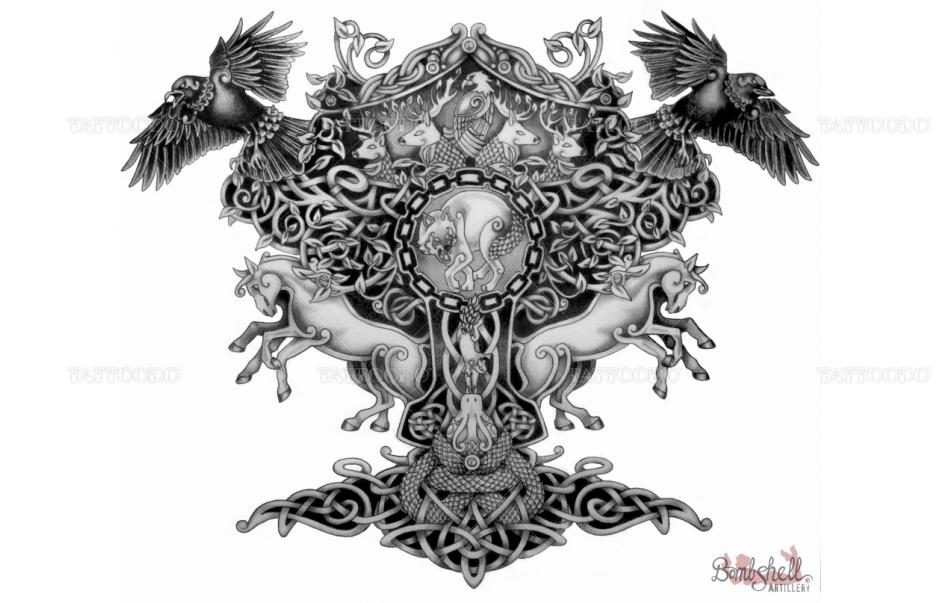
Typical of any realization, these features are most evident in Graphic Magic, Galdr, in particular in the techniques for creating Woven Runes and Galdrastafs.
So, in order to ensure any realization, both on the macrocosmic and the psychocosmic level, it is necessary to find, activate, attract and bind together a number of energy flows.
In the case of graphic magic, finding implies selecting the appropriate symbols, for example, Runes. The attraction of forces is accomplished through inscribing, and their activation in this case takes place after the creation of the Talisman during the process of its enlivening. Each of these stages requires experience, inspiration, and personal power. However, if what is being created is not merely a runescript but a band-rune or a galdrastaf, there is an additional requirement: the correct joining of the attracted flows to ensure their harmonious, effective, and non-contradictory interaction.
There are three principal ways of such joining, or interweaving: 1) linear, 2) circular, and 3) nodal.
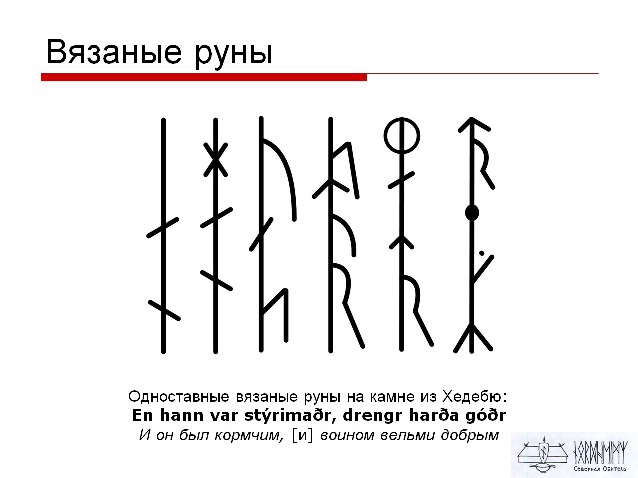
In linear joining the flows are as if “strung” onto a common axis; they sprout from a single direction, like the branches of a tree. This method is most characteristic of Oghamic inscriptions and talismans, though it is also used in Runic magic. Such an approach implies a kind of “surgical intervention” into a given, already existing and active flow: the Runes, “strung” on the common axis, act as a single program, an algorithm that is “imposed” upon an already existing target flow. In this way the flow is restructured, “reprogrammed” according to the characteristics of the runescript, and the desired realization is achieved. Note that in this case the energy for realization is taken from the already existing flow being targeted, while the energy of the eril, of the talisman, is used to alter that flow so it will accomplish the intended purpose. Accordingly, employing this approach requires 1) understanding which flow will be subjected to influence and 2) understanding how, with which Runes and in what order of operations, the characteristics of the target flow can be changed. It is obvious that this method is most effective when the eril is aware of the presence of a powerful flow into which he wishes to intervene and “tune” it to accomplish his tasks. Such external flows may be collective currents (like Egregores or collective intentions) as well as “physical” flows such as winds, rivers, and the like.
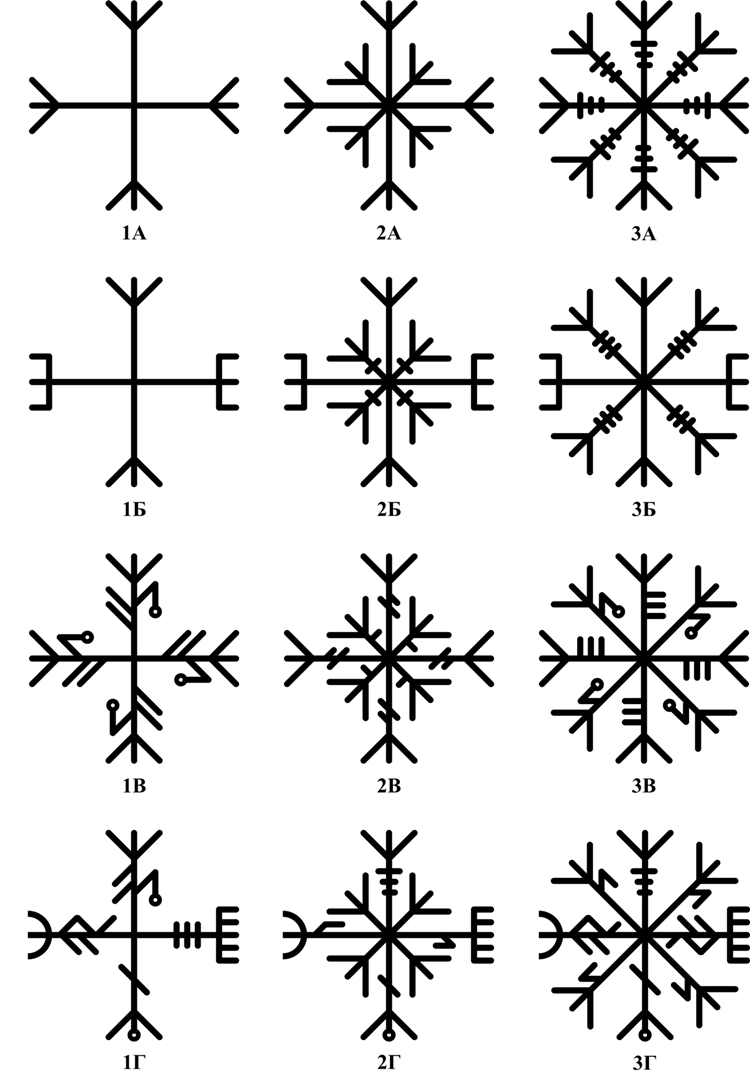
Circular joining is used when creating agishjalms and similar symbols. In this case the energy flows are “twisted” around the eril into an active Runic vortex, creating a “armor,” a “shell” for protection and attack. It is important to understand that the created vortex will not only protect but will also impede the exchange of energy and information with the surrounding environment, affecting both other manifestations of the eril’s activity (aside from those it controls) and his receptivity. Consequently, this approach is most suitable for any situation of “active defense,” when the eril needs to shield himself from undesirable external influences, pass through an adverse environment, or simply be unreachable.
Nodal binding is encountered most often and consists of joining a number of flows into a single whole so that their “resultant” emerges — the sum of their effects. In this approach the talisman’s “life” is imparted by the creator’s own energy, and in the case of remote action — its effect is achieved through contact with the recipient’s mind. Accordingly, the creator’s own power is critically important to the realization process. Creating such bindings requires, in addition to strength and inspiration, a clear understanding of their “mechanics,” the internal structure and interaction patterns of the Runes that comprise them.
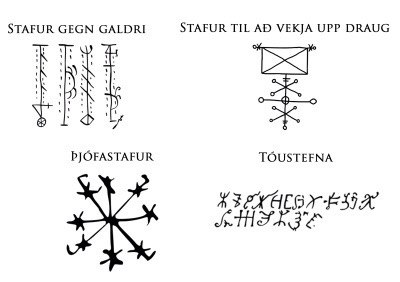
If in the case of linear weaving one can “ride” on the energy of the target flow, and an aegishjalm, being essentially a vortex structure, draws on the resources of the environment for its functioning, then the “classic” galdrastaf is purely the product of the eril, operating on his energy. This feature makes nodal talismans, on the one hand, the freest from external influences and therefore the most controllable and directed, but on the other hand also the most energy-consuming.
Depending on the resources the Magus possesses — his level of power, understanding, and also the nature of the goal he wishes to achieve — any of the approaches to interweaving energy flows in a realizational action may be applied. Nevertheless, it is extremely important that the Magus understands what he is doing, which flows he activates, which mechanisms he engages, and what this demands of him and his instruments. Without such understanding the Magus becomes a character in the world-process, from agent to object of influence, and thus risks not only failing to achieve his aims but also losing his energy.
Hello! I wonder how I understand that every flow of energy tends to its established minimum resistance in the medium, and in the case of linear connection of runes, let’s say, if we want to influence the channel of the flow, does it also require energy initially, where does it come from if not from the operator?
Hello! Of course, in any implementation, the source of energy is the personal power of the operator. The question only concerns the relative amount of this power. To create an agisκάlm or other cyclical talisman, the least amount of it is required (though significant understanding and authority will be necessary), whereas for a linear script, galdrastaff, or sigil – more is needed, yet this amount remains at a moderate level, since it is easier to alter an already existing flow than to create a new one, while for knot tying, a notably higher amount of energy is needed than average. Truth be told, in this case, the agisκάlm allows for the least maneuverability, while a knot allows for the greatest freedom of will.
Hi!
I confess I do not understand why you, En, when talking about opposites, constantly mention the word – neutralization. Neutralization is zero. The difference between power flows leads to a product, the creation of something new, generation, but not to neutralization.
Sorry.
Bin, the potential difference arises as a consequence of creative desire and is the reason for the creative impulse. Its poles naturally attract each other, longing to merge into one, into their “original” state, and, therefore, effectively exhaust the possibility of manifestation. Nevertheless, as I have mentioned several times, the Western Myth considers two fundamentally different ways of such “resolution” of the binar – its androgenization and integration. In the first case, the binar objectifies its longing for merging in the form of an androgyne – the “lower” element regarding it, encompassing the properties of each of the binar’s poles. In the second – the binar finds itself as a whole in the “higher” element regarding it – an integral, encompassing both poles of the binar in all their fullness. Neither of these methods excludes movement; on the contrary, they are the very aim of this movement. However, they are neutral since there is no operational potential difference in them, and in order for their further movement to continue, new dualities must be identified, new impulses created, and only in this case does the process of movement/development continue.
The most difficult and still incomprehensible aspect remains the understanding of relativity, the identity of flows with the field of consciousness. It has been repeatedly mentioned that inspiration has significant power. This speaks to the importance and dependence of the imprint of the symbol and its manifestation in the environment from Personal power, i.e., about giving a new meaning to a new manifestation. We can talk a lot about how we create ourselves and our power is the creation of our reality, but there are Laws and Principles.
Much is described about structures and schemes. It is clear that the basis lies in the vector of correspondence. For example, in the illustration, the nodal vectors (1G) I see as multilayered. 2g is intercrossing vortices, 3g – vortex connections of flows, but in a single complex structure. With their help, one can examine any elemental structure and learn to influence the composition.
But the question remains the same: how does the field of consciousness read and allow changing the vortex component?
It turns out that we can tune our flows to the common flows.
Where does the flow come from? From an idea. Thus, the original matrix of the consciousness of the Creator, consisting of ideas, served as the building material for creating flows.
Another question from the “devil’s advocate” cycle.
It seems to me that any embodied being can, if they wish, be viewed as a flow of power. I have the feeling that, in general, your description of the myth does not contradict this.
In that case, how does the “linear” use of any flow of power differ from predation and parasitism?
Absolutely right, any creature is a flow, an actual flow of consciousness, and I have spoken about this more than once. It is very important for the Myth to view us not as objects, but as processes.
As for reprogramming the flow under the influence of a linear galdrastaff, here, as always, everything is determined by the level of awareness and personal responsibility of the operator.
Good day. Are stable realizations built on antagonistic or absorbing forces possible?
Hello. The entire manifested world is a result of the interaction of hostile and consuming forces. It all depends on the form and method of their combination.
If the entire manifested world is a result of interaction of hostile and consuming forces (i.e., such forces are its cause), and if hostility and consumption are essentially opposed to compassion, then where is it in such a world view?
When it comes to forces – interactions are discussed. When it comes to compassion – attitude is discussed. Therefore, forces can certainly be hostile, however the attitude can be compassionate. For example – in the nature of any living being – there is resource consumption, competition for resources, struggle for resources. However, without changing this property of their nature, a being can very well be compassionate. A person who consumes other living beings (even when it comes to consuming plants or even their fruits – consuming another being still takes place) is not at all obliged to treat these beings with hatred.
But compassion is not only opposed to hatred, but also to indifference. As for the Manichean and Zoroastrian attitude towards plants in the context of this conversation, I do not quite understand it.
If we talk about competition, struggle, and resource consumption being inherent to all living beings, then this excludes unworldly (transcendent) beings or beings fully satisfied in their resource needs from the list of living ones. This is at least strange.
Where is compassion in this worldview? It is inside 🙂 it is one of the internal qualities of a magician on a constant basis, like determination on the path, and even more so, as compassion is a step towards love and awareness, a step towards unity and overcoming fragmentation. A magician cannot behave like a predator, because it is precisely predators who lack compassion, they bring harm to others, disrupt harmony, they do not think of others from the perspective of a unified being with themselves. Compassion is internal, one of the qualities of the core, while interactions are external.
We are doomed to interactions due to the limitations imposed on us by the external picture of the world. We are limited in power, resources, etc., we have to fight, resist. The question is only about the quality of interactions, which depends on the quality of consciousness – on what is within.
If “compassion is internal”, does it mean it exists by itself?
But does such compassion exist from the perspective of other suffering beings?
Gilgamesh, compassion is not an object. It cannot be characterized, although one can attempt (as I did at first, thanks to the article “compassion and pity” on this site), but it will not be the same. It either exists or does not exist. It is the realm of the heart, not the psyche. I can describe and tell about objects of the psyche – their interactions, which we project onto objects of reality. But in the world of the psyche, there is that which lies beyond the “border”, which is inexplicable. And this something arises from another deeper area, more internal. It has to be felt. But how can I explain it to you in the language of feelings? You either feel it or you don’t. If you feel it, no explanations are necessary, and if not, then it can’t be explained. Just like with love. One can ask questions for a long time like “does love exist, why do I need it, does it exist for others”… when one does not feel it themselves. It comes with development, it comes as a necessity.
Compassion can be an object of perception, for example (i.e. here, in my opinion, the issue of “constant characteristics” and “constant properties” resurfaces).
How so? 🙂 Can you describe compassion to me as an object so that I can perceive it in my psyche? For example, I can perceive objects of compassion, but not compassion itself.
For example, when we feel kindness shown to us by other beings, their compassion becomes an object of perception.
When we reflect on compassion, it becomes an object of reflection.
And so on – down to the point that when we do not feel compassion for ourselves, it becomes an object of denial.
Gilgamesh, please do not confuse hostility as a principle of movement and development, and Hostility, as negative and emotional reaction.
Compassion is the soul’s reaction to the internal feeling of disruption of the order of the universe.
I suppose, in the first case, it would be more accurate to speak not of hostility, but of opposition / contestation.
So it turns out that for a magician, predators are hostile since they bring harm, and for predators, the actions of magicians are hostile, as those actions harm the predators, their influence. A magician does not include predators in their internal picture of the world, they seek to exclude them (more precisely their influence), do not include them in their unity (since they themselves do not include 🙂 do not feel compassion towards them, but use their ruthlessness towards them…
But what if one were to feel compassion towards them? After all, they are also supposedly trapped in a dual system… And isn’t the “enemy” just a feature of our dual perception?
Clarifying question: Is it about predators as impressions in consciousness (distractors) or about predators as real entities without a physical, human or animal-like body?
Gilgamesh, it is about a product of my own psyche, i.e. it seems distractors. Although, what I do not see with my physical sight, but see with my “inner” sight also relates more to my inner world – to the psyche, and also to entities from dreams, which can bring real harm – also the inner world, also the psyche. I divide predators into internal and external. External predators are those from the carnivorous family, the rest are internal. Something like that…
In my opinion, it would be more productive to view the world process not as hostility, but as a necessary developing action of the opposite side of the same process.
To understand, please answer the question:
Where does light end and shadow begin?
There is not enough initial data to answer. Please clarify whether light and shadow relate to the same or different objects, do they have the same cause and conditions, and so on…
Numen, the source of light (a flashlight) and the source of shadow (a partition) are not the same 🙂
To complicate things, I can add a couple more questions:
1. Where does good end and evil begin?
2. Where does love end and hatred begin?
Numen, everyone will have their own answers, as each has their own partition (prism of perception) despite the fact that there is one light source 🙂
A foolish question, I think so myself, but for some reason, I really want to ask – why is the light source One?
The second question stuck – why is the source (flashlight) and the source of shadow (partition) not one?
Third p.s. consciousness among subpersonalities exists thanks to whom or what? i.e. what material is consciousness made of, where did it come from, who created it (-es or -ed)?
In man. Good and evil; love and hatred, etc. – these are emotional interpretations – Of what? – of energy processes (which at some point, (no one knows when and who) were framed in verbal descriptions, RULES, passed down from generation to generation and quite successfully presented as “truth” 🙂 ……………….. the question is only to find in “yourself” the “place” where these rules are “written” and “erase” them – then there will be neither good nor evil, neither love nor hatred – only “Primordial Unknowability” – the One thing from which everything happened through application – and Create New Rules – although then it will already be another world – a world of non-people 🙂
1. Again, good and evil – in relation to what/who and manifested by whom?
2. Love and (or) hatred – from whose side and in relation to what/who?
Ethical maxims are relative, while the absolute is ineffable.
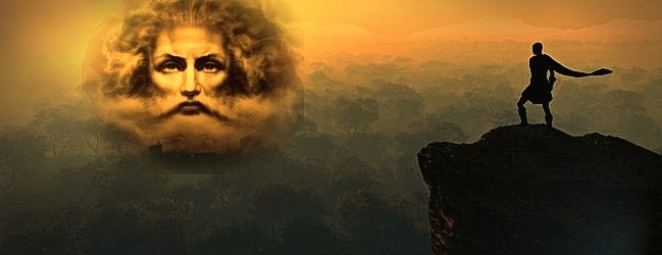
Here’s roughly what I was able to see in June 2012 – as in the first picture of the article. With one difference: everything He said came true.