
The Radiance of the Arits
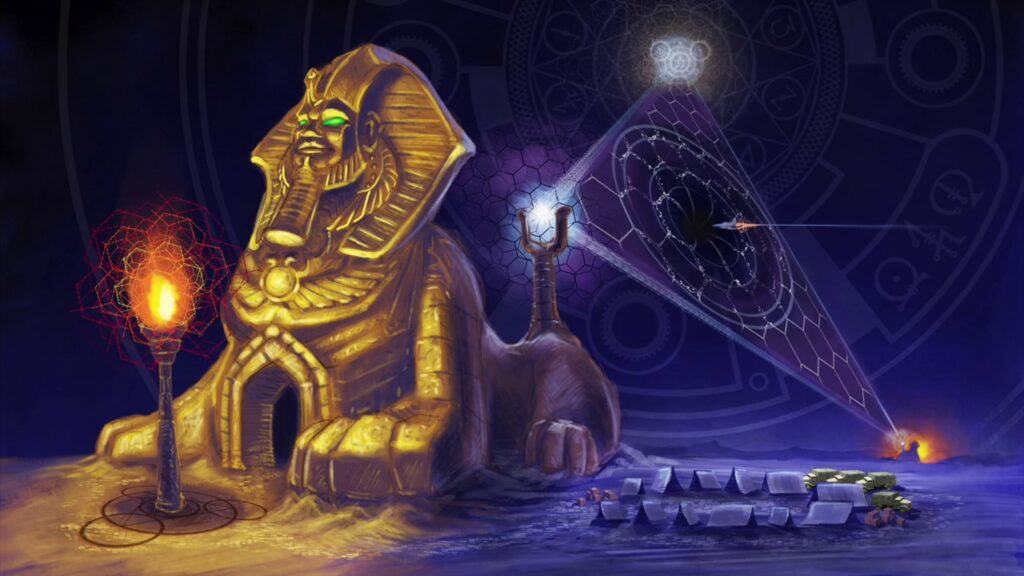
An important stage of the deceased’s passage through the Interval is the so-called “Road of Refuges.” It can be viewed either as a separate space, or as another description of the same journey through the Aat of the Mounds, only considered from the “subjective” point of view of ka.
One way or another, this journey is a long, exhausting journey on which, however, one can encounter seven special “refuges” — “Arit” (“Caves,” sometimes translated as “Tombs”), intended to restore the ka’s vitality, each of which has 3 gates.
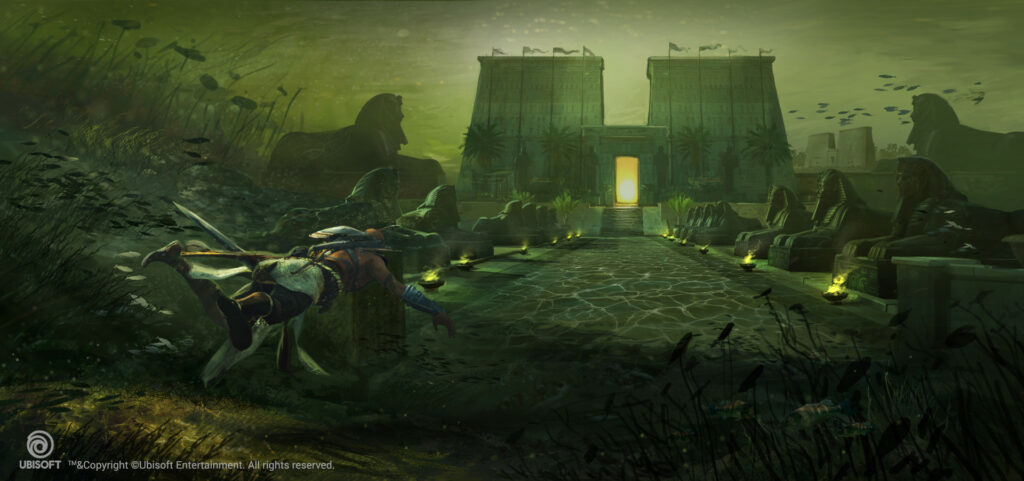
Just as the “Bardo Thodol” mentions “chances for liberation” in almost every vision of the Interval, provided one recognizes it correctly as a “manifestation of mind,” the “Books of Going Forth” describe similar “glimpses of Truth” in the twilight of Duat in the form of special “halls,” or, in modern terms, “Portals” into higher reality.
Arits are a “representation” of the Fields of Reeds — a place of bliss — on this arduous stretch, allowing one to “catch one’s breath” and gain motivation for the further path. Therefore the arits shine with the “radiance of Akh” — an anticipation of the coming fullness and perfection. Without entering an arit, ka has practically no chance of reaching the end of this Road: its vitality would be quickly depleted, and it risks being cast into rebirth.
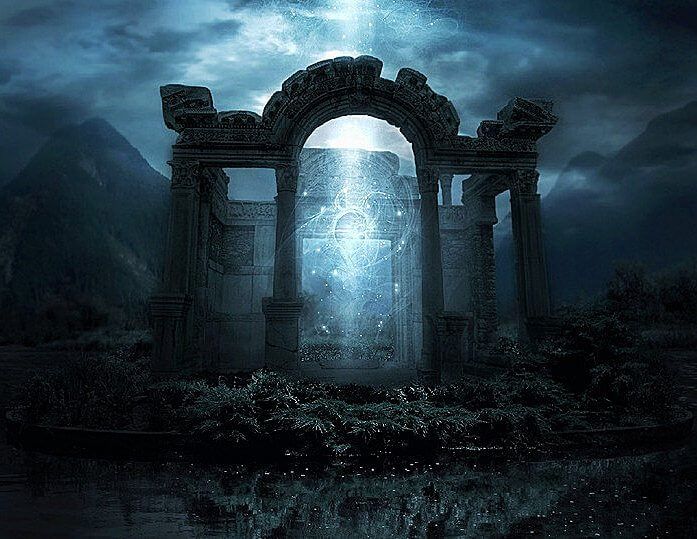
However, the “Books of Going Forth” warn that entering the arits is not easy: it requires both magical knowledge and moral purity. The total number of gates — 21 — corresponds to the lunar cycle (the full manifestation of the wisdom of the god Thoth).
One enters each arit through a Gate with three attendants: the Doorkeeper, the Guardian who announces the traveler’s arrival, and the Herald who names the traveler. To enter each refuge, one must overcome three gates, each of which is guarded by its own Doorkeeper, whose name one must know (since to know a name means to know the essence, that is, to possess this power). Each arit represents one state of the ba (seven celestial bodies correspond to seven bas of the Sun God — the standard of all “souls”), and, accordingly, passage through these refuges corresponds to testing the strength of this component of being. The first arit in this sense bore “Mercurial” energies, the second — Venusian, the third — Saturnian, the fourth — solar, the fifth — Jovian, the sixth — Martian energies, and the seventh — Lunar energies (these correspondences may differ in different sources).
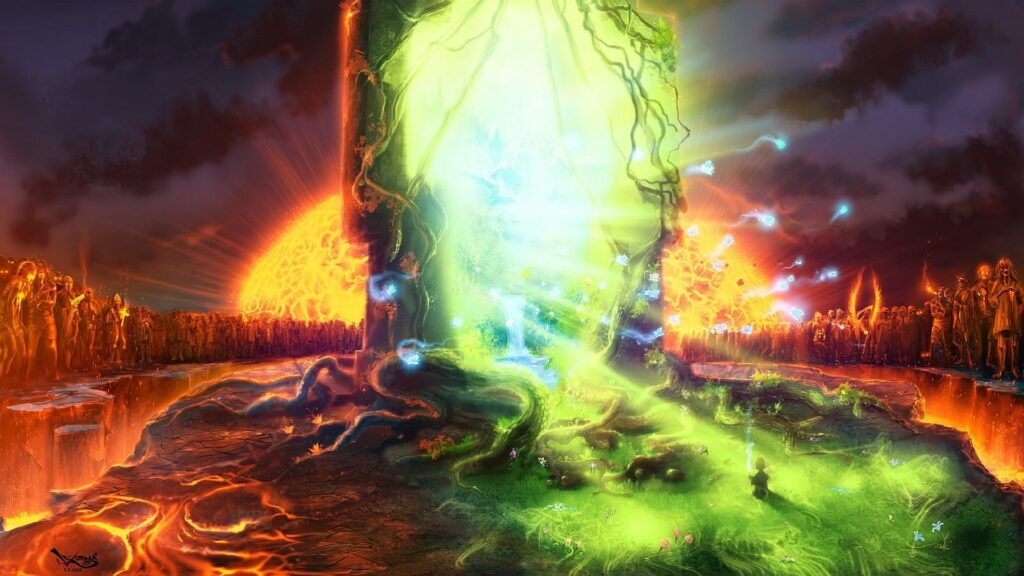
Let us recall that the Interval contains only “germs,” “potencies” of causal forces, and therefore the energies of arits are more properly associated with the “solar ba,” rather than with the planetary forces themselves.
In case of an error, one could lose one’s ba in one of the arits, and thus, again, “fall out” into a new incarnation, serving the “re-creation” of ba. If the deceased’s ka failed to enter one of the Refuges, then the ka’s ba remained in the previous arit. In other words, if some “planetary” force had not been sufficiently “worked through,” realized, assimilated, then a new birth is required to complete this task.
Such a ba is doomed to inhabit something material on one of the seven sacred luminaries (the Sun, the Moon, Saturn, Venus, Jupiter, Mercury, Mars). Successful passage through the seven arits, at minimum, frees the ba from needing to inhabit bodies on the planets, and, at maximum — gives seven chances at liberation.
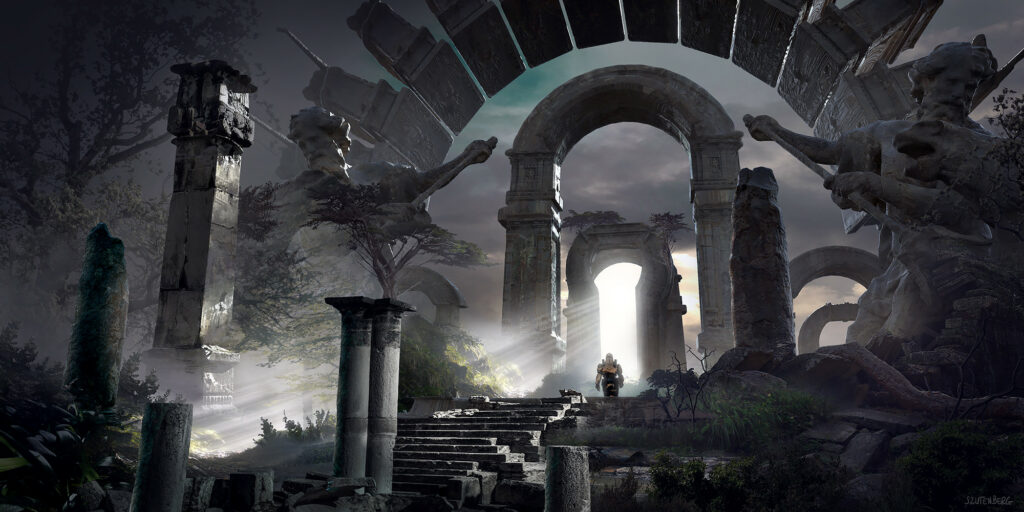
Moreover, each arit also has its own form of “rest,” that is, an influx of special energy from the “Fields of Reeds,” and its own task, which are requirements for one within it.
Thus, the first arit makes it possible to gain adaptability to the changeable world of Duat, and also gives the impetus to move onward (not to remain in the tomb, Ra-setau). At the same time, it requires from him “knowledge” and a firm reliance on the “body” (that is, the sacred sakh). This is the first chance for the deceased to merge with Osiris and attain immortality.
The second arit gives the protective energy of wisdom, the ability to find the right path and make correct decisions. However, it also requires selflessness (the ability to “make sacrifices”), and entry into it lies through the “Pushing Apart of Horizons” (the name of the Doorkeeper is Sakht-khri-asht-aru), and the ability to “see broader.”
The third arit is connected with the secret wisdom of Abydos (the place where the head of Osiris is buried) and gives the possibility of “purification,” that is, getting rid of hindrances and obstacles. Its main requirement is inner integrity, the unity of what is disparate.
The fourth arit makes it possible to identify higher levels of mind (“godlike”) and requires the ability to evaluate actions and events correctly.
The fifth arit carries the energy of power and authority, but opens only on the condition of the presence of their “rudiments.”
The sixth arit gives the energy of victory, and requires self-sufficiency, and the seventh carries the energy of purification/initiation (as abhisheka in Indian traditions), but requires great courage.
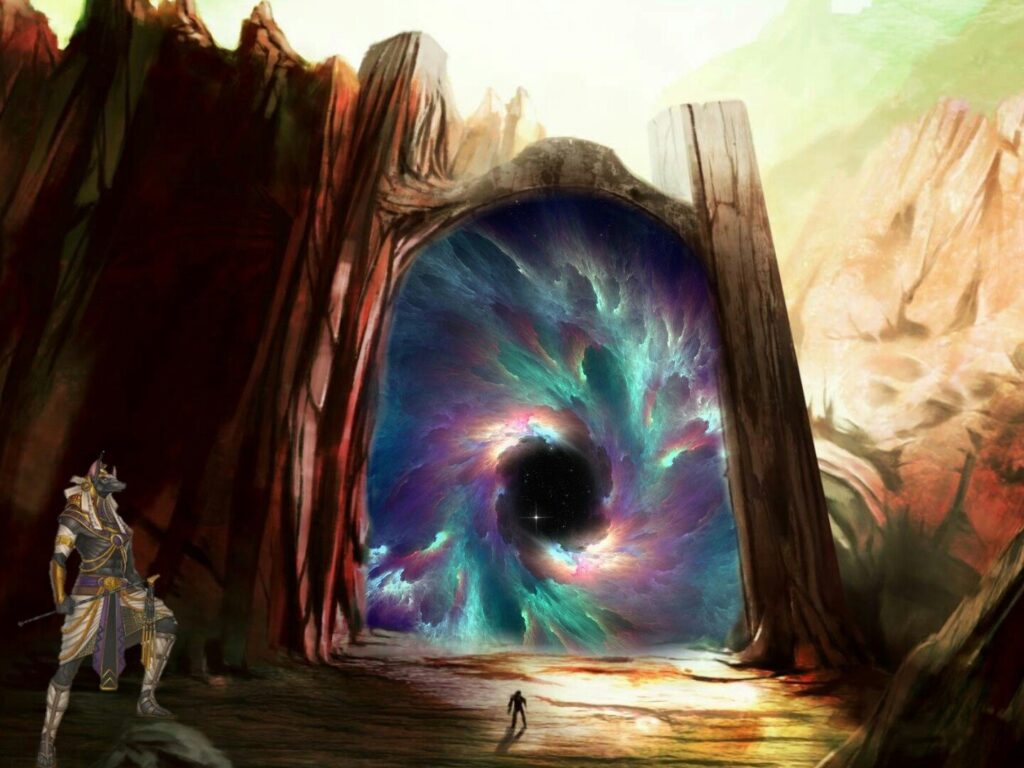
The passing through the arits echoes the refrain: “if the Pure Light of the Bardo is recognized, Liberation will be attained,” repeated in the “Bardo Thodol,” and therefore the main task of this experience is the discovery of the “light of akh” (or, in the Tibetan tradition — the “clear light” — “rigpa”) that stands behind any perceived image.
The full realization of the energy of each arit means “deification” in it, that is, acquiring the nature of akh and either joining the host of creative forces — or bliss in the “firmament.” However, even if such full realization is not achieved, a relatively successful passage through each arit brings one closer to the wanderer’s goal — the Judgment and the determination of one’s future fate.
Leave a Reply