
Gile and Malus
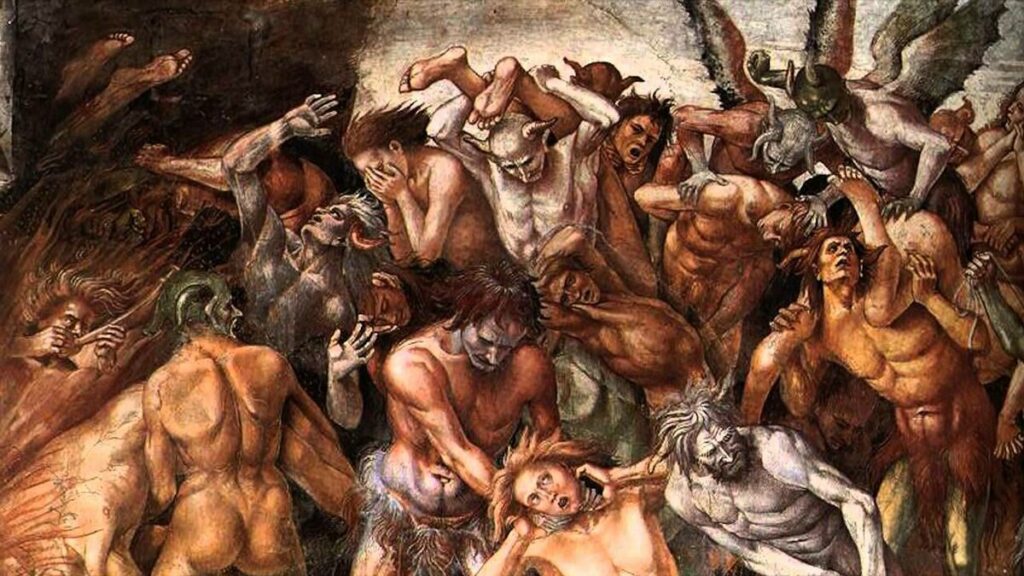
From a gnostic point of view, the manifested world itself is “evil,” since it is through it that the archons keep souls in a state of ignorance (agnosis). We have already mentioned that the archons’ power over materiality is achieved by controlling the emergence of the material world and is called the “Universal Fatum” or “heimarmene.”
Thus, in the material world there are two forces of destruction: the force of “ignorance” and the force of “delusions,” where the first is attributed to the influence of the archons, and the second is regarded as a distortion caused by the kidemons. We noted that destructors, the product of distortion, generate “negative psychic energy,” traditionally called “malus” (or “koach ha-tumah,” “the power of impurity”).
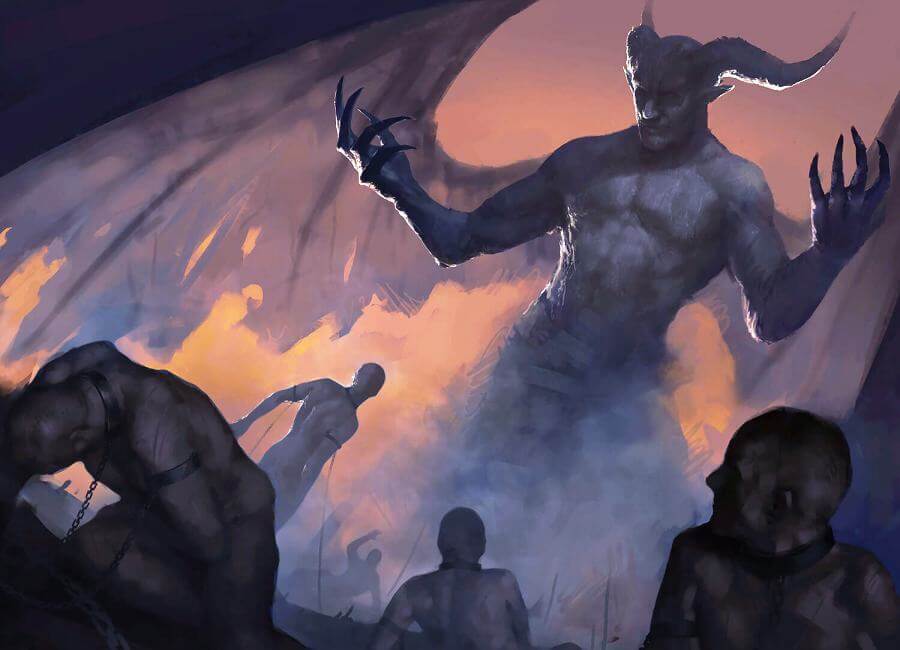
In a similar way, the universal force of “pushing” mind out of being was called “hyle” (Greek ὕλη (hylē), “matter”) and was regarded as the “mechanical,” “technical” component of manifestation. It is hyle that can be seen as the energetic basis of “koach ha-guf,” “the power of the body” — one of the “roots of evil.” This concept is central in many gnostic systems and reflects a view of the physical, material world as something base and separating souls from their true spiritual being. Hyle is not so much a physical substance as a concept personifying the illusoriness and alienation of the material world. In classical Greek philosophy and cosmology, this term was usually used to denote the space, substance, or matter of which everything physical in the world consists. However, in the gnostic context, the term “Hyle” was usually used in a more negative or pessimistic sense. In this understanding, it was usually associated with illusion, suffering, and alienation from true spiritual nature, and was considered not so much a material substance as a symbol of what conceals true spiritual reality.

In this sense, the term “Hyle” was contrasted with the terms “psychic” or “of the soul” (ψυχή, psychē), and “pneumatic,” or “spiritual” (πνεῦμα, “spirit”), which were regarded as true spiritual nature or the soul. The gnostics sought to cast off “materiality” and attain “spirituality,” freeing themselves from the limitations of the material world. This reflects the gnostics’ belief that the physical world is a trap for spiritual beings, and that true liberation comes through spiritual knowing or gnosis, which transcends material existence.
In the gnostic context, hyle is perceived as a factor influencing spiritual entities, “binding” them in the physical world. This action can be understood as a form of energy. In other words, “hyle” is a factor of influence; it is capable of “action,” that is, it possesses energy.
Thus, hyle, as an instrument of heimarmene, can be described as a form of influence or control through which manipulation of the material world or beings’ behavior is achieved. Hyle can be regarded as the means through which heimarmene manifests in the material world — as a kind of “concretization” of the principle of heimarmene, its way of sustaining “agnosis” — the alienation of mind from its source and attention — toward “external” manifestations.
Being the “energetic equivalent” of the very principle of materiality, hyle is close to modern ideas about “dark energy,” which is described as the “cost of the existence of space,” since any volume of space has some fundamental energy inherently belonging to it. It is also sometimes called vacuum energy, since it is the energy density of pure vacuum, and thus is associated with the Gap as a source of reality’s emergence.
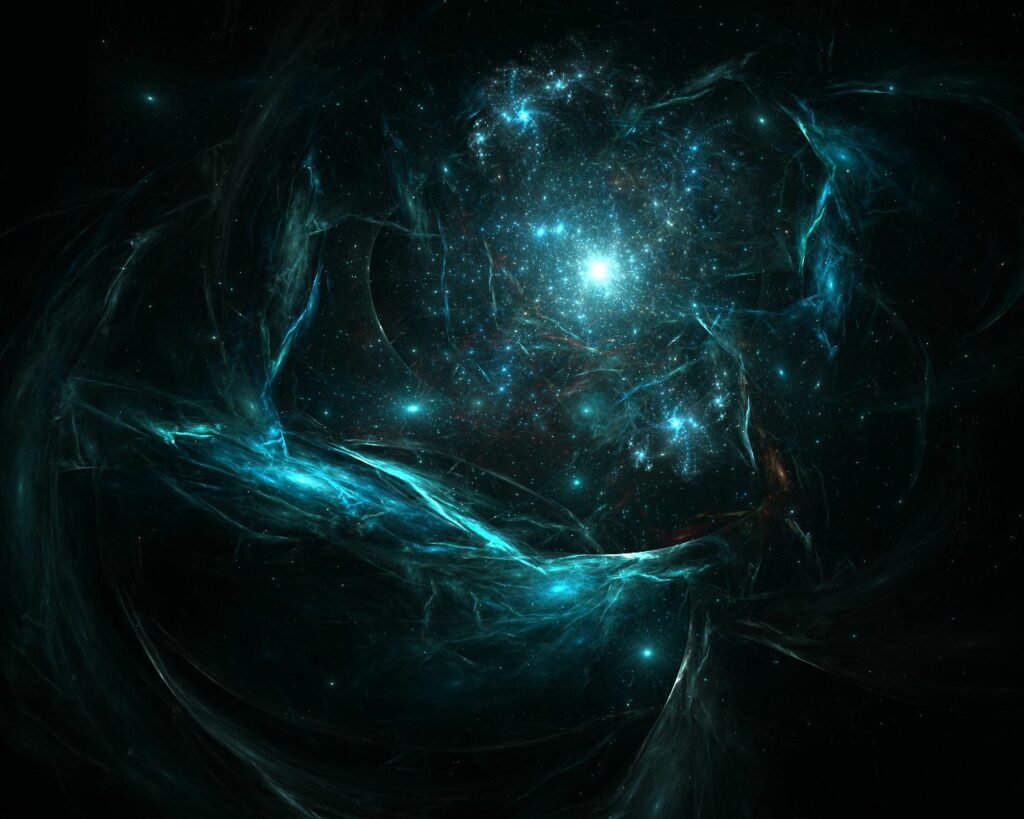
It is “dark energy” that creates “negative gravity,” the principle of repulsion, alienation, which manifests both on the material level and in the relationship between being and mind. Whatever its physical nature may be, it manifests in the fact that appears as the Universe’s accelerating expansion, slowing the formation of cosmic structures, and in the future this formation should cease altogether: any formations that are not dense enough will be dispersed by the accelerating expansion of the Universe. This happens because gravity tries to “gather” matter together and form structures such as galaxies and galaxy clusters, while dark energy, on the contrary, tends to tear these structures apart, accelerating the expansion of the Universe. In this sense, dark energy can be represented as a force that destroys cosmic structure or order. In other words, “dark energy” is the Universe’s “anti-structuring” force, which is understandable given its source — the Rulers of the Interworld.
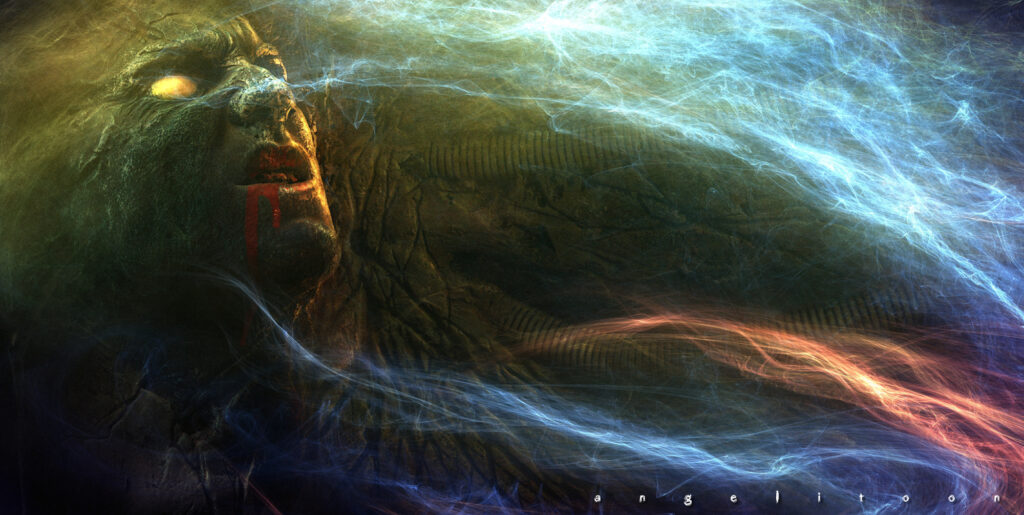
Just as malus is the energy counteracting “self-recognition,” self-identification, and self-realization of mind, hyle is the energy counteracting self-knowledge through reflection, interactions with the “surrounding world.” One may say that malus is an error in mind’s reflection of itself, while hyle is a distortion in its reflection of the “world.” Hyle is the principle of materiality as opposed to the cosmic principle; it is the “inertia of formlessness” opposing mind’s striving to order matter. It is “thanks to” hyle that in the gnostic tradition the material world is often seen as chaos or an illusion that hinders spiritual enlightenment and the understanding of truth: it is not matter itself that is spoiled, it is its interaction with mind that is disrupted; a mechanism of resistance to the ordering activity of mind is “embedded” in it. And just as malus is not a property of the “viciousness” of mind itself, but only an error, a delusion, hyle is a delusion in the perception of being.

For the Magus, both of these “roots of the Yetzer hara” are not merely concepts, but energetic realities, products of practical experience of interaction with the world and the reflection of mind. Accordingly, understanding their nature also makes it possible to develop strategies for their transformation: malus should be transformed into the energy of desire, and hyle into the energy of effective realization. Although Magi have long maintained that matter is a “garden” that must be “cultivated,” so that in the course of this transformation mind actualizes its potentials, examines itself and manifests the world within itself, people repeatedly become entangled in the traps of hyle and, instead of “gardeners,” act as a grazing herd that uses matter only in order to feed its “shepherds.”
Yes. A difficult period. Thank you.