
Air – Principle of Mobility
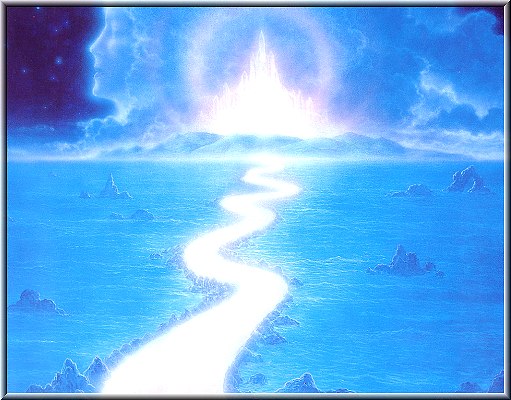
The fertilizing force that fills and permeates the cosmos corresponds to the Element of Air.
Air is credited with the penetrating and filling power, and, moreover, with vital force. It is no accident that in many languages the words for “life” and “breath” are identical. Strictly speaking, however, Vital Force, as an aspect of the Great Flow, is bipolar; its active pole corresponds precisely to the movement of Air.
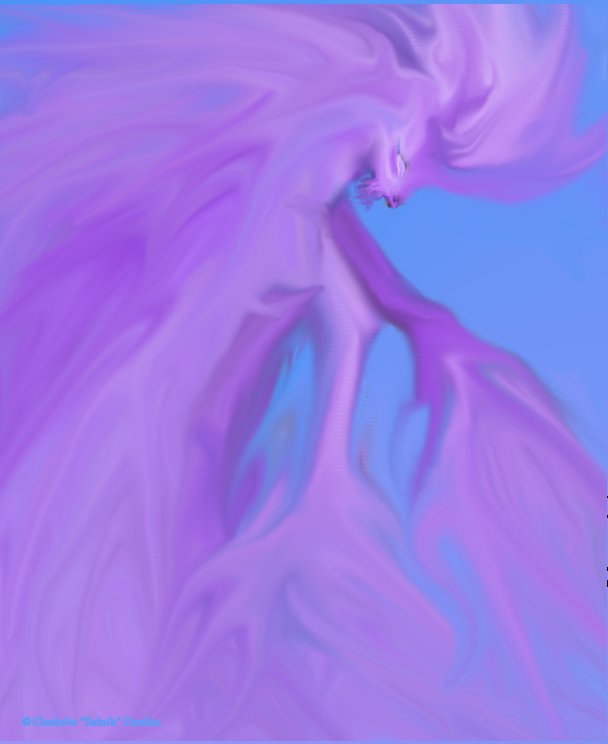
Air is associated with the principle of intellect; the speed of thought is likened to the swiftness of the wind. At the same time, Air corresponds to the unstable currents of thought that run in different directions, and their ordering requires the Element of Earth as well. The quarter corresponding to Air is the East, the season — spring.
In its aspect of filling, Air corresponds to space as a form of existence of the manifested world.
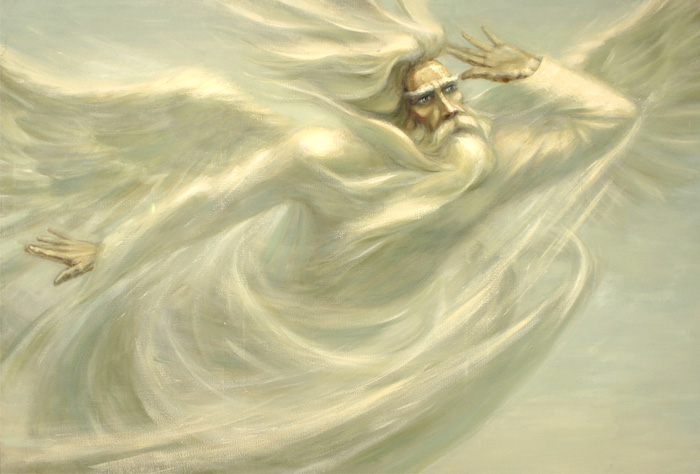
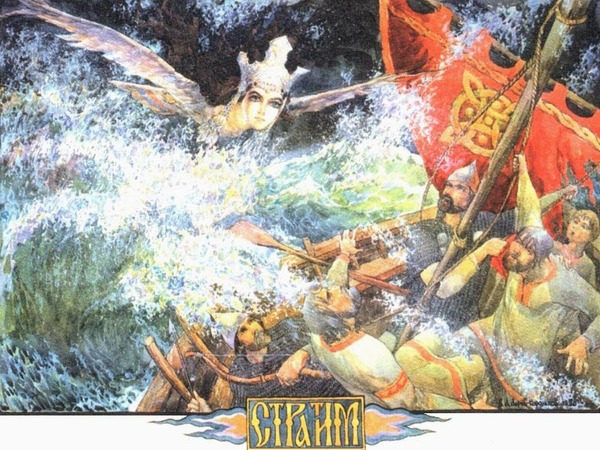
The Slavs assigned Air to the domain of Stribog — a god born of the breath of the Rod. Stribog, god of space, god of the heavenly depths, gives rise to a direct god of Air — Nemizu. In addition, the “air” god was Posvist, the god of the hurricane, while the drying, destructive aspects of Air were attributed to the malevolent Bosorkuny. Stribog was embodied as the wind-bird Stratim, whose wings stirred the winds.
Norse mythology honored Njord — to his sphere belonged sea winds, a mighty and mobile force. In addition, Odin himself is associated with Air, sweeping over the earth in hurricanes and storms.
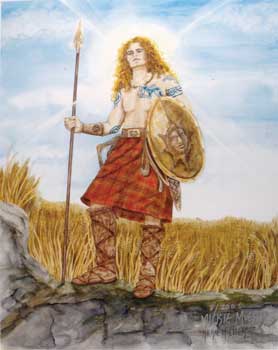
The Celts associated Air with the city of Gorias, ruled by King Paralda and the High Druid Esras. From Gorias comes the great Spear of Lugh, the unerring Assal.
Western European tradition calls the elementals of Air Sylphs. They are predominantly male, though among them there are female Sylphides. It is believed that Sylphs live on mountain summits and also in flowers whose scents they favor. Often Sylphs live in tree crowns. It is thought that Sylphs dwell on islands swept by the wind. They appear and vanish as quickly as lightning. Huge sylphs encompass the heavens and intermingle with earth, water, and fire. Air sylphs, together with Salamanders, direct and transmit the Sun’s warmth and the steady influence of solar radiation. They are friendly and curious. All sylphs can naturally fly and become invisible; they are endowed with magical abilities, especially those connected with the principle of Air.
Manly P. Hall notes: “..and in sight, and in hearing, and in intelligence, they differ from mortals as much as air differs in purity from water or the ether from air. The disposition of sylphs is changeable; they cannot stay long in one place and are constantly nomadic, using clouds as their means of transport… Sylphs sometimes take human form, but only for a short time. They change their size, but as a rule they are no larger than a human, and often considerably smaller. It is said that sylphs often took people into their society and allowed them to live there for a considerable time. Paracelsus wrote of such an incident… Rare qualities seen in genius arise from cooperation with sylphs, but along with that is added the inconsistency of sylphs. Sylphs work with gases in the human body and indirectly with the nervous system, where their inconstancy manifests itself.”
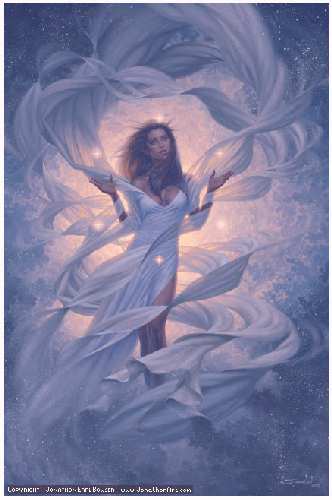
The Element of Air is activated by Magi when it is necessary to impart lightness, swiftness, and mobility to an object or a person. Negative manifestations of this Element are frivolity and idle chatter.
Sylphs were credited with forming snowflakes and gathering clouds. They did the latter with help from undines, who supplied the moisture.
In literature sylphs are often confused with fairies, possibly due to the phonetic similarity between “sylphs” and “elves.”
Thus, Air’s mobility has many manifestations; however, it should be noted that, unlike Fire’s upward power and Water’s downward power, Air moves mainly horizontally, and usually does not change the vertical position of the object or phenomenon in which it manifests.
Leave a Reply