
Fire — The Activity of Ascent
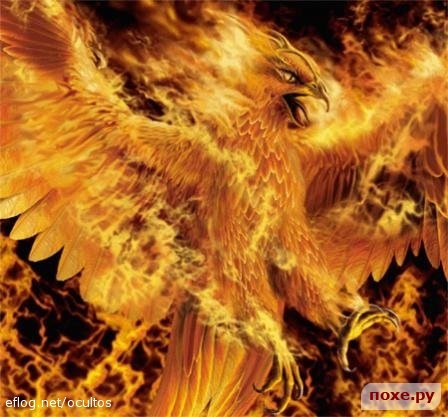
“Salamander, burn,
Undine, undulate,
Sylph, disperse,
Kobold, toil!
Whoever first hears
Of these elements,
Their properties and order,
What a conjurer!
A mere bungler!”
(Goethe “Faust”)
The first element of the quaternity is Fire.
As mentioned, Fire is considered the element of an object’s activity, its ascending force.
It is unsurprising that Fire is also credited with the greatest destructive power, since the principle of ascent it denotes is often accompanied by the disembodiment of things, — their material destruction.
At the same time, this ascending nature of the element of fire makes its expression — the principle — a unifying force, linking the lower and the higher. It is precisely this that makes fire an essential participant in sacrificial offerings and sacred rites.
Mythological systems of different peoples assigned varying but always important roles to fire.
Among the Slavs, each of the elements had a patron from the ranks of the high gods and its own deity, regarded as a particular “hypostasis” of the supreme god.
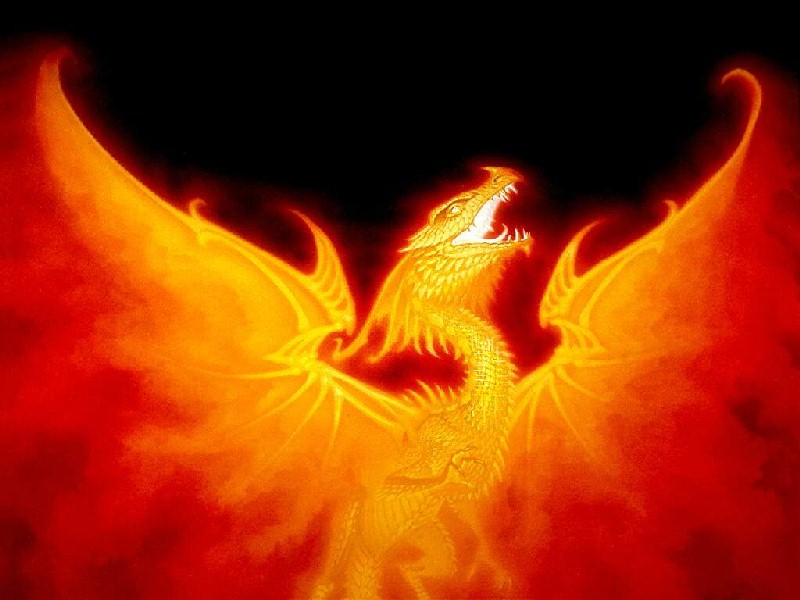
In particular, the Element of Fire was under the sway of Semargl the fire-god, and the personal deity of fire was the fiery serpent Rarog.
The Celts also described the elements according to their natures, and each element was embodied in one of the four sacred cities of the Tuatha Dé Danann, had its own king and its own high druid.
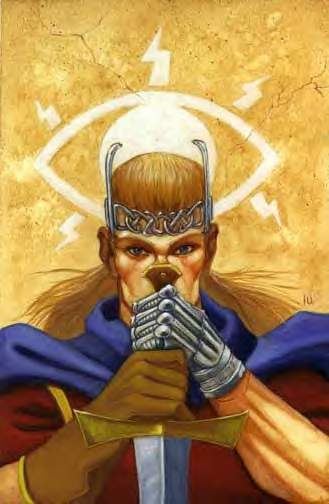
The Element of Fire resided in the city of Phinias, where king Jin and the druid Yuskias ruled. It was from Phinias that the famous fiery sword of the god Nuada originated.
The symbolic direction of fire was south.
The Scandinavians regarded fire as one of the two primal forces of creation, for it was the clash of the forces of Muspelheim and Niflheim, fire and ice, that brought the world into being. Fire will also cause the world’s destruction — the fire-giant Surtur will burn the world at Ragnarök.
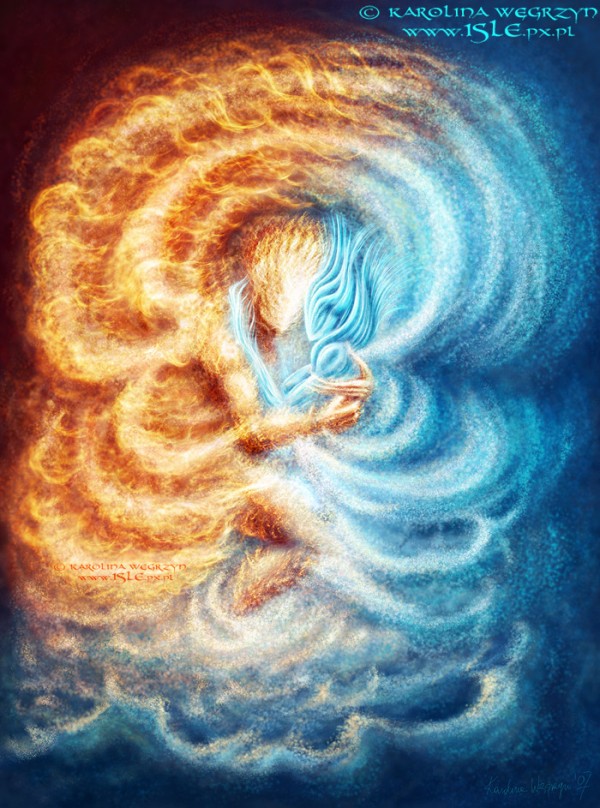
In the Prose Edda, there is a tale of how Loki of the Æsir in Utgard competed with a man named Logi in an eating contest. They were brought an enormous trough of meat, and each ate the same amount — yet Loki ate only the meat, while Logi devoured meat and bones and even half the trough. Later, Loki learned he had been outwitted, for Logi was the embodiment of fire.
European magic owes much of its information on the elements to Paracelsus, who composed the most complete description of the elements and their spirits (“Elementals“). Paracelsus, following Greek and Roman authors, called the spirits of fire Salamanders.
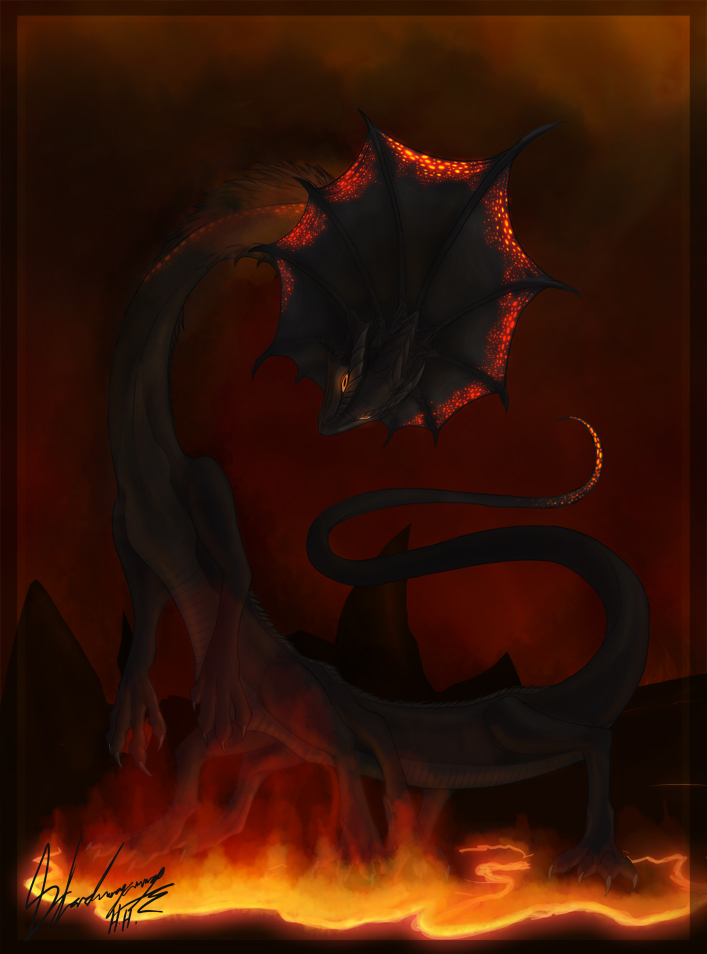
Even Pliny the Elder in his “Natural History” wrote that “the salamander is so cold that fire is extinguished at its touch“, remarking skeptically that “if it truly possessed the property ascribed to it by sorcerers, they would use it to put out fires“. He also speaks of a winged four-legged creature, the “pyrauste,” living in the flames of Cypriot smelting-houses; if it finds itself in the air and even flutters, it falls dead. Following him, in the early Christian work “Physiologus,” the salamander is called a “lizard“, which, however, does not live in fire but by nature can quench it. “Even if it (the salamander) is placed in a bathhouse furnace, the furnace is extinguished.” Saint Augustine in “The City of God” wrote: “…there do indeed exist mortal creatures which nevertheless dwell in fire.” In some old recipes for producing the Philosopher’s Stone, the salamander is mentioned as the living embodiment of that magical substance. Yet in other sources, it is clarified that the noncombustible salamander merely maintained the necessary temperature in the crucible where lead was transmuted into gold.
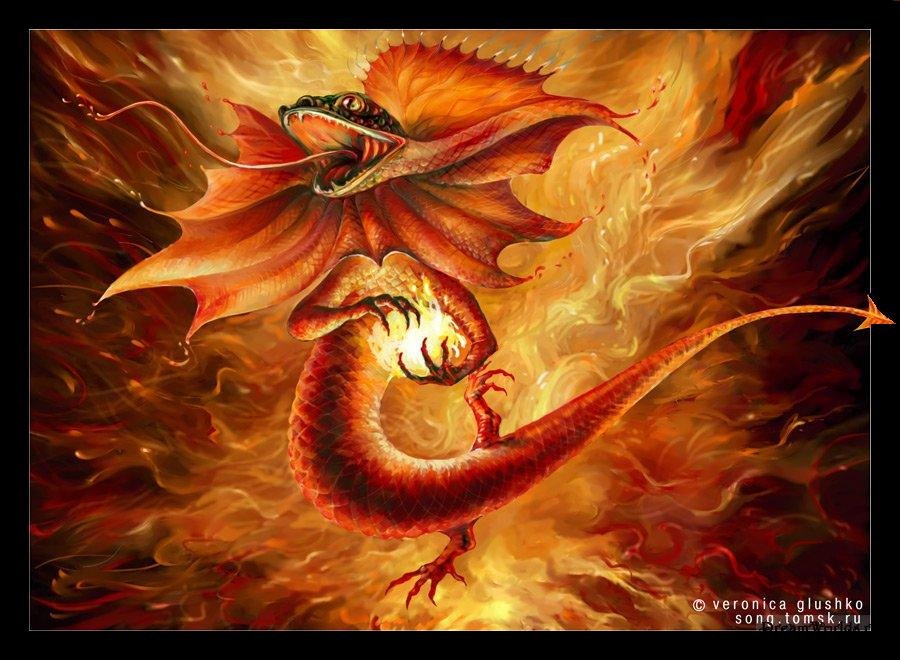
Medieval investigators of natural spirits held that the most common form of the salamander was that of a lizard, about a foot long, writhing amid the flames. Another group consisted of gigantic fiery figures clad in gleaming armor. Some authors, among them Abbot de Vilar, believed that Zoroaster was the son of Vesta (who was thought to be Noah’s wife) and the greatest of the salamanders, Oromazis.
Marco Polo wrote that the first Europeans who reached China were shown a wondrous cloth that would not burn. It was supposed to be made from salamander hide, but it turned out that the material had been “reinforced” with fibers of asbestos. Polo explained: “the salamander is not an animal but a substance.” At first, no one believed him: fabrics woven from asbestos were sold as salamander skin, and they were taken as irrefutable proof that salamanders existed.
Paracelsus held that salamanders by their very nature could not commune with humans, unlike water beings (undines, melusines), which are quite disposed toward them. In Renaissance philosophical works, salamanders are also called “volcanic,” and from them spring less pure, mixed beings called “fire-starters” or “kindlers.” Leonardo da Vinci believed that the salamander feeds on fire and that fire helps it to shed its skin.
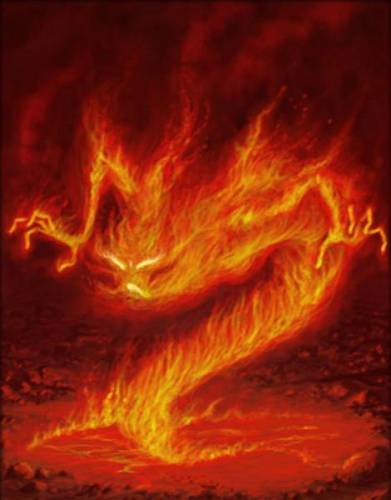
It is believed that without salamanders the appearance of heat and light on earth would have been impossible, for without their agency not even a match would catch fire. In animals and humans, salamanders manifest in emotional life, as bodily warmth, liver, and circulation.
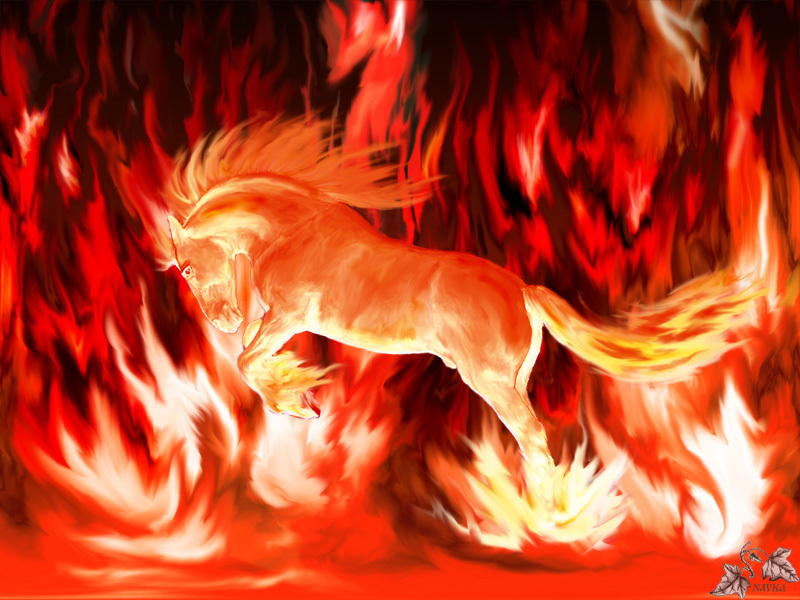
Fire is a purely masculine principle; it is wholly expansive and active. Hence salamanders are exclusively masculine. The chief fiery animals are therefore the horse, embodying the heat of battle, and the lion, the most bloodthirsty predator.
In magic, fire is used to impart passion and energy to an object or person; some spells and amulets are ignited by fire — for example, they are burned to set them in motion. The negative aspect of fire is associated with wrath and cruelty.
Thus, the element of fire and its manifestations are necessary constituents of life, of its activity and expansiveness.
Well, how beautifully, multilayered and multifaceted you, respected Enmerkar, write. Thank you.