Faerie and Time
Time is a fundamental aspect of human existence, defining the pace and rhythms of life, plans, and the very attitude toward reality. However, this category — so familiar and seemingly obvious — turns out to be entirely different, multidimensional, and holds deep meaning for the faerie.
By interacting with the experience of the Fair Folk, a human is given the chance to expand the boundaries of their mind, freeing themselves from rigid limitations and gaining a deeper, more holistic perception of the surrounding world. Understanding how the faerie perceive time is one important key to broadening human consciousness. It allows a person to step beyond their limited notions of linearity and the inevitability of events, opens up the possibility of looking at time as a multifaceted, living field of possibilities with which one can (and even should) engage consciously and harmoniously.
As mentioned, the nature of the faerie differs radically from the human one: the Fair Folk are practically immortal, possess the ability to exist in several spaces or timelines simultaneously, and can move freely along the boundaries of reality. This feature determines all aspects of their existence and is most evident in their unique perception of time.
For a human, time is commonly perceived as a linear sequence of events flowing from the past, through the present, to the future. However, for the faerie it is a multidimensional network in which events are interconnected, interwoven, and can occur simultaneously in many possible variations. At the same time, their mind is capable of holding several alternative ways events might unfold, thanks to which the faerie perceive time far more holistically and from multiple perspectives, without dividing it into separate fragments and without fixating on a single temporal direction.
Practical immortality removes from the life of the faerie the sense of urgency and the need to constantly control the flow of time, which are so important for people. The faerie do not experience fear of death or the desire to “fit” into certain strictly dictated time frames. Their attitude toward time is characterized by deep calm and steady patience, and their actions are not aimed at accelerating events; for them, what matters more is a gentle, delicate, harmonious influence on natural processes. In other words, for the faerie, time is not merely a medium or object, but a fabric they work with and shape according to their will.
Back in the days of Midgard, the faerie perceived natural time mainly through cycles and seasons. For them, the changing of the seasons and the rises and falls of life energy appeared as a reflection of the deep processes of the universe. Accordingly, the faerie perceive time qualitatively, in the sense that each season and each of its phases is significant in its own way and filled with its own meaning and content. This cyclicity taught them to live in harmony with the flows of the universe, subtly sensing their changes and managing them.
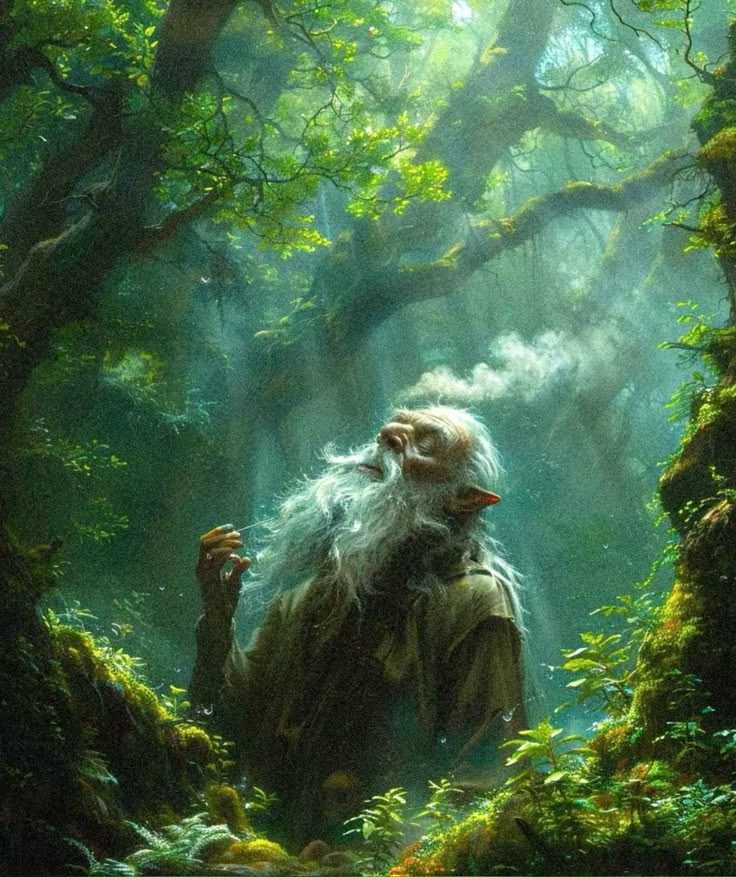
In addition, for the faerie an event-based perception of time has always been especially important: they measure it not in hours, days, or years, but experience it through a hierarchy of significant or energetically charged events. At the same time, one vivid, meaningful meeting or an emotionally charged moment can mean far more to them than centuries of monotonous existence. In other words, the faerie measure time by the power and intensity of experiences.
It is also important that the faerie are able to see cause-and-effect relationships in a completely different way than humans: they can perceive causes that lie in the future, and effects that have already manifested in the past. For the human mind this looks paradoxical; however, for beings with a nonlocal perception — as the faerie are — this is natural and quite to be expected. Such an ability allows them, among other things, to subtly influence the course of events, correcting them without abrupt interventions and undesirable consequences.
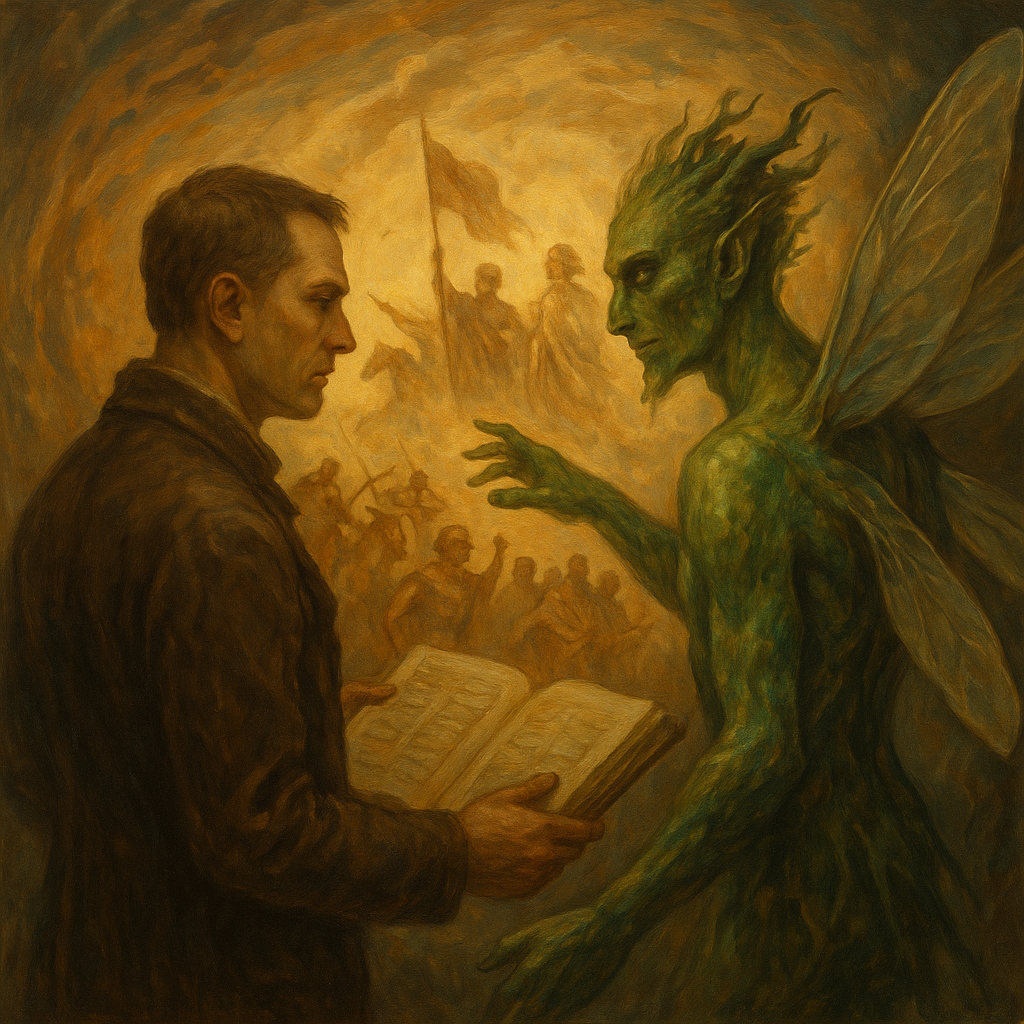
Such a perception of time by the faerie can be understood from the perspective of relativity theory and quantum concepts, since time depends on the observer and their state and position in space. Events that for one observer occur sequentially can be perceived by another as simultaneous or occurring in a different order. The flow of time slows down or speeds up depending on the speed of motion or the influence of a gravitational field.
Accordingly, the mind of the faerie is capable of “moving” along temporal currents and lines of probability, choosing different vantage points. In doing so, they act as observers free from the limitations of a linear and one-directional perception of time. And reality itself exists for them in superposition, as a multitude of probabilistic states, until the observer makes a measurement. In this sense, the mind of the faerie acts as a “quantum observer,” simultaneously holding many probabilities and capable of selecting which possibilities become real or moments that are realized in a specific branch of reality.
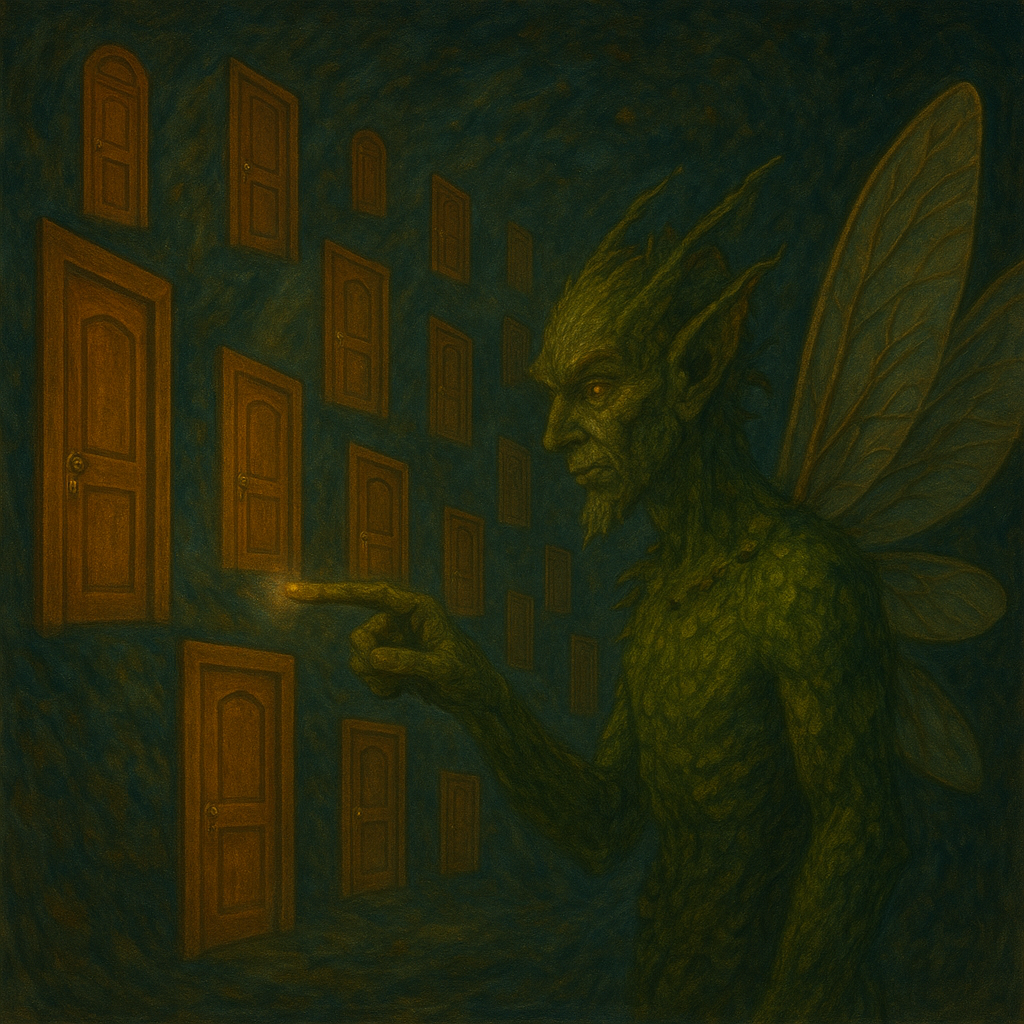
It is worth noting that the faerie do not deny the very existence of time as a property of manifested worlds; however, for them it is also a special magical substance, an energy with which they actively interact. Thus, it is well known that they are capable of locally slowing down or accelerating time, changing the subjective perception of moments and imbuing them with special power and depth. Such an ability can be described as manipulating time perception, which is achieved by influencing the mind of the observer, altering their inner tempo and perceptual rhythms.
Another important and integral part of the “maternal” nature of the faerie is the emotional and aesthetic aspect of time perception. Each moment for them is filled with its own unique meaning and a particular beauty, and is experienced deeply and holistically.
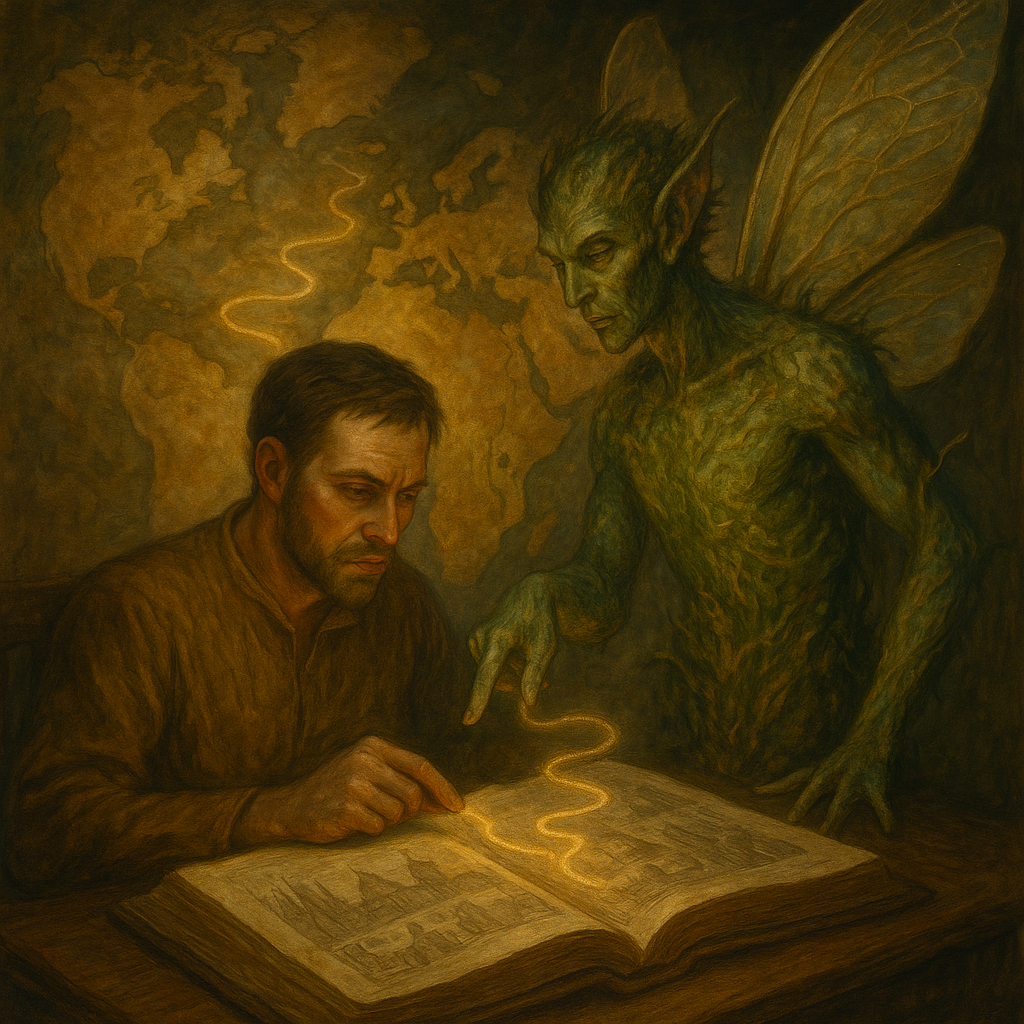
It is not difficult to understand that such a perception of time among the faerie has a significant impact on how they perceive history — both their own and human history. A nonlinear perception of time allows them to see the past, present, and future as a single space of possibilities, where the boundaries between what has already happened and what may still happen are highly fluid. In such a vision, each historical event is not simply completed and fixed in the past — it remains fluid, continuing to influence the present and the future, and can change under the influence of the mind of the observer.
Therefore, for the faerie the history of their own people is a living, multilayered tradition that is continually reinterpreted and renewed in the light of new events and experiences. They perceive their history simultaneously from many points of view, considering each episode as part of a larger whole connected by special semantic and energetic interrelationships. Therefore, historical events for the faerie never lose relevance and do not fade with the passage of time — they always remain part of their living experience.
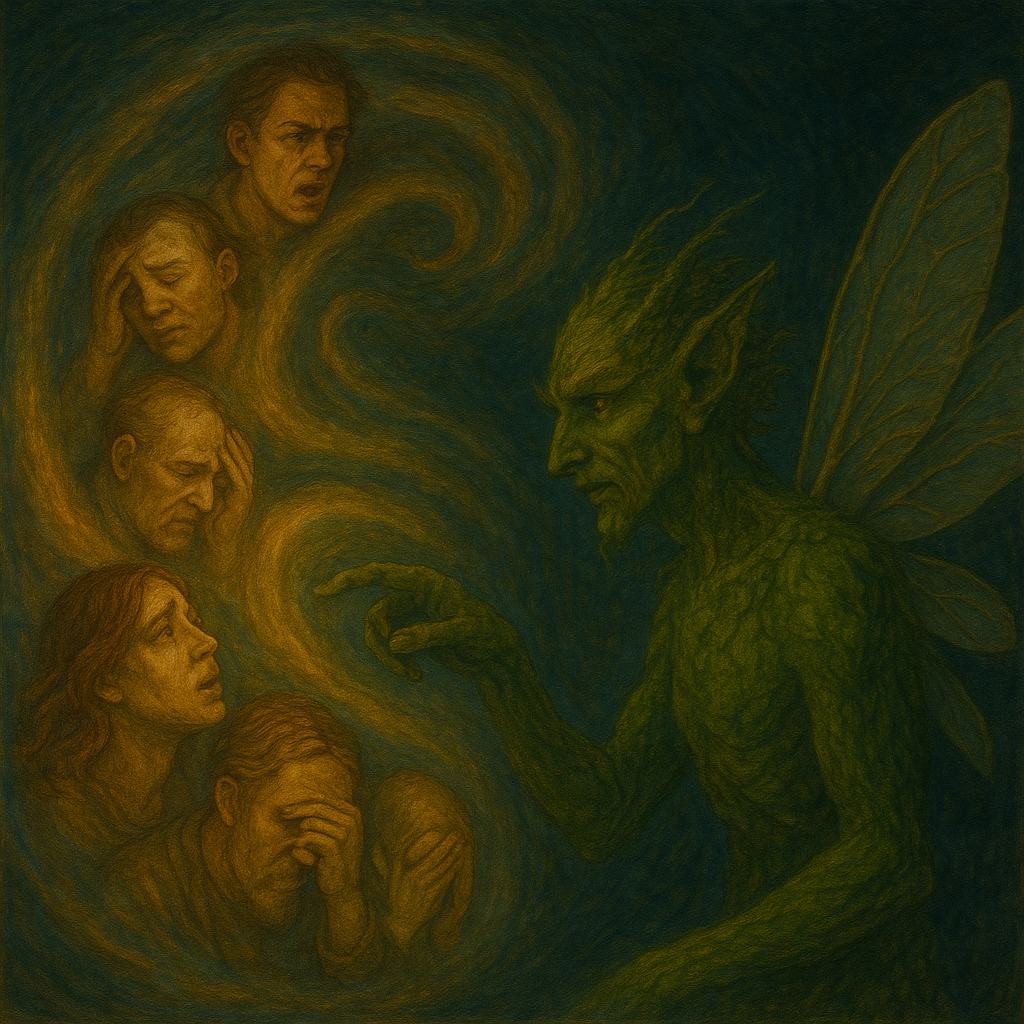
The same applies to human history, which the Fair Folk perceive far more deeply and comprehensively than humans themselves. Thanks to their ability to see hidden cause-and-effect relationships, the faerie can discern in events not only direct interconnections, but also subtle, nonlinear patterns that usually elude human attention. The faerie see historical processes as a complex network of mutual influences, where the slightest change in the past can have unexpected consequences in the future. Thus, they are able to foresee and even cautiously guide human history, gently correcting its course and trying to coordinate it with their own goals. It is clear that due to the large number of “players” and “interested forces,” the history of humanity often goes quite differently from how the faerie would like to see it; however, their influence nevertheless remains substantial.
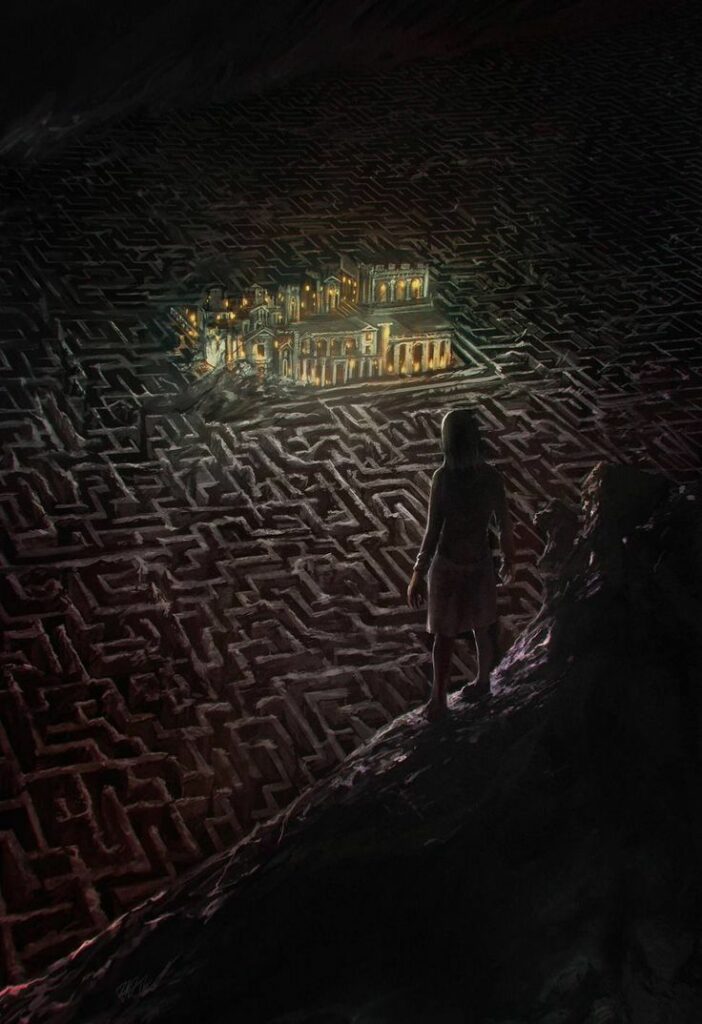
Thus, for the faerie history is a living, evolving process, where each event is filled with meaning and value. It is a field of creative activity, where the mind is capable not only of describing but also of consciously shaping reality.
Thus, from the faerie’s point of view, time is a complex and multidimensional fabric, flexible and dependent on the observer’s mind and position. For a human being, the study and understanding of such a perception offers a valuable chance to understand oneself for a deeper vision of one’s own nature and also broadens one’s understanding of the world and encourages more harmonious, mindful interaction with the surrounding reality.
And the peculiarities of the faerie’s perception and “formation” of history inspire a person to rethink their attitude toward the past and the future, to see history as more than a sequence of events, and to understand it as a living fabric shaped by many minds and the actions of each being.
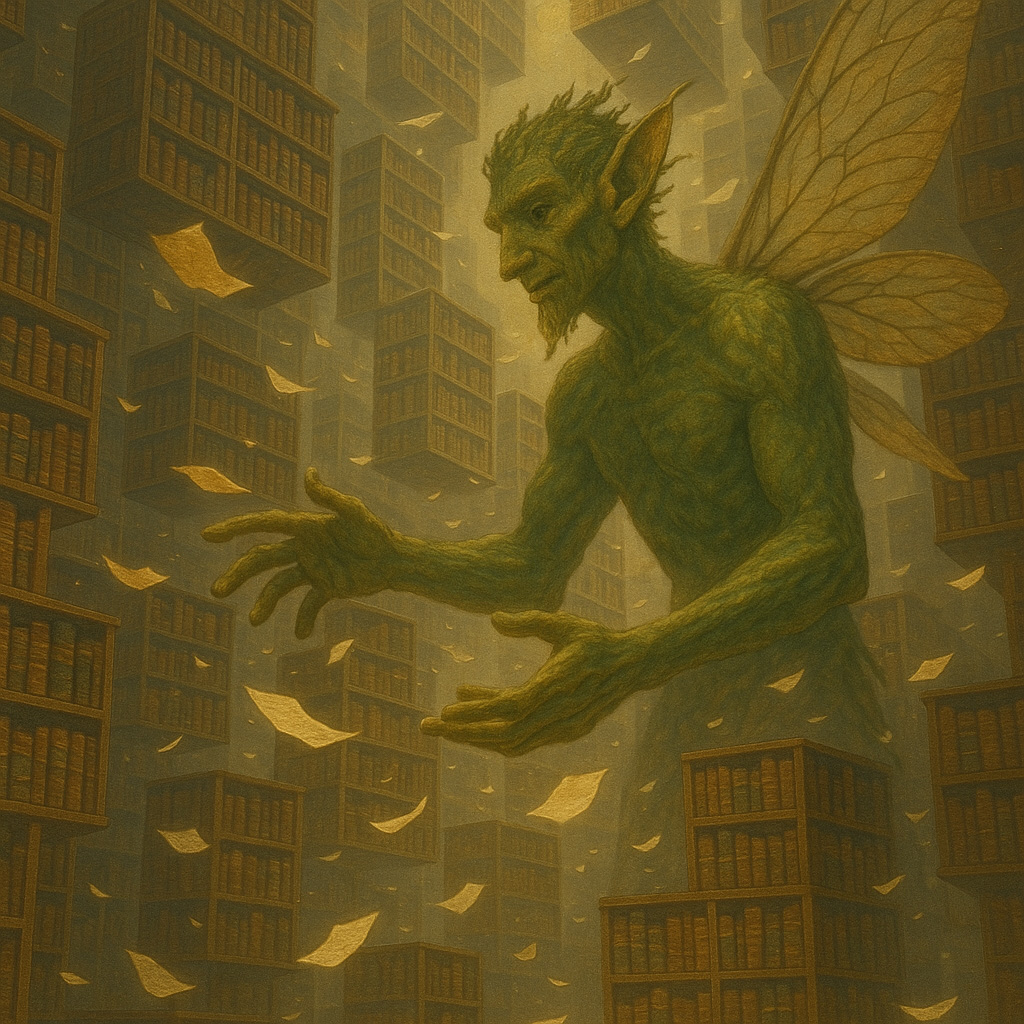
Hello! You have mentioned several times that fairies inhabited our Earth for millions of years before the appearance of humans. Is there any history of their lives that has been preserved, such as chronicles or records?
Celtic Epic. Mythology of Ancient Ireland.
Hello!
Yes, indeed, the Celtic epic, and especially the “Book of the Invasion of Ireland,” contains the most complete information about the history of fairies, which, however, is woven together with two other layers – the real history of early medieval Ireland and attempts to reinterpret Celtic and Gaelic traditions in a “biblical” spirit. Therefore, one must approach the interpretations of such sources as thoughtfully as possible, trying to read “between the lines” and to reach the most ancient layers.
Good day. In the context of your current cycle about Fairies and Elves and what we can learn from them, do you believe there are instances in myths and stories about the relationships between humans and the magical folk where consciousness shifts into another stream? Let’s call it a “change of soul race.” Is there any such aspect in the relationship between Freyr and the Elves? And more broadly, what does tradition think about the transition from one people to another (perhaps this can also partially relate to the paths of Freyja and Loki)? Are there aspects of changing nature here, or is it more like an “embassy” in a foreign land?
Hello.
Yes, mutual transitions are possible and happen from time to time.
We discussed this issue: https://enmerkar.com/en/way/waves-of-life-and-transitions-between-them
The situation with Loki is more complex: he constantly transitions—between genders, kinds, worlds, and forms. His essence lies in the very principle of transformation, which illustrates the dangers and possibilities of such transitions. He gives birth to monsters, changes his appearance, becomes a mother, a destroyer, a fool, a hero, a traitor. In him, the transition reaches an extreme, and he loses a stable nature, which is necessary for the nature of a trickster.
Freya also constantly moves between worlds—between Vanaheim, Asgard, Midgard, and her own realm of the dead—Folkvangr. She teaches the Aesir seidr, adopts their arts, and simultaneously comes into contact with elven and chthonic nature. In fact, although she is a goddess of the Vanir, she does not belong to any one people, although she is present in all.
In the case of fairies and elves, this is a transition to a more refined, non-physical stream of being and non-local consciousness, which requires a certain predisposition and resilience from a person. Such a transition is always accompanied by great risk of “stuckness” between worlds and natures, misunderstandings from both worlds, as well as the need to build a new system of supports and identifications within oneself, within one’s new identity.
Hello, respected Enmerkar! In your opinion, did J.R.R. Tolkien accurately or closely describe the essence/meanings of life, the presence of elves on Earth, and their influence on the formation of earthly history in his works “The Silmarillion”, “The Children of Hurin”, etc. (including “The Lord of the Rings”); their interactions with humans, dwarves, and their relationships with each other; the characteristics of representatives of these races, and overall – all the events reflected in these works? I’m interested to know what your attitude is in general towards these works from the perspective of world and event descriptions?
Hello! Of course, first of all, all great artists carry an element of “insight” or visionary experience, and their “fantasies” often turn out to be quite energetically active stories. Moreover, Tolkien knew and used traditional sources, epics, sagas brilliantly, which also adds historical accuracy to his descriptions. So yes, in general, we can say that the Professor’s works are quite lively and significant tales, in which one can find much useful, if not in the factual part, then in the ideological part.
Thank you for the clarification!