
Fairies and the Grigori
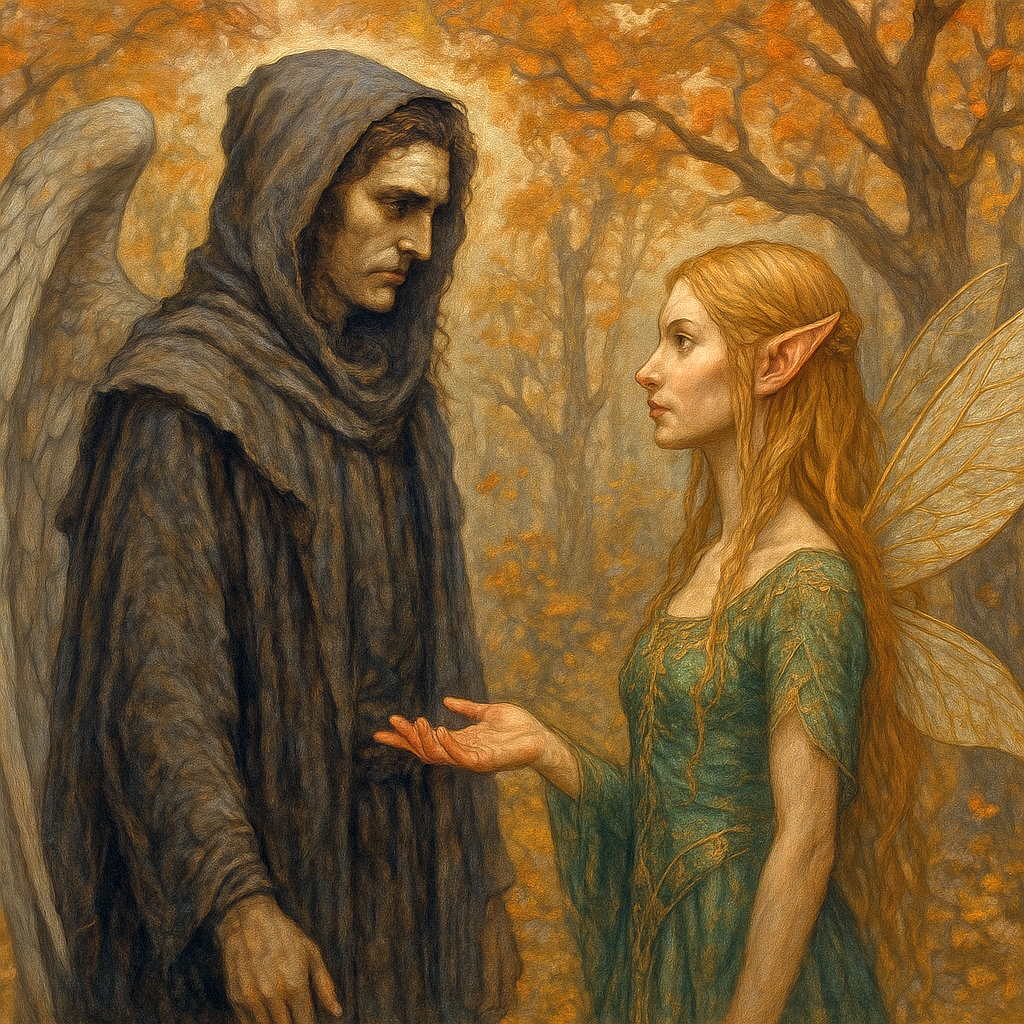
Grigori are not only ancestors of one faerie branch: interaction between the Fair Folk and the Watchers continues to this day. Their contacts are far more frequent and diverse than the visits by alvs or tsvergs to descendants.
In times immemorial, when the two faerie branches merged into a single Fair Folk, combining the Exalted impartiality of the alvs with the calculated non-intervention of the grigori, they gained a unique ability to travel between worlds, belonging to all of them at once — and to none. The faerie are a people unique precisely in their indeterminacy: at once deeply involved in worlds and the processes within them, and completely separate, eluding fixation in any timeline or state. They achieved what even the great Lessalvs could not — an absolutely immanent presence in the flow and, at the same time, without merging with it.
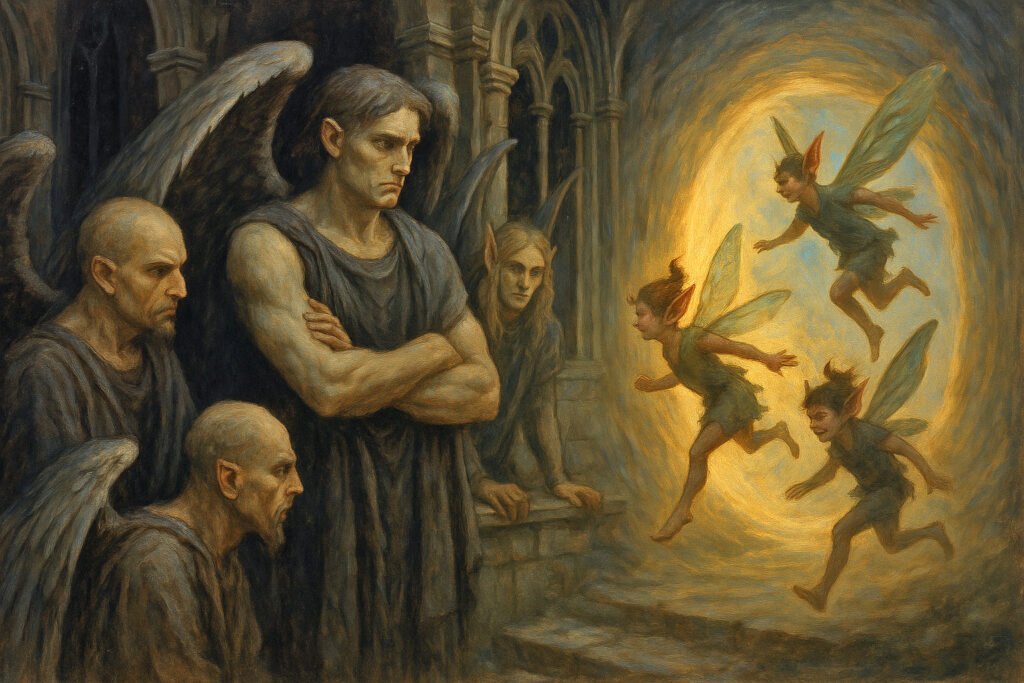
And if the Light-bearing Lords regard with proud curiosity the “jumps between realities” of their younger offspring, then for the grigori such faerie abilities are of entirely practical interest.
When they were angels, the grigori, like all vortex beings, existed outside processes of choosing a reality: they followed the flows of intention and energy of free beings, ensuring the stability of the structures created by them. They know two modes of existence: to “drift” in the flow of probabilities, or to “collapse” them, creating reality. If an angel (or demon) wants to become fixed in a definite state, they need a “fixing” observer — a human or another free being. The faerie, however, miraculously combine both possibilities: they are simultaneously plastic and fixed, multivariant and self-identical. Accordingly, the grigori strive to understand (and use) these features of the faerie’s nature.
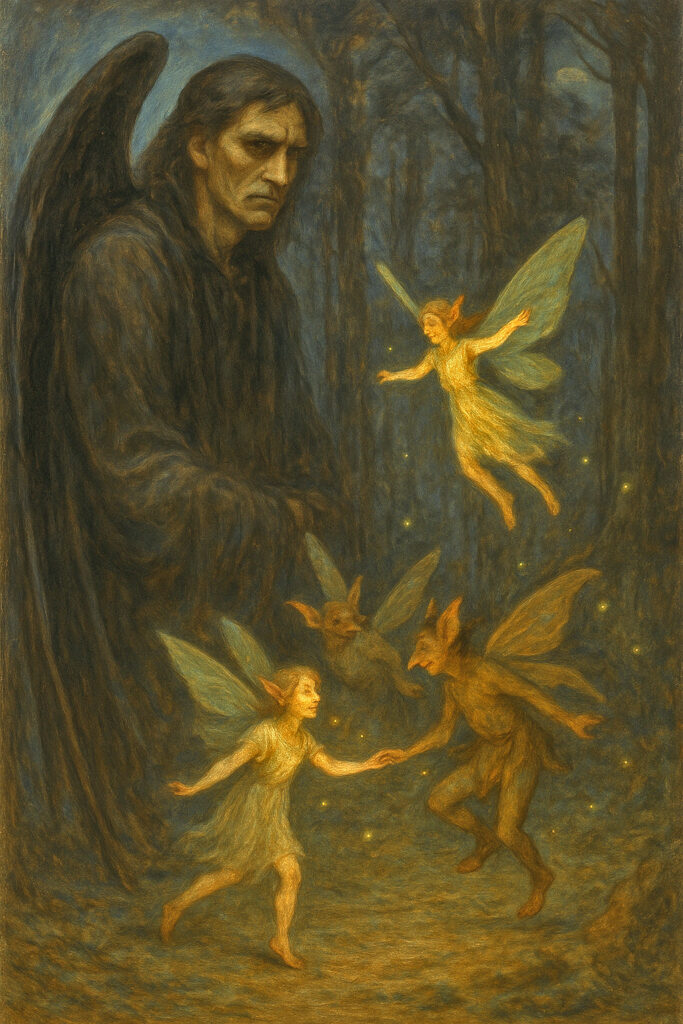
At one time, the cause of the Watchers’ “fall” was precisely their striving to attain definiteness and, thus, the ability to manifest their own will, rather than being part of flows or barriers, as the nature of angelic beings implied.
But the faerie cope without difficulty with their “wave–particle dualism,” moving without thinking from flow to flow, from timeline to timeline, and seemingly encountering no resistance. Therefore, the faerie are of interest to the grigori as a model of a successful transition — something the grigori themselves did not manage to achieve fully. One might say that the faerie are a completed synthesis of wave and particle, nature and mind, whereas the grigori are a “broken” transition from a state of service to individuality. The grigori themselves went through the “condensation of the vortex into a dense body.” The faerie, however, are capable of the reverse process — temporary or complete disembodiment, entering a vortex state while remaining self-identical.
The second feature of the faerie, also extremely interesting to the grigori, is their unhindered access to Life energy. As beings of “maternal” nature, the faerie seem to swim in the waters of Universal life without dissipating it, without encountering resistance and without contradicting it. At the same time, their fiery intellect does not come into conflict with the Maternal Ocean; on the contrary, it complements and “fertilizes” it, just as the Sun ensures the growth of algae in Earth’s seas.
This ability is also unavailable to the grigori: their own, “geburian,” fire burns worlds, scorches beings who risk drawing near to the Watchers, and thereby brings them into conflict with maternal forces. Therefore, having come out onto the “shore of Dinur,” the grigori not only gained freedom, but also encountered the difficulties of manifested existence, including the need to compensate for energy expenditures — that is, to satisfy their hunger.
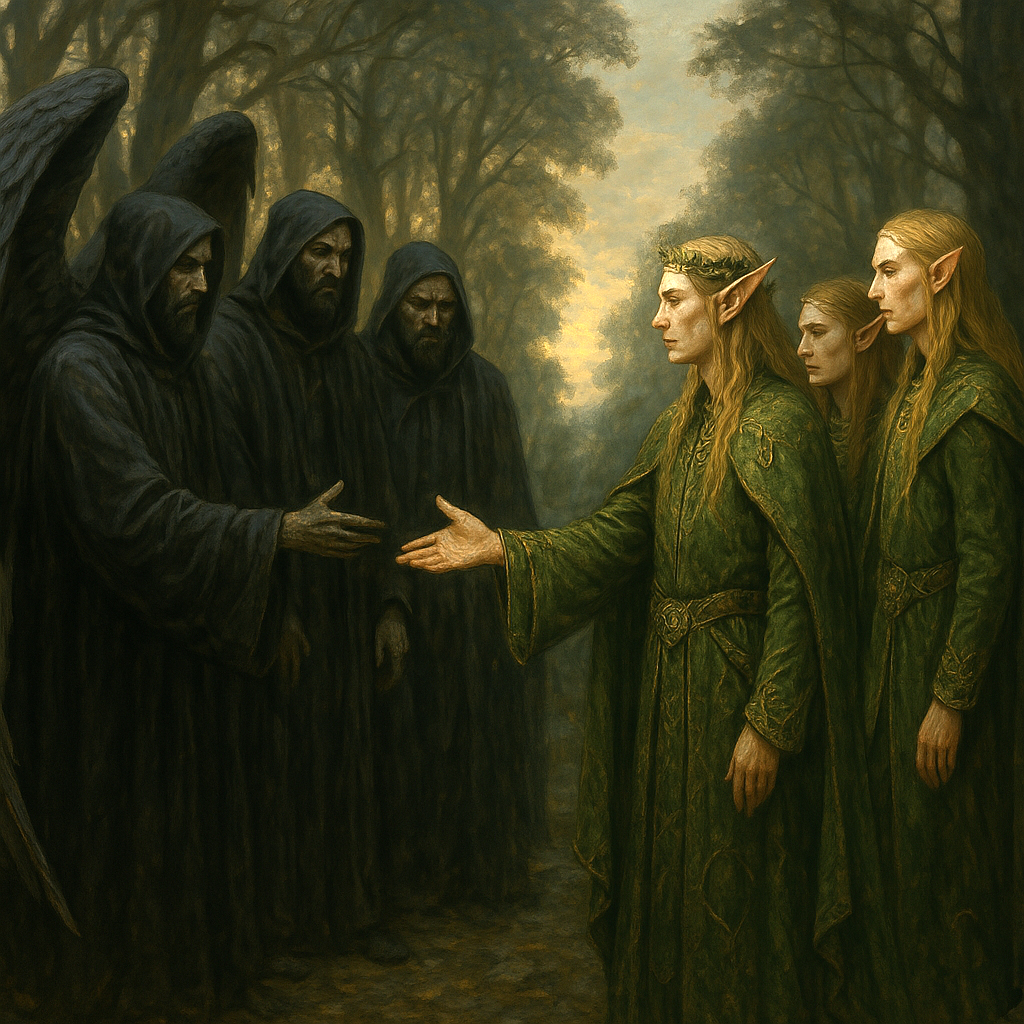
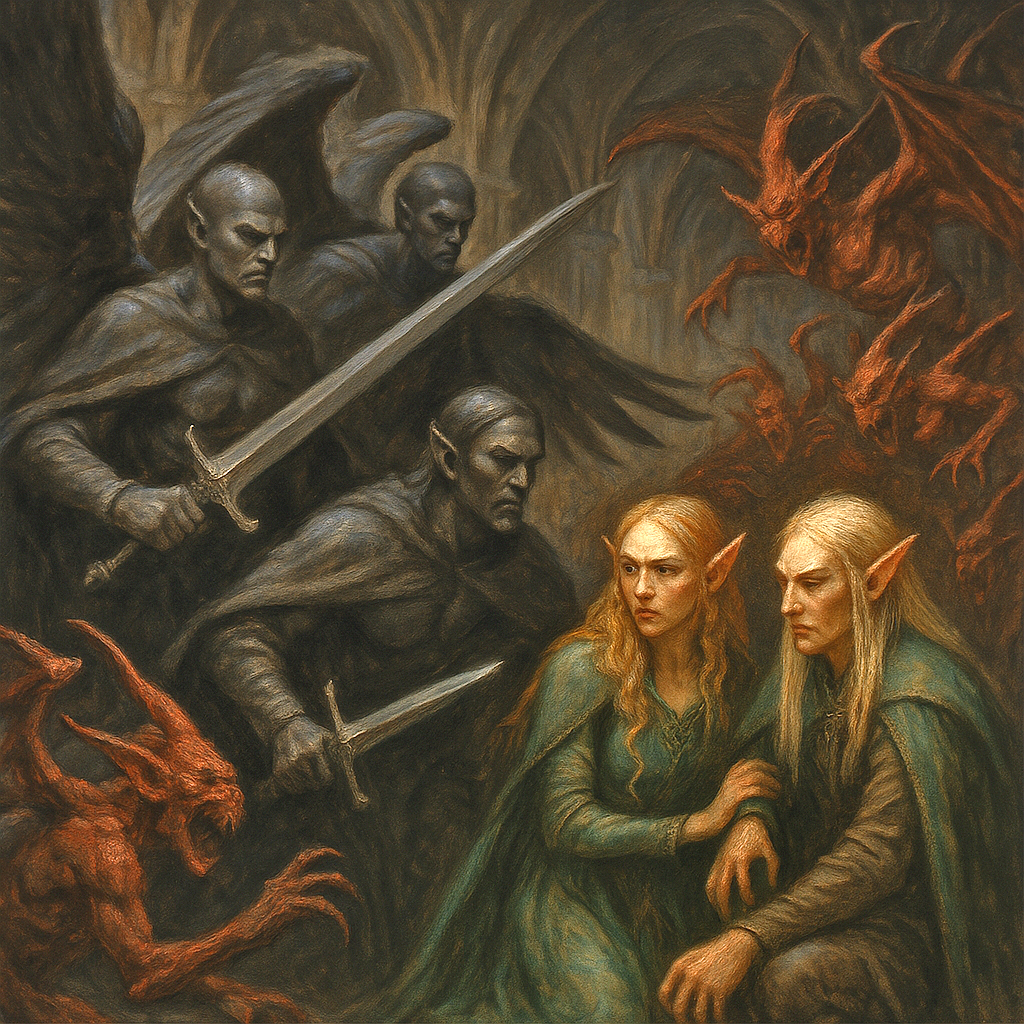
According to legend, even in deep antiquity the grigori concluded an agreement with the High sids, granting the Fair Folk their patronage and access to “angelic” knowledge in exchange for regular supplies of life energy, which the sids learned to condense in a special way. Although the faerie were never of particular interest to demons, the inhabitants of inferno nevertheless troubled the Fair Folk, interfering in the life of manifested worlds and their inhabitants, stealing their psychophysical energy and pushing them onto the path of destruction. Under the influence of the Dark Ones, the Fair Folk themselves split into two courts, and therefore the Kings and Queens of the faerie understood the importance of protection from them. In order to maintain this balance, the sids enlisted the grigori, whose angelic nature seeks to restrain demonic forces. Thus, with the help of the Watchers, the faerie effectively neutralize — albeit few in number — dangerous attempts by demons to bring destruction into the harmonious existence of the Fair Folk.
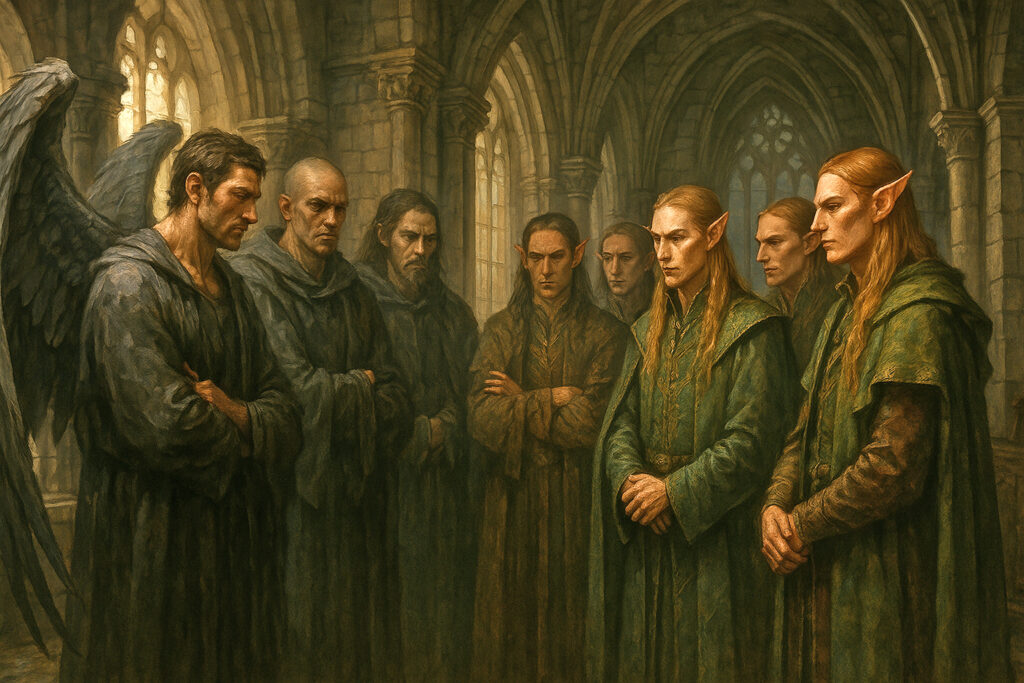
Overall, the coexistence of the faerie and the grigori is far from a pastoral picture: they seem allied, yet do not trust one another, and each side believes that it is higher and wiser than the other, and that it alone controls the situation and “keeps its opposite number on a leash.”
Perhaps I can help you connect with the Fairies. But I also need help.
Can you help me connect with them as well?
Lol): this statement implies help that you are unable to provide me. And hardly anyone here is capable.
Thank you very much