The Sense of Otherness
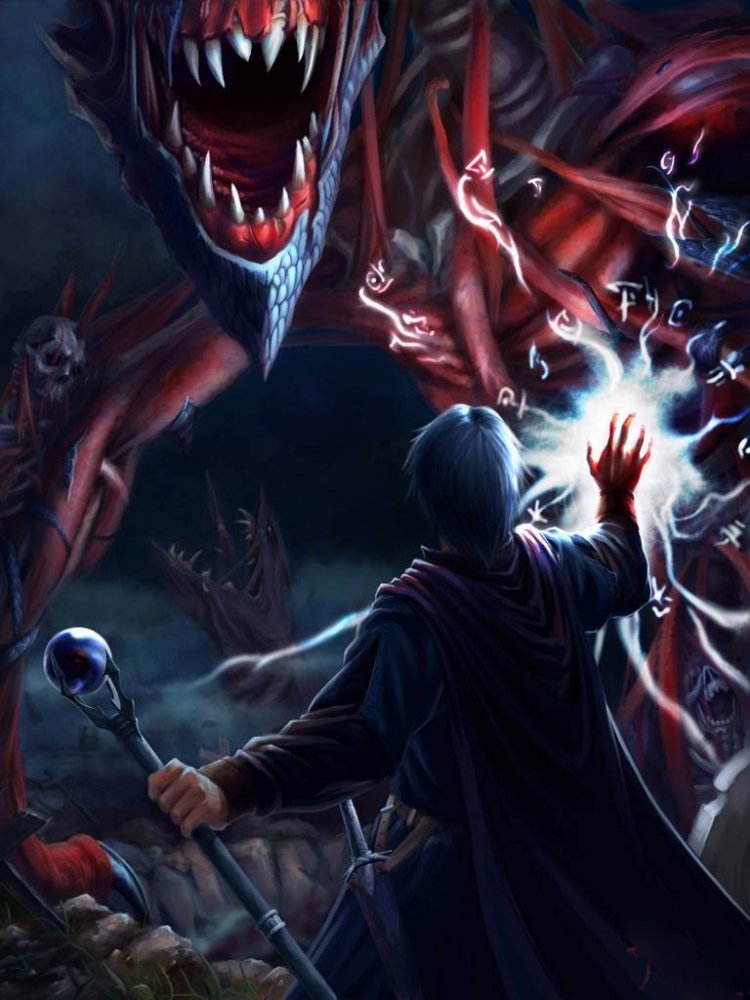
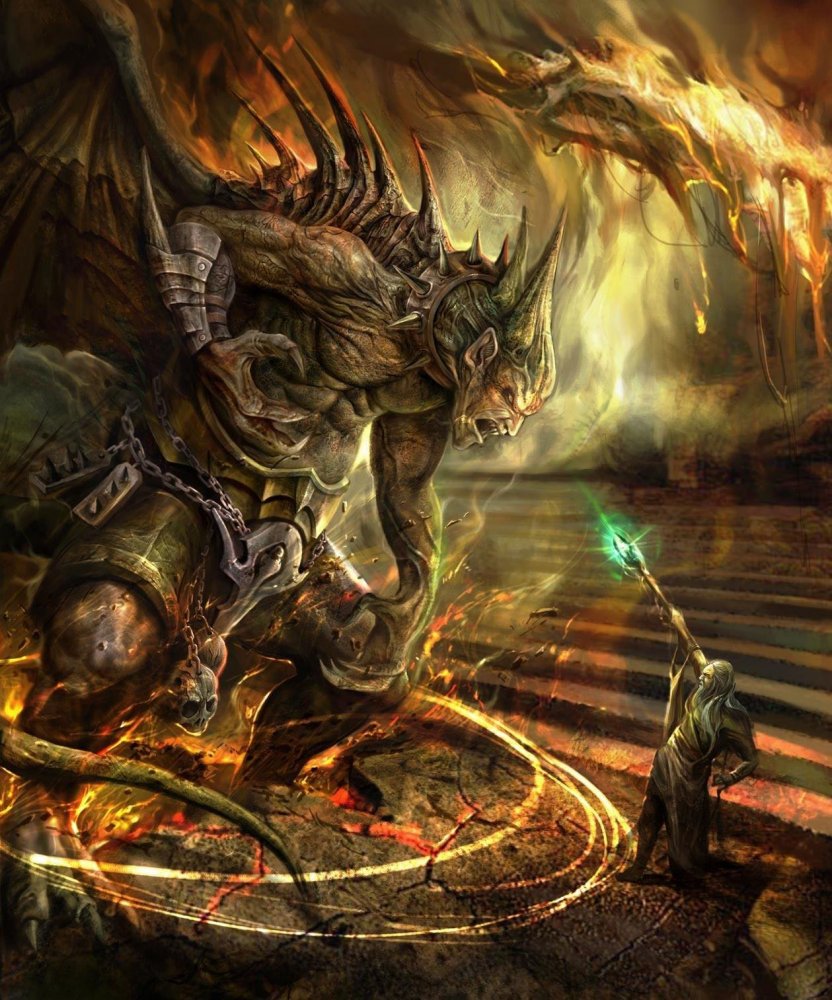
Magic forces a person to cross the Thresholds between worlds repeatedly. These crossings are inevitably accompanied by interactions between different forms of consciousness. Goetica, for example, brings the mind of a Free being (a human) into contact with the mind of a servitor spirit (for instance, a Demon). Elemental Magic brings the human mind into contact with the Elemental intelligences, and Dreaming — with Elementaries.
All these collisions are accompanied by overlap between different Waves of Life. Each Wave has its own characteristics, frequencies, and intensities that distinguish it from the surrounding ocean of consciousness. The human mind differs from the minds of animals and from the minds of Demons or Elementaries.
At the same time, any relatively deep interaction is accompanied by a mixing of these characteristics. It is well known that animals often resemble their owners. But owners often adopt traits from their pets. Even in this simple example, it is clear that the crossing of Waves of Life imparts new qualities to its participants. The more different the interacting minds are, the more significant the resulting changes.
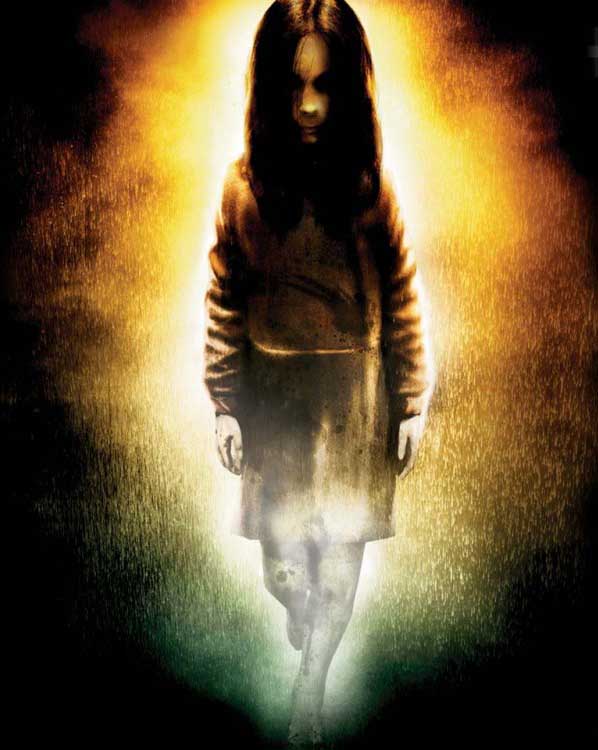
Therefore, it is clear that any interaction with distant forms of mind can be dangerous. This sense of danger is experienced as the familiar “the sense of otherness“. No wonder, for example, ghosts provoke such terror — they are perceived as “other” and thus potentially dangerous in any case. This feeling is even stronger during invocations. Even the most peaceable spirit, being a different form of consciousness, is instinctively perceived as “other and dangerous”. It is sad when the sense of otherness begins to dictate patterns of behavior and grows into xenophobia. Yet the protective role of this feeling is obvious.
“The sense of otherness” for a person can be the first sign of their interaction with other forms of mind — unexplained fear at night or in an unfamiliar place often also has this explanation. This is why children so often fear the dark — they are not yet reliably protected by the collective human consciousness; the threshold between their minds and other minds is still thin, and the “sense of otherness” therefore triggers.
Magical life, then, in addition to the well-known predatory dangers, also risks losing membership in the Human Wave of Life. This danger is often downplayed or even romanticized. Magi who cease to resemble humans are often seen as fascinating, even attractive. But in reality, these Magi derive no benefit from that state. Moreover, having lost affiliation with the Human Wave, they also lose the ability to draw power from that Wave.
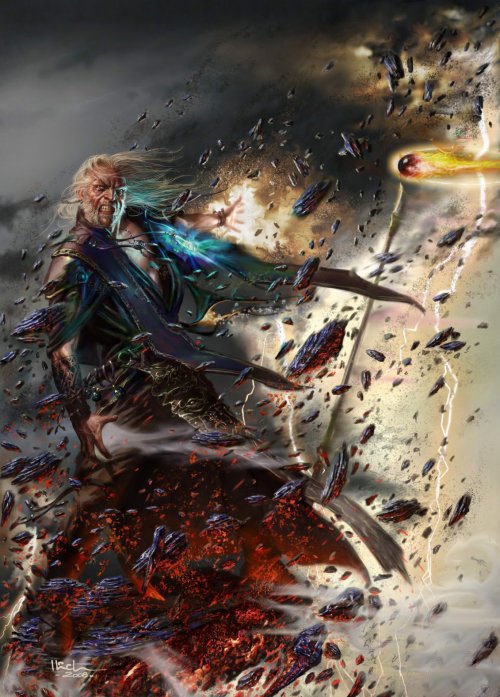
In practice, this condition is usually recognized after the fact, when the Magus suddenly realizes that they belong to a different kind. Feelings once reserved for spirits extend to people, and, what is worse, people begin to sense the Magus as ‘other’, often provoking aggression. Furthermore, everything that grants power to people loses its appeal and even its effectiveness for the Magus. One of the most important consequences of this phenomenon can be a Magus’s religious estrangement. Magi often simply cannot commune with ‘human’ gods or receive help and power from them. The same can happen with human egregores, which cease to support Magi. And the more interactions a Magus has had with other Waves of Life, the less human they become, and the deeper they sink into the Unknown.
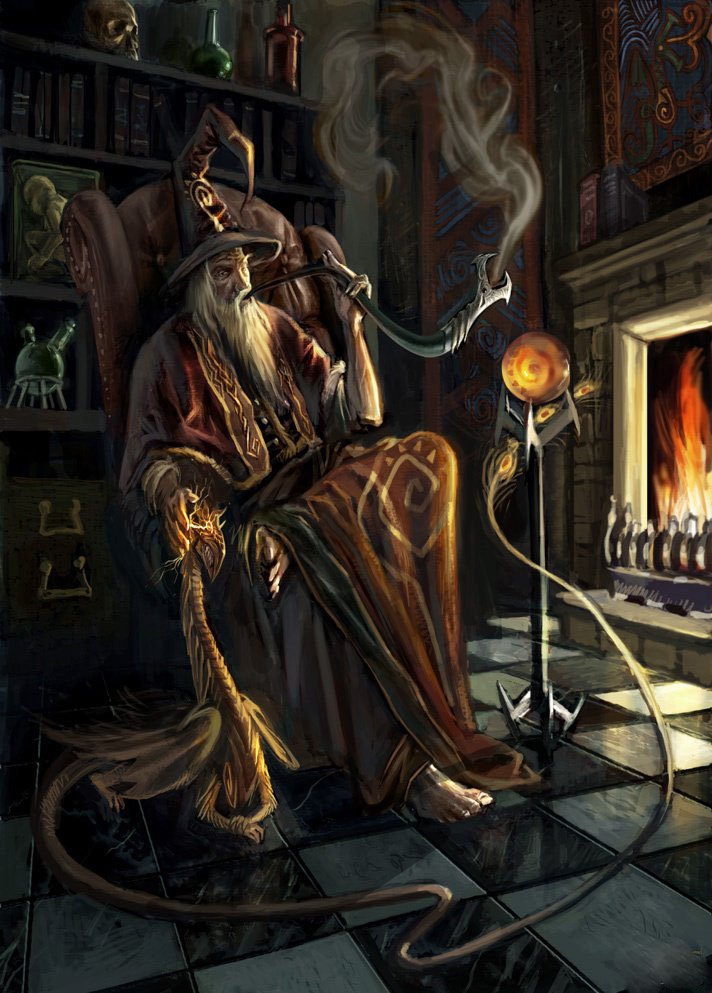
Does such a ‘diluted’ magician with foreign characteristics have the ability to gain Power through other methods unavailable to ‘human’ magicians? And is control over such mixing possible?
In the case of the described mixing, it is not just about ‘dilution’; there is a change in the makeup of the Mage since changing one element (or adding) in the structure of consciousness leads to a change in the whole structure. Control over this process is possible and desirable; however, in practice, the state of control occurs later than the mixing, as interaction with other forms of consciousness happens from the very beginning of the Path of the Mage, while the state of control is achieved much later. Unfortunately, the Mage does not gain any additional paths to obtain Power, but the process of ‘alienation’ of their consciousness reinforces the distinctness of the Mage from humans, distances them from the human world, and therefore contributes to concentration and hence the Path.
It’s not entirely clear why a Mage eventually stops receiving assistance from ‘human’ gods over time. Does he become equal to them, or is there some kind of parallel in the Mage’s Path preventing him from crossing paths with higher powers that govern humans?
A Mage stops receiving help from human egregores as soon as he leaves those egregores, and this is quite natural.
In other words, the more a mage ‘shakes’ their ‘point of assembly’, expanding its range, the greater discipline they must have, otherwise they might not return from the boundary. And then they might start receiving help from the wolf egregore (if they became one) or, for example, a rabbit. Right?
Of course, discipline must increase in parallel with the increase in Power.
I’ve always felt this way, a sense of “unlikeness,” I don’t understand this world. And I don’t perceive human gods like everyone else does; that doesn’t make things any easier… I really don’t care about anything the way ordinary people do… It’s hard… I wish I could be like everyone else; I’ve tried, but I can’t seem to succeed. What should I do now?
I initially had an alienation from this world. But there were attempts to adapt. I perceive human gods, but rather as equals and interact with them based on mutual desire. Although there may be illusions present here.
But what’s curious is that sometimes I feel how this world studies through me, completely alien forms of consciousness. What is that?
On the other hand, I have always found conversations about alien beings foreign. I try to find common threads of interaction and consider fear as a misunderstanding of the ongoing process.
Strangely, Toltec magicians were striving to lose their human form, considering it an obstacle to attaining freedom. I had a few encounters with ‘others’ during dreams. Usually, the others felt like a buzzing swarm, and the contact itself felt like a slight electric shock.
En, after all, such interactions can greatly broaden one’s worldview and become a powerful source of increasing Authority?
Last summer, I walked at night down a dark street to my godparents’ house. At one point, it became so eerie and cold that I felt a terrible fright. Later, my godmother told me that not long before that, a murder had occurred there. Who attacked me? And I remember another case when I was returning home in the dark, having refused any escorts. I felt such a great sense of lightness, tranquility, and cheerfulness – the feeling that behind me was a crowd of my deceased grandmothers, great-grandmothers, grandfathers, aunts, and uncles.
Dear Enmerkar, I am a bit confused. Did I understand correctly from your article and answers that leaving human egregors is natural and normal for a magician, while being in conflict with religious egregors is, roughly speaking, bad? Should a magician, in any case, develop within the human wave of life? Thank you.
For a magician, independence from egregors is important; however, it does not necessarily achieve it through opposition or ‘physical’ distancing. It is entirely unnecessary to ‘exit’ from egregors; it is enough to not internally feel dependence on them.
Thank you for your response, esteemed Enmerkar