
Waves of Life — Waves of Wisdom
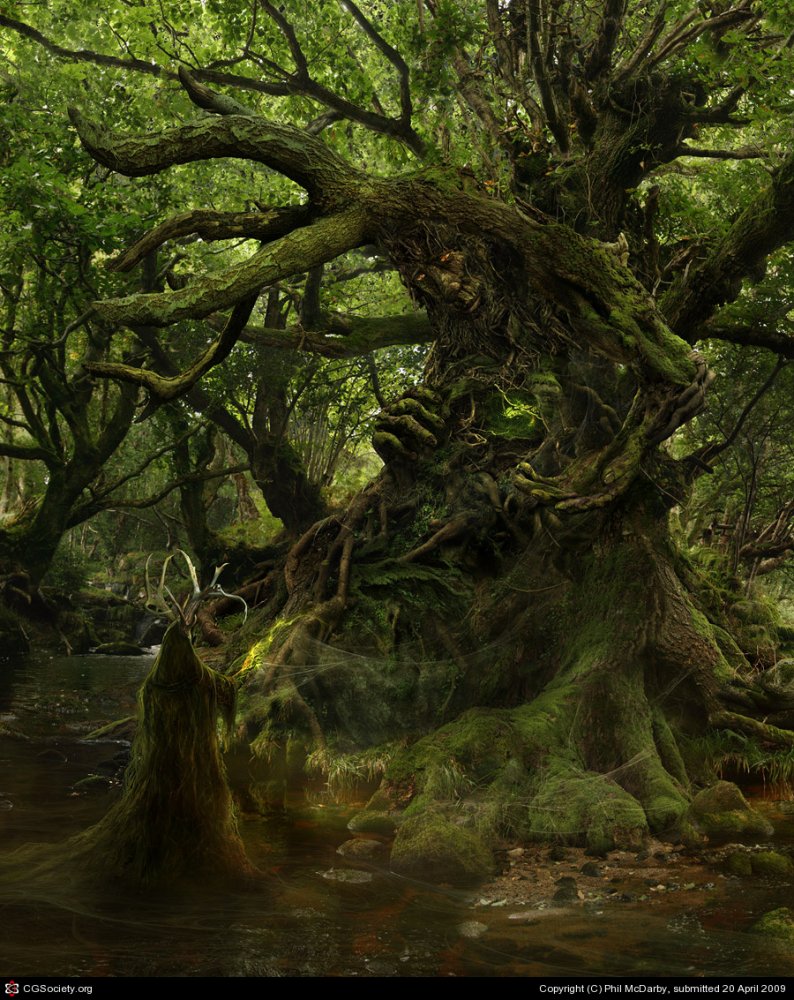
Very often the experience of increasing a person’s power as a result of interaction with nature is summed up as the “Wisdom of Nature.” But is this wisdom really so homogeneous? Let’s examine what the Western tradition says on the matter.
First, let us define the concept of ‘wisdom’.
Dictionaries tell us that the word consists of two parts. The first part, “mudr,” means “mother.” Compare: in English mother, in German Mutter, in French mère, in Italian and Spanish madre, in Sanskrit mätár. The second part, “-ost,” is a Russian suffix forming abstract nouns that turns adjectives into nouns (радость, свежесть, etc.). Thus the word wisdom should be understood as derived from ‘mother’ — implying maternal rootedness. That is, something with a deep, established meaning, time-tested.
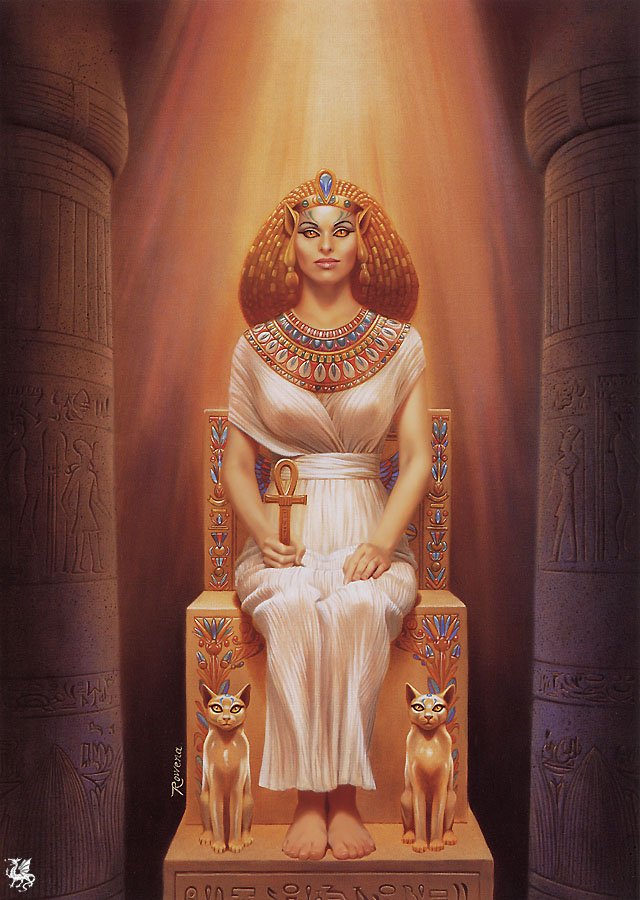
In other words, wisdom can be defined as understanding one’s place in the world and one’s interactions with that world.
Kabbalah likewise assigns Wisdom to the maternal principle, equating it with the Third sefirah — Binah — and attributing to it a generative quality. This means that Wisdom is a state in which a system overcomes its “desire to receive” and awakens to the “desire to give”; it is the expansion of generosity over self-attraction. The system, by overcoming its closed state, begins interacting with the surrounding world and, in response to that interaction, forms an attitude toward the world.
Thus, gaining wisdom can be described as the process of clarifying one’s place in the cosmos and of changing one’s activities accordingly in accordance with that position.
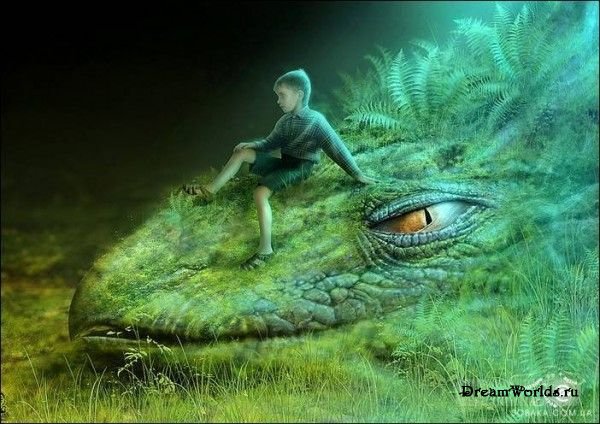
Now we must understand how this quality manifests at the different levels of consciousness. We have already discussed that Western myth views the evolution of mind as a sequence of passing “waves,” each corresponding to a particular level of the mind’s development. It is currently thought that the material world is the result of the passage of the four Waves of Life, corresponding to the “mineral,” “plant,” “animal,” and “human” levels of the mind’s development. It is clear that at each of these levels the view of the world and of one’s place within it (that is, Wisdom) manifests differently. In addition, this world is also influenced by “higher” forms of mind — creative, generative gods.
At the “mineral” stage the world is undifferentiated, and individual consciousness does not stand out from the common flow. Therefore the “Wisdom of the Mineral” is awareness of nature’s essential unity.
At the “plant” stage individuality emerges, which, nevertheless, is perceived only as part of the whole. Plants perceive the cosmos as their source. That is, the “Wisdom of the Plant” is the understanding of oneself as part of the cosmos’ harmony.
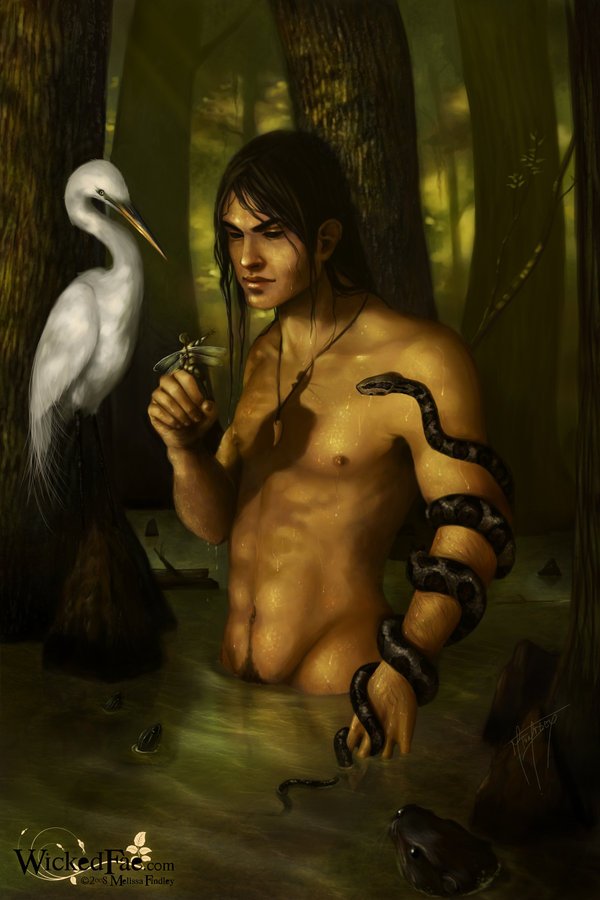
At the “animal” stage the self opposes the cosmos, which is perceived not only as the source of life but also as the cause of death. Animals struggle with the world to survive. Therefore the “Wisdom of the Animal” is the awareness of the world as a unity of opposites — life and death — where mutual predation, on the one hand, is necessary for the survival of some, but it also ends others’ lives.
At the “human” stage of the mind’s development the mind begins to see the world as a collection of individual agents, each with their own goals and tasks. In other words, “Human” Wisdom is the understanding of the world’s many facets, the complexity and diversity of interactions within it, and the awareness of oneself as an equal part in the world’s harmony.
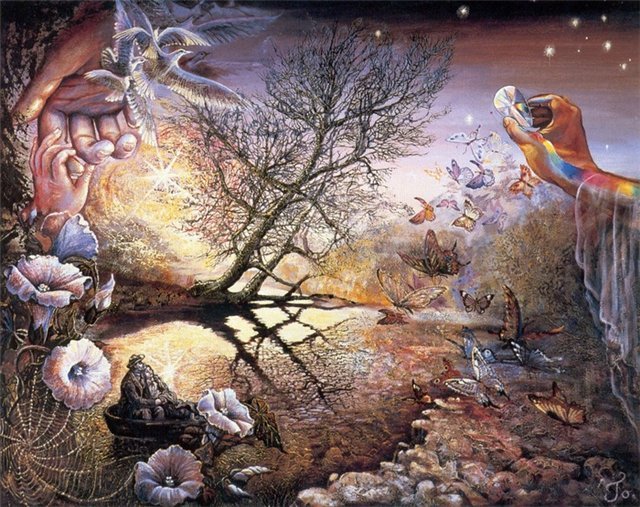
At the subsequent, higher stages of awareness there is further deepening and differentiation of mind, combined with the ability to synthesize.
What does this mean in practice? It means that, by interacting with nature’s different kingdoms, the magus learns to see the world more broadly and deeply: he can learn from stones to sense the world’s unity, from trees — the steady flow of the cosmos, from animals — harmony born of struggle; and, being human, the Magus can learn to perceive the world as complex strings sounding together.
Another important manifestation, following from the “maternal” nature of Wisdom, is that it gives rise to love. At the “mineral” stage love is the love of “everything for everything”; at the “plant” stage it is the love of the part for the whole; at the “animal” stage it is love for similar beings, like family; and at the “human” stage it is individual love — one person for another.

In the Kabbalistic tradition, Wisdom is an attribute of the sphere of Chokmah, while Binah is Understanding. However, this doesn’t significantly change the essence of the question but emphasizes the Male Dynamic Aspect in the concept of Wisdom.
Well, in fact, these are quite arbitrary nuances of translations 🙂 Both Hokhma and Bina can be translated as ‘Wisdom’; it just needs to be initially agreed upon what we mean by this concept.
Having tried and felt, I realized that it is not necessary to be close to the object. It is enough, for example, to imagine any tree, ask it to give strength and understand how it influences. Feel the outflow or inflow. I think this can be applied to any organic matter. I wonder if it is possible to feel a person this way?
“By engaging with the different Kingdoms of Nature, the Mage learns to see the World more broadly and deeply. He can learn from Stones to feel the Unity of the World, from Trees the steadfastness of the Flow of the universe, from Animals the harmony that arises from struggle, and, being a human, the Mage can learn to see the World as a complex ensemble of strings resonating in unison.” – The four waves of life in this description align with the three generations of gods + the generation of humans: the Jotuns with the mineral kingdom, the Vanir with the plant kingdom, and the Aesir with the animal kingdom. Moreover, considering that the Aesir are divided into two generations – the creators and the guardians – the younger Aesir can be counted as the fourth generation of gods. At the very least, the affinity in the descriptions in your blog is quite strong.