The Magus’s Elegance
Calling Magic an “art”, one often forgets an important quality that should belong to every art — elegance.
Indeed, the optimal balance between a task and the means to accomplish it, the proportionality of forms and modes of execution, are key qualities that distinguish the Magus from the sorcerer, the charlatan, or the dabbler.
People often believe that a sign of power is crude intervention in the fabric of the cosmos, and the Magi who have fallen prey to this destructive impulse seek flashy spectacles, forgetting the chief motto of Magic: «effectiveness — above all».
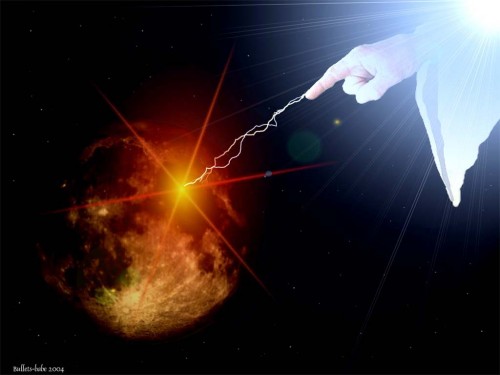
After all, it suffices to recall that, according to the biblical account, the Creator of the universe appeared to the prophet in a gentle breeze, not in thunder or lightning.
The elegance of the Magus’s actions is not in their ornateness and theatricality, but in their surgical precision, composure, strict, impeccable focus. The Magus affects the fabric of the world; he does not act like a bulldozer that sweeps everything in its path and leaves a deep furrow, but like a surgeon or jeweler, with one precise, nearly imperceptible movement, turns a rough stone into a sparkling diamond.
The elegance of the Magus’s words lies not in external verbal ornamentation — bright metaphors, striking epithets, nor in varied rhetorical exercises. It lies in brevity and precision of expression while maximizing the informational density of language, and, again, in the intense, focused energy of thought.
There is a well-known phrase that travels from book to book: the Magus should go through life “as on the surface of the water”, lightly, leaving no trace.
That is precisely why Theurgy and the various methods of “assuming divine forms” were considered the highest of the magical sciences, allowing the Magus to work with the currents, not to try to reverse or dam rivers, but by lightly intervening at their very sources, in the initial and most basic processes, to achieve broad results with minimal use of brute force.
In other words, for the Magus it is very important to influence the deepest layers of being and mind, and for this one must not only possess delicate mastery, but also clearly understand what direct, indirect and even far-reaching consequences such an intervention will lead to.
The Magus’s elegance, the beauty and effectiveness of the verbal and gestural forms he uses, are a direct consequence of the power of his mind, his analytical abilities and well-developed intuition.
Therefore, in seeking to increase his effectiveness in life, the Magus must clearly understand that the fewer “seams” he leaves on the fabric of the world, the more exact his words and actions, the fewer backlash effects, the less power is dissipated, and the closer his action is to primordial creation. The Magus’s pursuit of elegance in word and deed is not merely the product of a developed aesthetic sense; it is above all a deeply practical aspiration, allowing the Magus to act effectively and take his rightful place among the creative hierarchies of the cosmos.
Hello! Welcome back, I am very glad to see your new articles again. And if I may, a question – as far as I understood, the opportunity to interact with the original (divine) current of powers opens up not immediately (as I know, priests studied to correctly interpret the will of the gods their whole lives, and underwent quite a number of initiation rituals), and within the framework of the modern world, it becomes extremely difficult, if not to say unrealistic, to follow such a Path. So in the modern disconnected world, wouldn’t it be more effective (of course, excluding those who were born for this Path) to seek Power in currents created by people for people, drifting down already turned rivers and living on already built dams, reinforcing them?
Yes, it is more effective to flow in the built ones, for those who relate, and to reinforce them. But for those who do not relate, they are torn apart and hunted for trying to claim rights to their independence. And the only incentive for Life is the struggle for freedom.