
Generation of Evil

Humanity has always been a highly aggressive species, causing considerable destruction both to other living beings and to the habitat as a whole. This trait, distinguishing Homo sapiens from the other primates even more than the capacity for self-awareness, is known in Jewish tradition as an “inclination to evil,” “Yetzer hara” (הָרַע יֵצֶר), or “Eytsechore.”
Homo sapiens, since the beginning of their history, faced the need to compete for limited resources: food, water, territory. This contributed to the development of aggression for survival. Unlike many other animals, humans developed large groups and complex societies, where aggression could be a way of securing status, fighting for leadership, or controlling others. The developed frontal lobes of the Homo sapiens brain allow planning of actions, including aggression, as well as control. However, without sufficient control in stressful situations, this can lead to destructive consequences. Humans exhibit a stronger stress response associated with cortisol production, which can easily provoke aggression in response to threats. Homo sapiens evolved under conditions of high uncertainty and constant threats (predators, climate change, competition with other species), and an increased stress response helped them mobilize more quickly in dangerous situations. Because of their cognitive abilities, people can perceive threats that exist only in their imagination, which amplifies the stress response. However, in humans, aggression goes beyond biological instincts and extends to symbolic and ideological levels.

At the same time, for most of humanity’s evolution, its hyper-aggressiveness was the result of ignorance, insufficient awareness arising from entirely objective causes — a lack of knowledge and fragmentation among humans, which made the exchange of experience difficult. In the early stages of evolution, people confronted a vast array of unknowns: from natural phenomena to the behavior of other groups. This fear of the unknown often triggered aggressive reactions as a simple defensive mechanism from the “fight-or-flight response” group. Under conditions of disunity, each group perceived itself as the center of the world and others as a potential threat. This “tribal logic” made aggression toward “outsiders” natural and understandable.
However, the modern world has largely overcome the physical limitations imposed by the struggle for resources, and the relevance of biological survival in recent centuries is more tied to psychological and political factors than to objective natural ones. Nevertheless, human aggressiveness has not only failed to diminish; on the contrary, it has acquired new, subtler forms. Homo sapiens invented weapons of mass destruction, which increased the scale of possible aggression, and its internal sources now outweigh external ones.
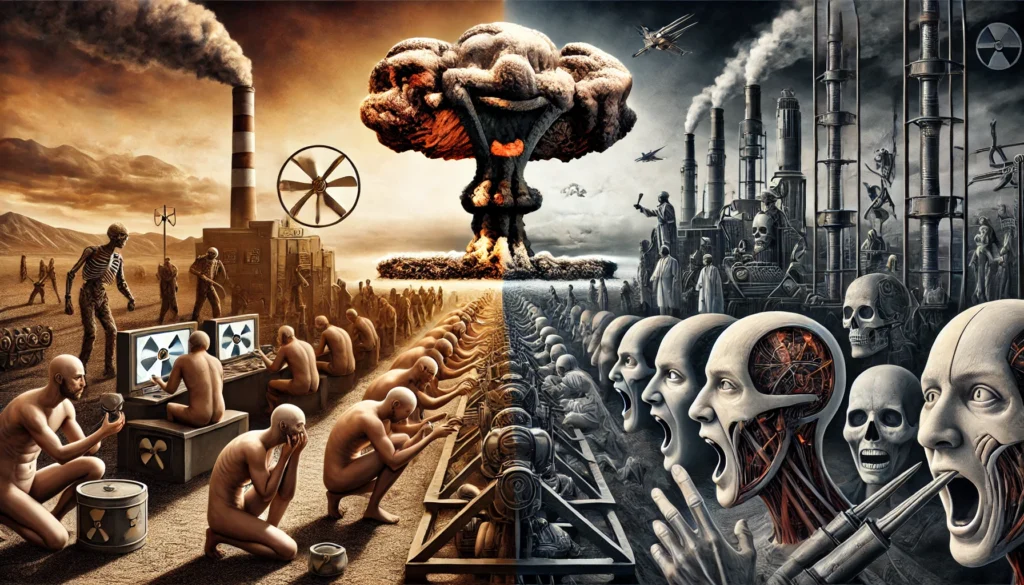
If a few hundred years ago a person was in ignorance because people couldn’t access broad knowledge, today many choose not to — he consciously chooses not to know and to retreat into narrow views.
People tend to avoid knowledge that causes discomfort or threatens their worldview. This psychological defense mechanism (cognitive dissonance) allows one to avoid complex truths that may contradict limited personal beliefs. In the modern world, political, religious, and national ideologies often replace the search for objective truth, and the “average” person prefers to choose what aligns with their group’s beliefs, even if it contradicts reality.
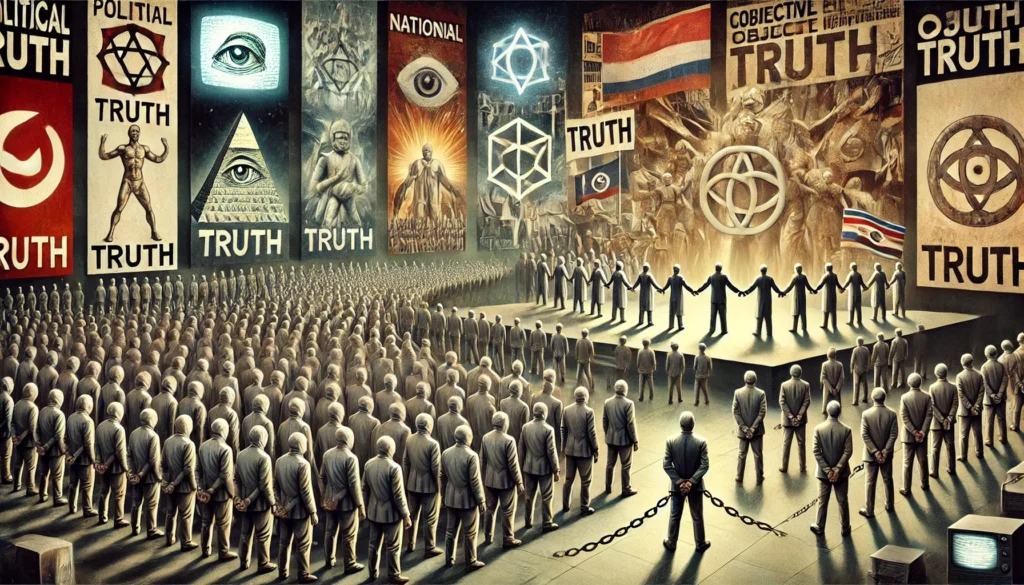
In modernity, knowledge is often used not as a way of understanding the world, but as a tool of manipulation, propaganda, and control. Accordingly, people often consciously choose ignorance if it allows them to avoid responsibility or difficult decisions.
Modern political and economic systems often encourage aggressive behavior, promote excessive competition, consumerism, and the desire to dominate. This, of course, fuels conflicts and entrenches limited thinking. At the same time, modern culture encourages individualism, which reduces willingness to seek shared knowledge or critically reflect on other people’s viewpoints.
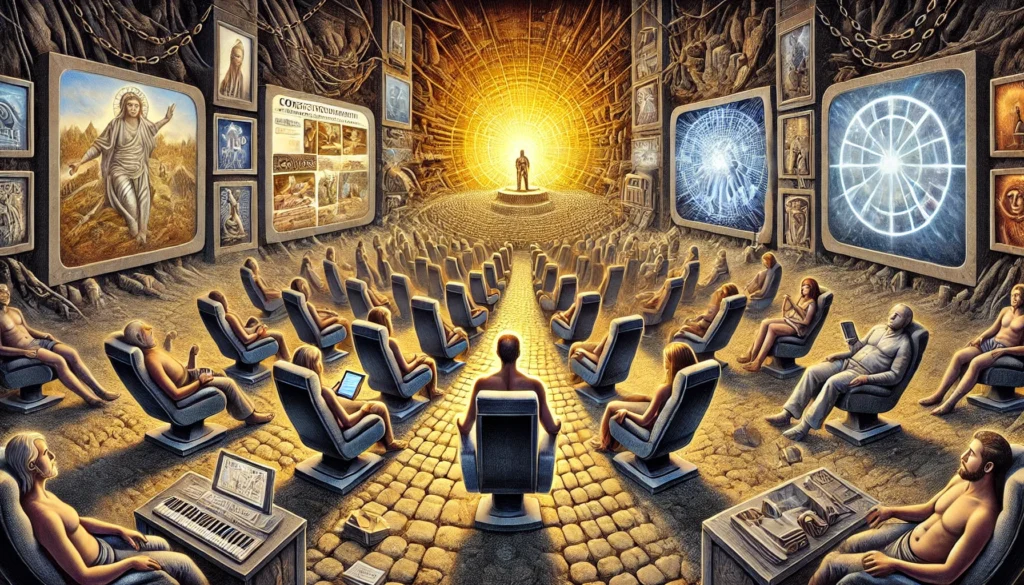
Under conditions of relative physical well-being, people’s incentive for development and for intellectual growth declines. The search for truth has ceased to be a matter of survival. Progress has made life more comfortable, but at the same time has generated an inclination toward simplification, avoidance of difficult questions, and passive consumption. Energy began to be generated, and therefore dispersed, in far larger volumes than before; humanity became a much richer resource for predators and parasites that support its destructive tendencies.
When it became obvious to the predators and parasites consuming this energy that the choice in favor of ignorance had become firmly rooted in the motivational patterns of the human psyche, they took this choice to a new level by launching a global exchange of information — the internet. If half a century ago it was comparatively easy to find a justification for the narrowness of one’s beliefs and frankly destructive motivations — the justification “I didn’t know” worked — then under conditions of generally accessible information, refusing knowledge is a more serious choice, a more conscious shift to the side of destruction, and therefore a step not merely toward disharmonious behavior, but toward direct demonization.

Knowledge obliges action. For example, understanding environmental problems requires changing one’s way of life. Therefore it is often easier “not to know” than to confront the burden of responsibility for one’s actions. In addition, ignorance makes it possible to preserve a habitual way of life, even if it is destructive for others, and willful ignorance becomes a defensive mechanism. Instead of searching for truth, people tend to look for information that confirms their beliefs, even if this leads to destructive conclusions.
The rejection of knowledge in an era of its availability is not just laziness or fear, but a conscious shift to the side of destruction. Disregard for truth is justified by personal benefit, power, or ideological goals. Ignorance becomes a tool to justify violence, discrimination, and destruction when people consciously ignore knowledge that contradicts their destructive motives.

Thus, over the last quarter-century, humanity’s destructive tendencies have reached a new level — people, from passive fuel for the inferno, are becoming active producers of destructive mental tendencies; from “victims” they are rapidly turning into conscious agents of evil. “Evil through ignorance” is replaced by “evil as a choice,” which brings the struggle for the survival of souls and the very level of the human mind into a new plane.
Communication platforms now serve as platforms where toxicity, aggression, and destructive ideologies not only spread easily but also receive support. The culture of recent decades actively romanticizes destructive images and ideas (antiheroes in film and music, celebration of nihilism). This normalizes evil and makes it attractive.
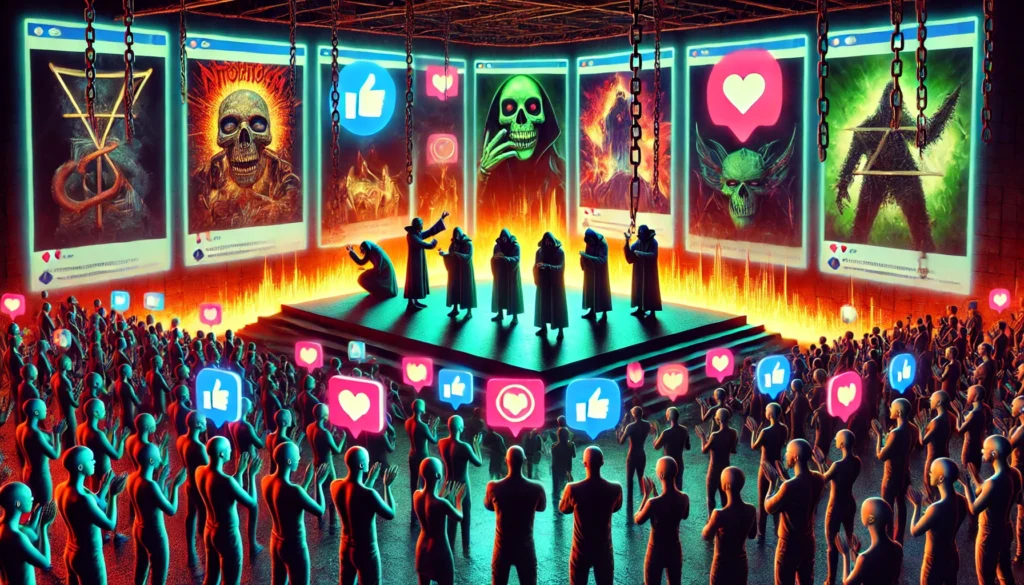
The main challenge of modernity is that evil is no longer seen as involuntary or accidental, but becomes a conscious choice, often even an attractive one.
Accordingly, the struggle for bodily survival is replaced by the question of the survival of souls. Now everyone faces a choice — whether to keep their mind creative, loving, and compassionate, or to set out on the path of destroying oneself and one’s surroundings. People who choose the path of love and understanding not only keep their soul alive but also inspire others.
To achieve such survival, we must cultivate critical thinking, openness to complex issues, and the development of empathy as a foundation for global cooperation. This requires constant self-awareness and inner work, and the courage to resist the temptations of destructive emotions, as well as resisting manipulation by mass media, which has also taken on an unprecedented character lately. Modern people can no longer simply remain passive; they must develop awareness to avoid succumbing to manipulation and destructive tendencies. The conscious decision to reject the path of destruction, to accept responsibility for one’s influence on the world, and to strive for harmony with oneself and others is the path that leads not only to personal salvation but also to the salvation of humanity.

Carl Jung wrote a lot on the nature of evil: the ability to hold contradictions within oneself without allowing one of the opposing forces to completely overtake and possess you has a beneficial effect on the entire field of the collective unconscious – on the general spiritual sphere. Such people, who penetrate the essence of their actions and have access to the collective unconscious, exert an inducing influence on all others, weakening the conflict of oppositions and also in their souls. In fact, even the few such individuals, essentially those called righteous, can have a huge impact on the overall field of events.
Great respect and gratitude to you, dear Master.