
The Serpent upon the Cross
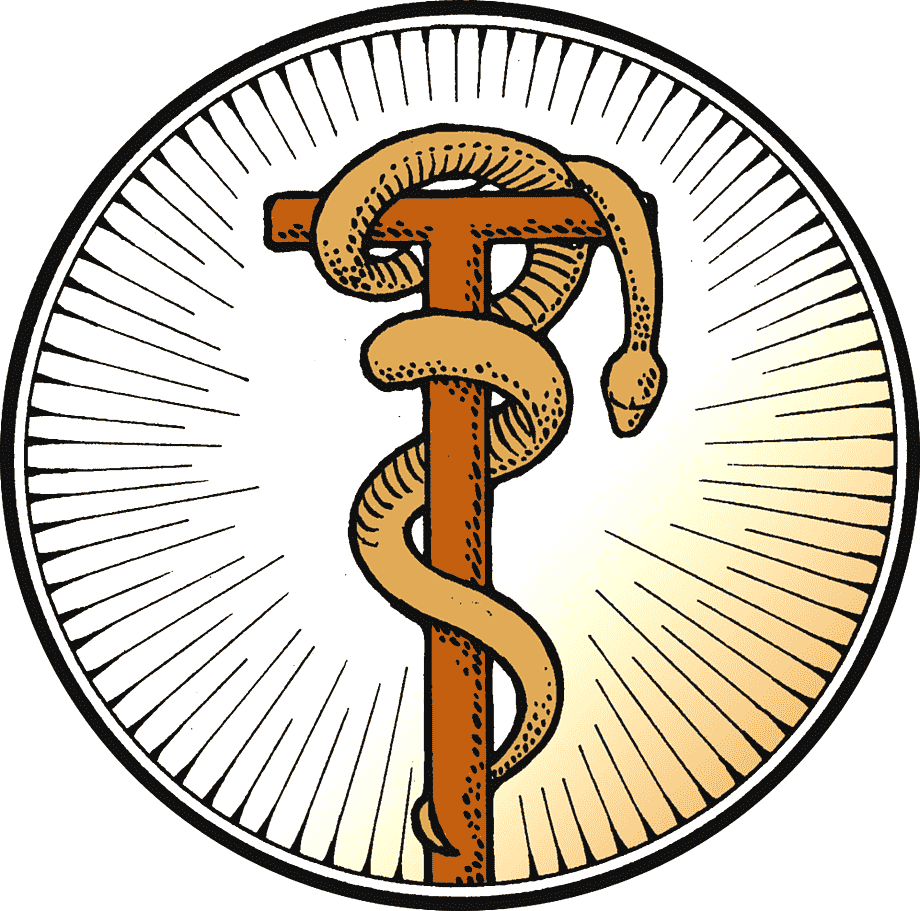
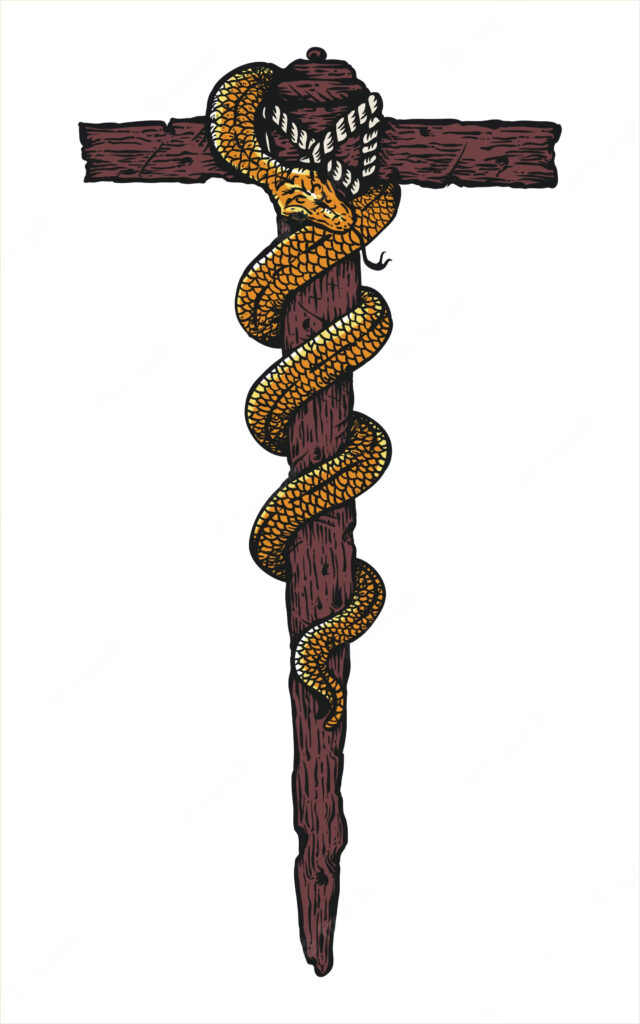
The symbol of the Gnostic Path — along the Middle Pillar of the Tree of Life to the Great Abyss — is represented by the so-called “Tau Cross”, or Gnostic stauros, also known as the “Cross of Saint Anthony”. Such a sign is also known as Crux commissa (“the helping Cross), and is one of the four main types of Christian iconographic depictions of the cross.
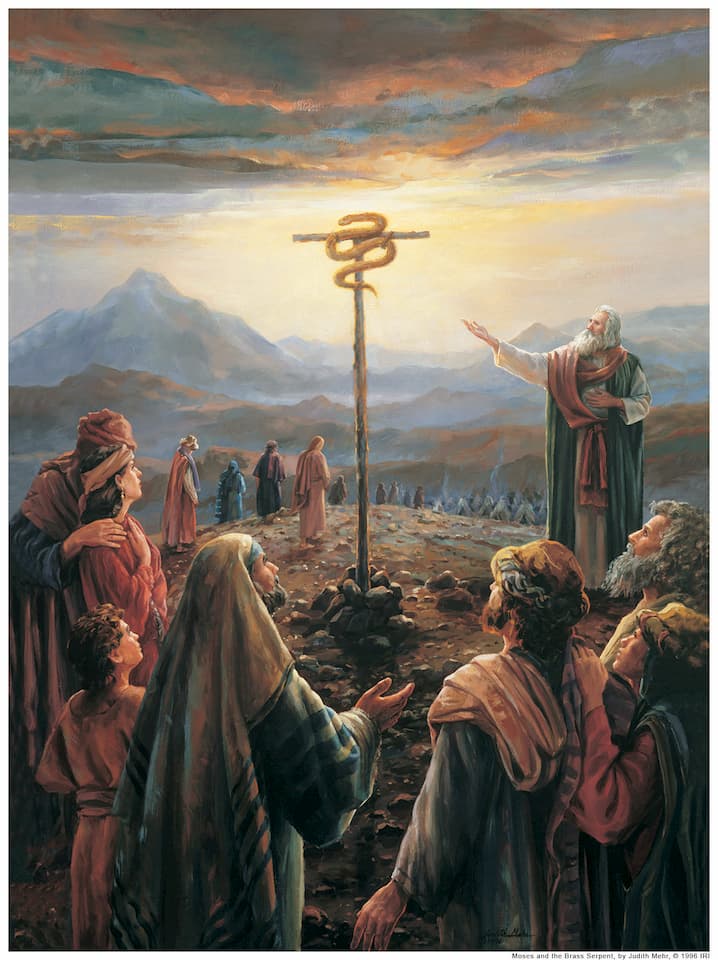
This symbol has been known since ancient times, and the Bible refers to it in the narrative of the Bronze Serpent (Old Heb. נחושתן or נחש הנחושת, Nehushtan):
“And the Lord said to Moses: make yourself a [bronze] serpent and set it upon a standard, and [if a serpent bites any man], the one bitten, looking at it, will remain alive. And Moses made a bronze serpent and set it upon a standard, and when a serpent bit a man, he, looking at the bronze serpent, remained alive” (Num. 21:4 — 9).
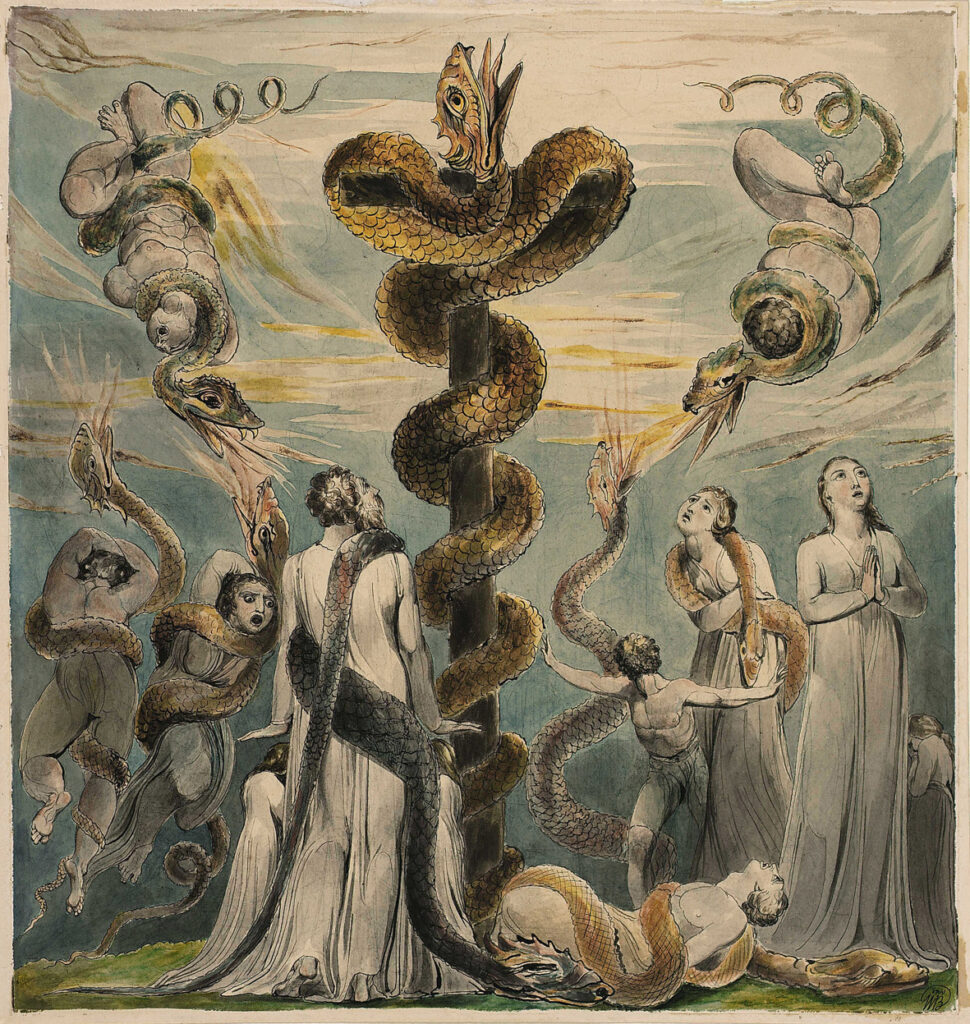
Since in the Talmud the serpent symbolizes such vices as slander and evil speech (Genesis 3:4-5), the Midrash sees in the fiery serpents’ punishment a requital for sins of evil speech (Numbers 21:5):
“God said: ‘Let the serpent, who first sinned with an evil tongue, punish those who committed the same sin and did not take into account the example of the serpent.’”
Accordingly, the Tau Cross can be regarded as a symbol of truth and the purification of the tongue, as well as protection against lies and slander.
According to tradition, it was the Tau Cross that the Israelites marked on the doorposts on the night of the Exodus, to protect their homes from the Angel of Death. Moreover, since tau can be seen as part of the symbol of life — the Ankh — the Tau Cross took over the functions of the ancient life-giving symbol.
In the New Testament, Jesus Christ compares his crucifixion to Moses’ lifting of the bronze serpent:
“No one has ascended into heaven except the Son of Man who came down from heaven, who is in heaven. And as Moses lifted up the serpent in the wilderness, so must the Son of Man be lifted up, whoever believes in Him should not perish but have eternal life” (John 3:13-15).
Thus, since Old Testament times the Tau Cross has served, on the one hand, as a protective sign, and on the other, it served as a support and symbol of the Path of Wisdom.
The name “Tau Cross” comes from the symbol’s similarity to the form of the Greek letter tau, which in uppercase is identical to the Latin letter T. Similar letters are also known in other alphabets:
- Phoenician: cross, mark, sign.
- Proto-Canaanite: cross.
- Proto-Sinaitic: mark, sign.
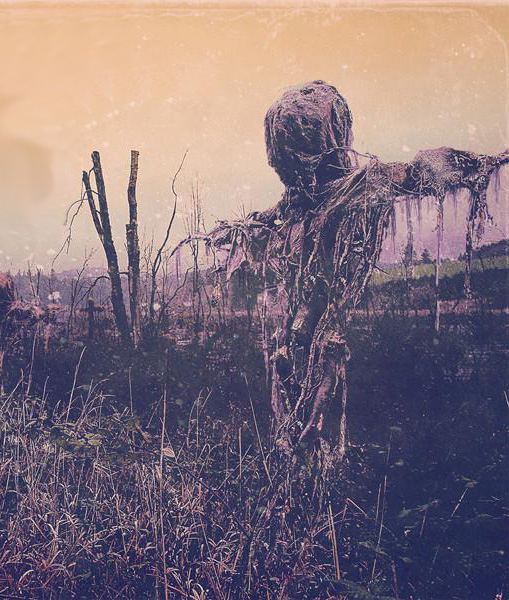
In many traditions, Tau signifies life, the key of supreme power and the descent of spirit into matter, and in the Kabbalistic interpretation Tau has the meaning of “heaven.”
According to tradition, the Tau Cross was marked on participants’ foreheads in the mysteries of Mithras. Among the Druids, the Tau Cross was important. Such a cross, made of oak branches or logs, symbolized the Druidic ‘God of Trees’.
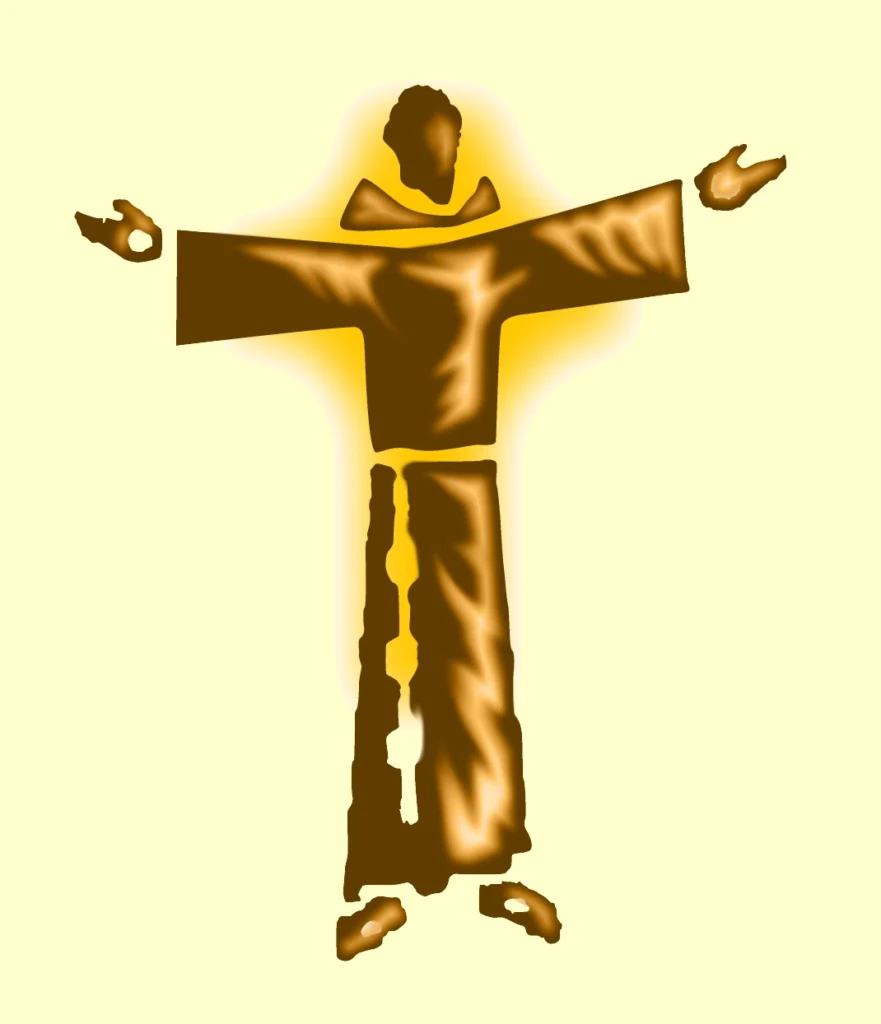
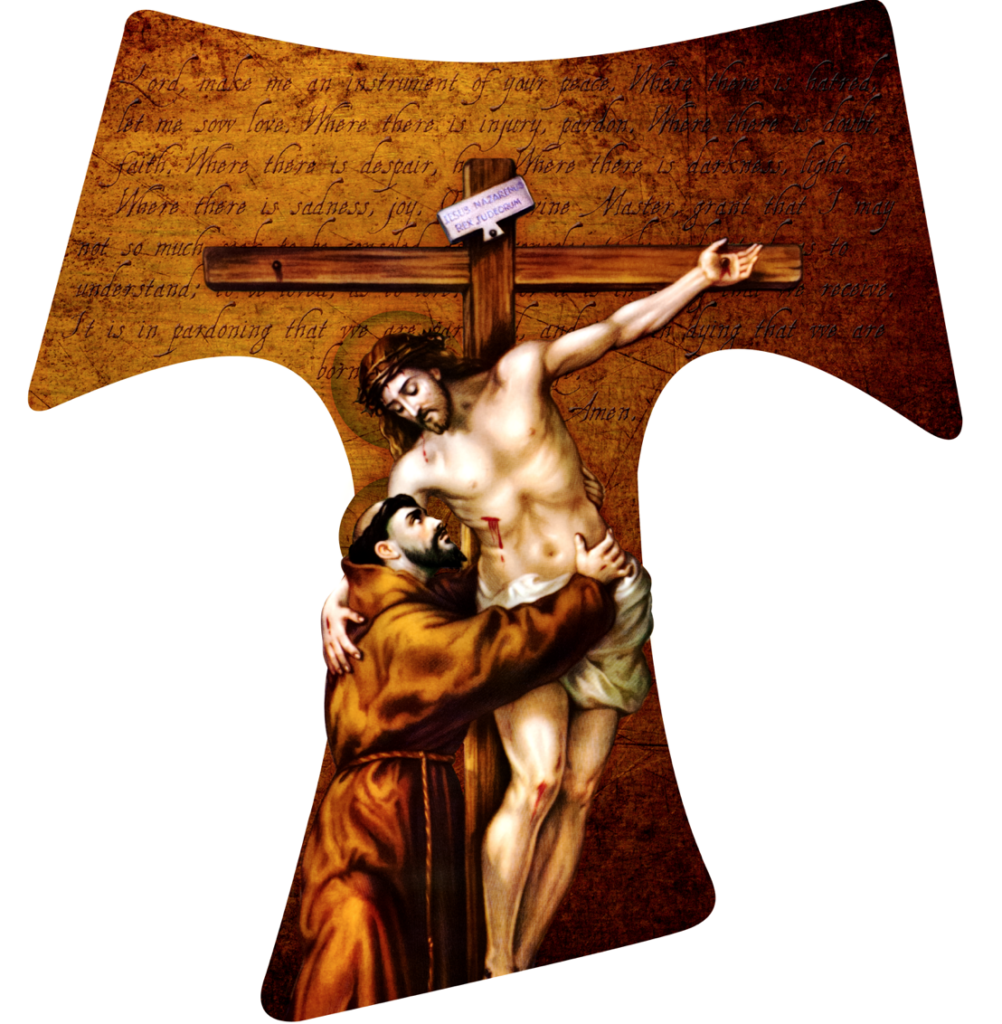
To this day the symbol is used as the emblem of the Franciscan order. Saint Francis of Assisi loved and revered Tau, “because it symbolizes the cross and denotes true repentance.” Before any action, he would make this sign, preferring it to any other sign, and drew it on the walls of rooms. In his conversations and sermons he often recommended it and drew it as a signature in all his letters and works, “as if all his cares came down to engraving the sign of Tau, in accordance with the prophetic saying, on the foreheads of people who groan and weep, truly turned to Christ Jesus.”
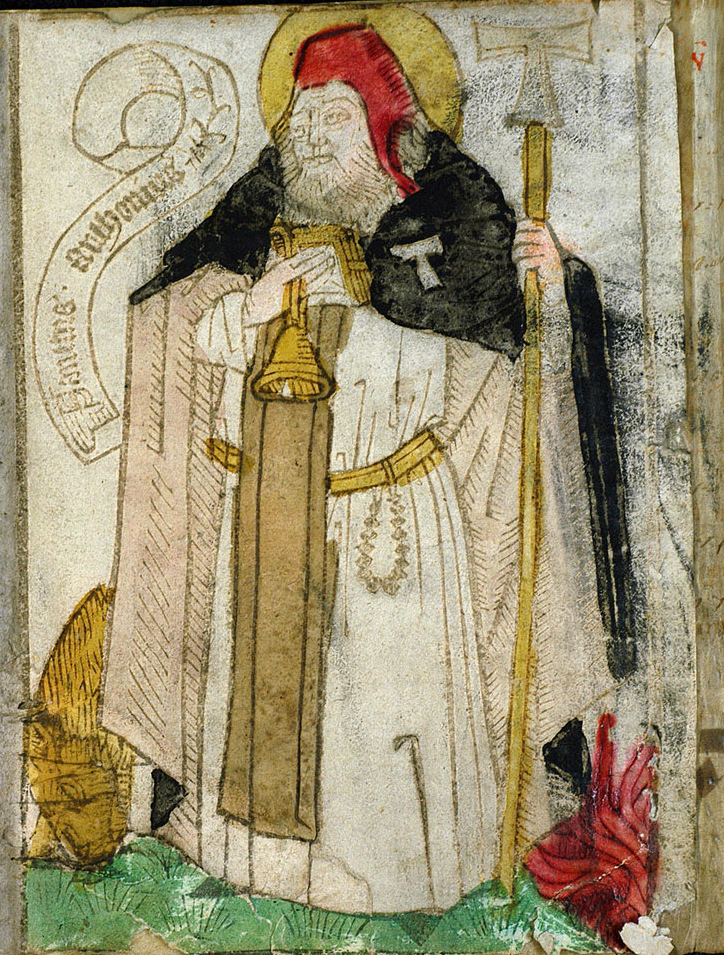
The Tau Cross was also used as an emblem by the medical Order of Saint Anthony from the 11th century. Members of this order wore black garments adorned with a blue Tau Cross. This clothing came to be associated with their holy patron Anthony the Great, who, accordingly, was depicted with a Tau-shaped cross on his cloak. It is believed that the Tau Cross represents a stylized image of this saint’s staff, crowned with a horizontal crossbar, on which he leaned in old age. According to tradition, he also used it to drive away demons, including those that cause diseases.
Among pagan Germanic peoples and Celts, a symbol similar to the Tau Cross was often used as an alternative depiction of the Hammer or Axe of Thor, Taranis, and other thunderer gods-thunderers.
Various Turkic-speaking peoples, descendants of nomadic tribes, also widely used a similar symbol as a sign of Heaven and divine presence. It was worn as an amulet, and also installed as a sacred object of worship. The T-symbol even now is an important element of the traditional religion of the Circassians, symbolizing the unity of faith and divine presence.
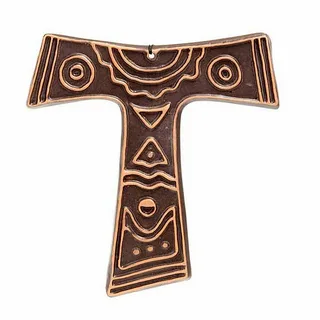
Thus, historically the symbolic field of the Tau Cross boils down to two groups of meanings:
- protection and healing;
- connection with heavenly creative and fertilizing forces.
In this key, this sign is closer to the symbolism of Mjölnir than to the Christian cross.
However, the Hermetic use of the Tau Cross supplements its symbolic field with the notion of a “passage to Heaven”: it is regarded not only as a symbol of the “descent” of divine forces into the world, but also as a sign of the ascent of the soul to heaven, the “return” of spirit to its Abode, and also — in the context of the Great Arcanum — as a reminder of the Presence of the divine in creation. In this sense the Hermetic stauros is often depicted inside a six-pointed star, serving as a symbol of the Path of Liberation.
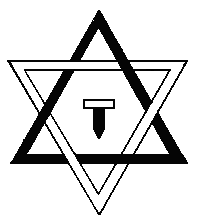
The serpent entwining the Tau is at once a symbol of wisdom and the ascent from the lower to the higher, a sign of the hidden Path of Gnosis. Accordingly, Crux commissa is also a symbol of “healing” from ignorance and the limitations of the material world, and also of the union of the Higher, heavenly Spirit with its earthly “sparks.”
Regardless of the level of interpretation of the symbol, the Tau Cross is undoubtedly an effective supporting talisman, carrying not circular solar energy, like many other crosses, but a “vertical flow” — the Merkabah, and thus, along with “everyday” functions, can be used for initiatory purposes.
So these symbols: tau-cross, dragon’s eye, rose of the cross, crucifixion, major arcana. Are all these external manifestations (products of description) of one phenomenon?
Well, strictly speaking, any symbol has many levels of description, just as any object has many levels of existence. However, the question is which of these levels is more emphasized, more expressed – that is what makes the diversity of both objects and symbols important. Even when they express close ideas or similar streams of energies, they embody them from different angles and therefore can be useful in different situations.
Hypercube