
Caichir — Memory of a Lost Alliance
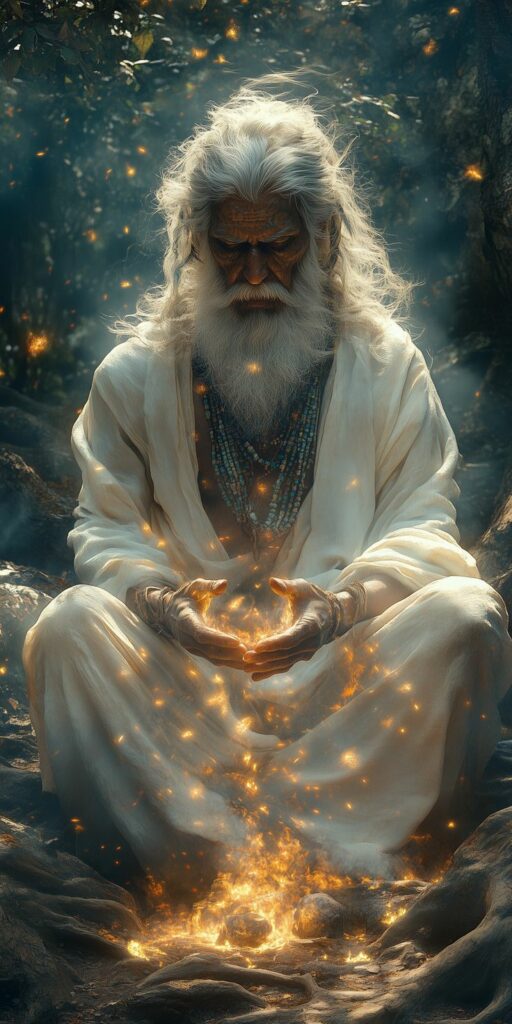
«Do not build temples over the corpse of Earth.
Do not speak with the Gods from a tower that blocks the sun.
Seek the Song in the grass, and the Word — in the river.»
From “The Song of Caichir”
Among the events of Earth’s mythohistory, one of the most dramatic moments is the Separation of the worlds, with the emergence of two “alternative” branches of development — Erd and Grid (Ta and Geb or Geya and Tellus).
According to tradition, the common reason for this separation was the differentiation and ever-growing divergence of two global tendencies in the development of the human mind — one more technological and one more natural — behind which stood two guiding forces or peoples, whom the Nordic myth identifies as Vidar and Vali, the Celtic as Bres and Nuadu, and the Gnostic knows under the names Adonin and Sabaoth.
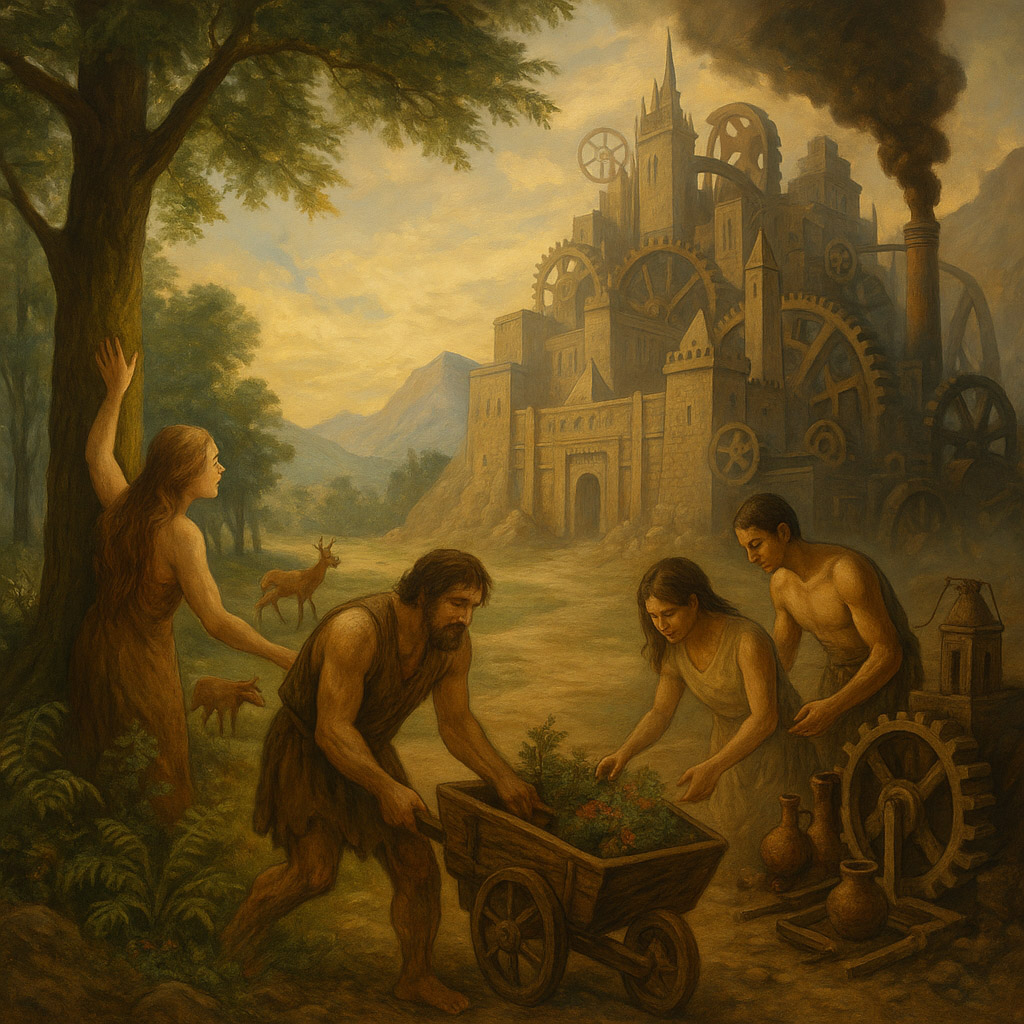
However, this separation could have remained merely a social stratification within human society or the emergence of two separate peoples, if not for the fateful event that became known as the Great Flood, caused by the failed attempt to create a passage between worlds by the magi of the country known as Atlantis or Ta-meru.
The mythohistory of Atlantis is a separate topic, which we will not discuss now, noting only that in the late stages of its existence (beginning roughly 20,000 years ago) it finally took the path of technology and a consumerist attitude to nature, increasingly breaking away from natural forces and flows.
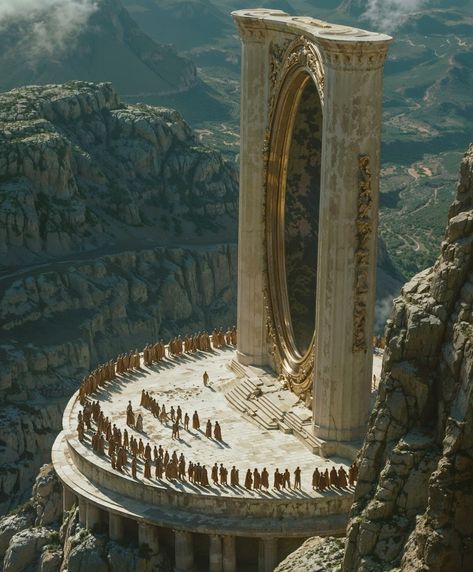
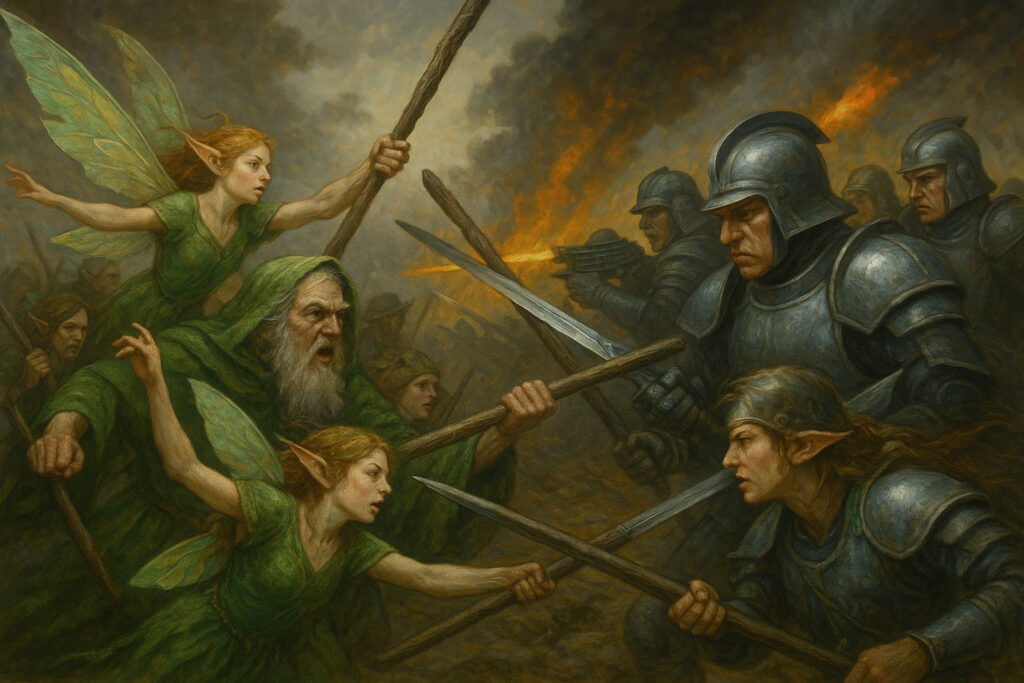
And against such a course of events, against the oppression and enslavement of nature, both the fae and part of humanity rose up. The Atlanteans, possessing colossal magic-technological power, tried to save themselves from global cooling (which had occurred earlier as a result of the Fomorians’ invasion) and from the consequences of their own development. Their main goal became the creation of a passage to Alfheim — a world where reality was still “alive,” filled with creative energies and possibilities. However, as a result of this failed attempt, interconnected catastrophes were set off, which entered collective memory as the Separation of the Lands, the Fall of Atlantis, and the Great Flood, which is also sometimes described as a special “battle,” a confrontation between the united forces of nature-oriented peoples and the fae, and the armies of Atlantis, relying on part of the svartalves they had enslaved. This confrontation is known from a number of Irish and British sources as the “Battle of Caichir’s Grave” (Battle of Cuil Caichir (Cool Cah-hir)), so named because Caichir was buried on that site — a legendary druid who fell there, becoming one of the defenders of natural harmony. His name is associated with the root caich- — “to see clearly,” “to clarify,” and -ir — “way.” In other words, Caichir is one who clearly sees the Way, even when the others are blinded.
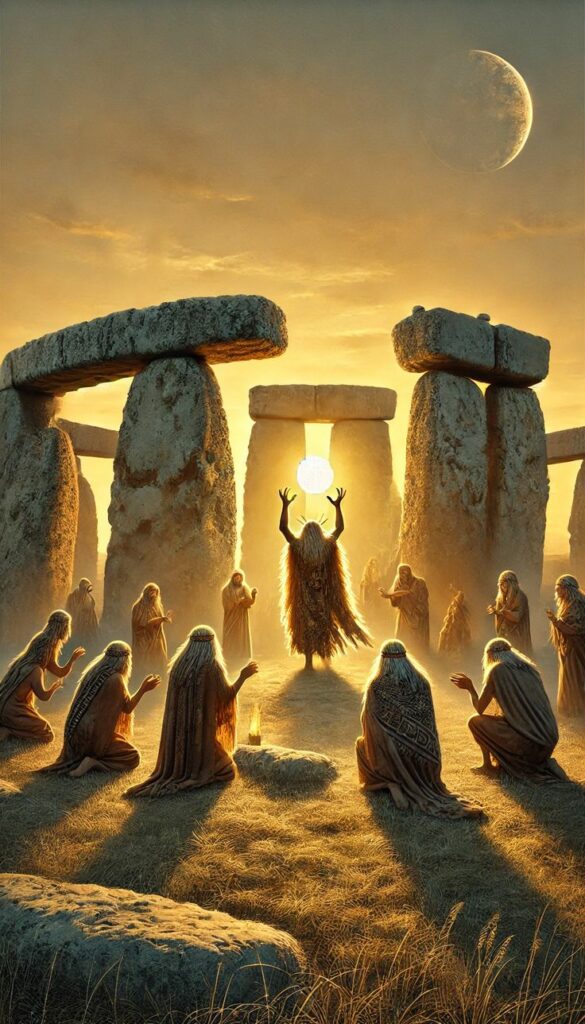
And this figure deserves special attention. In the texts he is described as one of the three leaders of the Milesians, bearing the title of druid and possessing wisdom, radiant power, and the ability to lead people through darkness. According to some legends, he was a half-blood — descended from humans and the fae, an embodiment of union and harmony between these two peoples. Or perhaps he was called the Son of Nuadu symbolically, for his commitment to the “natural” ideals of the Tuatha Dé Danann. In any case, his struggle with the Atlanteans became a symbol of defending the natural Way and refusing to violently alter the universe. His very name became a reminder of a special spiritual feat: the refusal of the easy path to power for the sake of serving nature’s deeper truth. And the drama of his fate lies in the choice he made: to stand against his own people, who had succumbed to the temptation of technogenic might, and to rise in defense of the natural world and the living current of being.
He was a representative of the rarest category of bridge-building magi (pontifices), druids who were able to simultaneously encompass both poles of mind and world — the defined human and the fluid fae. And therefore his skills lay in maintaining connection, balance, a single flow — the one sought by those who understood the importance of an alliance between natural forces and the human mind.
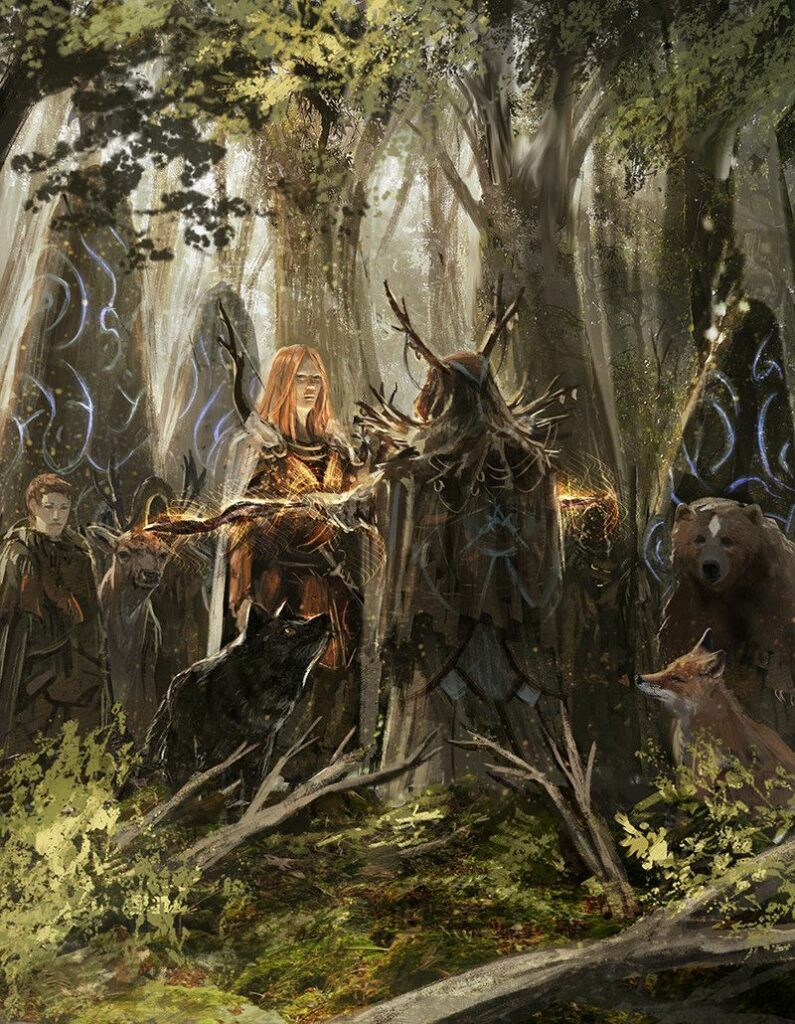
It was he who first became aware of the danger posed by the Atlanteans’ technocratic path. He understood that opening a passage to Alfheim in an attempt to shelter themselves from consequences of their own actions would inevitably lead to a catastrophe for the entire structure of the universe.
Nevertheless, the Atlanteans, with their technological power and the aid of enslaved dvergar, prevailed, but the price of victory was the destruction of Atlantis itself and a global energetic catastrophe that reshaped Erd and split off Tellus.
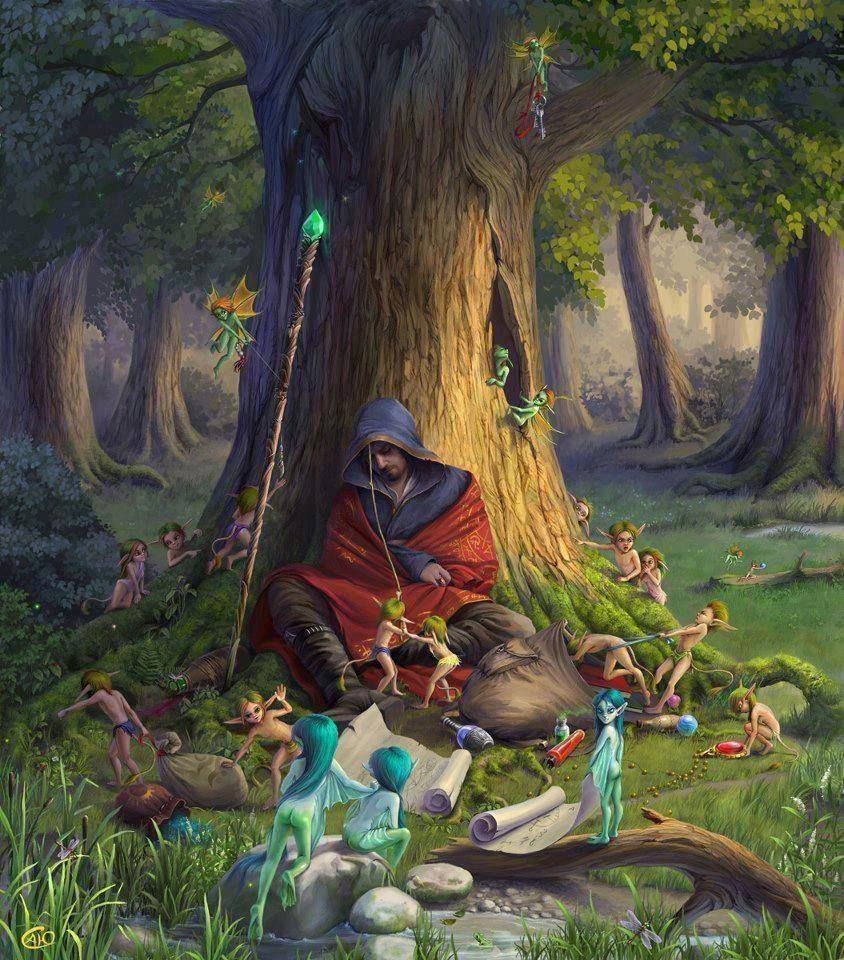
Caichir was one of the last representatives of the “people of the flow,” a vanished caste that once stood at the origins of humanity: mediators between the visible and the invisible, between what is becoming and what is eternal. He was the last the fae still recognized as “inner,” as one who not only knew nature’s laws but lived by them. And in this sense he served as a prototype or “role model” for nature magi and shamans of later times, who likewise strove to unite the manifest and the potential, the human and the natural — yet who nevertheless had already “fallen out” of the original unity.
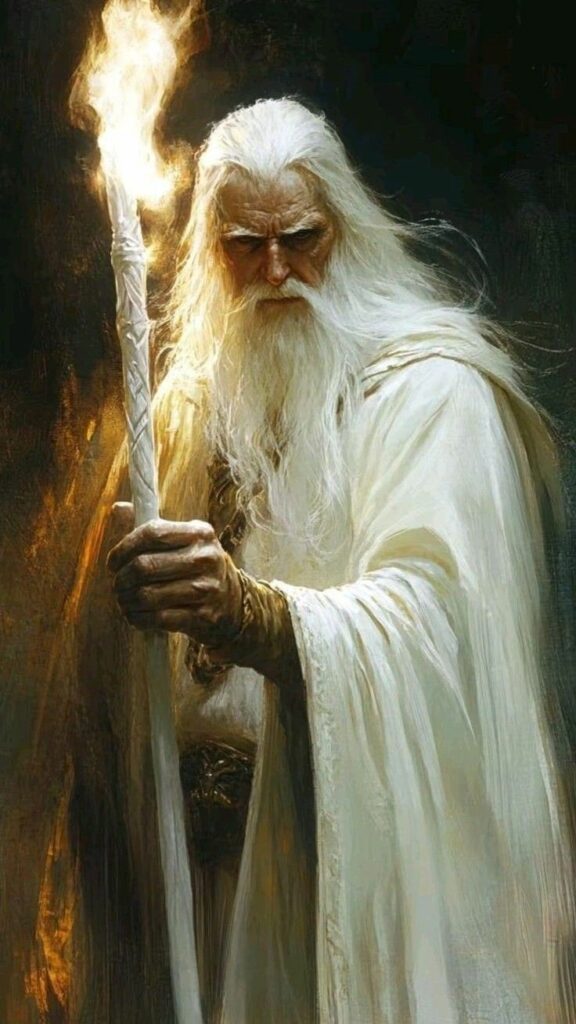
They say that Caichir knew the outcome of the confrontation would be tragic. He knew he would not be able to stop the Atlanteans armed with iron, and therefore, in effect, he sacrificed himself to remind people of the possibility of another, a truer, more natural path of development. He invested all his energy, the very power of his soul, into the Interspace, in an attempt to prevent it from tearing. And although he did not manage to stabilize the Interspace for long, and the world plunged into the chaos of catastrophe, his sacrifice laid down a model of behavior for those who, in later times too, would draw people back to the forest, to the breath of the wind, to the songs of rivers and sacred groves.
His death marked the end of an era in which the unity of consciousness was still possible. And although the fae were not destroyed, for them Caichir’s defeat became a sign that humanity had made its choice. After this, many of the Tuatha Dé Danann began preparing for the Exodus into the Interworld, and only a few remained to secretly support the weak bridges between the worlds. They perceived Caichir’s death not only as the loss of an ally, but as the end of any chance of agreement between the worlds.
And regardless of what we think about the “historicity” of these events, the Battle of Cuil Caichir can be considered as a scenario or prototype of the inner drama of every person who stands before a choice: to follow natural laws or to “conquer” the environment, to live in natural flows or to build technocratic superstructures over them. And the image of Caichir is a model for those who, even knowing defeat is inevitable, still choose nature’s side, because it is a choice of fidelity to the flow of life.
How solemnly sad this is…. In the heart!