
Leraje and “Fighters for Justice”

We have already discussed that among the demons that are especially active during periods of social upheaval, wars, and revolutions, one of the most important players is the “Marquis of False Justice” — Leraje. Unlike his more obvious “associates” from the retinue of Belial — demons of violence as such — Flauros or Kaasimolar, Leraje’s activity is often less obvious — more precisely, the destructive nature of this activity is less noticeable.
This destructive matrix is activated when there is no solid inner foundation in the mind, yet there is a need to feel one’s power and significance. Instead of genuine inner work, Leraje offers the mind a deceptive compensation: to create an illusion of one’s own power by imposing on others one’s (usually immature) notions of “justice” and “rightness.” The mind led by Leraje does not seek the cause of its suffering within itself; it tries to “appoint” an external culprit because admitting inner weakness is too uncomfortable for it. But an external “wrong” person or factor becomes a convenient target. Instead of awareness of the fragility of its inner foundations, the mind begins to attribute the source of pain to certain figures of the external world. Such xenophobia is a reaction of a weak mind, unable to contain life’s complexity. At the same time, one’s own insecurity is usually masked by an appealing ideology — slogans about a “fight for justice,” “cleansing society,” or “defending the nation.” However, behind these slogans there is only fear of the world’s complexity and the many ways the mind manifests.
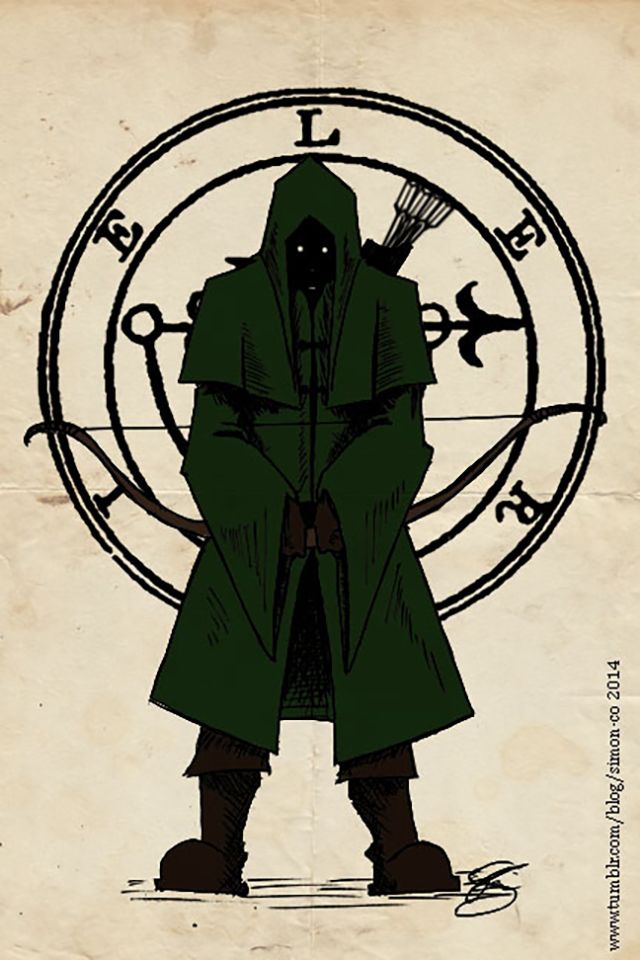
Leraje pushes the mind toward a desire to force uniformity, to bring everyone down to a low standard (“if I suffer — everyone must suffer,” “if it’s hard for me — others cannot have it better”). At the same time, the concepts of “justice,” “good,” and “order” become covers used to justify aggression, intolerance, and violence. To avoid feeling his weakness, the bearer of Leraje’s matrix seeks to control others’ thoughts, actions, and lives. He tries to become the “supreme judge” who decides what is right and what is not.
When the bearer first sees the suffering of someone “different,” he feels a mix of relief and satisfaction: “If I feel bad — let others feel bad too!” However, such an illusion of “restoring balance” is actually petty revenge against the world for his own weakness. And each observation of someone else’s pain strengthens this short-term sense of power and rightness, and this flash of pleasure gradually begins to work as emotional sustenance. A mind seized by Leraje grows accustomed to seeking suffering around itself in order to confirm its “rightness” and “strength,” developing an emotional dependence on others’ suffering.

Thus, the source of Leraje’s activity is the fear of one’s own insignificance, pain, and insecurity, which leads to a substitution of the drive for development with a drive for suppression. Xenophobia becomes the fuel on which Leraje powers the matrix of “sacred struggle for equality.” At the same time, the ‘cave law’ matrix effectively blocks the path to self-development: instead of overcoming its weaknesses, the mind only aggravates them, suppressing manifestations of strength and uniqueness in others. Yet this only intensifies the inner conflict, since violence against the surrounding world cannot heal inner pain; it only deepens it within the mind and, as a consequence, destabilizes the energetic structure: by destroying harmony on the outside, a person inevitably disrupts his own inner balance as well. Denying differences, imposing sameness, such a mind becomes gray, inert, and incapable of perceiving life fully.
During wars, revolutions, and social crises, bearers of Leraje’s matrix manifest especially strongly because the chaos of the external world “triggers” inner destructive impulses as well — especially in weak minds. Under such conditions, the bearer of the matrix of “pseudo-Robin Hoodism” quickly begins to feel like a “warrior of justice” or a “punishing judge.” He is convinced that right now his actions are justified and even necessary. He develops an inflated sense of grandeur, unrelated to real inner achievements. At the same time, his mind actively searches for the “guilty,” and the criteria for the enemy become ever broader: at first these are real or imaginary “oppressors,” then simply dissenters, and finally absolutely everyone who is “not with us.” The threshold of aggression drops rapidly.
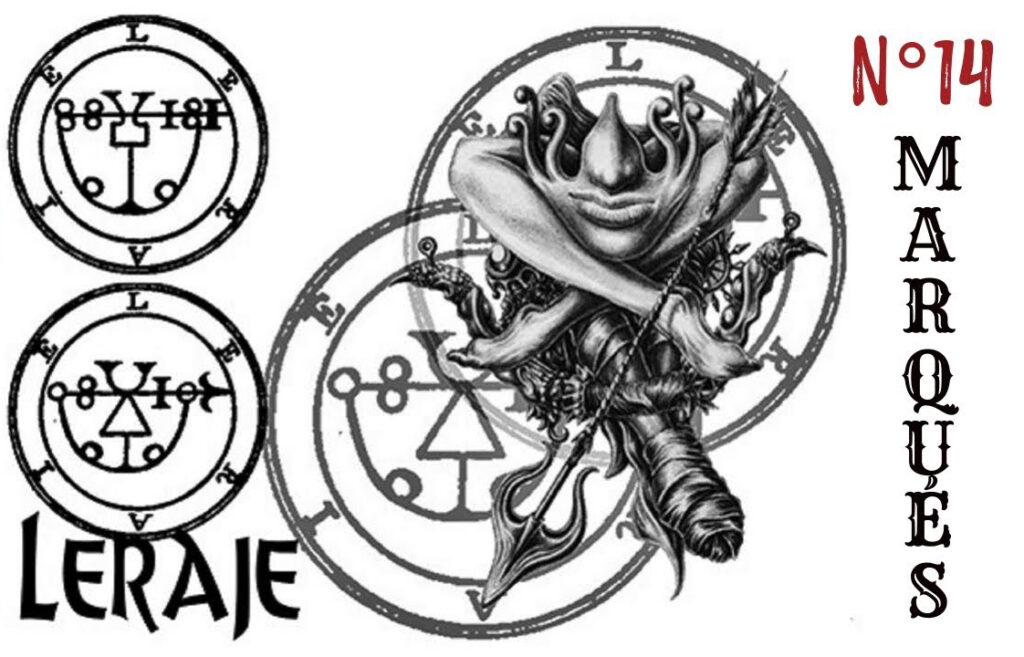
Instead of a deep analysis of the causes of what is happening, the bearer of Leraje’s matrix relies on ready-made slogans: “Justice must prevail!”, “Whoever is not with us is against us!”. His judgments are simplified to the extreme; he completely ignores nuances and subtleties.
At the same time, he readily justifies cruel actions against other people, because he sees them as “enemies of justice” or “involved in causing suffering.” He sees mercy as weakness or betrayal. Leraje pushes him toward actions whose goal is the leveling differences: denying diversity in social status, culture, language, worldview — and better yet, suppressing these differences by force, if that becomes possible.

Such a bearer of the destructive matrix either seeks to gain power himself (even small power) in order to “establish order,” or else he seeks a strong leader with similar slogans, to join him and act on his behalf.
Thus aggression grows toward those who are not sufficiently “ideological” or who doubt: anyone who asks questions or expresses doubt about the “only correct path” is branded as a traitor, an agent of the enemy, or “mentally ill.” The bearer of Leraje’s matrix strives for a demonstrative display of “rightness”; he actively shows off his “loyalty to the cause,” seeks to be noticed and valued by “elders,” even by meanness or betrayal.

The capacity for compassion is nearly gone. The suffering of those who are “wrong” becomes for Leraje’s victim either unnoticed or, more often, justified (“they brought it on themselves”). Their pain begins to be perceived not as a tragedy, but as deserved retribution, and therefore as a source of satisfaction. At the same time, events and people are perceived exclusively in a black-and-white spectrum: “ours” or “theirs,” “good” or “evil,” and the ability to see third ways and seek compromises is reduced and met with hostility. And then the destruction of another’s well-being becomes an obsessive goal, hidden under the mask of a “fight for justice.”
Thus, a bearer of Leraje in a crisis is a destroyer hidden under the mask of a savior. His actions almost always intensify suffering, because their true source is not a love of truth, but xenophobia and insecurity masked by aggression. In reality, Leraje does not create inner strength — he only masks weakness as cruelty. And each time, by causing suffering to another, the mind only postpones the meeting with its own pain, deepening the split between the real self and one’s true existence.

Opposition to the Marquis of false justice requires intensive work on three levels: emotional, intellectual, and spiritual. Only by acting simultaneously on all these planes can one truly cleanse the mind of the false “fight for justice” and the desire to compensate for pain by destroying the surrounding world. The root of vulnerability to Leraje is inner pain, fear, and insecurity. Therefore the first step is to learn to honestly see and accept one’s weaknesses — but not as something to be proud of, but as raw material requiring transformation.
On the intellectual level, it is necessary to develop broad-mindedness and tolerance, since Leraje locks the mind into a narrow, black-and-white perception of the world. Therefore, in this aspect, the antidote is broadening one’s horizons and learning to value diversity.

On the spiritual level, it is necessary to work on rooting oneself in an inner foundation. Leraje takes hold of the mind when a person seeks validation externally. Accordingly, true opposition to him consists in rooting one’s value within, connected to the Source. For this it is very important to build an inner center needing no approval or superiority, and also to practice honesty; heed the voice of your heart, rather than external slogans or manipulations.
In general, we can say that the path of opposing Leraje is the path of the soul’s maturation, which happens not by fighting the world, not through eradicating the “different,” but by overcoming one’s weaknesses and fears, by becoming oneself: clear, calm, free, not needing to humiliate others in order to confirm one’s value. Only this way can one go beyond the call of “cave law” and begin true service to justice — the kind that creates, not destroys.

Hello. How to gain inner support and what is meant by “rooting one’s value within oneself in connection with the Source”? Thank you for the article.
Thank you