
Trials of the Magus
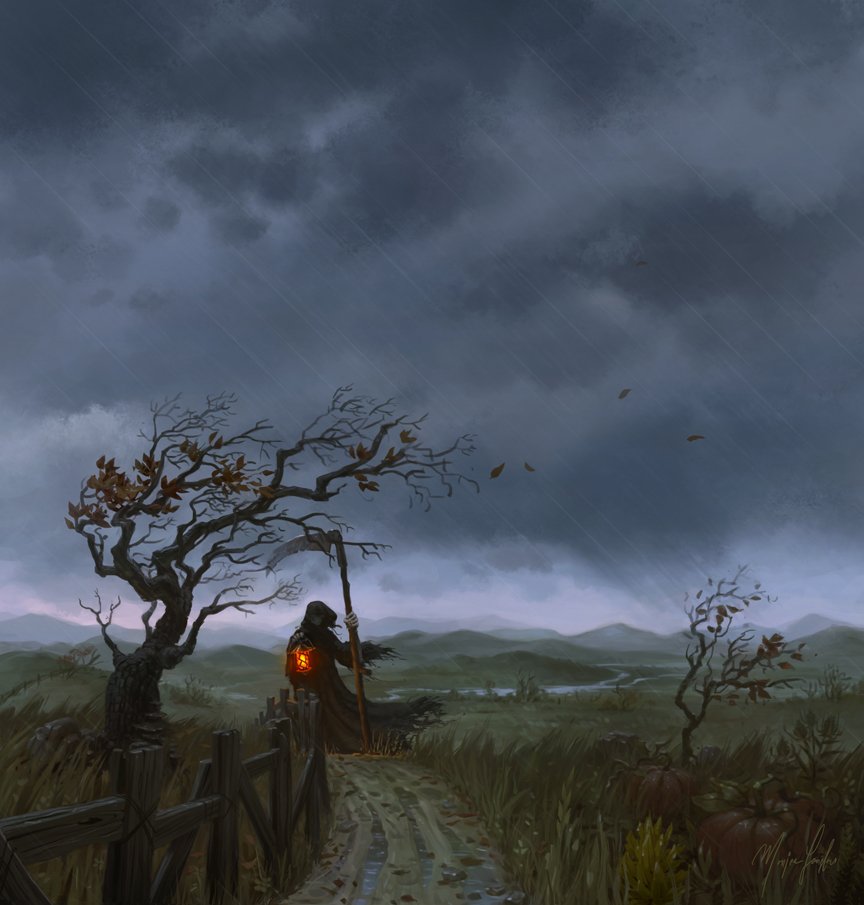
Encountering obstacles or difficulties on their Way, many magi call them “trials”, without clearly understanding who is testing them and why.
For the religiously minded person it is simple — there is some external power, a god or gods, who wants to know a person’s capacities or resilience, and sends these ‘trials’ to determine these very “trials”, which serve both to reveal hidden qualities and to develop them.
For the Magus, the source of his existence is his own striving for actualization, for the realization of his potential. Accordingly, most often he himself is the source of his “trials”.
The Magus clearly understands that no one can do anything to him without his consent. Accordingly, all events in a Magus’s life are expressions of his will, and the sufferings that befall him arise only from improperly concluded agreements.
Therefore it is very important for the Magus not to look for an external source for his “trials” unless it is obvious (for example, when a trial is part of an initiatory ritual). And if obstacles do come from outside, it is usually more correct to call them simply “obstacles”, because the point of a “trial” is precisely to determine suitability or unsuitability for passing a particular stage of the Way or for carrying out a certain action.
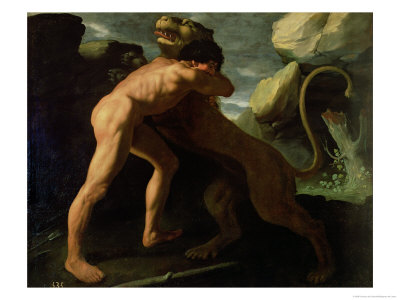
In other words, a “trial” in its inner logic “wants to be passed”, whereas an obstacle, by contrast, strives to remain unconquered.
It may seem that this distinction is not that fundamental, yet distinguishing the inner nature of an obstacle is necessary for overcoming it effectively, because, as we have seen, a trial has primarily an informational function, while an obstacle has a prohibitive function.
Indeed, understanding that you face a “trial”, a Magus must above all focus on self-knowledge; he must first of all understand his possibilities and limitations, and develop a general strategy to cultivate and reveal those possibilities currently closed. If, however, what must be overcome is an obstacle, then efforts should be directed, first and foremost, primarily at overcoming it, and reflection can wait until the battle is over.
Moreover, the distinction in the sources of obstacles is crucial — trials arise either from the very internal logic of the Way, or from a benevolent power — for example, a Master or a Hierophant — whose aim is to accelerate and harmonize the Way, or, in some cases, from malevolent forces that the Magus himself permitted to test him; obstacles, on the other hand, are usually born of forces seeking to halt development or, at least, to reduce its effectiveness.
Put differently, determining the source of an obstacle is important for devising the right strategy to overcome it, and therefore for devising the most effective action.
Therefore, before calling any given obstacle a “trial”, a Magus must ask himself — who is testing him and why, and whether he consented to this trial.
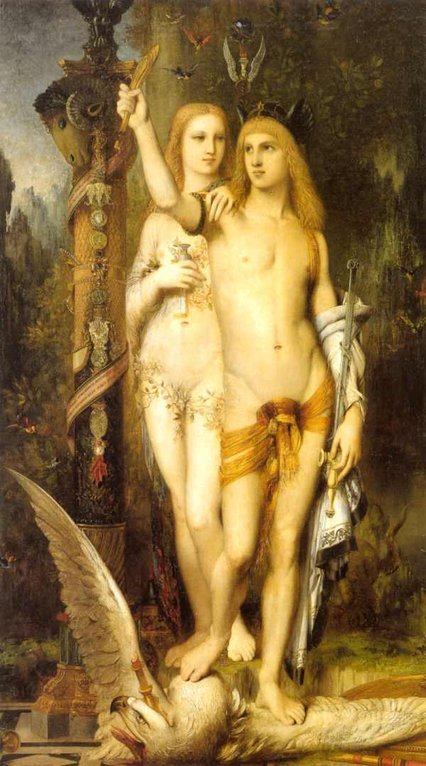

The difference between a test and an obstacle, as I understand it, is roughly this: When a student comes to take an exam, and you ask them according to the program approved by the Ministry of Education, this is a test. In this case, passing the exam is a necessary requirement to determine whether the student’s knowledge meets the minimum requirements needed to continue studying. If the student fails the exam and is not d’Artagnan (http://lurkmore.ru/Д'Артаньян) and is not inclined to indulge in self-pity, they will sit down and work on their gaps.
It’s different when a certain teacher has personal animosity toward the student for one reason or another and has a clear intention to fail them in the exam or, at least, significantly lower their grade, regardless of how much the student knows the material. In this case, the exam for the student transforms from a test into an obstacle. This conflicting situation may make further studies at this institution for this specialty simply impossible.
It seems to me that a test is always (or usually) reversible. There is always a possibility of retaking it in one form or another. An obstacle can be irreversible. No matter how much you try to break through the wall with your forehead, you won’t destroy it. For that, you need a hammer, a grinder, a perforator, a jackhammer, or at least a chisel.
I do not agree with such “reversibility” of tests. Practice shows that most tests, strictly speaking, are one-time, and for a “retake”, if it is even possible, usually a significant change in the system is needed, and from a magical point of view, a system that has not passed the test is a different system from one that has passed it, even if they appear identical externally. In other words, if a test is failed, it means the system (person, consciousness) is not what it claims to be, meaning it cannot occupy the position it claims, and it must develop further or completely restructure to occupy that position. Moreover, the repeated test is essentially subjected to a different system if the changes that occurred were indeed significant.
Yes. To speak strictly, I agree with this. Indeed, one cannot enter the same river twice. If we talk about the Magical World, then the rule “if you call yourself a mushroom, get into the basket” always works here. And claiming something, you inevitably invite tests or obstacles upon yourself. But, on the other hand, let’s assume there is some abstract Order, where the Neophyte is required to do certain things to become an Adept. According to the rules of the Order, to transition from Neophyte to Adept, a certain exam must be passed. Let’s say, this exam does not consist of having the Hierophant-Mystagogue offer the Neophyte two cups of wine, one with just wine and the other with wine mixed with hemlock juice, and the Neophyte must drink one of them, identifying by clairvoyance which one is poisonous. Let’s say, failing the test does not imply the physical demise of the Neophyte. Let’s say, the Tests imply something not so fatal. Let’s say, the Neophyte does not pass this Test, and they do not indulge in boastfulness, saying: “They’re all bastards, and I’m d’Artagnan!” Then what do they do? They analyze their flights and start working through what hinders them from moving forward. And then they can express their desire to move on again. Although, from a strict magical perspective, they will already be a different person than the one who failed the Test. But the first failure did not lead them to fall off the Path and turn back into a layperson among the general herd. So, how to put it, the essence of the Test is to check whether the subject has truly advanced to a new level or has remained at the previous one. Whereas an Obstacle aims not just to keep the subject at the same level but to push them back into the state of a layperson among the general herd. Or, at least, to make them an occult nerd who is in no way different in essence from a railway maniac, a computer player with red eyes, or a tank builder :), except for immense self-importance: “Phew! What nonsense – building tanks! I, meanwhile, am exploring the mysteries of the Universe – I’ve read the works of Alice A. Bailey and E.P. Blavatsky, and if you stack them one on top of the other, the pile would be higher than my head!”
“…Thus, in the era of decay, this serves as the main foundation for a worldview that corresponds to a person returned to themselves, who must test their own strength. They must become the center for themselves, affirm or discover the highest identity with themselves, feel within themselves the dimension of transcendence, and cling to it like an anchor, so that it becomes something like a door hinge that remains still even when the door is slammed (the image of Meister Eckhart). From this moment on, any “spell” and any prayer become existentially impossible. The legacy of “God” lies in the serene feeling of the presence of unshakeable perfect knowledge, superiority over life within the heart of life itself… This also means a complete acceptance of one’s own position, which excludes the possibility of religious crises, that is, liberates from the “feeling of being forsaken by God,” since at this stage it would be equivalent to God having abandoned Himself. Likewise, there is no room or possibility for denying God, as to deny God or to doubt Him would mean to deny or doubt oneself. As the idea of a personal God disappears, God ceases to be a “problem,” a subject of “faith,” or a soul’s need; the concepts of “believer” and “non-believer,” as well as “free thinker,” become meaningless. We find ourselves beyond both theism and atheism.
Having clearly established this moment, we can begin to show how to accept the existential challenge posed by all that is negative, tragic, painful, problematic, and absurd in life… It is well known that saying: “What does not break us makes us stronger.” Indeed, in our case, the foundation of this fearlessness must lie in the dimension of transcendence within oneself: it must be identified and confirmed in all situations where chaos and decay reign, turning them to one’s own benefit. This is opposed to the bold stubbornness characteristic of physical individuality, in all its forms, both unilaterally stoic and Nietzschean. On the contrary, it is about the conscious awakening within oneself of another beginning and the activation of one’s strength in trials, which one does not merely endure, but strives for, as we will discuss later. This must never be lost sight of.
In some cases, confronting reality and the possible trauma resulting from this confrontation may be used today not to confirm and increase the already existing strength but to awaken it. This happens when only a thin partition separates in a person’s character the principle of being from a purely human individual beginning. Dejection, emptiness, the sense of the tragic nature of existence, and other states of this kind, the negative exit from which becomes religious conversion, can lead to the indicated awakening in the case of a positive reaction… The problem of “being oneself” has a special solution in terms of achieving unity; as soon as it is experimentally established which of the many aspirations is central, it is necessary through a volitional act to stabilize it, organizing around it all secondary or divergent tendencies. This is what it means to give oneself a law, one’s own law. As we have already seen, the inability to do so, the “many discordant souls in the breast” as a state, typical for one who refuses to obey before learning to command, are the cause of the collapse that may conclude the path of a person who has dared to experience borderline situations in a world without God. In this case, the following maxim applies: “He who cannot command himself must obey. Many have learned to command themselves, but are still far from the ability to submit to themselves…”
…Indeed, at the first stage, which consists of knowing “one’s own nature,” destined to become one’s own law, this problem receives only a limited solution on the level of form, determination, or individuation (whichever is preferred), which provides a sufficient foundation to manage oneself in any circumstances. But for one who wishes to go to the end, this level does not possess transparency; at this level, the apprehension of absolute meaning is still impossible. That is to say, at this level, a person achieves an active position in terms of their desire to be themselves, but remains passive in the face of the fact that they are precisely as they are, and not otherwise. This can be perceived as something so irrational and dark that it can provoke a certain type of person to begin a new crisis and once again call into question everything they have achieved in the previously indicated direction. Then arises the mentioned necessity to move to the second stage of testing oneself, which consists of experimentally verifying the presence of a higher dimension of transcendence within oneself, that absolute, unconditional core which in life belongs not to the realm of existence but to the realm of being. In an environment bereft of any support or “sign,” success or failure in resolving the problem of the ultimate meaning of life depends precisely on this final trial. Once all superstructures have been rejected or destroyed, and the only support remains one’s own being, the only source of the ultimate meaning in existence can be only a direct and absolute connection between this being (between that which exists in a limited way) and transcendence (the transcendence within oneself)…” (Julius Evola. “Riding the Tiger”)