The Magus’s Happiness
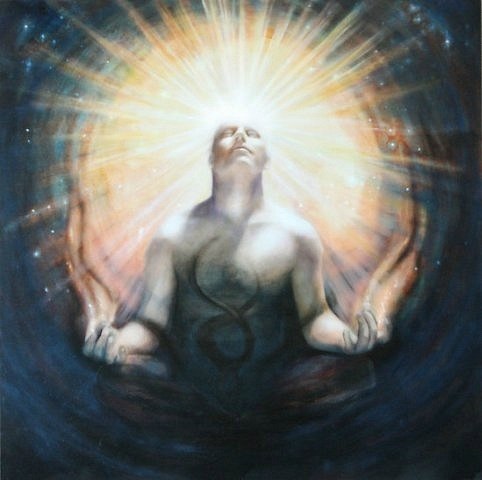
The ultimate goal of human life is commonly seen as happiness, the highest inner fulfillment.
At the same time, when one thinks of a happy person, the image that usually arises is of a cheerful, smiling person who ignores hardships and problems — essentially the image of a person with a sanguine temperament.
But does this mean that everyone who is happy is simply a sanguine, and that for other temperaments, ‘pure’ happiness is inaccessible — that, say, a melancholic cannot be happy on their own without turning into a sanguine?
To reach that inner harmony and fullness, which is subjectively perceived as happiness, can be achieved in two ways. The “human” way consists in bringing internal processes into harmony by ignoring or removing “inconvenient” elements from the focus of attention and optimizing the remaining elements. The fewer elements that remain in the field of attention, the easier they are to reconcile and the stronger the sense of well-being.
In fact, most of the so-called “spiritual practices,” popular and widely promoted, are precisely such a method of “creating an alternative reality” from which disharmonious elements are “excluded,” while what is convenient is assembled into a superficially coherent picture. This is exactly how a “sanguine” mind works: the sanguine simply ignores problems and difficulties, leaving only favorable elements in mental focus, and one can easily build a coherent system that does not tax the mind.
From this point of view, of course, neither the choleric nor the melancholic can be happy — for their minds are less one-sided; they contain internal conflicts that prevent the harmony from lasting longer than the time of the “favorable picture,” and introducing any conflicting element into that picture robs one of a sense of well-being. Nevertheless, it is clear that such “artificial” happiness, though it may seem complete and beneficial, is unacceptable to the Magus, since any narrowing of outlook, any exclusion of elements from attention, does not expand awareness, and thus conflicts with the magical Path’s ideology.
For a person, of course, it is precisely the “positive” vision that signifies the mind’s well-being, but the Magus also needs the vision of the negative. The Magus must not ignore or belittle any element of the cosmos, regardless of how illusory that element may appear — it must be considered to the extent it affects the overall balance.
One-sidedness implies a lack of freedom. A Magus possessed by angels is in no way freer than one who is possessed by demons, and ignoring evil, like ignoring good, does not foster real development. Although in the uniformity of elements there is no conflict, there is also no drive for growth.
From this perspective, it is clear that for the Magus a sanguine temperament is by no means more “fortunate” than any other. The Magus’s happiness lies in finding harmony in as many elements as possible. Any limitation of perception reduces fullness of awareness, and for the sanguine, their positive outlook obstructs them just as for the melancholic the obstacle is a negative outlook, for the choleric, conflict, and for the phlegmatic, inertia. Each person, to achieve their partial harmony, ignores parts of reality: the sanguine downplays suffering and pain, the phlegmatic undervalues movement, the melancholic misses uplifting currents, the choleric overlooks stillness; the extrovert loses the depth of inner life, the introvert underuses opportunities around them. However, the Magus strives to ignore nothing. Their broad vision lets them perceive harmony in pain, motion, and stillness, without fixating on any single extreme.
The Magus should move beyond any binary systems: none of the extremes alone nor their conflict, fusion, or neutralization offer freedom. The Magus’s freedom is a transcendence beyond positive and negative views — but not by merely ‘accepting’ the world; the Magus is never passive; always active, and their activity aims to increase inner harmony, with as many elements included as possible and thus to spread harmony around them. The Magus’s happiness arises when they learn to see harmony in diversity, the harmony of the Great Spirit, but in all its complexity, including its pain and struggle, not ignoring anything, not turning away, accepting the world’s joys and sufferings as conditions of its wholeness and growth.
As a person once hit by magic precisely because of psychology, I certainly wanted to say right away. There can be tons of fog of all sorts, however, all gates can indeed be closed. And there are many ways, some even relatively quick and non-magical. After this, some oddities occur that cannot fail to lead to magic. And here’s what I can say, as someone who has swallowed “the pills from the Matrix” by the handfuls (I haven’t actually watched the movie, it’s just an example, and I once played in life and wanted to know everything). The taste of all this turned out to be no joke. First of all – the most important thing was to love. Well, for me. I saw people for whom something else was important. Then it turned out that there was no one to love because all these sufferings and stories with gates – it’s that they are in people, and if you go to hug them and just quietly sit next to them – they will devour you and sew hats on you in 72 different ways. But knowing what you want, and basically trying all this both in childhood and in various moments, especially it was easier to achieve on the road, because people are not afraid of you and it seems they’ve nothing to take from you; it becomes a moment to just smile and love, and you will never forget that. I gathered myself and decided, so what, nothing scary and I will find those whom I can love, not running around the world but just looking around. By learning to endure certain types of pain, because everyone is afraid, seeing all possible types of fears, learning to scold and hit by the mustache – not people, but distractors, but not going anywhere while a person can still draw conclusions, some things started to work out)
And there are no psychotypes in this. This is what I wanted to say. I am ready to be anyone and have become incredibly sociable, whether a choleric or a melancholic. But not so that a person was comfortable with me but due to the possibility that one day I could sit next to him and smile. Calmly and truly happy.
I have probably seen all the illusions of the world, all the twists of plots – it is due to the work I approached seriously, during which I worked with immersion probably with about 5000 people. Because I conducted assessments and saw people simply at the peak of fears… and it was necessary to remain honest in all of this. And I can say there are no psychotypes – there are habitual behavior models. And if one really tries, then everything works out, it’s possible to obtain a person to love, and it turns out what is described in this blog as magical families, when you don’t even know or think, but another person at the other end of the world, other people – do something for you and you for them. A lot of goods come together if there is a reason. And psychotypes do not exist for such a purpose.
Types of temperament are merely the physiological basis of the features of the functioning of the nervous system, whereas a person is a bit more complex 🙂 Thus, the concept of happiness is unique to everyone, not only due to different biological predispositions but also psychological components, and the peculiarities of the environment in which they grew up, culture, family and more. Also, the level to which one has developed plays a role (if one has developed, of course). So if one has developed into a magician, then in principle, nothing seems daunting; in any situation, one can find a reason for further development, and isn’t that happiness?
We all run around, not knowing what we are looking for;
You reach out to thousands – and get hit on the head.
Freedom is to become absolutely impoverished –
Without a devoted sharp knife hidden behind your boot,
Two grams beneath the floorboards,
A trump card up your sleeve.
Everyone laughs, baring shark teeth, with a jackal’s eyes –
Parents hinted at who you did not become.
Freedom is to fall out of verticals,
From pretense and regalia, office reflections,
So that the very pavement would become your pedestal.
We spit Lugol’s solution, treat ourselves with alcohol,
Shoot up drugs, cursing the brothel of life.
Freedom is to become absolutely naked,
Like a golem,
Without lenses, rings, turtlenecks, –
And your skin was like armor to you.
And by the way, beyond the scope of both horoscope and destiny – all variations of fates, not only temperament, you find yourself with a certain approach.
Here’s the translation of the text to English:
“The magician must strive to go beyond any binary systems: none of the extremes, taken by themselves, as well as their struggle, and also their merging and mutual neutralization, contain the possibility for freedom.”
“not ignoring anything, not closing one’s eyes, accepting the joys and sufferings of the world.”
As for your question, it seems to suggest that while one should not ignore or close off to the experiences and realities of life (both joyful and painful), striving for freedom involves transcending the rigid dichotomies (like good vs. evil, joy vs. suffering) that can limit one’s perception and experience. This means achieving a perspective that acknowledges all aspects of existence without being constrained by binary oppositions or forcing a merging of them. It’s about finding a broader understanding that allows for a more nuanced experience of life.
Here’s the translation to English:
“You understand everything perfectly… 🙂
There are people who are in the thick of events with everyone else, but for some reason, the dirt doesn’t affect them; it’s as if they are surrounded by some invisible protective field…
What distinguishes such people from others?
-Their inner state-
But the inner state is not something that can be thrown away and replaced with another…
To experience a new inner state (a truly sober and healthy one, without considering any synthetics), one must build on their current state—refining it.
Maintain balance and refine it.
“Maintain balance on the tip of a needle…”
If you overly ignore reality, you’ll sink into a world of dreams (fall into schizophrenia).
If you overly immerse yourself in reality, you’ll be caught up in the hustle and bustle (your attention will be pulled in every direction, trying to drain your energy…)
This is beautifully described here:
https://enmerkar.com/en/way/the-maguss-elegance“
And the hospital smell is already in the air) the scent of medical alcohol and the struggle against the evil in humanity. Not understanding how it is – is the first step to understanding, and I have not seen anything more complicated than the search for the center of oneself. Especially the center from which one can truly live. Without quoting articles, without clinging to authors, and without freezing in the lotus position every half hour.
Here’s the translation of your text into English:
It’s very difficult and painful…
out of 100 people, only 7 succeed… just like in Forex… 🙂
(but usually, those who get there achieve it effortlessly… since childhood, they never stopped and they continue without losing their sense of being alive, their dream, and they are passionate about the game. They are scared just like everyone else, but their passion for the game overcomes it, and they go hunting instead of sitting back and waiting for something…)
The feeling of your flow (concentration, control) and centering are not the same… so no need to be vulnerable… 🙂
You don’t need to center around anything,
the center magnetically attracts you to itself; you don’t need to do anything for that… you want to sleep because your energy is depleted, and the Center pulls you in… resist or don’t resist, you will still fall asleep… but if you forcibly kept someone awake for 4 days, they would lose their mind or face a fatal outcome…
(in meditation, it is important not to center but to calm down, not to let your point of attention wander off to the colorful spots appearing before your eyes, to maintain balance, to have a plumb line, to steer the wheel… it’s like balancing a stick on one finger, not letting it fall…
and the Center pulls you in on its own; no action is needed…)
(For example: the person who invented judo wrote about this; initially, they had training taken from yoga related to centering. When they worked in the field (in the village…), they concentrated on the point below the navel while simultaneously mowing and weeding… after two months, they discarded all this “centering” as irrelevant… it only looks good on paper; in life, it is not applicable… but merging with the movement, finding your rhythm (through breathing) is possible, and once you find your rhythm, you can mow from morning till night without getting tired – even gaining energy while doing so…)
Here, the sense of movement is important…
and the sharper, the better…
Let’s say – in a school with 50 students in a class, only 5 engage in sports seriously; the rest look at them like they’re fools… (why do it? Time is wasted, you start to perform worse in studies, communicate less with peers… and all that…)
The answer is to develop your rhythm, to feel your body (not just to know it, but to truly feel it…), to bring your body to life…
The psyche becomes very sensitive…
A person starts to feel Life…
they don’t ask how to behave in a given situation, they don’t rely on learned patterns and rules; they feel and instantly react to any change (like a fish in water…), but for this, you need to have a living psyche – a living body…
Well said, Lir147……….subtle……..the internal state that corresponds to the inner essence – the conflict between “I” and “Not-I” is resolved…………….I walk down the street and smile – that’s what I want, that’s how I express my inner essence…………….what is commonly considered emptiness, in which I walk, is actually filled – filled with currents emanating from conscious beings – I become more refined – attuning myself to perceive all the currents – this is painful because most conscious beings are hostile. The painfulness of perceiving the currents decreases when you establish a “semi-permeable membrane” between “I” and “Not-I”…………..I radiate my internal state outward – my current. I allow only those currents from the outside that resonate with mine to penetrate, while others are reflected back to their sources…….but…..all their hostility, envy, anger, pain, illnesses, sufferings, desires, their internal states – touch “me – the membrane”………there is no way to ignore them when you become more refined, but there is a way to exclude their penetration if the internal state – the internal resonance is whole, harmonious, and there is simply no room, just no room for foreign, unharmonious sounds – false notes………..
Well, for women, everything is so subtle and aesthetic… Men, in this regard, are a bit more “wooden”… 🙂
For women, it is all different as well. There is one feminine state, usually radiating happiness – pregnancy. Accepting the unknown and the risks, the future challenges, pain, and suffering, the joy of life, creation, love, and faith come to the forefront.
The happiness of a mage lies in the fact that he sees and accepts the laws that govern this world. The mage perceives the big picture and hears the music to which life and death dance their paired dance quite harmoniously.
Two days ago we fought at training. My partner’s fingers were bloody, and their elbow hurt. I have a bruised finger. Both of us are satisfied. What else do you need for happiness?
A few days ago we trained against each other with an old acquaintance. Both of us got hit under the eye. A couple of days later we sat in a cafe, drank cocktails, ate ice cream and made plans for the future. We became friends. That’s happiness!
Often, it is the forceful interactions that open access to the depths of existence and self-awareness of oneself and others. It removes the superficial husk and allows for the feeling of harmony. Or to see its absence where everything previously seemed harmonious. And to act with an understanding of this. It allows identifying and actualizing one’s own individuality and helping others in this.
It can clear the space for the arrival of Power, Love, Friendship, and much more…
Perhaps martial arts did not disappear with the advent of firearms and due to the above-named moments.
Bruised fingers, bruises, and bumps – yes, happiness can be like that too. The same is true for more subtle “planes” or “bodies”. Yesterday I confirmed this once again.
Of course,
Sometimes in depression, there is more happiness than at a lavish holiday. Temperaments are a very ambiguous topic. Modern psychology considers temperaments to be innate and, in most cases, unchanging. Their origin ties to genetics. However, observations show a somewhat different picture; everything is much more complicated. It is evident that there is not a single healthy person with a permanent temperament. On the contrary, the behavior of a healthy person changes depending on the external environment and the inclination to interact with that environment. Here’s the situation: if a person has a vector of forces directed towards the external environment, and the environment successfully accepts the vector, the person sees the success of their investment and rejoices; in this case, they are a sanguine person, radiating constructive vibrations. If there is a vector but the environment hampers realization, yet the person does not give up and breaks through, they are a choleric. They radiate destructive vibrations to break through. If there is a vector, the environment hampers, and there isn’t enough strength to break through, then the person at that moment is a melancholic. They radiate destructive vibrations, and very often they are closed in on themselves, destroying themselves. If there is no vector, or it is weak, or directed not directly into the surrounding environment, but somewhere far away, i.e., at that moment, there is no vector in this environment, if so, the person does not realize their strengths, they accumulate and hold them; they are a phlegmatic. The emissions of a phlegmatic are relatively minimal. What about the physical body? With the predominance of lymph, blood, bile, and black bile? Here lies an interesting thing. The physical body reacts to surrounding emissions, and first of all to the emissions of the person themselves. And the internal fluids are subject to emissions. Moreover, the physical body has a certain overall state that is most suitable for a specific environment, plus a certain inertia. Yes, genetics can be viewed as inertia in this case. It turns out that the vector of a person’s own forces interacts with the condition of the physical body. If the vector of forces corresponds, for instance, to a ‘choleric vector’ + a fast choleric body, then everything is okay, everything comes easily to the person. However, if a person has a phlegmatic-melancholic body, it will resist (‘how could this be? I’m used to sleeping and whining, and you’re forcing me to work?!’), and in this case, the ‘choleric vector’ must be much stronger to succeed. However, the physical body, even though inert, is quite susceptible to changes, and after several such investments, it will awaken and start to get used to the fact that it exists for actions. And the internal fluids of the body, yes, also restructure themselves to adapt to the person. Therefore, the assertion that temperaments are innate and unchanging is fundamentally erroneous. I, as a person who has lived long enough in each of the four temperaments, can state this with confidence. On the contrary, from this description, it is evident that having only one temperament for a lifetime is a pathology, a limitation, a bad habit that more often leads to failure than to happiness. (By the way, I can say the same about Jung’s and Ausra Augustinaviciute’s popular socionics today. There is something in the internet about how she changed those sociotypes at the snap of a finger.) A person’s character depends not so much on genetics and external environment as on their will, on the strength of the person themselves, on desires that stem from the depths of their being, and on the goals they set for themselves. If you seek happiness, do not limit yourself with frameworks… imposed by neither you nor us. Nowhere in nature are there instructions detailing how one should act and how to behave properly. But the answers ‘correctly’ or ‘not’ can be found in one’s heart.
A Hasidic tale. He couldn’t get a job. He had no money for public transport. He got to the point where he started asking his parents for money for travel to interviews. The parents began to begrudgingly give money for him to get to interviews. In general, you can not work, just stay home and use the computer. If you really need to, you can ride for free. In general, a dead end. As a result, the traveler began to vent his frustration on his parents and surrounding pieces of furniture. He ended up in a mental hospital. He spent 5 months there, received a disability. Now he has free public transportation for a year and a pension. A positive perspective. Now the traveler has conditions for contemplating Orleg.
Abramedlim, what does it mean to vent anger on items of furniture in your tale? Trying to destroy something, perhaps? And what got you into the mental hospital? I see in your tale a fork of mismatched expectations (read egoism) of the traveler with their existence—is that so? Or did some Higher Powers arrange the mental hospital for them? Please explain, I have a similar situation with work—should I prepare for a mental hospital?
To throw away, rid oneself of, destroy things starting from letters in one’s own name to furniture. When you want to find Your way, there is a single desire to rid yourself of distractors to make the journey easier. Everything and everyone falls into the category of distractors. Then time is needed to comprehend what needs to be returned in order to take along on the journey and time for restoration. Yes, this was the case until the mental hospital; the mismatch of expectations. All expectations were projected onto the imaginary Magical family of the traveler. For harmonious following on one’s path, they needed the mental hospital. Preparing to seek or create a Magical family or lead a dreary existence.
Author, tell me honestly, how many percent of knowledge was lost in the process of translating it into words?
So. The happiness of a magician is seeing harmony in diversity. What does this mean? If I see harmony, I am happy; if I do not see harmony, am I unhappy? That is, the happiness of a magician, just like a person’s, depends on perception? (And who is the Great Spirit?)
Perhaps the author has a specific and clear point of view on what the happiness of a magician is. Perhaps I am too stupid to see this formula in the article. But still, I would ask to make articles more concrete because a smart person already knows this, and a foolish one does not understand. Despite the abundance of words, a clear picture does not emerge.
It is not achieving the desired that makes us happy; it is a specific state of the soul.
I believe that a magician experiences happiness when their efforts can help a person – it is difficult to describe these feelings. Happiness for a magician is to walk the path, to develop, to gain new knowledge and use it.