
The Flow of Power and the Inertia of Movement

We have discussed that the Way is a system in which each step is the result of the previous step and the cause of the next step.
From that understanding, movement in the Flow of Power may appear as swimming “with the current” of that Flow.
Although the apparent contradiction between such a view and the importance of alertness for the Magus seems clear, many travelers fall into the trap of inertia in their Way and avoid building it, preferring to follow established patterns. In practice the “life of a Magus” often proves to be the ordinary life of a person, with only the names changed — vanity labeled ‘honour’, aggression called “the spirit of the warrior”.
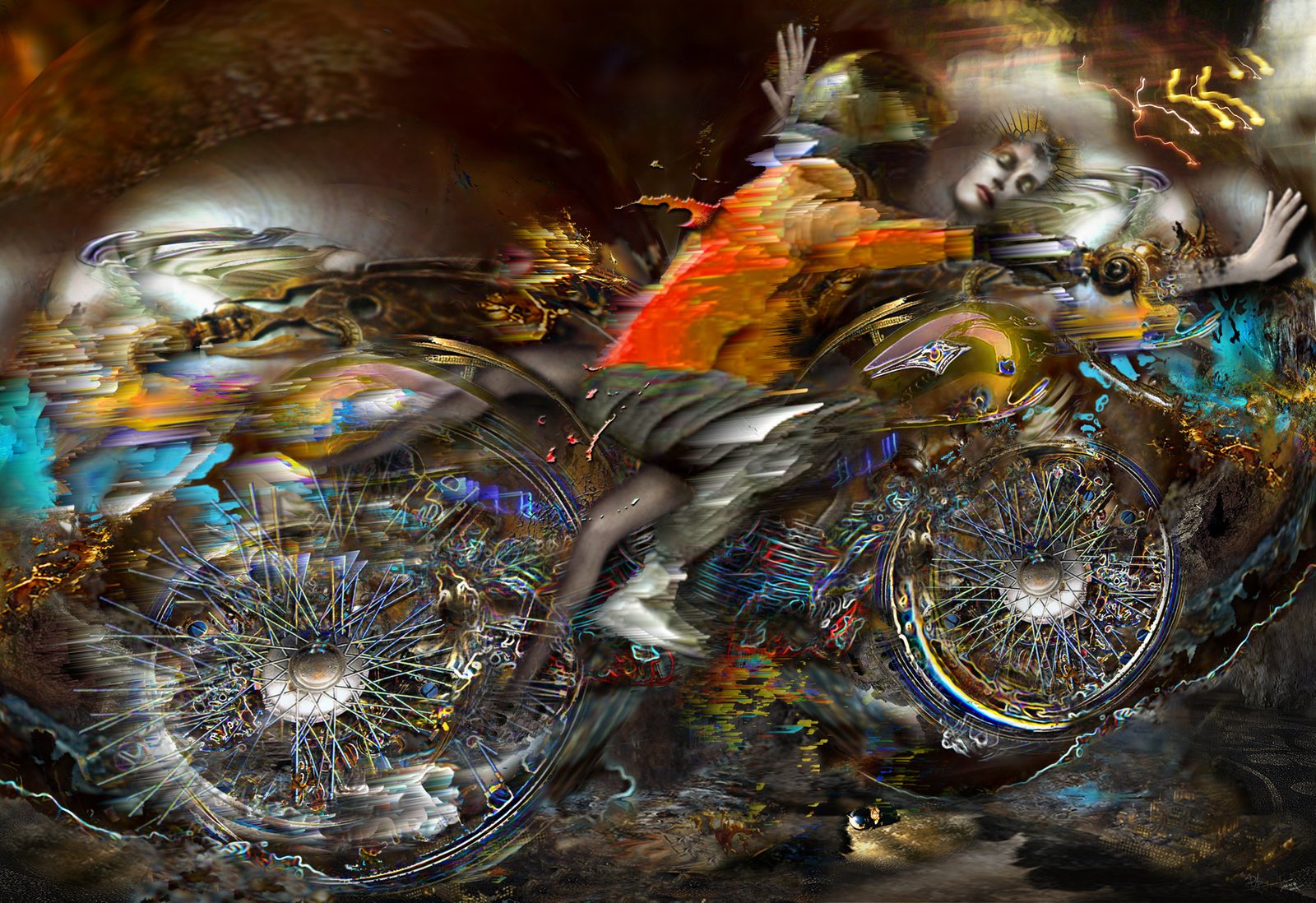
Indeed, even Magi who have overcome the habit of acting automatically often fail to maintain the balance between the systemic nature of the Way and its flexibility. And even a Magus who has won victories on his Way and become accustomed to certain successful strategies sometimes continues to apply them even when a fairly simple analysis shows them to be ineffective in the situation. After all, for many Magi it becomes more important to appear to be right than to achieve an effective result, and all effort is spent on maintaining their system rather than allowing it to fail in particular situations. The cause of such an error is most often fear, born of the sense that if the Way is wrong, it is flawed and therefore must be abandoned. The fear of losing the Way is a very common fear among Magi who have travelled it for a long time. Their train of thought is roughly: “if I lose my Way, what will I have left?”… Nevertheless, a system’s lack of effectiveness does not always mean its collapse, and the more perfect the system itself, the greater its degree of flexibility, its capacity for application and for modification when the field of battle changes. At the same time the “energy of the Way” can manifest in two ways — as a “habit of doing something” and as an “inertia of accumulation”. In the first case we are dealing with a destructor, in the second — with “beneficent” energy. In other words, by giving in to the habit of movement, repeating the same actions — even those that once led to great victories — the Magus exhausts, castrates his Way, depriving it of inner vitality and fruitful power. As mentioned, the Way is at times a smooth road and at times a swift and hard-to-predict mountain torrent, and to pretend you are walking a road when you are rushing in a whirlpool is, to put it mildly, unwise. We will stress again — there is nothing terrible about being wrong, and for Magi the well-known proverb is especially apt: “only he who does nothing makes no mistakes.” And although a Magus’s mistakes, like those of a sapper, can sometimes be very costly, they cannot be completely avoided, and the skill of the Magus lies precisely in the ability to extract benefit from his defeats. A Magus follows winning strategies only so long as they are genuinely winning, and readily changes them when they prove insufficiently satisfactory to his requirements. This means that the Magus analyses each of his steps twice: before making it and after it has been made. The first check allows him to choose the most effective means for each situation, and the second to assess how correct that choice was. The first analysis serves to develop the Way, and the second to develop the Wayfarer himself. And one must never yield to the temptation to make use of the fruits of past victories. Let us remind once more that when a hunter walks through the jungle, leopards attack him regardless of how many predators he has defeated before, and the danger of being eaten remains even for the most experienced hunter — only increasing in the case of ignoring the danger and the thought, “if I have defeated a thousand leopards, I will always kill the thousandth as I did the first.” On the contrary, a thousand killed leopards should teach the hunter that as many enemies mean as many strategies, and therefore the hunter himself must be able to try on different approaches; the greater his plasticity, the greater his chances of success.
Fear is something that has always existed and must always exist. Sometimes it seems to me that you read my path or my thoughts. Your posts appear on exactly the themes that have just happened to me.
Then I am curious: how to distinguish following the path from wandering in one’s fantasies? For now, I am relying only on my inner feelings, but I am interested in the system because I have nothing to answer the question: “Why do you think that I am making a mistake?”
But I am even more interested in how to distinguish in people the recognition of mistakes from empty words? I am curious about your opinion on this, asking for self-education and out of curiosity for comparison of opinions.
Recognition of mistakes is not saying: “Oh, how wrong I was!”, it is changing the way one acts to prevent similar mistakes in the future.
As for the Path and fantasies, the criterion is also effectiveness – if your fantasies give you Power, allow developing, then these fantasies are the Path 🙂
Thank you; everything is clear with this. You only confirmed my opinion, but does it mean that people who replace one mistake with another merely worsen their condition and should be kept away from? Is it worth trying to explain something about mistakes and more to a person who does not want to hear anyone but themselves?
It’s worth it, but not to convince them, but to not remain silent in the face of Power: https://enmerkar.com/en/way/words-before-the-face-of-power
This remark is very dear to me..
To be silent or to speak?
Some years ago, a friend from a neighboring town called me, asking for a gynecologist’s phone number. I pictured her two little sons – freckled red sunflowers – and realized she wants to have an abortion. I said – no such thing. I wanted to say that I thought about her intention, but a voice inside me silenced me: This is an adult, educated person. You were not even told about the abortion. Who are you to interfere in someone else’s fate? I stayed silent. And because of this, an unpleasant feeling remained. Now I understand why.
Without inertia, there would be no strength, as strength is action, and inertia is reaction, which, according to the third law of motion, are equal in magnitude. Therefore, if the reaction is zero (absence of inertia), then the action will also be zero.
This implies that without opposition (inertia), there cannot be action (strength). So they are necessary to each other.
Is this convincing or not?