Passions of the Magus
We have said more than once that the Way of the Western Magus is a path of high-intensity realization; moreover, unlike Eastern Ways, which demand the attainment of maximum equilibrium, realization on the Western Way requires constant tension and imbalance as the driving forces of development.
At the same time, we have also emphasized that, despite this imbalance, the Magus always strives for the maximum harmony and integrity of his being.
In other words, on his Way, the Magus does not seek to smooth over, calm the inner turmoil within his being; instead, he seeks to direct the tension that arises from that boiling into the course of development and the perfecting of his mind.

The integrity of the Magus’s being does not lie in the exclusion of diversity, but in the organization and integration of that diversity into a single complex yet internally harmonious system, subordinated to the overarching idea of actualizing his potential.
The idea is that at every moment the Magus’s being should not be in a state of “transition from imperfection to perfection,” but should be harmonious in that particular aspect. Many paths and methods of developing the mind, facing inefficient, disharmonious functioning of the mind, propose a long process of restructuring, a transformation into a more perfect system.
And, as a general principle of development, this approach, of course, applies to Magic as well. However, instead of “postponing” perfection for later, the Magus strives for the maximum harmony available to him right here and now.
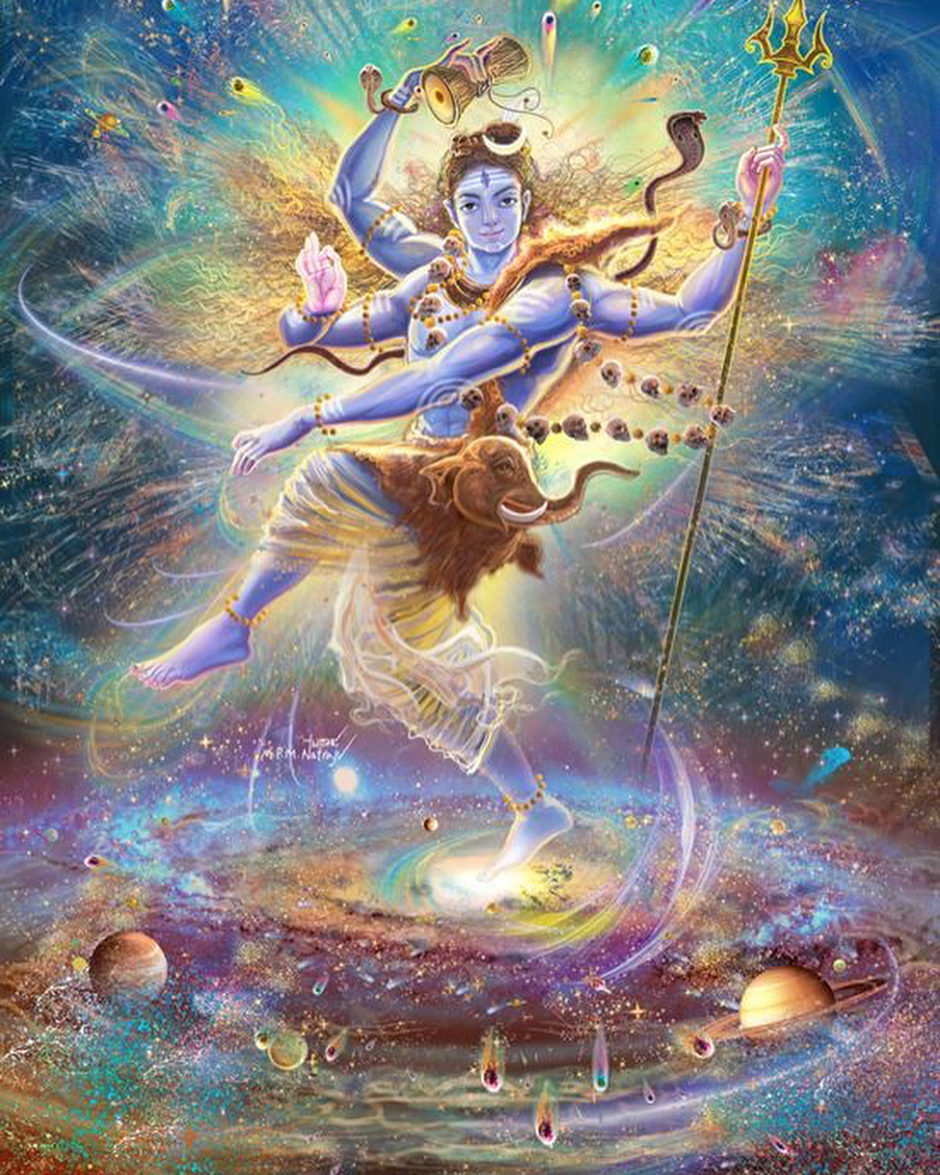
In practice, this means a constant state of agitation, a cycle of melting and casting, repeatedly performed by the Magus throughout his Way. Put differently, as soon as he sets foot on the Way, the Magus must immediately recast his being, decisively and irreversibly change the character of connections from less to more efficient, those available at the current stage. The Magus’s being must change, or rather be reorganized, immediately and completely, regrouping the existing elements into a more effective system. After that, this system continues to develop, incorporates new elements, discovers defects in itself, and is again recast and crystallized into an even more effective state. This cycle repeats continuously throughout the Magus’s life.
However, it is very important that the recastings and regroupings of elements of the mind should not take long because the Magus seeks to reduce the periods of mental instability to a minimum, since real development is intense only when the mind is crystallized, and the Magus, as we have already understood, aims precisely at the maximum intensity of his development. Very often, the developing mind seeks to regroup whenever it senses imbalance, striving to return to a calm state; in fact, most of life is spent in unstable oscillations and reorganizations, and the net result of development turns out to be quite negligible.
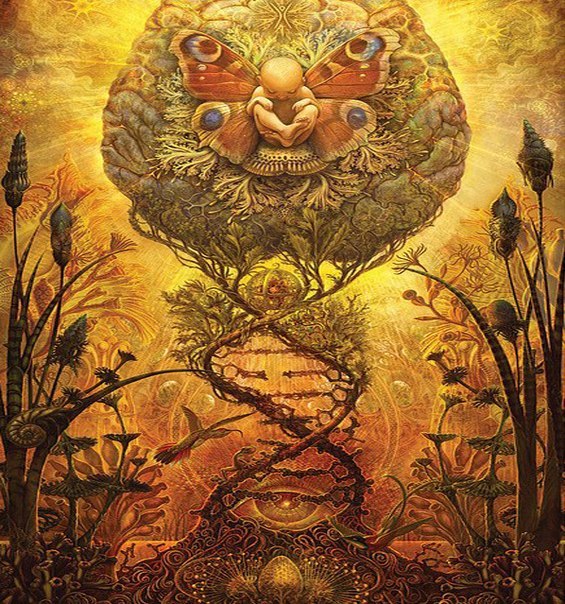
Therefore, the Magus does not reorganize each time he senses imbalance; he intensifies that imbalance, brings it to a maximum, and only when the tension reaches its peak does the Magus rapidly and efficiently recast his mind, moving it to a new, higher level. Comparing this to the metaphor of melting metal, one can say that the Magus’s mind spends most of the time in a red-hot state, passing into a white-hot state of melting, only for a short time and only when truly necessary.
Accordingly, for the Magus, equally unsuitable are both the state of “coolness,” the relaxed state typical of ordinary people, and the “molten” condition characteristic of trance-based, “altered” states of mind.
The Magus does not bewail his shortcomings; he quickly and decisively frees himself from what he can, and what he cannot yet discard he forces to serve his development. Only in this way — by making no concessions and constantly increasing the intensity of his developmental cycles — does the Magus gain a real opportunity to achieve the maximum degree of actualization available in his current incarnation and thereby leap to fully realizing the potentials of his Monadic nature.
Enmerkar, I have a question for you on how to be a pagan magician who walks the Path of the Northern Tradition; is your described concept applicable to those who follow the Northern Path?
There are as many paths as there are travelers. And while nailing down the Myth and Law of one’s own Path, everyone has to decide for themselves which precious beads of experience from other travelers they can thread onto the necklace of their experience and which they must discard. Most importantly, the approaches, ideas, and discoveries made by other travelers should be known to them. In fact, the aim of my exposition is just this description of possible paths. And which of them you will incorporate into your own Path – only you can choose.
Thank you, Enmerkar, I was just reading
about paganism and magic and have thoughts
that resonate with my perception of the Path and
add to the Path, I add to my
experience for further following
the Path I have chosen.
“Only in this way, not giving oneself indulgences and constantly increasing the intensity of the revolutions of one’s development, does a magician gain a real opportunity to achieve maximum realization.”
I consider the following problem to be quite acute. When reaching a somewhat high speed of consciousness revolutions, difficulties may arise with applying consciousness in an environment with a lower rate of revolutions. I know two ways of solving this problem:
1) Temporarily lower the consciousness revolutions to the rate of the environment.
2) Without lowering one’s consciousness revolutions, synchronize the rhythm of consciousness with the rhythm of the environment.
Are there other ways?
There are also several interesting ways. If there are POTENTIALS in the environment for increasing revolutions, one can increase the revolutions of the environment itself. In this case, the MAG leads the environment, maintaining their pace of development.
In the absence of potentials in the environment for increasing its rhythms, the MAG gives part of the rhythm to communication with the environment, and the other part of the rhythm of revolution is spent outside the environment, thus synchronizing with the lower periodic frequency of the environment while in NO CASE not slowing down themselves 🙂 The key to this is parallel processes. At a higher level – applying parallel universes and parallel probability lines 🙂
I do not see a problem, only guidance for possible actions.