
Is It Easier to Walk Together?
We have already discussed, despite the complete and absolute independence of Monads, embodied beings can effectively interact, and this interaction is all the more successful the more elements their compositions have in common.
Moreover, we also noted that any magical Way begins with someone setting us on that Way, giving an initial push to our movement while our own power is still insufficient for movement.
These two aspects explain why, traditionally, Magi — who everywhere emphasize their “chosenness” and “uniqueness” — nevertheless always tended to form various groups, “covens”, “lodges” and “Orders”. With sufficient honesty and conscientiousness among participants, such groups did not become sects; unlike sects, magical associations were sober enough to see the limits of the “private” and the “common”.
In fact, the point is precisely that the shared elements contained in the Compositions of different people, filtered through their unique individuality, when properly combined are perceived and brought into consciousness much more effectively and, accordingly, lead to a greater accumulation of power than solely individual development of awareness.
In other words, if the people in a group are genuinely united by a common Way, and not by the authority of a leader or some other false motive, then their journey together is not only easier than solitary movement, but the effect of this mutual amplification is not reducible to a simple sum of their efforts; it possesses an additional resonant component. Walking becomes easier in a geometric, not an arithmetic progression, and the multiplier of that progression increases with the resonance of the companions’ Compositions.
A common objection is that the achievements belong to the group, not its members, and that leaving the group automatically leads to losing the gains. But that is true only when the group forms an Egregore. Often people call any joint human activity an “egregore.” However, anyone familiar with the rule of formation of Vortices understands that the individualization of collectives — specifically, the emergence of a group’s “spirit”, an Egregore — occurs if and only if the leading element of the bond is the emotional principle, from the fabric of which the Egregore’s vortex is woven. Thus, for example, a family united by mutual love has an Egregore (we will not at this moment delve into the varieties of Egregores or distinguish the physiological Egregore of a kin from the proper Egregore of a family). Similarly, a sect united by love (or fear, or a mixture of both) of its leader inevitably forms an Egregore. Egregores are always present in states formed by patriotism, and, say, in football teams formed by that sentiment. Magi, even at the dawn of civilization, discovered that if the motivating principle of an association is pure Will, then the group’s collective vortex does not vampirize the vortices of its members; that is, strictly speaking, it is not an Egregore. Moreover, in such a case there is effectively an identification of each participant’s individual vortex with the group’s common vortex. In other words, each contains all, and ideally such a system is balanced — nobody “pulls the blanket to their side.”
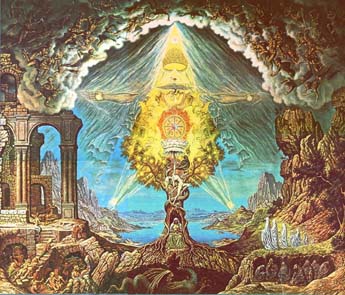
So, in its original sense the idea of forming groups of Magi was precisely based on creating resonant structures in which each individual’s abilities are available to the others, multiplied by the amplifying effect of the union itself.
Unfortunately, the vast majority of real groups of Magi were far from this ideal. Even when born with pure intentions they soon, under pressure from external and internal enemies, degenerated into ordinary egregoric associations in which each participant became merely a “cog in a single system”, and his individuality, instead of forming the common idea, was subordinated to and even absorbed by that idea.
Therefore anyone who decides either to join such a group or to create one must pay the utmost attention to the processes occurring within it, preventing vampirism and taking steps to encourage mutual exchange of power. In that case the effects will exceed all expectations.
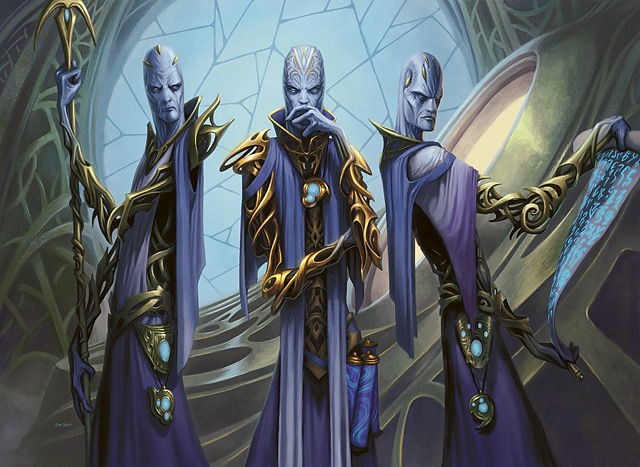
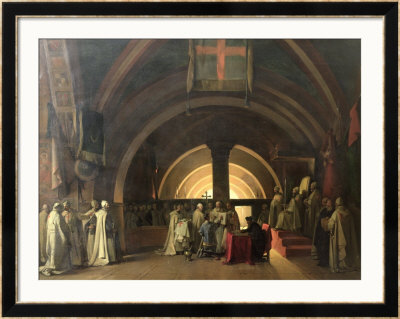
Doesn’t a group attract more attention to itself? After all, the more Power, the more noticeable, and hence greater resistance… for instance, the Templars.
Of course, it attracts. However, in the case of an effective group, its capabilities still outweigh this disadvantage.
Should it be understood that the effectiveness of the group is higher the less group interest there is and the more individual (volitional) efforts coincide in vector?
Thank you for the information. Now I understand why I wanted to leave the meditation school. And always a kind of detachment. The readings of poems and messages on the theme of ‘how everything became good for me and my crooked legs straightened’ during group meditations only made me laugh.
Thank you for your articles! Very good and resonate.
Tell me, how can this “common element” be determined with a specific person?
“He is attractive.” or “He draws attention.”
My unending desire to find such a group. Thank you for clarifying such subtle moments about the egregore and the magical family.