
Flight of the Soul
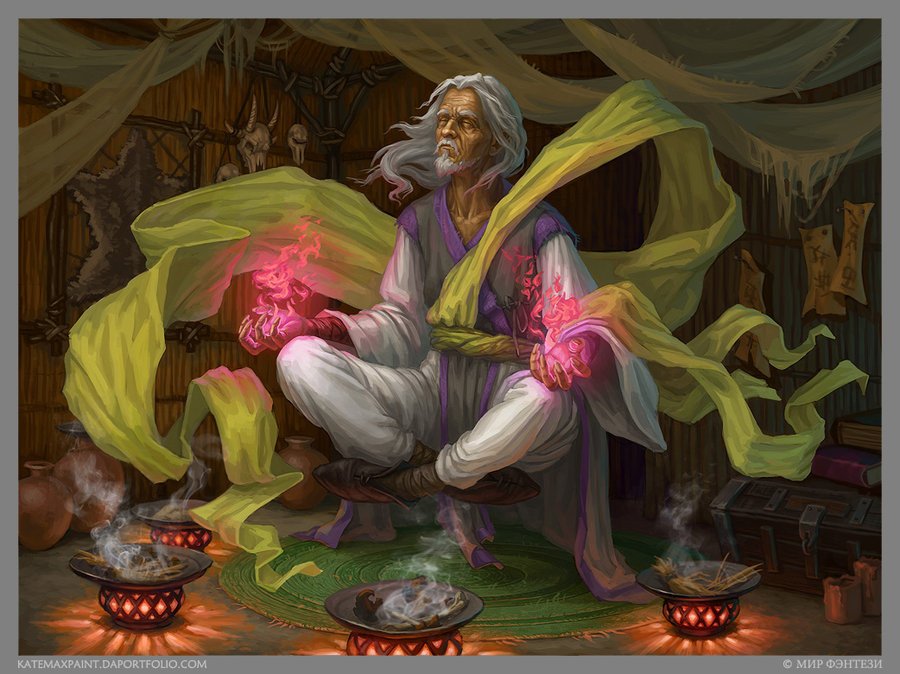
Various factors that weaken the mind’s link to particular circumstances of its manifestation also loosen the constraints and bonds that place limits on the mind.
In other words, if, under the influence of certain factors (music, breath, spells or mantras, incense, etc.), the mind’s link to its channels weakens, the mind experiences a lightness and freedom that accompanies a reduction of limits on its expression.
On the one hand, such a state — bordering on the mystical ecstasy of Dionysian dissolution into the world’s fullness — is extraordinarily attractive and inspiring.
But on the other — like any unbalanced state — it draws the mind deeply toward only one pole of the spectrum, depriving it of clarity.
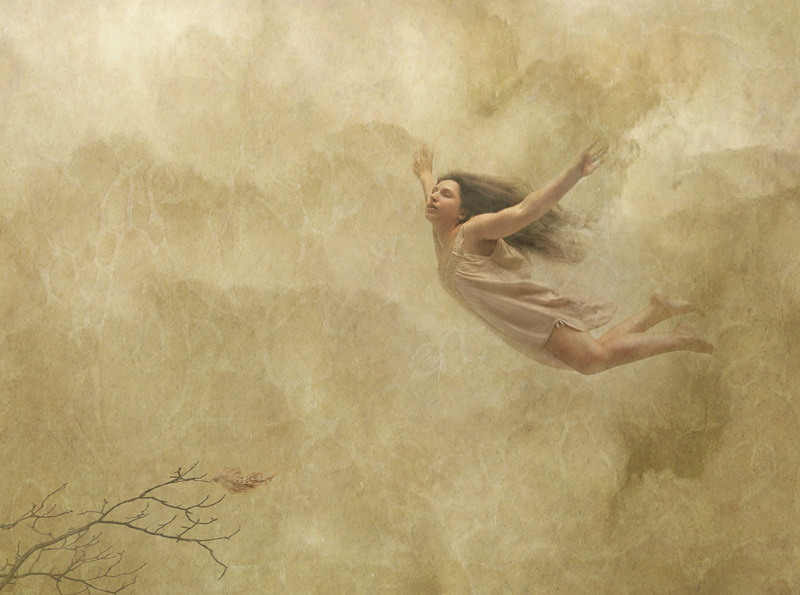
The inspiration of the poet, like the ecstasy of the mystic, is the most vivid example of such a “separation” of the soul from the body, although less all-encompassing experiences occur practically daily under the action of “unraveling” influences.
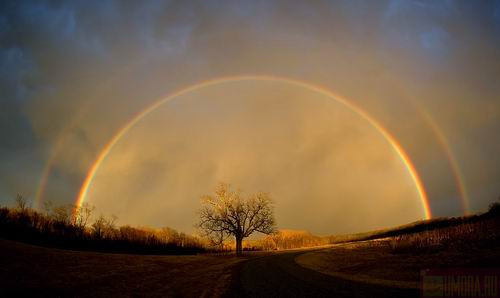
The importance for the Magus of balancing between these poles is obvious.
Indeed, a Magus who cultivates his nature harmoniously feels both the attraction of “unraveling” forces that lull his mind and the clarifying influence of reason.
It is no accident that Odin, having drunk the Mead of Poetry and flown like an eagle over the vast realm of unconscious impulses, then gave the Mead to the poets rather than adding it to Asgard’s treasures — inspiration is useful so long as it does not carry the soul too far, so long as it preserves alertness and readiness for action.
The Magus must avoid both excessive “immersion” in events and excessive detachment from them, not falling into the traps of either everyday bustle or the barren, sterile contemplation of pure spirit.
Without shackling his mind to worldly ties, yet without dispersing it in the world’s abyss, the Magus walks his Way, remaining himself — wind and cloud, tree and bird, neither disappearing nor becoming too distinct.
Thank you for the article, Enmerkar. Tell me, can the state of “as if in a fairy tale” (i.e., reality is not perceived as such) be considered analogous to the concept of “weakening of consciousness”?
This state corresponds more to a dreaming state.
Are there negative consequences of such a state?
Of course, just like in any dream.
Thank you, this is just what I needed. I was thinking about this yesterday.
Recently I came into a state of abstraction from everything. It is just that you get tired from being pulled in different directions. Constantly resisting the pull into the hustle and as you correctly said, contemplating the pure. Until I find balance. I can’t understand why. Probably because of constant control. I was told correctly, one cannot be one person by day and another by night, but for now, it isn’t working out differently.
Thank you very much for the answers, Enmerkar. Your articles are always very timely.
What is the positive aspect of such ‘dream-like’ states (after all, balance is important, not the exclusion of such states)? I see at least two points: 1. More effective channeling of flows, for example Runic, into the Psychocosmos. 2. For techniques using “unraveling Ea”. For example, the Alchemical re-melting of the soul and the third stage of the Circle of Semargl.
Î^m sending you rainbow, thak you for your birds,
We are togethe, without a bords.
We are the same waves, similar steam,
geting throu life so strenth, so upstream.
Being united, even split up,
haveing the feelings for everly love.
Who knows what is better?
GODS,chant please, our days!
Who^ll says what is matter?
GODS, bless please, our ways!
If we talk about the problematic side of the phenomenon, then there are two questions: 1. In the state of ‘unraveling’, consciousness begins to fade (its analytical component) (after all, this is essentially one of the first stages of disincarnation), but it is necessary to ‘dig’ deep. What can be used as reference points of consciousness for immersion into the Psychocosmos during ‘unraveling’? 2. Not always what is understood and resolved in dreaming states can be brought into the manifested world; in everyday events, habitual reactions begin to dominate again. What can be used as threads to connect (and thus balance) the experiences described in the article?
Thank you. Please tell me, is there a concept of ‘dark paths’ in traditional magic and what does it mean? This word comes to me in dreams when I feel the inspired detachment you described.
‘Dark paths’ somehow associates with ‘Set’s Tunnels’ – pathways on the Tree of Klippot (a concept developed in the works of Kenneth Grant). So be careful with such states. At first – inspiration, then – exhaustion.
Set’s Tunnels are supposedly related to the Egyptian Order of Amentet; they were trying to reach the ‘inside out of the world’ (klippot?). I doubt something like this can be done in an uncontrolled sleeping state, although it sounds tempting :). Supposedly, time or something similar does not govern those who have been there. Nevertheless, thank you for the answer!
Here is the attitude of the Sufis towards the afterlife (this is news to me):
Question: How do Sufis relate to asceticism and seclusion?
Answer: The Sufi path is not based on ascetic practice. The ascetic, turning away from this world, turns to the afterlife.
The Sufi, drawn by Divine Love, renounces both worlds. His asceticism consists in being free from everything that is not God.
The poor at Your door
Do not need eight Paradise gardens.
A prisoner of Your Love
Is free from both worlds.
(Hafiz)
The Sufi believes that one who does not find the Truth in this world will not attain it in the next. Living in harmony with society, being externally among people, but internally with God, is considered in Sufism a manifestation of human perfection.
“The true saint is one who lives among people.
Eats and communicates with them, marries, raises children, buys and sells at the market.
But does not forget God for a moment.”
(Abu Said)
From here: http://portal.sufism.ru/index.php/2009-10-22-23-33-29/54
It’s like the middle path in Buddhism.