
Magic and Society
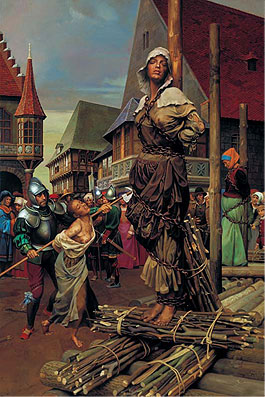
It is well known that since ancient times Magic has provoked sharp hostility from both official religion and the state. The usual explanations attribute it to the “illegality” of magical methods, the Magi’s encroachment on spiritual authority claimed by religion, and methods of influence that are difficult to control and dangerous for the state.
However, another aspect often goes unnoticed. Magic is deeply individualistic and even antisocial. By recognizing the uniqueness of each person and asserting the uniqueness of their path, Magic challenges the notion of the individual as a “member of society”, a “part of the church”, and so on. Indeed, having undergone social death, the Magus confronts their true self and withdraws from social life. Then, having met a kindred companion (for example, a student), the Magus encourages them to leave society as well. Since it is usually the more progressive members of that society who turn to Magic, society, of course, is not pleased to see them go, and does its utmost to portray Magic as corrupt, dangerous, or sinful. Not wishing to lose their “flock”, social structures sometimes even respond with exaggerated aggression.
Moreover, recognizing the difference between the Magi and ordinary “cogs in the machine”, society (both governmental and religious) begins to regard the Magi as “outsiders”, “others”, which, in principle, is quite understandable, and as a result, heaped xenophobic abuse upon them. In this respect, only people with sexual minorities fare worse than the Magi, for the same reasons.
Another aspect of this confrontation between Magic and society lies in rather paradoxical, at first glance, outbursts of aggression toward the Magi from “spiritual adepts”, various “gurus” and the like. Usually, these attacks occur under the same claims that the Way is ‘unworthy’ or ‘corrupt’ of the Magical Way, yet the real reason often lies in that very social competition.
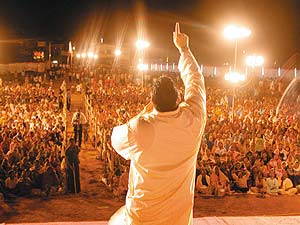
Many of those who proclaim themselves “Masters of spirituality” leave the social sphere, withdraw from society, but only to form their own community. Claiming leadership, wishing to be the chieftain of their “tribe”, such “gurus” naturally cannot tolerate the Magi’s individualism, for Magic teaches trusting oneself above all, one’s heart, one’s Way, not the authority of the “enlightened”, the “attained” and other predatory gurus. The “enlightened” spare no effort in smearing the Magi and Magic, and smear them with accusations.
This last point proves to be very significant. Indeed, the Seeker, feeling a pull toward something broader and deeper than the everyday, is likely to encounter such an “enlightened Master” who says: “I know what you need. Follow me.” And he follows, moving from one consumerist group to another.
Nothing changes — he remains a source — as he was a source of others’ well-being, so he remains.
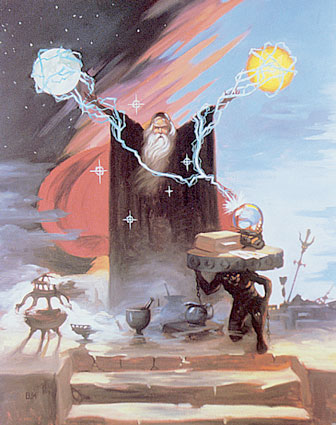
A competent Master of Magic, however, does not say “go after me”, but “go with me”, not separating themselves from the student, not exploiting them, but on the contrary, nurturing their uniqueness, developing their sense of self. The Joint Way of the Master and the student of Magic is aimed at attaining power, not at changing the student, not toward their “upbringing”. We have already said that this state reflects the gnostic notion of the “Pleroma”, where each individual, contributing their uniqueness to the Absolute, nevertheless does not contradict others, does not “serve” them, but complements them, revealing their own aspect of the world’s boundlessness.
Of course, not everyone wants to develop their individuality. This Way is not suitable for everyone, yet it is very important that whoever feels this path is theirs can find it, embrace it, and realize themselves.
Thus, stepping onto the path is half the battle; the main difficulty is realizing oneself on this path.
Do teachers really use us?
Enmerkar, I would like to know your opinion. How to determine that a student is being used? Sometimes a teacher’s influence is very subtle, and it is not so easy to understand one’s role…
Teachers – if they are true teachers – do not use anyone; on the contrary, they connect their Path with the Path of their students.
Suppose a student encounters a false teacher, who leads not from within but behind, with all the ensuing consequences. There are black, there are white, and there are other shades and variations…, but the Law is one for all. How does Tradition view such a situation, assuming that the one leading is on the light side of the Force, and what was promised initially was exactly the revelation and development of the student’s individual abilities? Is there some fault of the ‘learner’ themselves, and if so, what does it consist of?
Thank you for the Wisdom.