
The Errors of the Aeon of Horus
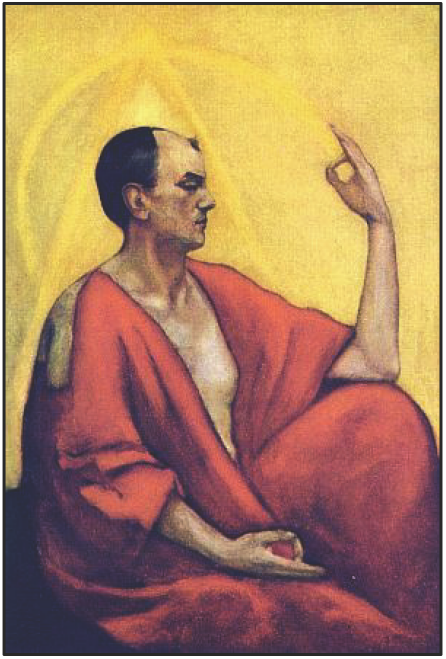
The Aeon of Horus, revealed and proclaimed by the last Great Magus of the modern age — Aleister Crowley (V.V.V.V.V.) — in the early twentieth century, is an era in which the chief task of the individual and of humanity as a whole becomes self-determination. If in the Aeon of Ra the principal law governing mass mind was «Do what you must», i.e., the imperative to follow social interests and their unconditional dominance over the individual; and in the Aeon of Osiris that followed it the rule was «Do what you ought» — meaning that morally/ethically legitimized dependence of the individual on society replaced absolute duty — then in the Aeon of Horus it is finally time to reveal the value of the individual, and the Magus established the Law: «Do what thou Wilt». In other words, obligations and directives that dictated the forms and modes of individual mind from the outside gave way to the mind’s own self-directing activity; its intrinsic worth, self-sufficiency, and self-reliance were discovered and manifested.
Nevertheless, even now, a century after this radical change, the Law is still often misunderstood and misapplied.
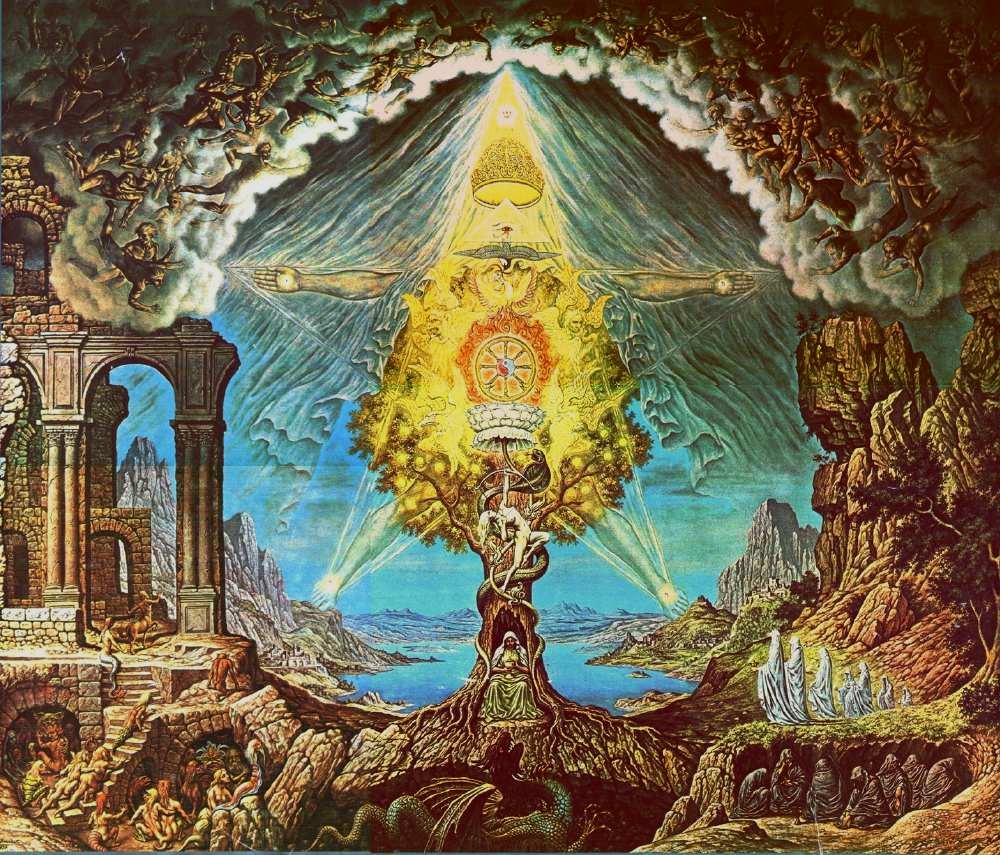
The first error lies in an incomplete understanding of the very Law. Along with the well-known phrase: «Do what thou Wilt», it also includes two very important statements: «Love is the law, love under will» and «Every man and every woman is a star». Thus three complementary principles of the Law are affirmed: 1) the primacy of one’s own will; 2) the importance of a sense of unity; and 3) the importance of a sense of intrinsic worth and equality. In other words, the Law proclaims the absolute value of the individual stream of mind alongside its freedom to exist either autonomously or in a synarchic state. This establishes a coordinate system centered on the individual mind, which then constructs a network of relations both among its own manifestations and with the manifestations of other self-valued stars. Only in this integral understanding does the Law open the possibilities for which it was proclaimed: the right and the capacity to assert an individual stream of mind as an autonomous supreme value, since, when considered in its absolute sense, it proves indistinguishable from the universal stream, and is also equal (though not identical) to any other particular stream.
Thus the first part of understanding the Law — the worldview aspect — comes down to describing the mind as a particular manifestation of the universal property of the One (as is now fashionable — ‘nondual’) reality; moreover, this particular manifestation is bound to all other manifestations by ties of unity — “love”, and it is equivalent to them.
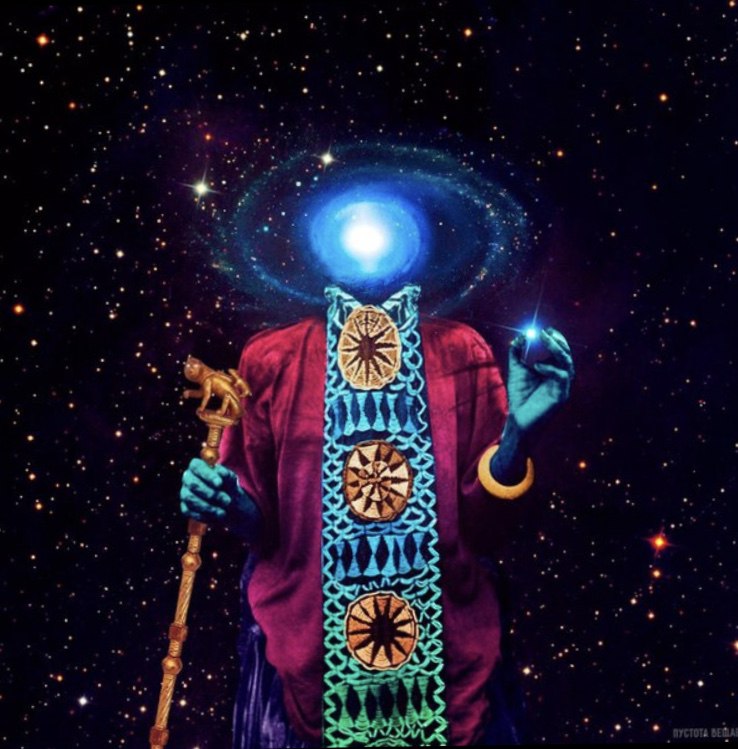
The second error consists in a one-sided understanding of how the Law operates. Indeed, often “Do what thou Wilt” is taken to mean “do whatever one pleases,” which is fundamentally opposed to the logic of the Law. The injunction «Do what thou Wilt» means not only the affirmation of what one should do, but also a stern prohibition: one must do only what one’s own will bids, and at the same time must not do anything that contradicts that will: «You have no other right than to act according to your Will». From this perspective, the Law is a very serious restriction, since a vast number of actions (if not the majority) performed by the modern individual not only do not accord with their own will, but are often directly opposed to it. It is precisely because of this fact that Crowley and his followers introduce the notion of the “true will,” the “true desire,” contrasting them with the private impulses of a limited being, and even assert that this “true will” is usually unknown to the individual. Accordingly, in order to establish contact with this “true will,” a special practice is required, described as «Knowledge and Conversation», which receives exceptional attention.
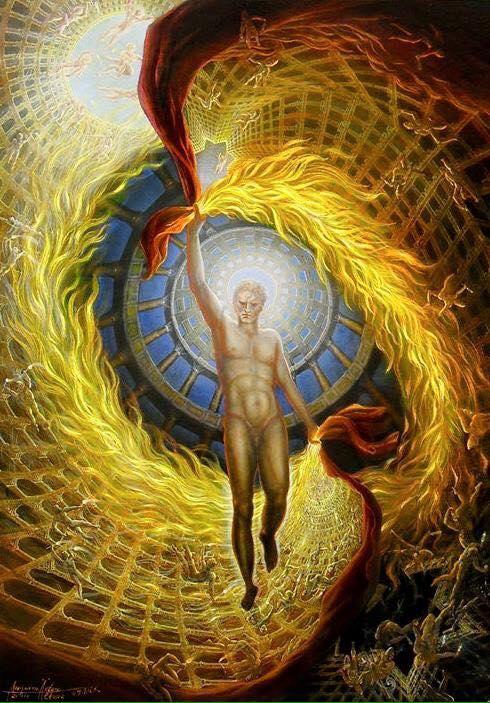
As mentioned, one may approach this necessity in different ways; however, it is quite obvious that for those who cannot reach the pure nature of their stream of consciousness by other means, the Abramelin Ritual is a valuable tool.
Thus the second, practical part of understanding the Law amounts to adding to the phrase “do what thou Wilt” the requirement: “find the true willing,” that is — establish the correct hierarchical relationship between the impulses arising in the “upper,” “diurnal” layers of mind and their roots; identify these impulses as coming from different layers of your own nature or from the drives imposed upon you. Of course, everyone may conceive of the nature of this willing according to their preferences — either as possessing some substance (of the type “Higher Self,” “Avgoeidos,” or “Atman”) or as the composite characteristics of the stream, lacking autonomous reality — the essence of the matter does not change: they must be clearly identified, and then realized.
Before entering the Aeon of Gora, a person goes through the external of the Aeon of Ra and the Aeon of Osiris. I managed to do this. And now the proposal to enter the Aeon of Gora seemed to me a disregard for the principles of humanity and, most frighteningly, for my own. And that means to cease being decent towards myself.