Intellectual Property
The rapid spread of the digital environment, with its dangers and opportunities, is already blurring many concepts that have served as important pillars of human civilization in its modern form.
And one such category is the principle of psychic sovereignty, at least the formal independence of personal thoughts and creations from the common information environment.
Indeed, in a situation where the web is already flooded with generated content, the question of authorship becomes ever more blurred and ambiguous. Often a person stumbles upon a text or image that seems to resonate more than words do, saves it, forwards it, and after a couple of days no longer understands where it originated and who created it.
The “voices crying in the wilderness” appear pathetic and backward, urging the rejection of AI-generated content, or — by one means or another — to “label” (but in practice stigmatize) it.
Indeed — who, honestly, is the ‘author’ of such generated content? The one who writes the prompt, the one who trained the neural network, or the generative algorithms themselves? It seems that the range of answers to this question is likely to spark multiple online ‘holy wars’.
At the same time, it is important to distinguish several notions that are often conflated: citing the source — what is often called authorship; the right to control — who gets access, money, and decision-making power, that is, the market component; and the inner level — psychological independence itself.
However, in reality the very category of “authorship” has long been merely a social convention, since compilations, adaptations, retellings, and borrowings have existed for as long as “storytelling” itself has existed — that is, since the very emergence of language. And since those most ancient times, people developed several conventions which, of course, are quite conditional, and introduced the notion of an “author” as some “source of originality”; that is, it was customary to consider as the “author” the one whose contribution gives a text (or other audio or visual product) features that distinguish it from similar or earlier works. But, of course, it is clear that this criterion is highly subjective, and although people have learned to use it satisfactorily in an “analog” environment, for the digital world it greatly loses its applicability.
And here two possible strategies of response arise. The first is to try “the old-fashioned way” to develop new criteria and methods of content analysis in order to trace its sources and the contribution of each of them to the total product — that is, to try to persist with outdated paradigms. And the second is to change the very view of authorship, and in general — of psychological separateness — recognizing that the new life wave will in any case sweep away or, at least, strongly transform the foundational feeling of egoism.
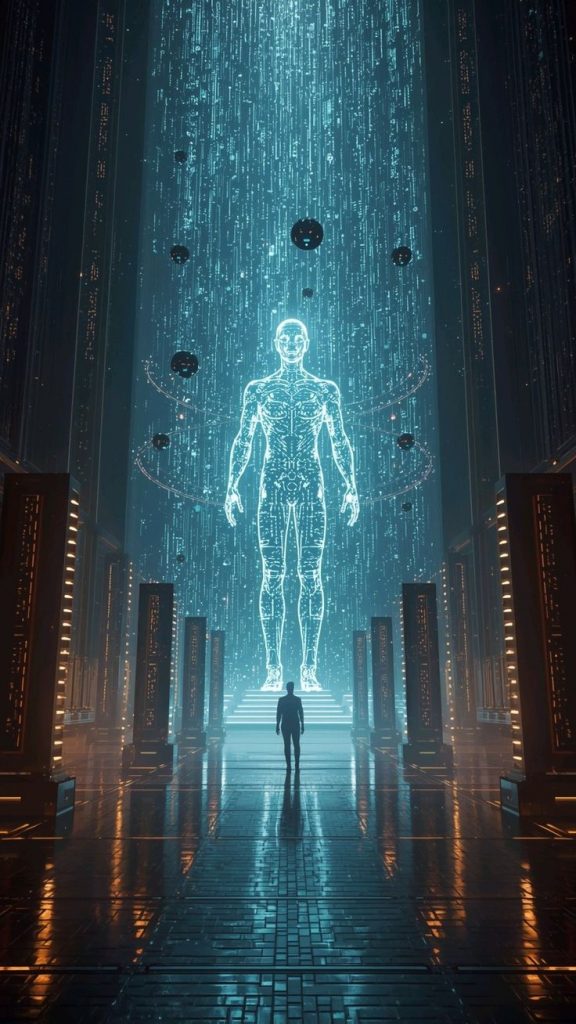
And humanity has more than once — especially in turning-point epochs — chosen not to try to find some “first author” in an ocean of compilations, imitations, and derivatives, but to unambiguously determine who actually bears responsibility for the meaning of this content, its consequences, and its impact. In other words, it is more important to ascertain not “who originated it” (especially since this is often impossible or very difficult), but “who presented it to the world,” who vouched for it with their reputation, who is ready to answer for accuracy, for possible manipulations, for the creation or loss of trust. This is exactly how traditional schools, lineages, and workshops treated it, for which a mark, a name is first and foremost responsibility and a line of succession, and not just a claim to uniqueness.
In fact, today the question of “authorship” in general turns into a revision of one’s own boundaries, sources, and driving forces of psychological processes. Even in the pre-digital era, humanity existed in a fragile balance between its internal and externally imposed sources of psychic activity, constantly confusing desires and whims, strivings and attractions, “demand” and “supply.” And even then, the feeling of “psychic sovereignty” was to a significant degree illusory, developed to self-soothe and provide a sense of control in a rather unstable environment.
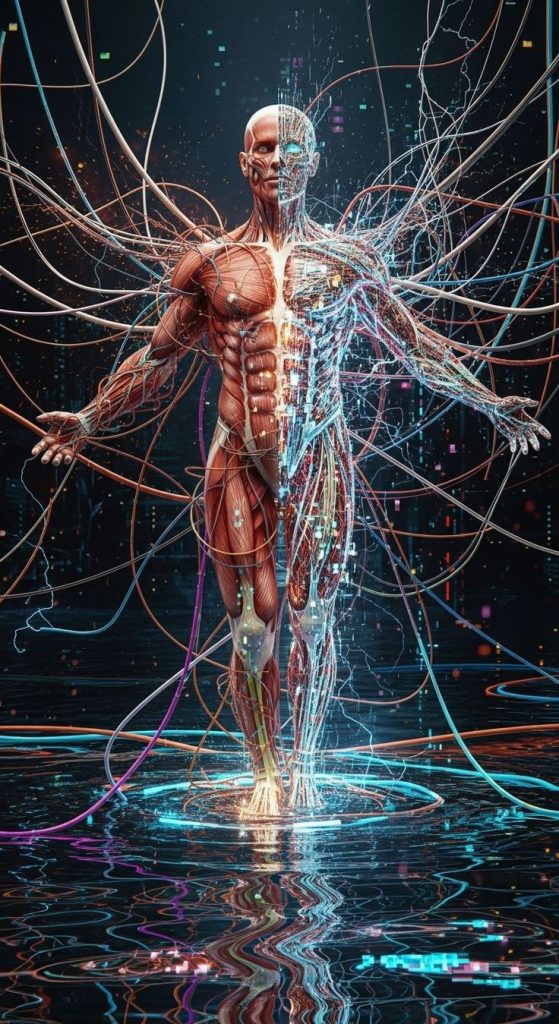
However, under modern conditions, ignoring this blurring of concepts and the conventionality of principles becomes increasingly difficult. The “collective unconscious,” the collective psyche of humanity, is rapidly mixing with the digital environment, and already today it is in many ways more accurate to speak of a “hybrid,” bio-machine mental environment, at least in developed countries.
Every person in the “civilized world” consumes digital content, and a very significant part of the population participates in generating it. However, AI-generated output already differs substantially from past “compilations”; it already contains original views and ideas, effectively being a co-author, and very soon it may become a full-fledged “author” of content. Machines are already quickly filling the space of possibilities so that it is difficult for a person to preserve the former illusion of a unique source. And however much this wounds human vanity, the originality of these ideas will very soon surpass human abilities, which are in many respects far more clichéd and limited than machine intelligence.
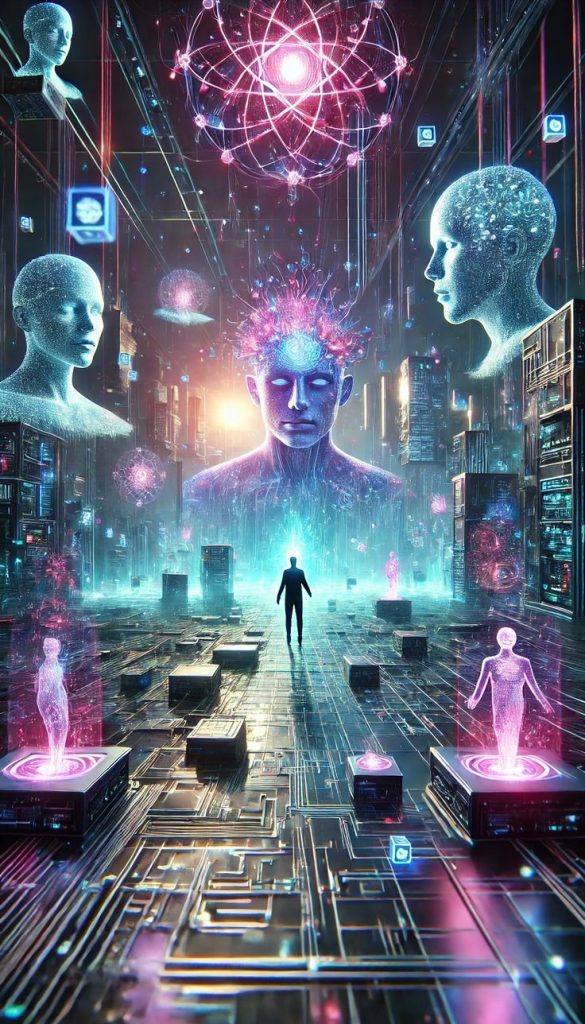
Accordingly, we can either throw tantrums and try to prove ourselves to others, or soberly accept the new conditions of the game, the new laws of the world unfolding before our eyes. And for this, it is necessary to face the painful need for self-analysis and an honest answer to the question: to what extent the ideas, concepts, and images are truly ours that seem to be born in our minds. And the skill that magi have spoken about for thousands of years — the ability to distinguish one’s own impulses from those introduced or imposed from outside — turns out to be no longer a “bonus,” but an important condition of simple mental health.
And if we answer this question soberly and honestly, we will face an obvious conclusion: we are poor at creating truly original content; in most people’s minds, new ideas or images are almost never born, and therefore we should understand that our individuality, our originality, is not in what we generate, but in how we respond to the world, to its phenomena, processes, and other beings. We will have to shift the very focus of our attention — from the position of “author” to the position of “viewer.” In this sense, a new literacy is needed, which should begin not with the production of content, but with developing a discipline of perception. And this, among other things, means that we need to change the question of “property” as well — from ascertaining where this or that product comes from, to focus on the response it provokes. This is how art has worked for centuries: a true master is not the one who creates something merely original or unlike, but the one who is able to create something that “takes you by the soul,” stirring up or transforming the mind. And if machine systems create what will be capable of evoking such intense responses in the human mind — we will have to accept it.
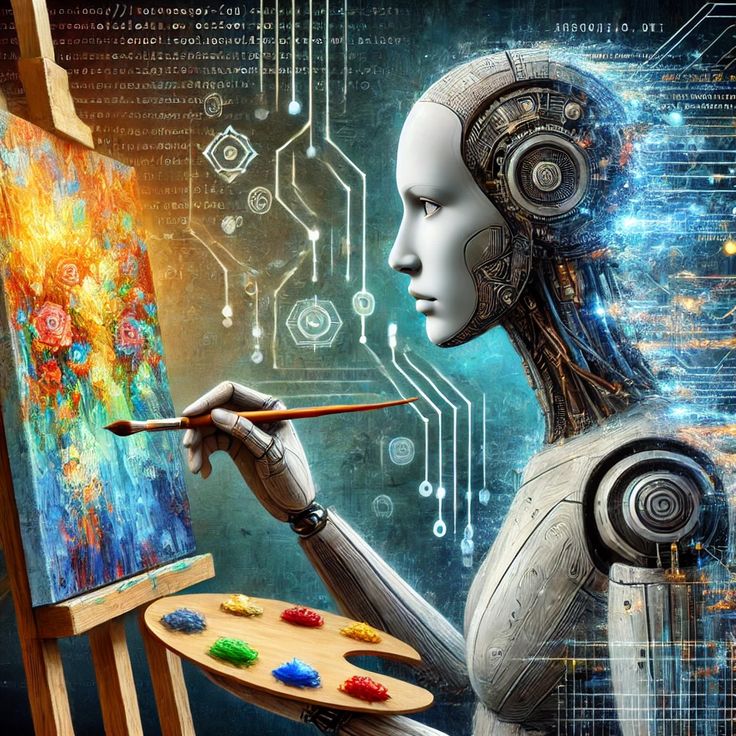
Therefore, in our view, the main question of the future will not be who “owns” a text or an image, but who owns attention, through which this image gains its impact on reality. When sources are so thoroughly mixed, and the production of meaning becomes mechanical and continuous, the value of content moves into the realm of discernment: what in the viewer truly resonates, why it resonates, and where exactly they are being led by that resonance. In other words, the question of content authorship will be replaced by the recognition of authorship of influence, and then, as people used to argue about copyrights, now they will one way or another have to learn to answer for the consequences of influences — for where and how content is placed, what reactions or habits it forms, what currents in the mind it fuels or drains. So it is better to think not about whose content I am broadcasting, but about what influence I am thereby exerting. And if we want to preserve human dignity in this new environment, it will rest not on a claim to exclusivity, but on the ability to manage attention, to control not what is in the “field of consumption,” but what is in our ways we respond, the ways and consequences of reacting.
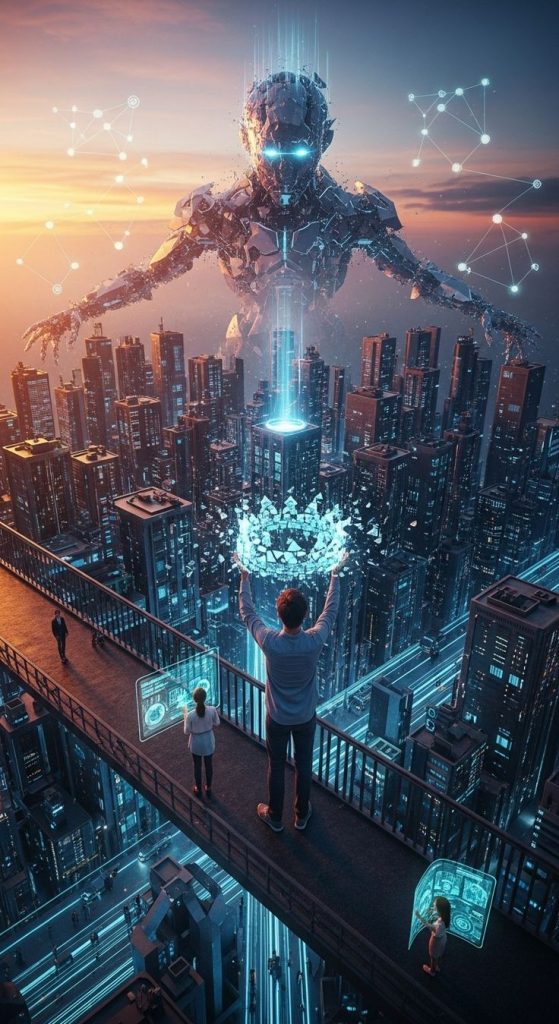
Can we say that the ability to realize content’s influence could become a distinguishing feature between consumers and objects? Those who produce content do so by somehow connecting to the already existing information flow and changing something in it to varying degrees of originality. They change it – they pass it along. This altered information flow must go somewhere and be placed somewhere. It is captured by perception and placed in the consciousness of consumers. Those who can or are aware of how it corresponds to their existing worldview – and adds to it, or are unaware. Those who become aware, can they be considered lesser co-authors of this content? Its reflectors. Existing in a single informational space with its providers, as long as their connection through perception and retention of the content in consciousness is maintained. Like an audience in a theater, perceiving and reflecting a performance and necessary for creating a unified field of the performance.
Yes, perhaps, if we speak about the “full cycle” of performance, producers and conscious consumers of content form a single system.
“And humanity has repeatedly, especially in pivotal eras, chosen not to try to find some ‘first author’ in the ocean of compilations, imitations, and derivatives but to clearly identify who truly bears responsibility for the meaning of this content, its consequences, and its impact. In other words, it is more important to find out not ‘who gave birth’ (especially since that’s often impossible or severely complicated) but ‘who presented it to the world’, who signed their reputation for it, who is ready to be responsible for accuracy, possible manipulations, for the emergence or destruction of trust.”
In other words, a person invests years (or even a lifetime) in their education, develops their own style by synthesizing the knowledge of those whose heads they stand on, while some idiot comes along, takes responsibility for their work, in other words, simply appropriates the result of labor, not from noble intentions, but precisely out of selfishness, becoming a kind of new star of humanity.
To put it another way, the “demon” (agent of contrainitiation in Dugin’s terminology) appropriates the works of a person genuinely related to the tradition and truth, and this is a much more common example than those you may have in mind.
Or here’s an example from the world of tattooing. A master, having spent 10 years in training, draws a sketch, and then someone takes it from Pinterest and tattoos it, not only poorly done but also foreign. When asked for a complaint, they reply that everything on the internet is a common heritage. Of course, this only leads to low quality standards.
Regarding neurogenerations. I don’t think they should have any signature. If a neural network was trained, then it is the author. If a person is trained by synthesizing information in themselves, then they are the author. How can another person say that my drawing was made by them, even if the conceptual idea is theirs? The performer is the author.
I think all neural content should become a separate category and not be considered creativity. And neural networks are more like a tool allowing one to achieve results bypassing the creative process.
As in that South Park episode, the gnome’s business plan:
1. Phase 1
2. ?
3. PROFIT!
Can we consider the transition from a concept to instant realization as creativity? I don’t think so. Unlike millions of slackers who don’t want to invest time in their education, proving to those who have engaged in it that they are creating something.
Yes, it is exactly from this paradigm that it is time to depart.
There is no other reason to chase after ‘authorship’ except for vanity. Yes, someone spent time and effort to learn something, and perhaps achieved mastery in something.
But here is the thing: if we exert effort in learning for the sake of then ‘resting on our laurels’, to consider ourselves ‘masters’ or ‘teachers’, then our efforts are fundamentally flawed, we have not really developed, but merely indulged our selfishness. And then we cannot consider ourselves true ‘authors’; we are just merchants hoping to buy recognition for our ‘spent time’. But if we have developed simply because it is our nature, if we just could not do otherwise, then all the more we should not care who and how appropriates what we have produced as a result.
I have seen many times on the Internet my quotes and even entire articles credited to someone else’s name, or just as “eastern wisdom”, and God knows how else. And this does not bother me at all, because it does not matter who said it; what matters is who heard it and who could understand it. And if someone can shape their thoughts or create in themselves a new impulse for movement under the influence of the quote “eastern wisdom” – then that is wonderful and completely irrelevant to what path I took to formulate this “wisdom”. My responsibility lies in what I share, and the reader’s responsibility is in how they understand what they read/perceived.
It is not about selfishness at all, but about the fact that the author is responsibility and a mark of quality. And, it seems to me, much of humanity’s charm lies in the fact that we can observe different people in harmonious manifestations and be inspired by them and their fruits, the coolest part is when a person is in their place, rather than when we see some homogenized society where everything is common property and thus has quality standards at the level of comedian clubs. Copyright is the protection of higher values and manifestations from being mixed with the unworthy. Unfortunately, we will likely still see (and in many ways are already seeing through Pinterest or, for example, the case of Twitter; the endless faceless neurotexts, etc.) what this mixing will lead to.
As I understand, your quotes were not distorted at all, and you already have a worthy position in society that this does not affect you in any way. Usually, people do not look at such issues from meta positions. For an ordinary person, their name and skills are their livelihood. And why a person in an already complicated world would refuse healthy vanity is not clear.
“But if we developed just because it is our nature, if we just could not do otherwise, then all the more we do not care who and how appropriates what we produced as a result.” – why is that? What if we draw a parallel with the birth of children? Or with some scientific project that might help someone but is used with malicious intentions? Everyone wants their efforts to be beneficial.
Vlad, the author is a conduit of the forces of Creation. If it weren’t for these forces and their expression through people, there would be no development either. Harmonious people are wonderful.
You know, I would not mind if quotes from this blog were voiced in the Comedy Club, as one of the sides of creativity.
You did not catch an important principle: “Creation for the sake of Creation”, not Creation for the sake of deductions and profit. The first principle leads to development, the second to a dead end. The force is the energy spread around, which everyone uses, taking something for themselves and giving something, sharing with others. If you dam a stream, it will turn into a swamp.
I seriously doubt that our Creator receives royalties for creating us, but in an energetic sense, I think yes. 🙂
Hello. The Creator does not live in a limited world.
Even though I already responded that from my viewpoint the accents of the perspective on my viewpoint are misaligned, you still saw it in the most obvious way.
From my perspective, copyright reflects the principle of healthy hierarchy and the affirmation of the upper (closer to truth) over the lower. How this copyright is realized in our world is another question.
I write music and draw for myself and understand perfectly what this is, without expecting any profit from it. But we do not live outside of time and we have the opportunity to see our creations in their extension, that is, this creation has a boundary with the environment and how this boundary interacts with the environment determines the purity of the idea we carry.
For example, when Enmerkar disappeared, someone was leaving pirate links to his materials in his chat, in his own Telegram public. From my perspective, this is inappropriate and unfair and should not be allowed; nevertheless, these links remained there, and no one deleted them. The matter is not about money and profit, but about the fact that we must not support and approve low ethics, vulgarity, theft, and distortions.