What to Do with the Runes?
As a product of the action-oriented Northern myth, the Runes are, of course, above all an eminently practical system.
No matter how deeply the mind plunges into the semantic fields of the Runes, at each of the levels it finds a concrete practical application, and using the Runes as an object of contemplation still implies development of consciousness through action.
At the same time it must be clearly understood that the use of each Rune can be very broad and varied, and it is limited not so much by the Rune-image itself as by the inspiration, power, and authority of the eril.
Consider the latter as an example.
Take, for example, the Rune Isa.
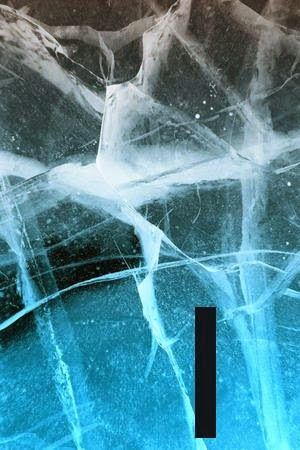
The semantic field of this Rune represents the principle of ice.
What, then, can one do with ice?
It can be an obstacle. It can indicate a stop. But it can also serve as protection.
Can one build with ice? — Of course one can.
Can ice be used in medicine — yes, for instance to reduce fever or to ease inflammation.
One can float on an ice floe.
And there are countless other applications for ice.
However, before celebrating such a wide range of possibilities, it is necessary to ask the following series of questions:
– And is ice useful in treating every illness? — Obviously not.
– And could building houses from ice have widespread use? — Apparently not either.
And, finally — the most important questions are: can anyone build reliable houses from ice? Can anyone effectively use ice for healing?
In other words, although each of the Runes can be applied in a great many ways, not all of those ways will be equally suitable, and, most importantly, far from everyone will be capable of using a given Rune appropriately.
Therefore the application of Runes requires two essential things.
First, of course, a clear understanding of the semantic field of the Rune in question at all its levels — this primarily concerns the realm of intelligence and is achieved by studying the Myth and the Law of the Runic order.
Second, the eril must master the power of the given Rune.
This pertains to the realm of Will and signifies the ability to act so as to apply the knowledge correctly gained in the study of Myth and Law.
It is not enough to know that you can float on an ice floe; you must also be able to do it.
For a Magus seeking mastery of Runic powers, it is very important to understand the level of one’s skill and to hone it continually, much as he sharpens the chisels for carving Runes. One cannot master the power of Fehu without mastering its Fiery nature. One cannot feel at ease with Isa without having mastered the cold of ice.
And above all, the Runes, of course, require inspiration. Not merely a poetic gift — that belongs more to Bragi, timid in battle — but Odinic, fierce inspiration that sweeps away all obstacles in realizing the eril’s will.
Dear Enmerkar, please tell me, is there a single principle for constructing rune bindings, in which cases are bindings more advantageous to use, considering the huge potential of each rune individually, and is there a limitation on the number of runes included in a binding?
Incredibly precisely written, the rune on the body appeared because it was very hot at night, and in order to relieve the heat, I placed a protection around myself to create coolness. I cannot always control it.
Each rune, individually, is a letter. A binding is a word or sentence. Each builder applies letters, words, and sentences according to their principles of construction.
A binding is a group, a system, a scheme, the effectiveness of which depends on the interaction of the strength of Eril.
There is a limitation on quantity and quality of Erils. However, there are no limitations on the number of runes included in a Binding…
Very accurately written. I liked it. Especially about inspiration. I sometimes have such a mood that I just want to create a formula, work with Runes, and you dive into work that captivates you. Thank you very much for this article.
As I understand it, Eril is a master of runes who tunes into the egregore of the runes – the planet Vril.
Greetings! Tell me, Master, how does the material affect the surfaces from which the runes are carved, and who carves them? For example, heliotrope with machine carving or birch with hand carving?
In the case of Runes, exactly “who” and “how” carves matters more than “what” is carved.