
Three Generations of the Gods
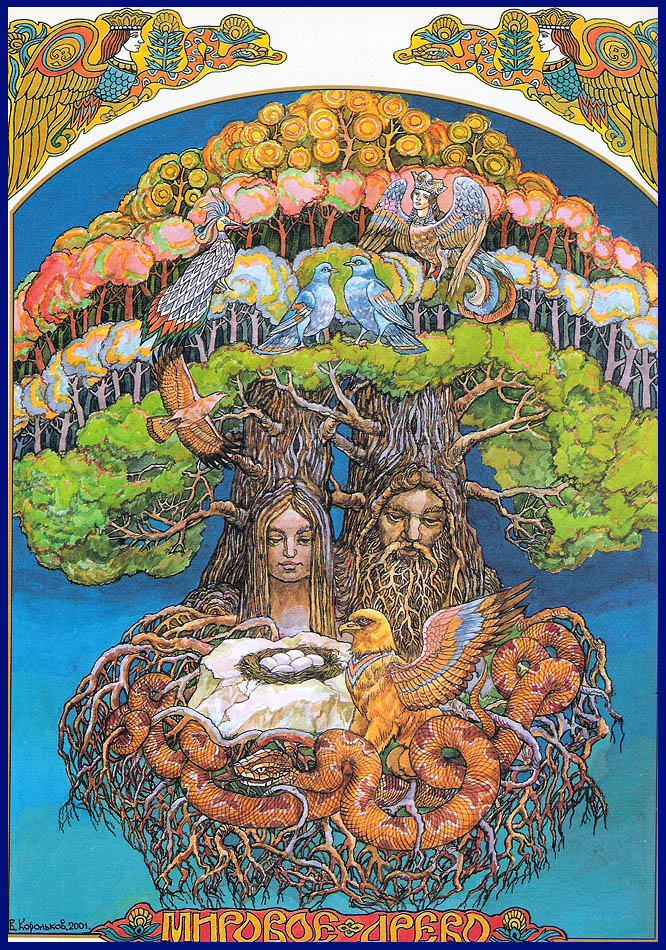
Apart from the primordial Jotuns (or, for example, the Proteus and the Titans of classical mythology), in relation to whom all other gods are their children — if not by lineage then by rank — mythologies distinguish two further generations of gods.
Each generation embodies a specific function the gods perform in the cosmos.
As noted, Jotuns (and their descendants — the Archons, Titans, Volots, Fomors) are the primeval ancestors of all things. They do not take part in shaping the world (with rare exceptions, such as the building of Asgard’s walls), but they give rise to everything needed for it.
The two other generations are the Creators and the Sustainers.
The older generation of gods participates in creating the world. Thus, for example, Odin, Hœnir and Lodur, having slain the Primordial Being Ymir, created the ordered Universe. Beyond creation itself, the Elder Gods establish the fundamental laws that govern it. Yet they are subject to certain laws originating with the Progenitors (for example, the fate of the Aesir is governed by the Norns — “the mighty Daughters of Jotunheim”).
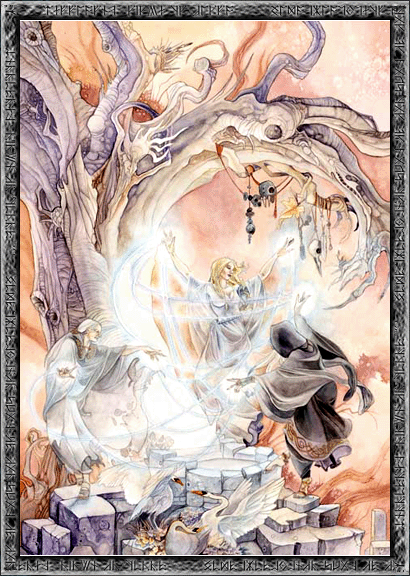
The establishment of the laws of the cosmos is the Elder Gods’ main task. In fact, these laws flow from the gods’ very nature; as mentioned, we perceive these laws through the gods’ existence and actions.
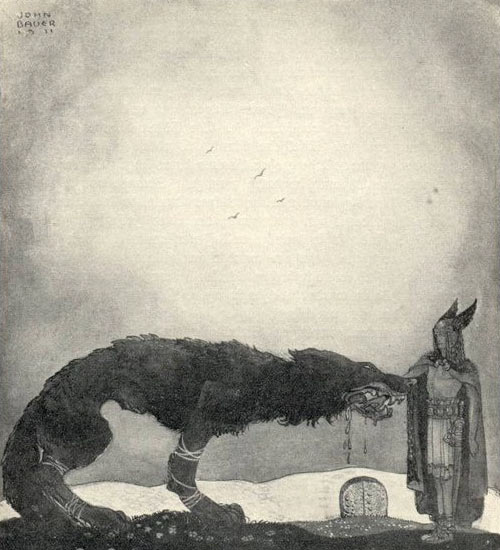
Thus Svarog, who drew the world out of primal Fire, relies on Veles, who guards the thresholds between worlds and prevents them from re‑mixing into a chaotic whirl. Odin, who devised binding Fenrir with the chain Gleipnir, relies on Tyr, who sacrifices his hand to atone for the deceit and thus restores the world to justice.
The division of the Elder Gods into creators of things and creators of laws is somewhat artificial, since in creating things the Gods simultaneously establish the laws governing those things’ existence. At the same time, it often happens that, having completed Creation, the Elder Gods withdraw from active interference in worldly affairs, because their mere existence guarantees and conditions the continued existence of the things and laws they created. The active maintenance of those things, however, is left to the Younger Gods. Thus, although Veles is the Father of Life, the active maintenance of its flow is the work of Dazhdbog; although the Dagda (the Earth God among the Irish) created the Sídhe (the Otherworld), its governance belongs to his descendants; although Svarog rules the Primordial Fire, the principle of Fire is entrusted to his son — Semargl.
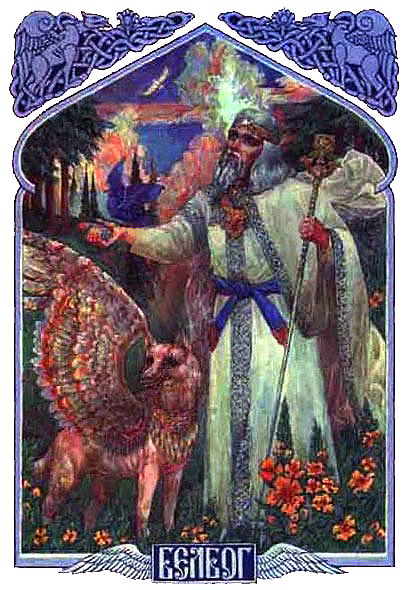
The younger generation of gods, the offspring of the Elder Gods, sustain the cosmos in the form their parents established. Thus Thor preserves the world’s solidity (established by his father Odin), Freyr (son of Njord) preserves its fertility, Manannán mac Lir (son of Ler — the Sea among the Irish) governs the Water principle, Nemiza (the Father of Winds among the Slavs, son of Stribog, god of the celestial expanses) controls the winds, and so on. The Younger Gods are necessary to the Elders as the executors of their tasks, just as the Elders are the source of the Younger Gods’ existence.
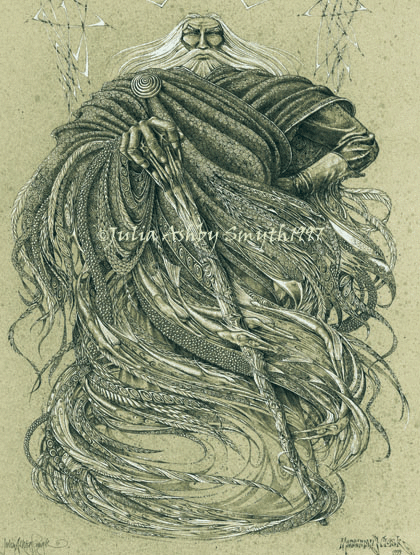
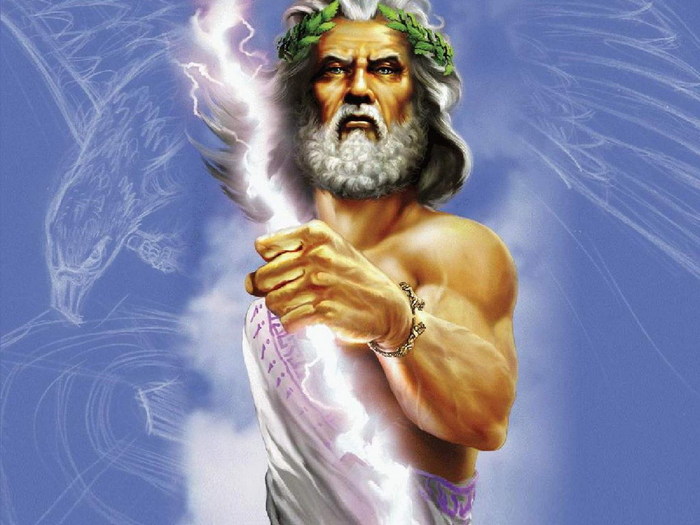
Thus, the Progenitors, Creators, and Sustainers constitute three generations of gods, their most fundamental forms. It is important to understand this when speaking of the functions of any particular deity.
I do not quite agree with the author’s thoughts. Because based on this article, it follows the conclusion of a certain harmony between the gods of the older and younger generation. But if we turn attention to the Elder Edda, do we not see there constant conflicts between cosmic gods and chthonic beings, who want to return the world to its original chaos and formlessness…
Why do you think ‘harmony’ and ‘friendship’ are synonyms? Harmony can very well exist in opposition…
But a god can also become a human. (or can’t he?) What place will he then occupy in this conditional hierarchy? Like a son of the youngest gods? After all, someone is responsible for his creation.
IMHO, a person can become equal to one of the categories. And by manifesting in the guise of a god, he becomes more and more equal to his environment :). I see it this way.