Hyperborea – the Ancestral Homeland of the White Race
“You shall be sent by the gods to the Elysian Fields, to the very
Farthest bounds of the earth, where Radamant the fair‑haired dwells.
In those regions the lightest life awaits mankind.
There is neither rain nor snow there, nor do violent storms occur.
Ever there the Ocean breathes the bracing breath of Zephyrus,
Blowing with a piping whistle to bring coolness to men.”
(Homer, “Iliad”)
Alongside the legends of Atlantis, the classical tradition contains a legend of Hyperborea — a country inhabited by a sacred people endowed with extraordinary powers. This mythical land, according to ancient authors, lay far to the north of the Mediterranean.
For us, Hyperborea, the mythical ancestral homeland of the Aryans, is of greatest interest; since it was on the northern homeland that our civilization is said to have arisen. According to tradition, the route ran from the mythical cities of Falias, Phineas, Murias and Gorias, by which the magical peoples Tuatha de Danaan came. And it is from there, the legend continues, Merlin transported Stonehenge to Britain. In his “Centuries,” Nostradamus called the Russians simply the “Hyperborean people“.
Since the time of ancient Greek mythology and the tradition that followed it, Hyperborea has been a legendary northern land, the dwelling‑place of a blessed people, the Hyperboreans. The name literally means “beyond Boreas,” “beyond the north.”
Relating the legend, Plutarch (1st century AD) writes that long ago, in times unremembered, the harmony of the Golden Age was disrupted by a struggle for power between Zeus and his father Cronus, who was supported by the Titans. After Zeus’s victory, the Titans, led by Cronus, withdrew northwards and settled beyond the Cronian sea on a large flowering island where “the mildness of the air was wondrous.”
The homeland of Leto, the Titaness and mother of Apollo, was likewise Hyperborea, to which he made journeys in a chariot drawn by white swans.
The Greeks called the cold north wind Boreas, in contrast to Notus — the moist wind from the south — and Zephyrus — the gentle wind from the west. All of them, according to mythology, were reckoned as brothers, born of the father of the stars, Astraeus, and his consort, the goddess of the morning dawn, Eos. An Orphic hymn is dedicated to Boreas:
“Mover of the aerial realms with thy breath,
O ice‑bringing Boreas, appear then from snowy Thrace,
And shatter the fixed stillness of the rain‑laden sky!
Blow upon the clouds, disperse and scatter the rain‑bearers,
Grant fair weather that, with glad sight of the ether,
The rays of the Sun may shine on earth, both shining and warming!“
(“Ancient Hymns”)
For the Romans, the north wind is Aquilo. In Pliny’s “Natural History,” Hyperborea is mentioned not only in Greek terms but also as “the land beyond Aquilo.”
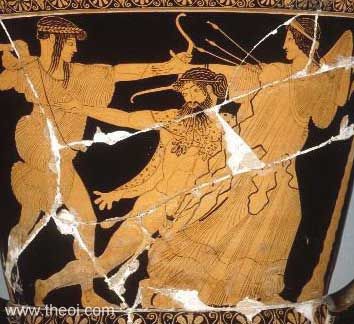
Aeschylus writes that it was “at the edge of the earth,” “in the desolate wastes of the wild Scythians” — that Prometheus was chained to the rock by Zeus’s command: contrary to the gods’ prohibition he gave fire to mankind, revealed the secret of the motions of the stars and heavenly bodies, and taught the arts of writing, agriculture, and navigation under sail. But the land where Prometheus languished, until he was liberated by Heracles (who thereby earned the epithet Hyperborean), was not always so deserted and inhospitable. Things looked different earlier when the famed hero of antiquity — Perseus — came to this edge of the Oikumene to contend with the Gorgon Medusa and to obtain the magical winged sandals, for which he too was named Hyperborean.
Well-known ancient maps bear the name of the legendary country in the northeastern reaches of Europe written in Latin.
Pliny asserts that the Hyperboreans lived beyond the Riphean Mountains (various authors placed these mountains in different parts of the oikumene: from the Alpine peaks to the Ural range). “Beyond those [Riphean] mountains, on the other side of Aquilo, a happy people (if one can believe it), called the Hyperboreans, attain very advanced ages and are celebrated in wondrous legends. It is thought that there are the extremities of the world and the furthest bounds of the luminaries’ course. The sun shines there for half a year, and it is but one day when the sun does not set (as the uninformed might suppose) from the vernal equinox to the autumnal; the heavenly bodies rise only once a year at the summer solstice and set only at the winter. The land is entirely sunlit, with a benign climate and free from any harmful winds. Groves and forests serve as houses for these inhabitants; the worship of the gods is performed by individuals and by the whole community; there discord and all manner of disease are unknown. Death there comes only from satiety of life…. There is no doubt of the existence of this people“.
To the ancient Greeks, the Hyperboreans were not a purely mythic people but actual people, with whom they maintained close ties. The Hyperboreans, along with the Ethiopians, the Phaeacians and the Lotophagi, were numbered among the peoples close to and beloved by the gods. Like their patron Apollo, the Hyperboreans were regarded as artistically gifted.
For example, widely known was the priest of Apollo who came from Hyperborea, the magician and seer Abaris. He is mentioned by many ancient authors, including Plutarch, Porphyry and Iamblichus. Abaris is credited with religious and magical teachings. Inspired by the gods, he gave oracles and prophecies. It is said that Abaris “always carried an arrow in his hand as a symbol of Apollo and traveled throughout Greece with his prophecies.” According to Diodorus, “the Hyperborean Abaris came to Hellas to renew the ancient friendship and kinship with the people of Delos.” Abaris and Aristaeus, who taught the Greeks, are regarded as “avatars” or hypostases of Apollo himself, since they possessed the god’s ancient symbols (the arrow, the raven and Apollo’s laurel with their miraculous power), and they also taught and introduced new cultural practices (music, philosophy, the art of composing poems and hymns, and the building of the Delphic temple).
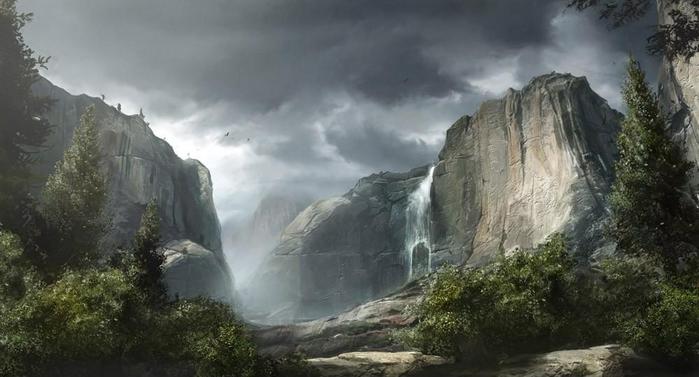
Modern historians disagree about the location of Hyperborea. Various authors place Hyperborea in Greenland, near the Ural Mountains, on the Kola Peninsula, in Karelia, on the Taymyr Peninsula; some have suggested that Hyperborea lay on a now‑submerged island (or continent) of the Arctic Ocean.
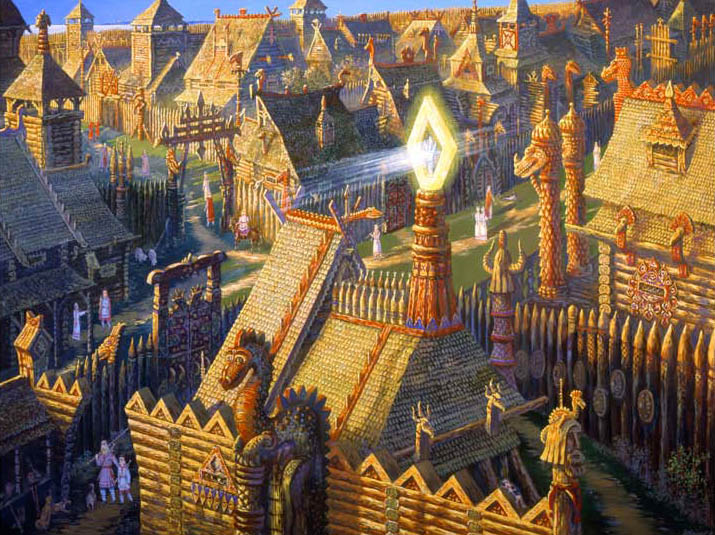
A large group of historians believe that the legendary country lay in northern European Russia and elsewhere in Europe. A second group places Hyperborea in the Krasnoyarsk region and Khakassia, in the so‑called Khakass‑Minusinsk basin. A third school holds that an ancient paleocontinent once existed in the Arctic. It was from there, from the far North, the original peoples emerged who founded primal religions.
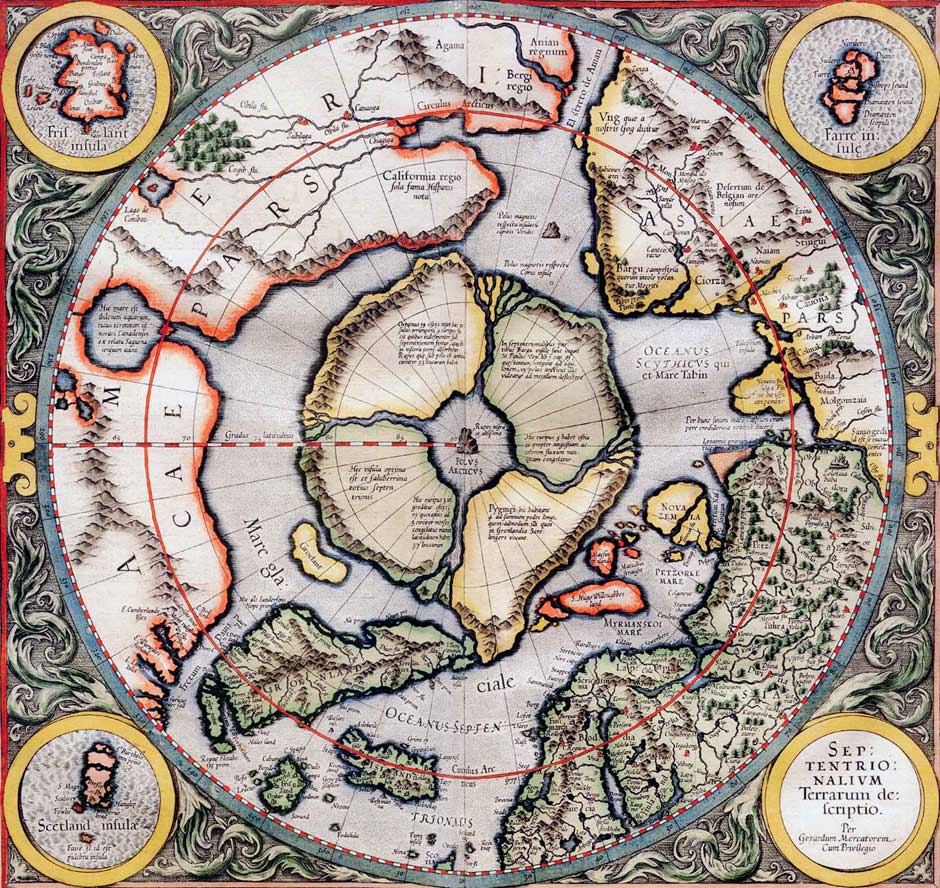
This last hypothesis is corroborated by Gerardus Mercator’s famous 1554 map, which depicts the Arctic as land, as Hyperborea is described in the legends — a country encircled by a ring of mountains with a sacred mountain standing at its center.
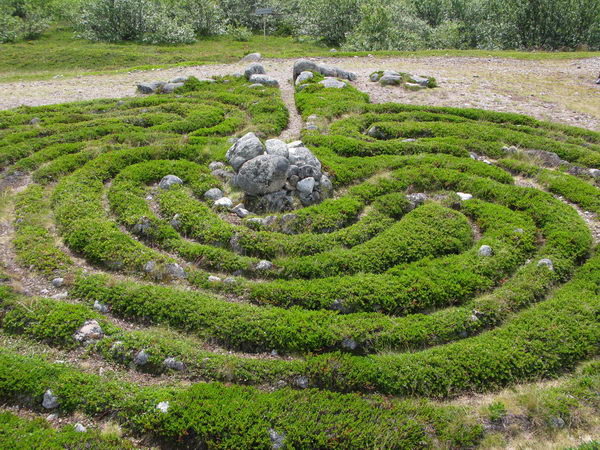
Another version says the Hyperboreans lived on the Solovetsky Islands, where, according to legend, they still inhabit an underground city. In the prewar 1930s, Soviet expeditions on the largest island of the archipelago discovered a labyrinth of stones at whose center there was an entrance to a system of underground tunnels. Many explanations were offered for the purpose of the Solovetsky stone spirals: burial places, altars, models of fish traps. The passages of the labyrinth, which forced the traveler to search in vain for the exit and finally led him out, were interpreted as a symbol of the Sun’s wandering during the polar half‑year night and half‑year day along circles or, more properly, along a great spiral projected upon the celestial vault. In cultic labyrinths processions were probably held to symbolically represent the Sun’s wandering. Russian northern labyrinths served not only as walkable routes but also as mnemonic diagrams for performing ritual round dances.
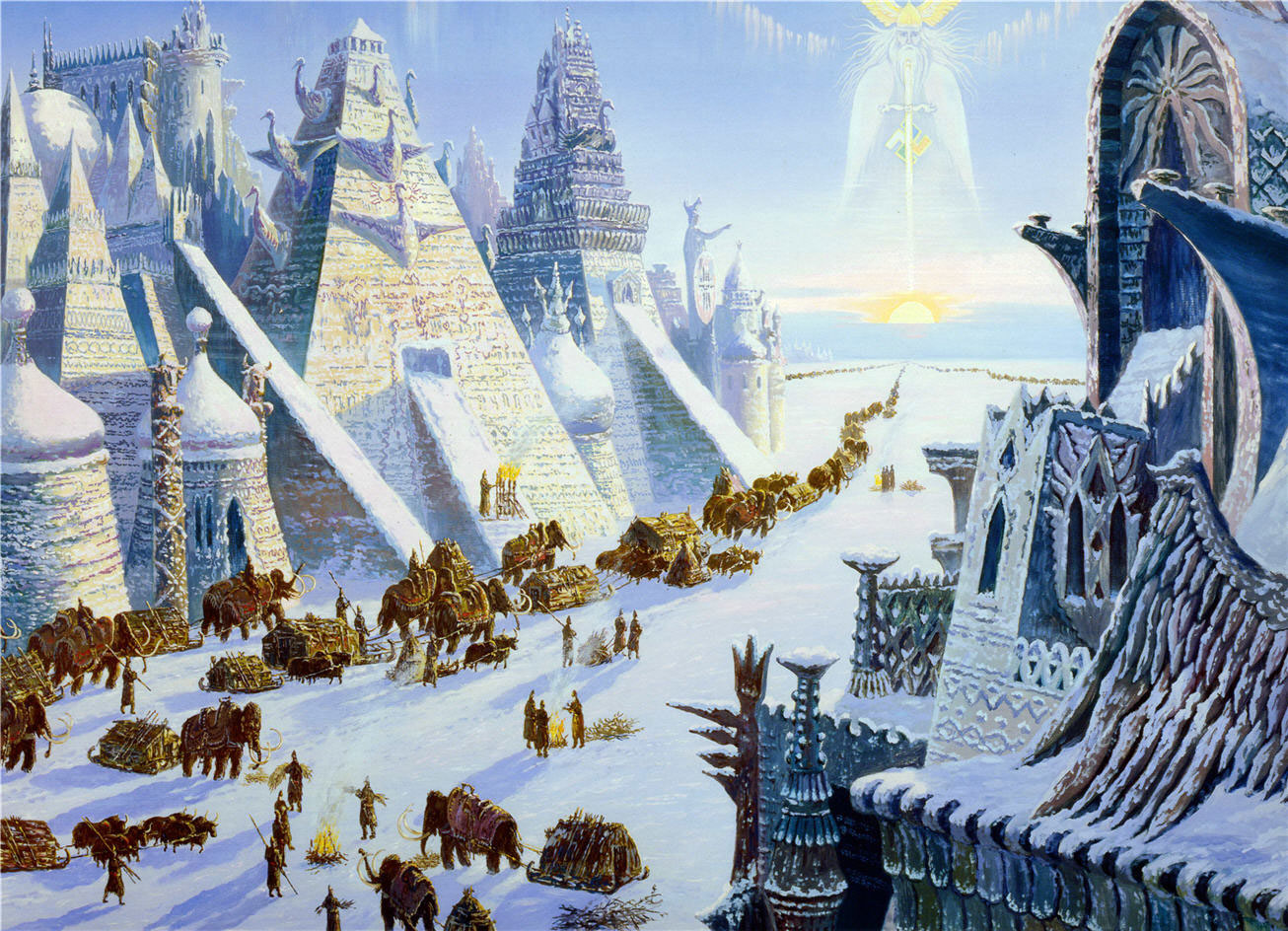
The Kola Peninsula is also considered a possible location for Hyperborea, as evidenced by ancient pyramids found there.
The search for Hyperborea resembles that for the lost Atlantis, with the only difference that parts of Hyperborea still remain in the north of present‑day Russia. However, ambiguous interpretations (a personal view) permit the suggestion that Atlantis and Hyperborea might in fact have been the same landmass.
In northern Russia, numerous geological teams repeatedly encountered traces of ancient activity, yet none of them set out explicitly to search for the Hyperboreans.
Nevertheless, the most convincing hypothesis appears to be the identification of Hyperborea with Doggerland — the now‑submerged area north of France and Germany.
But wherever Hyperborea may have been located, its spirit and influence are heard in the works of Indo‑Europeans from Scandinavia to Hindustan. The legendary northern homeland is reflected in its austere spirit in Slavic and Scandinavian mythologies, distinguishing them from the “Atlantic” mythologies of the Egyptians and Greeks.
As far as I know, the Solovetsky Archipelago, namely: Kuzuva, Solovki, and Anzer – is a projection of the Orion Belt and corresponds to its three stars: Alnitak, Alnilam, and Mintaka. Moreover, in ancient times, during the time of Christ, these stars had another name – “The Staff of the Magi.” I believe the three Lords came from there to the cradle of Christ, at least two – surely from those lands, and the third was probably the legendary Melchizedek – the Lord of the former Salem. Master Enmerkar, thank you, it’s very interesting!
The Greek texts clearly state that Prometheus was chained in the land of the Hyperboreans – this is the Caucasus – so why search in the north???!!! Moreover, the white race is called the Caucasian race all over the world. If the Hyperboreans are the ancestors of the white race, then they are Caucasians.
The white race is called Caucasoids in English literature not because of the Caucasians. But because of Noah and Mount Ararat 🙂
And I am curious… They often write that the Hyperboreans possessed technologies and spirits that are unavailable to us… but I wonder did they have cartoons? We with our technologies and spirit need a TV, and probably their spirit was such that they practically did not need technologies, only energy management. And television…
In fact, our 5th civilization is the most primitive and the weakest. There are supposed to be 7 in total. Achievements such as scientific and technological progress, and computerization are signs of the weakness of our civilization. We do not know how to manage our minds and thoughts as the Hyperboreans, Atlanteans, or Aryans could… Their inventions were clearly unnecessary for them. They connected to the collective information field through telepathy, while we do so through the Internet))))) And Darwin’s theory, let me tell you, is evidently incorrect. There was no evolution. Everything developed in a spiral: civilization – development – flourishing – decline – extinction. And this has happened 4 times… So our civilization will eventually perish as well…
In Irish epic, there is a myth-legend about a Flying Castle that supposedly delivered traveling magicians to other Worlds. I wonder if this is the same castle that hung over the capital of Hyperborea? Although it did not fly, it was five-dimensional inside and served as a portal for transitioning to other Worlds (also according to legend).
Hyperborea is definitely in our vicinity; how can we explain the pyramids, labyrinths, observatories… Just the Lake Seid is worth mentioning…
Regarding Hyperborea, I don’t know… As for the white-eyed creature, yes, I’ve heard of it. I’m a bit tired of the constant questioning online about the existence of pyramids. I’ll explain: given that pyramids exist not only on our planet, their primary purpose is to facilitate movement between planets. Unfortunately, in our world, most of them are non-functional.