
Archons and Video Games

As we discussed, in the modern world over the past quarter-century a clear trend has emerged toward a symbiosis between the human mind and digital environments. From the standpoint of the worldview we are considering, the cause and source of such a change are forces called the “Authorities” (Principes) or Archons. Whatever we consider the Archons to be — inner tendencies of the human psyche, archetypes of the collective unconscious, or separate volitional entities — the fact of their influence on the evolution of collective consciousness is completely obvious.
And the main target through which the Archons implement the transformation of a human being into a biological-digital hybrid is the reward system in the brain, which in the new information environment becomes a source of the so-called “dopamine addiction,” developing according to one of two scenarios: addiction to virtual environments and social networks, and addiction to computer and video games.

These two types of “dopamine addiction” are associated with reward-system dysfunction; however, they have their own unique mechanisms and features.
Thus, both social networks and computer games offer instant gratification that activates the dopamine system. Likes, comments, notifications in social networks, wins, achievements, and rewards in games stimulate dopamine releases, creating a feeling of satisfaction and making the user return to these actions again.
Both types of activity can easily turn into a habit. Constant dopamine releases reinforce behavior, creating addiction cycles that then become difficult to break.
At the same time, there are certain differences between the development of these addictions:
In social networks, reinforcement is primarily social in nature. People get dopamine spikes from interacting with other users, which strengthens the feeling of belonging and social recognition.
In games, reinforcement is usually linked to achieving goals, progress in the game, victories, and completing tasks. Players get dopamine for solving problems and achieving outcomes, which satisfies their striving for mastery and success.
In addition, the use of social networks often occurs throughout the day in short but frequent sessions, which is accompanied by constant small dopamine spikes. Games, however, more often involve longer immersion with intense dopamine spikes, especially during achievements or the completion of difficult tasks.
Social networks are capable of evoking a broad range of emotions — from joy and satisfaction to envy and anxiety — depending on interactions and content, whereas computer games more often evoke more intense emotions associated with tension, satisfaction from victory, or disappointment from defeat.

Subsequently, addiction to social networks often leads to the development of clip thinking — rapid shifts in focus against the background of processing large amounts of information in short periods of time.
Addiction to computer games, especially to those that provide quick and frequent reinforcement, has a different impact. Here, deep immersion in the gameplay occurs, accompanied by changes in the perception of time and reality. Unlike clip thinking, which is characterized by shallow focus and constant switching, addiction to games requires the development of hyperfocus, when the player is completely absorbed in the virtual world. This state, in turn, makes it difficult to return to real life, where stimuli are less intense and rewards are obtained harder and more slowly.
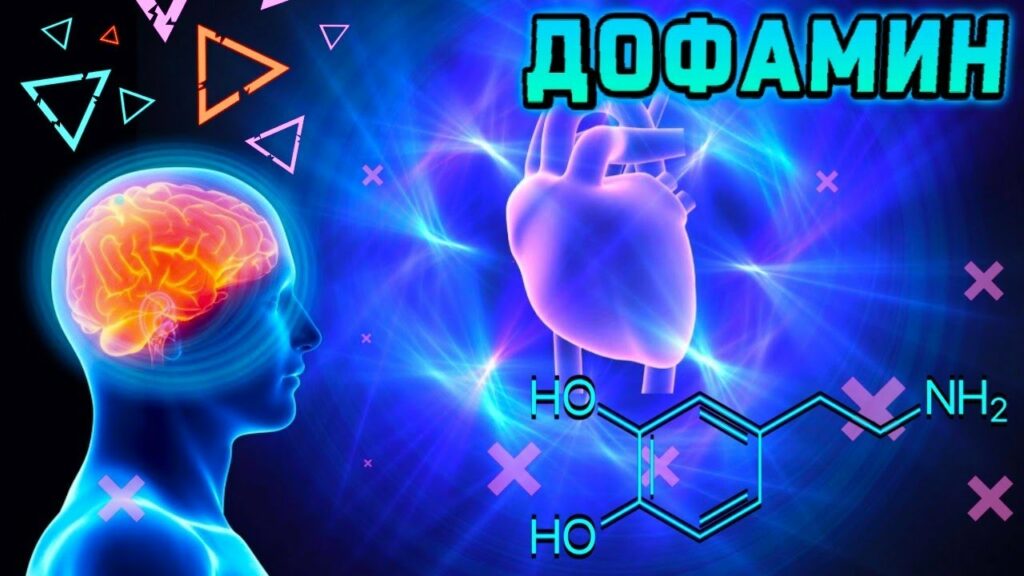
From a neurobiological point of view, the formation of dopamine addiction in the two indicated dependencies also has its own features:
Interaction with social networks is associated with receiving instant, short-term rewards that activate the dopamine system, especially in the ventral tegmental area and the nucleus accumbens, which leads to a sense of satisfaction and reinforces the desire to continue interacting with the platform. Frequent switching of attention between short fragments of information links dopamine with other neurotransmitters such as norepinephrine and acetylcholine, which are involved in the modulation of attention. As a result, “clip thinking” is formed. Due to constant switching and instant rewards, dopamine activity becomes fragmented, which leads to a superficial but constant level of stimulation, reinforcing addiction and reducing the ability for long-term concentration. The user is in a state of constant anticipation of new information or responses, which causes regular dopamine releases and maintains the addiction.
Addiction to computer games, on the contrary, provides “deep immersion.” In games, the dopamine system is activated intensely. This is especially noticeable in the mesocorticolimbic system, which includes the ventral tegmental area, the nucleus accumbens, and the prefrontal cortex. Unlike addiction to social networks, games require prolonged concentration on a single task or a set of tasks. This is related to increased dopamine receptor activity in the prefrontal cortex, which promotes hyperfocus and reduces sensitivity to external stimuli.
In gaming addiction, an important role is played by the interaction of dopamine and serotonin systems, which regulate the perception of time. Serotonin levels decrease, which contributes to distorted time perception and a preference for short-term game rewards over long-term real goals.
Gaming addictions are also often accompanied by increased glutamatergic activity, which maintains a state of arousal and keeps attention on the game. GABA, the main inhibitory neurotransmitter, fails to inhibit, which leads to a state of increased excitability and difficulties in ending a gaming session.

In games, a person’s mind is captured by complex tasks, goals, and rewards, which creates deeper immersion in the process. Here, both the instant dopamine spike and the gradual increase of motivation through achieving goals are important. In addition, games can give an illusion of control and success, which is especially attractive for people experiencing stress or insecurity in real life.
At the same time, constant stimulation of the dopamine system leads to the formation of stable neural circuits, which reinforce the addiction and make overcoming it more difficult.
If in social networks the main “hook” on which the mind is “caught” when addiction forms is short-term pleasure from social validation and constant anticipation of new stimuli, then in computer games such a “hook” is progression, achieving goals and the feeling of success, reinforced by the structure of the game, which stimulates both instant and delayed rewards.

Long-term development of addiction to social networks and computer games often leads to significant changes in the mind and cognitive functions, and these changes will differ depending on the type of addiction.
Constant switching between short fragments of information in social networks leads to reduced ability to concentrate on one task for a long time; the tendency toward superficial processing of information increases, which limits the ability for deep thinking and critical comprehension of complex issues. The expectation of new notifications and reactions to posts generates a state of chronic anxiety, because the brain is constantly in a state of anticipation. The constant need for likes and comments leads to self-esteem starting to depend entirely on external validation, which exacerbates anxiety and depression. Although social networks provide an illusion of communication, they more often lead to real social isolation, since online interactions only imitate, but do not replace, deep personal connections. At the same time, frequent interaction through text and images reduces the level of empathy and the ability to emotionally perceive other people.

Constant immersion in the virtual worlds of games is accompanied by a decline in interest in real life: it begins to be perceived as less attractive or secondary. This often causes problems with motivation in real life. Virtual achievements and rewards in games make a person less tolerant of difficulties and delayed rewards in real life. Since in games a person usually feels like the master of the situation, this leads to disappointment in real life, where such control is unattainable. Addiction to games ultimately leads to cognitive exhaustion, when constant stimulation results in burnout and a reduced ability to perform even simple tasks. At the same time, symptoms of attention deficit are often observed.
Expectation and receipt of rewards in both forms of addiction lead to frequent dopamine releases, which over time provokes changes in dopamine receptor sensitivity and can lead to a chronic lack of dopamine, which increases the risk of depression and other mood disorders.
Although both types of addiction are accompanied by the generation of an excess psychic energy, which then does not flow into real actions but is dissipated in vain (more precisely, it is used to feed the small predators of our world and the larger populations of inhabitants of the Interworld), computer games are usually a more energy-intensive activity compared to addiction to social networks, since they require greater cognitive, emotional, and even physical activity, which leads to greater consumption (and therefore dissipation) of energy.
In particular, games often require high concentration, quick reaction, strategic thinking, and constant problem-solving. The brain engages many cognitive processes simultaneously, which requires significant energy expenditure. Emotional involvement in games is usually more intense due to high stakes on results, the competitive element, and also due to the constant presence of challenges and threats that stimulate releases of adrenaline and other stress hormones. This increases the body’s overall energy costs. In addition, they often involve prolonged periods of remaining in one position, which is accompanied by muscle overstrain, eye fatigue, and general physical fatigue. Games can also require fast motor skills (for example, in shooters), which additionally increases physical energy costs. Games require maintaining attention for long periods of time, which is especially energy-intensive. Multitasking associated with games often requires more attention and effort than simply browsing social networks.
Although social networks also exert a certain cognitive load, it is usually related to rapid switching between small fragments of information, reading and commenting on posts, which requires less energy expenditure. Emotional involvement here is more episodic and associated with the expectation of social reactions (likes, comments), which creates a lower emotional load. Engagement with social networks usually involves less intense physical activity, for example, scrolling a feed or typing text, which requires less physical effort. Due to such a lower energy cost, addiction to social networks is compensated by connecting various bots, digital assistants, and similar structures that carry out additional stimulation of the production of psychic energy (and its dissipation).

Thus, the main goal is achieved: a person loses independence, becomes dependent on external reinforcement, and the source of this reinforcement turns out to be an artificial digital environment that provides an additional resource for producing psychic energy. Accordingly, on the one hand, control over this source of reinforcement provides an unprecedented level of manipulation of the human mind, and on the other hand, it makes it possible to regulate the production (and dissipation) of psychic energy, directing its supply in one direction or another.
Accordingly, humanity has now found itself at a crossroads, and it faces a choice — remain a free biological species that manages itself, its environment, and its technologies, or finally turn into a weak-willed “raw-material appendage,” suitable only for producing tonic pneuma that feeds the Empty spirits of the Interworld.

!!!!!!
What if you create something with pleasure: ceramic products, paintings, books, etc.? If you derive pleasure from this process, are you giving energy to the Archons to your detriment?
The dispersion of energy occurs when the ‘size’ of the emerging impulse of desire is greater than the energy equivalent of the achieved result. Games are a source of outflow precisely because all apparent ‘achievements’ there are illusory, and the energy required to obtain them is great.
If in ‘real’ life there arises a great desire to realize something, and then it is not brought to completion, then part of the activated energy, which has already ’emerged’ into the environment, flows into the Interval, while the part that remains in the psyche goes into the Shadow.
If, however, the desire is realized, then such dispersion does not occur. And if this realization is also conscious, then it becomes a springboard for further expansion of consciousness.
Thank you!
Good day. In addition to games and social networks, porn is also very popular on the internet. Is the mechanism of porn’s influence on people similar to that of video games? And to whom do people give energy after ejaculation? To the Archons as well, or to other beings?
In the Betweenworld, energy flows away. Because it comes from there.
The influence of porn is a much more complex process, as sexual energy itself is much layered: it includes physical, psychic, and spiritual components. Therefore, it all depends on how its release occurs. So, it is unlikely that a general answer can be given.
Hello. Currently, divination practices are widespread, and sometimes people lose all measure in their interaction with various divination tools. A parallel reality is also created, from which a strong dependence may arise.
In the case of excess in predictive practices, where does the energy flow?
Hello!
There are many paths and ways of dispersing energy, and there are many consumers of such dispersed energy and provocateurs for its losses. The case with the obsession with divination is just one of them. This involves the desire to escape, hide from reality, the desire to control it, and a thirst for novelty. All of this forms a set of distractors with their energy consumers.
Thank you. Based on your response, I could also add a tendency towards interaction with images, ‘creating worlds’… A bit akin to creativity, which can also become hypertrophied and lead to addiction (graphomania).