
Visualization and Materialization

The human mind oriented toward visual perception of the surrounding world operates most effectively when it processes visual images. It is precisely “visibility” that often becomes the main criterion for recognizing the “authenticity” or value of a fact or experience.
Therefore Magic also devotes considerable attention to the vision of energies, spirits and similar beings. Depending on the energy intensity of such visual perception, all visual contacts can be divided into three groups:
1) proper vision, when the source of energy for visual perception is in the perceived object, and the perceiver expends energy on the act of perception itself. This sort of experience requires relatively little energy; it includes ordinary sight as well as perceiving energies and passive visualizations.
2) active visualizations, when the subject brings the perceived object into the field of their mind by mental power without changing their energetic structure. This category also covers various auxiliary means of observing, like telescopes or microscopes in ordinary life, crystal balls or magic mirrors in divinatory practice, and the Search for Vision as a basic initiatory ritual.
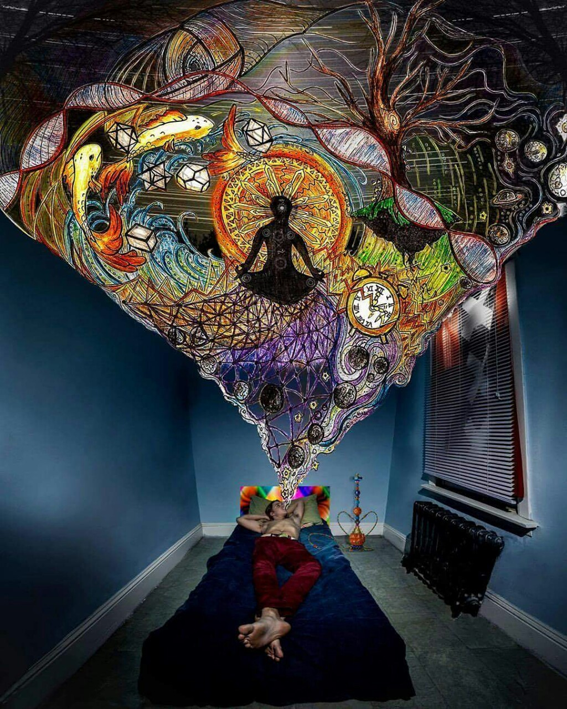
3) materializations, when the perceiver’s mind expends energy not only on bringing the object into awareness but also on altering the object’s nature to facilitate contact. Sometimes it is subjectively difficult to draw a line between active visualization and materialization, but in terms of energy expenditure they differ by orders of magnitude. This category includes a number of goetic practices, as well as some evocation rituals that require a “tangible” presence of the ritual’s object.
Since for a Magus the principal measure of success on his Way is effectiveness — that is, the ratio of effect to energy expended to achieve it — the choice of the right ritual strategy and the understanding of when to aim for materialization, when to aim for visualization, and when no visual image is needed, are important questions. Naturally, individual traits and inclinations make a significant contribution to this choice: what requires great strain and energy cost from one person may come “naturally” to another. Even in the latter case, however, the energy spent is often unnoticed because of attention’s peculiarities, not because the expenditure is small.
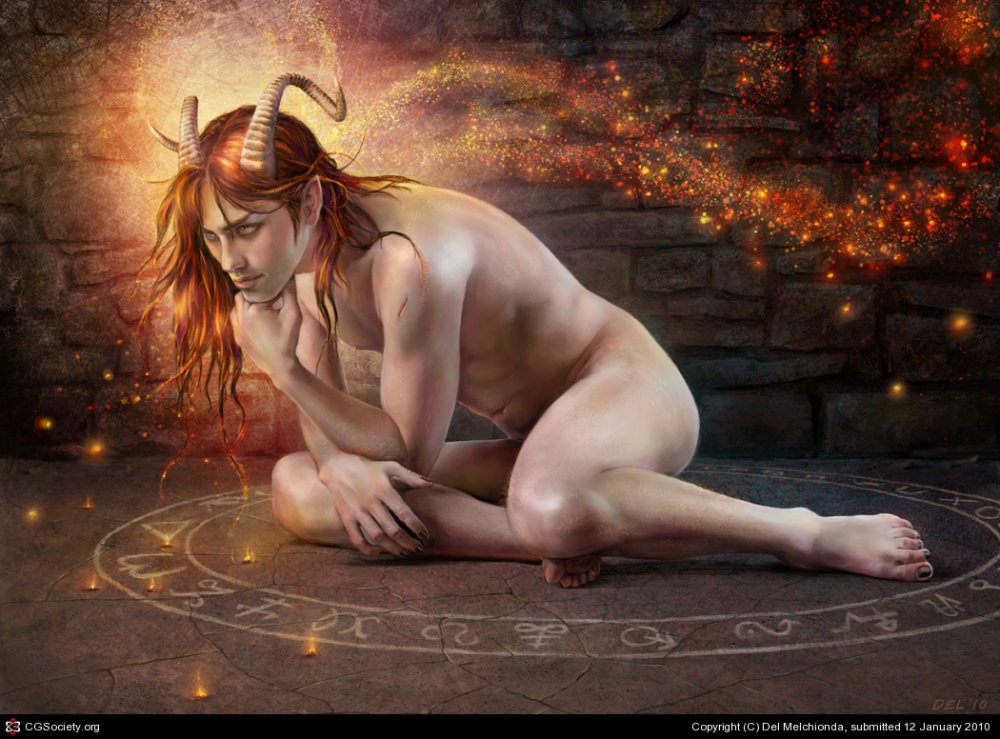
Novice magi usually strive for the “maximum effect” and favour rituals accompanied by vivid materializations. This is one reason why such a small percentage of those who set out on the Way of Magic achieve real success, becoming Magi rather than merely “practicing” Magic. Having squandered their energy on buffoonery and fireworks, they exhaust the resources needed for further progress and remain mere performers and dabblers.
Therefore, for a Magus focused on their Way’s efficiency, deciding the ‘success’ criterion for a summoning, or for any other “visual” Ritual, is an important part of preparing the ritual itself.
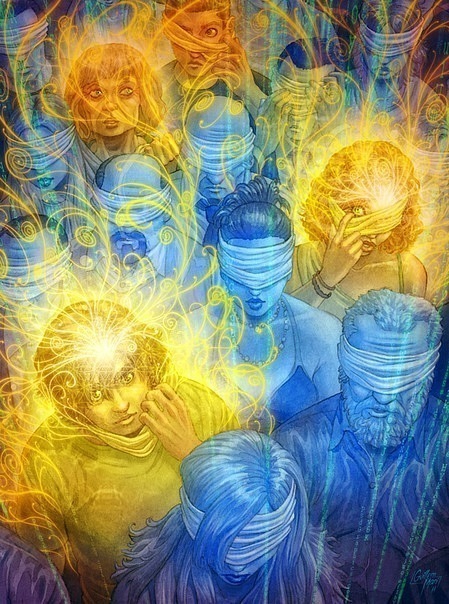
It is essential to clearly understand how necessary a visual image is to achieving the ritual’s aim, and if it is truly necessary, how “substantial” that image must be. If the decision is made that not just visualization but materialization of the object is required, one must arrange for the maximum possible “external” sources of energy, such as incense, Pentacles or Spells of Accomplishment. One must remember that in rituals involving materialization the more elaborate the staging, the better, since every drop of energy can be critical not only to the achievement of the materialization itself but sometimes even to the practitioner’s survival. Moreover, one should bear in mind that the greater intensity of contact achieved by materialization makes ending that contact more difficult, which is summed up by the well-known maxim: “the more intently you gaze into the darkness, the more intently the darkness gazes into you“.

As I understand, there are several levels of visualization. The very first level (concerning both active and passive visualizations) is when you ‘see’ objects with some inner vision on a kind of screen in your head. The simplest (though not quite decent) example is when a guy indulges in erotic fantasies. He imagines the object of his passion next to him (in his head), without delving into any details, rather fragmentarily – in short, he just imagines that he is having sex with the object of his passion, with all the bodily reactions that follow.
Or, when a person, just before making a journey, begins to fantasize in his head how the trip will go.
Or, on the contrary, recalls some memorable trip.
The second level is when you truly see the images. For example, if you have been walking in the forest searching for mushrooms for a long time, and then you lie down to sleep and close your eyes, then even if the mushrooms found were not fly agarics, or psilocybe, nonetheless forest pictures often arise before your eyes, with growing mushrooms. Or another option is when you are on the verge of falling asleep, you can start seeing various images, somewhat like a French poodle with the head of a lion. According to such a representative of the Toltec tradition as Teun Mares, such states should be used in working with dreams.
Finally, the third level (materialization) is when you see an object existing ‘for real’. And such visualization is not always active – there’s no need to look far for an example. These are hallucinations. When an object (a hallucination) appears by the action of some substance or a large dose of alcohol (the ‘white rabbit’), appears on its own, without any effort from the subject, to the extent that the subject does not doubt its reality, and behaves as though the object actually exists.
In that case, a question arises: (to Enmerkar primarily – and if anyone else wants to express their opinion – please) what level should visualizations in basic rituals (pentagrams and hexagrams) correspond to? Crowley wrote that ideally there should be materialization (‘experienced magicians can create pentagrams so that they are visible to physical sight’). However, Crowley also wrote that the Dagger must be forged by oneself (I wonder how many contemporary magicians actually do this?). I, for one, always strive to achieve at least the second level. However, is this necessary in this case? Or would it be sufficient to just ‘see in the head’?
From my point of view, the first level is the representation and retention of an image without confusing it with fantasy. Retention is specifically with the help of will. This requires inner silence and is not as simple as it may seem at first glance. I do not know exactly which subtle area of consciousness this practice touches upon, but at the moment of this exercise, vivid memories of dreams came. Also, I was ‘interfered with’… I literally had to fight it off)) Then came the complication… spinning the object, changing colors.. adding other forms. And all of this only with the help of will. When everything is stable, one wants to complicate further by materializing that object)) There was indeed a desire as if to extract that object from consciousness and materialize it before myself, as clearly as I saw it. But that is a different story.
That’s how it is. I have confirmed it through personal experience. First in the head, then it goes outward. I believe if the environment is ‘energized’ – a good question is what can it be energetically filled with (maybe this is the meaning of all those incense and smoke?), it should ideally be visible not only to the operator but also to the participants.
For some reason, the second level of visualization does not go ‘as ordered’. When trying to visualize, there is only muscle tension.
Thank you, a very valuable article in the context of explaining forms of vision and warning of consequences.
Good evening, can various diseases like bronchitis, gastritis manifest as a result of passive visualization (meditation on a certain divine image)? That is, the information coming from space pushes one to advance along the Path, or is it the ‘work of the dark’, to deprive of strength? Can the side effects of visual practices be somehow alleviated?
I can suppose that there are weak energy channels (Nadis). They need to be strengthened and cleaned. The second option is that there is no balance between the Logos and the feeling. There must be a clear understanding of the Logos, then visualization will proceed easily and without obstacles. Therefore, it makes sense to study philosophy)). I have confirmed this through personal experience: when I understood something – the meaning of the form – I grasped the principle itself, then imagination became very easy to engage in. Essentially, imagination is the structuring of ‘astral matter’/phantasms – a whirl of desires. In principle, this is also a warning for the amateurs who have not established themselves in spirit-reason (intellectual intuition, awareness, understanding).
Your question has too little preliminary information for you to receive an answer. What image are you meditating on, how and why? Perhaps you made a mistake in choosing the object for concentrating your attention. It is possible you are receiving energy that is not suitable for you or in such a quantity that your body cannot cope with it… and another 50 options of different ‘Possibilities’. Think about the Causes yourself. Adjust your actions according to your guesses; if the results please you, then it means you have successfully sensed your mistakes. That is how Personal experience is accumulated 🙂
Thank you, in any case, this is a sign of my unpreparedness… :), indeed too many ‘possibilities’ and ‘ifs’…
Enmerkar, could you please tell me, the Invocations of Accomplishment that you mention in the article – are they the ones that Douglas Monroe referred to, or are they different? Thank you!
There are quite a few Invocations of Accomplishment known, including those distortions that Monroe mentions. In general, the banal ‘Amen’ is also an Invocation of Accomplishment, just like the phrase ‘So be it’ in many languages.