
The Magic of Arbatel
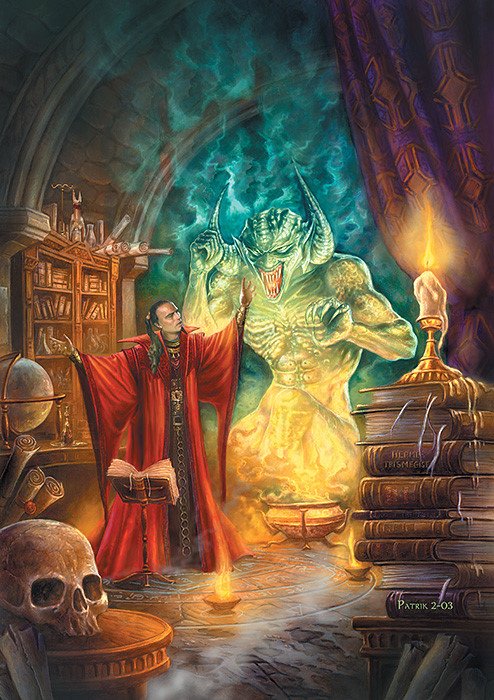
“The true Magus is destined for his service already in his mother’s womb. Others, those who decide for themselves to engage in magical work, are unhappy.”
(Arbatel)
Among the evocative methods used in Ceremonial Magic, Arbatel — the Great Pentacle, which governs the so‑called “Olympian” spirits, occupies a special place. The book describing the pertinent approaches is titled The Magical Arbatel (the Latin form of the title is Arbatel de magia veterum). No manuscripts of Arbatel are known. The colophon of the first edition gives Basel, 1575.
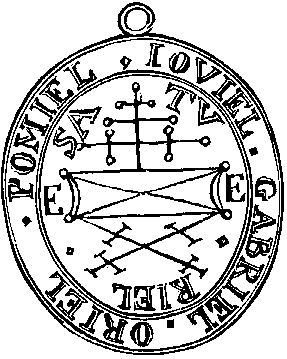
By common account, the very title “Arbatel” is the name of a Spirit or Angel (the ending -el is ordinarily present in angelic names), although a Spirit or Angel by that name is unknown. The name may indicate that, as often happens in Ceremonial Magic, the book resulted from an encounter with a Spirit who revealed rules and principles to the Magus.
Arbatel consists of seven groups of seven aphorisms, which contain many teachings and rules for the life of the Magus and for the study of Magic; these rules are carefully considered and lofty.
“The passage of a man from ordinary life to the magical is nothing other than an awakening from the sleep of that life to the appearance of the other. For all that happens to an ignorant man in ordinary life also happens to the knowing and capable Magus who can manifest his will.”
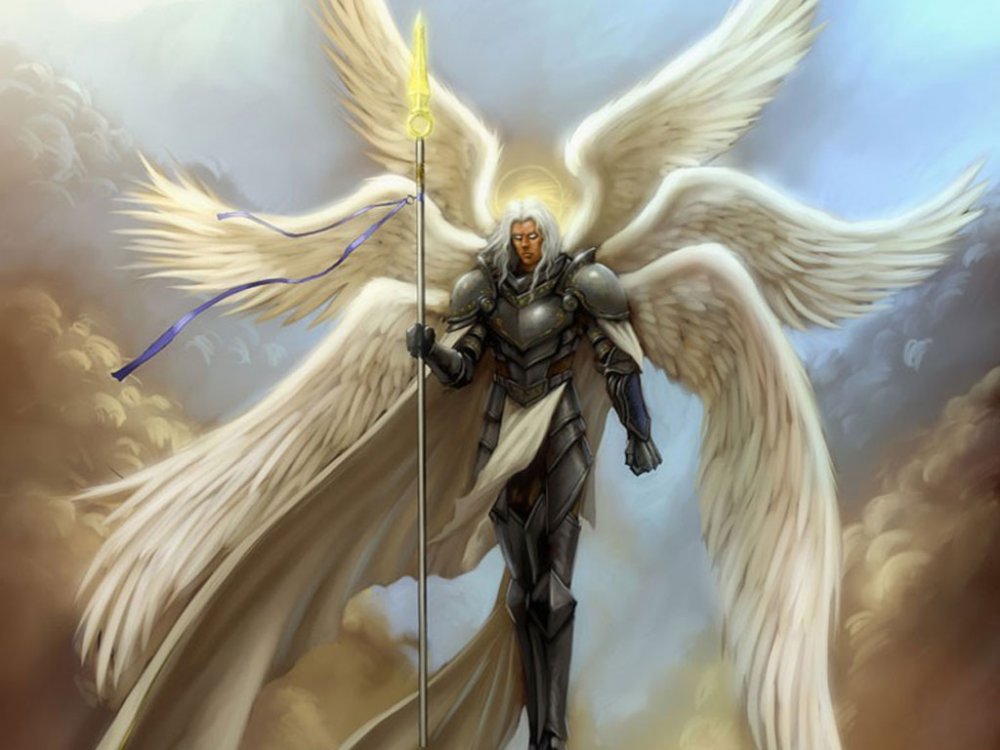
Of greatest interest is the third “septenary” of aphorisms, which describe the Olympian Spirits, dwelling in the vault of heaven and among the stars; according to the influence of the stars, responsibilities for governing the world are apportioned among these entities (which are customarily called Angels). However, despite this (not entirely accurate) identification, the Olympian spirits by their nature are much closer to the concept of gods and, more precisely, may be correlated with the Gnostic image of the Archons — world-governing powers that create the very principles by which worlds manifest.
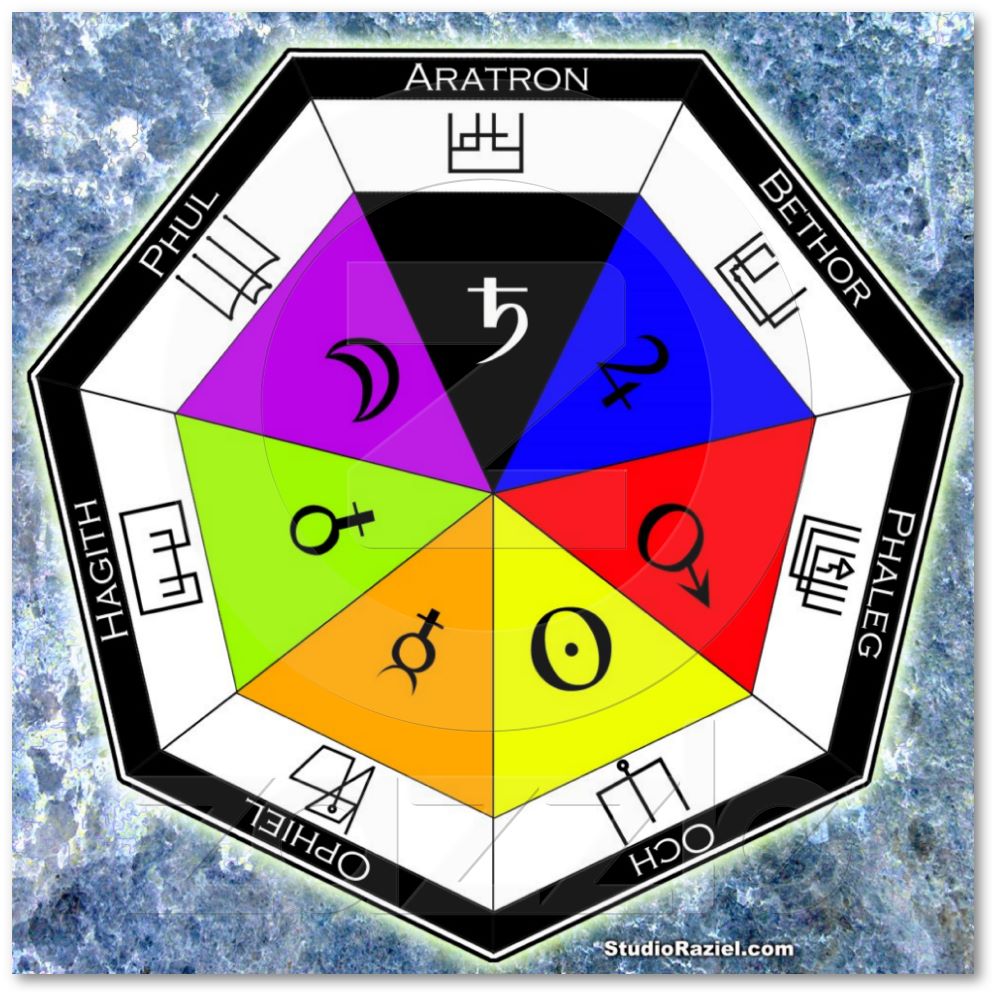
“The celestial beings and inhabitants of the heavenly luminaries are called Olympian Spirits. Their duty is the declaration of the Predestination of Fate, the management of all events, insofar as God allows: for neither the Evil Spirit nor Evil Fate can harm one who is under the protection of the Most High. Therefore if any of the Olympian Spirits teaches and reveals what his star forecasts, he cannot in any way affect subsequent events without God’s permission.“
There are 196 Olympian Eparchies in all: Aratron rules 49 regions, Bethor — 42, Phaleg — 35, Och — 28, Hagith — 21, Ophiel — 14 and Phul — 7. Each spirit “builds upon” the previous and governs a number of “regions” seven greater than the preceding one. These Eparchies are called visible; just as everything that pertains to Transcendental Magic can be described precisely in the Seven Chapters of the Arbatel, so these seven numbers, multiples of the mysterious number seven, symbolize the number of spirits and their powers and their authorities. It is further said that the Olympian Spirits rule in turn, each for 490 years, for a permanent fixation of a single sphere to each of them would lead to confusion.
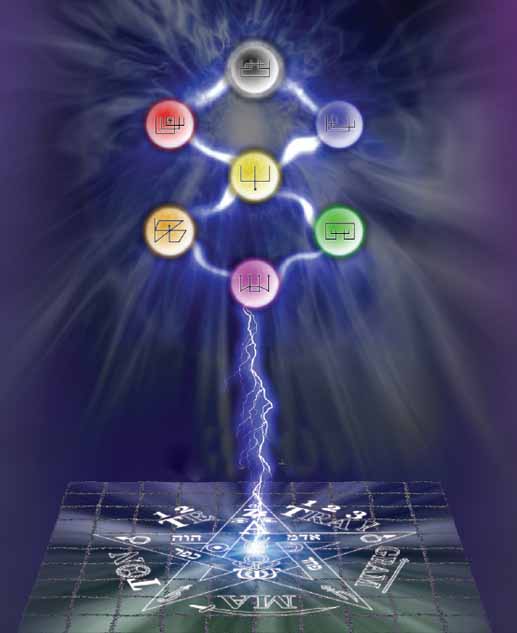
It is important to note that, in the magical tradition influenced by Gnostic teachings, the Planetary Spirits or Archons were regarded as very powerful entities, upon whose power all manifested worlds depend.
Medieval books on magic frequently address the Planetary Spirits. For example, Aratron (attributed in the Arbatel as the Spirit of Saturn) is mentioned in the “Sworn Book of Honorius” (13th century), in the Enchiridion of Pope Leo, and a reference to the Spirit of the Sun, Och, appears in the diaries of the English Magus of the second half of the 16th century, John Dee, which include reports of his mystical practices. Most likely Dee knew the “Magic of Arbatel”; a reference to it is contained in his work “Books of Mysteries” (Mysteriorum Libri). Moreover, Dee, who interacted with spirits of the intermediary realm, undoubtedly noticed the influence of the Archons, whom he, like many others, habitually identified as “angels.”
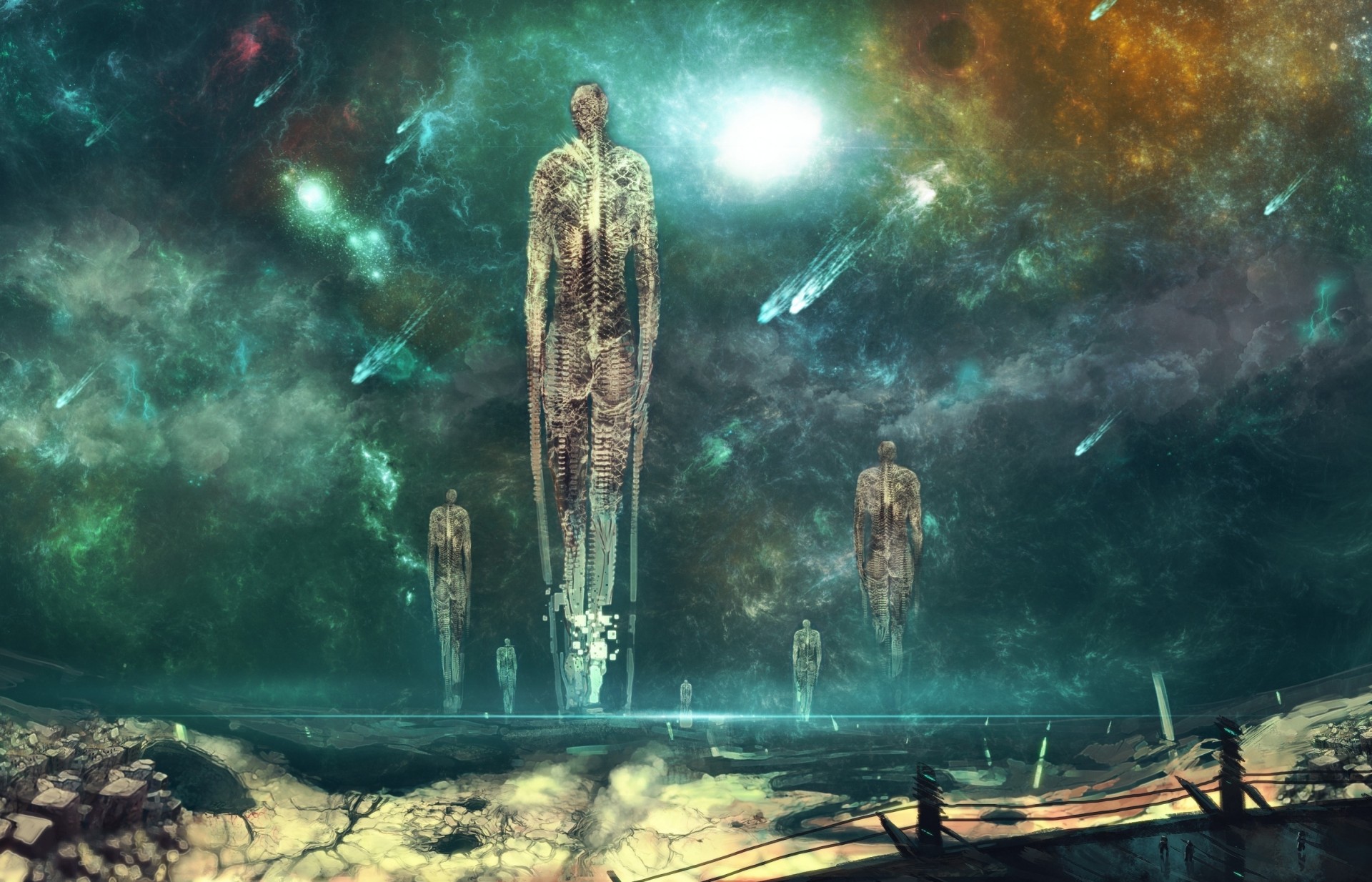
According to tradition, the Olympian spirits govern specific departments and spheres of activity in the material world in a “natural” manner; outside the bounds of their Eparchies, however, they accomplish the same ends by means of Magic.
Thus Och, lord of all that is connected with the Sun, controls the formation of gold or the development of gold-bearing veins in the depths of the earth — this casts him as chief mineralogist in the natural hierarchy. He also presides over the rapid production of gold by chemical means and is the patron of alchemists. And, finally, he instantly procures gold by Magic.
“Each Ruler is able to do what corresponds to his natural skills not so quickly if the material requires time for preparation, but he can act immediately if no preparation is needed“.
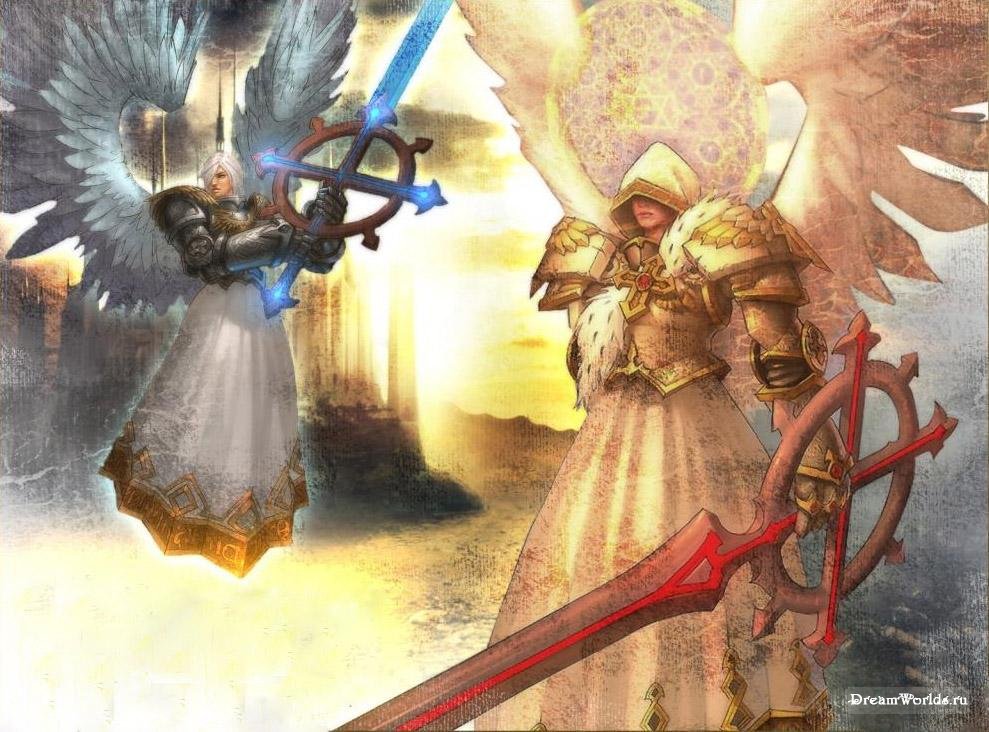
Arbatel also asserts that the Olympian Spirits recognize true magi, which sets these spirits apart from other Goetic entities:
“To middling magi they send spirits that obey them only in certain matters; but pseudo-magi they do not heed at all or they deceive by sending demons
Each ruler acts with all his spirits alike, according to his appointment, always in the same manner“
Each Olympian spirit has its magical symbol, which is its Seal or signature; this symbol contains its “true” name. However, Arbatel notes that knowledge of a spirit’s symbol does not automatically confer power over it, and this contradicts accepted magical doctrine. A spirit may be summoned only by means of a prayer addressed to God, asking Him to send it. For such a request to be granted, deep reflection and true love of God are required.

Only those names that have become known to the operator directly from Angels can be efficacious, but even these names rarely remain operative for more than forty years. Thus, Arbatel says, he who makes use of this magical guidance is better off relying on the spirits’ authority and not relying on names; and if the operator is destined to master the Magical Art, then all branches of that art will inevitably reveal themselves to him.
“Every sign received from a Spirit for a particular purpose is effective only for that purpose and only for a specific period of time. One must use the sign on the day and hour when it was given, which corresponds to a particular Planetary Spirit. “
Moreover, names are not fixed, immutable, or true, which is why they differ among various authors, and this depends on how knowledge was obtained.
Arbatel contains, like other sources of Ceremonial Magic, fairly detailed instructions for creating the Magical Circle.
The rules for the life of the Magus set out in the Arbatel are numerous. They pertain both to the sphere of morality and to the very essence of life. As is evident from the epigraph to this article, Arbatel regards magic as an innate human quality, and his instructions are aimed precisely at regulating the lives of such “born” Magi.
“Anyone can understand whether he is born for Magic, and if so, for which form of it
a man must look into himself in order to know himself, and to understand what in him is mortal and what is immortal, what in him belongs to his personal qualities and what to the common“
Many of these injunctions are unduly ignored by modern magi:
“The principal rule of Magic is to know what each person should take from the Spirit that helps him, and what to refuse. “
“One should take care that one’s experiments are not mixed with others; each must be simple and isolated from the rest“
Finally, I will close this overview with a quotation that, in my view, contains the quintessence of Arbatel:
“pay attention to everything that happens in everyday life, and you will be convinced that everything in the world is filled with Magic”
Enmerkar, if you allow, I will add one important point here, which I have noticed not everyone knows. In the Russian translation of the 21 Aphorisms, where the evocation is described, there is an unfortunate error! It is written that the starting point for evocation is at sunset. In fact, in the Latin and other manuscripts, it states that it is at sunrise. This also aligns with the principle that a spirit can be summoned not only during its planetary hour but simply at sunrise.
In general, the translation from Hebrew of the word ‘Arbatal’ – ארבעתאל – can mean ‘arba’ (ארבע) four and el (אל) God, i.e., four times divine or something of that sort. The letter “t” (ת) is the connecting letter between the two words. Although the four may refer to a quaternary.
Thank you for the Magic of your articles!!!