What Do We Know About the Runes?
The word “Runes” is familiar to everyone today, and it is hard to imagine that as recently as thirty years ago the notion that these signs had any meaning beyond mere writing was known only to a narrow circle of specialists — and to German nationalist organizations.
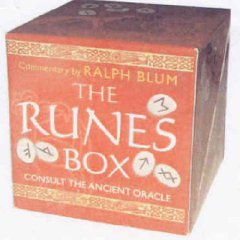
Ralph Blum, who revived the Runes for the general public in the 1970s, became at once the Angel and the Demon of the Runes.
On the one hand, he drew attention to the colossal powers hidden in these signs; on the other, he treated them frivolously, thereby establishing an unhealthy tradition of commercial, profane use of the runes.
In fact, apart from the numerous works today by scholarly and non-scholarly runologists, information about the hidden meaning of the Runes can be drawn from little besides the traditional Runic Poems, of which, as is known, three have been preserved (Icelandic, Old English, and Norwegian), and which in verse form guide readers to the symbolic field of each Rune.
It is precisely the paucity of primary sources that gives rise to the diversity of views on the runes that we see today.
But is that a bad thing?
Let us recall where the runes came from.
“No one fed me,
no one gave me drink,
I gazed upon the earth,
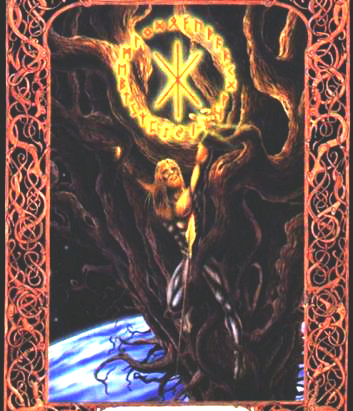
I raised the Runes,
I uplifted them with a groan —
and fell from the tree.”
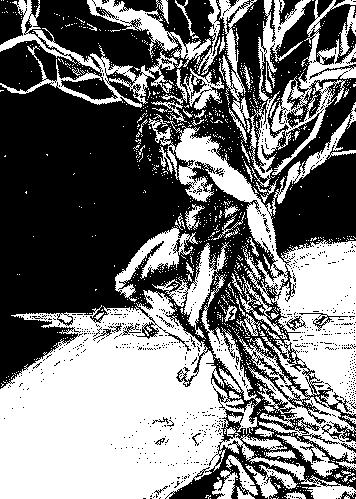
What Odin raised will be discussed later; what matters now is that the runes are the fruit of inspiration.
Therefore, broadly speaking, nothing besides the runes themselves is needed to understand their meaning (of course, this is precisely “broadly speaking,” because in reality the Futhark runes chosen by a given people require, for their comprehension, knowledge of that people’s mindset, mythology, and spirit).
And here two points require discussion.
1) what should be counted as runes? Only Futhark sets? And what about non-alphabetic runes, for example the famous Valknut and Wolfsangel? Do they possess the same power? Anyone who has used the runes will say: “Yes, they do.” Then it becomes clear that the Runic world is not limited to the Futhark sets, and we must admit that the Valknut, the swastika, and the Wolfsangel are runes. But what, then, did Odin raise?
A semi-traditional idea seems plausible: nine sticks forming a pattern in which runes can be found. Conversely, one might call runes the signs formed by the intersections of these sticks.
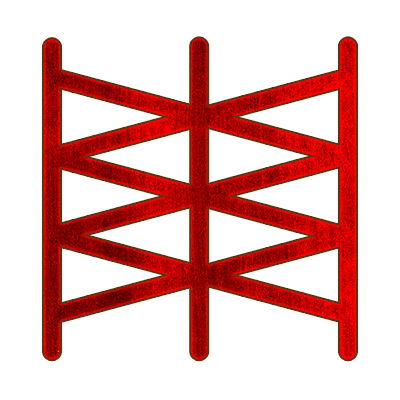
Then the question of what should or should not count as runic symbols will become irrelevant, and at the same time nontraditional runic systems (such as Armanen) will gain their rightful place to exist.
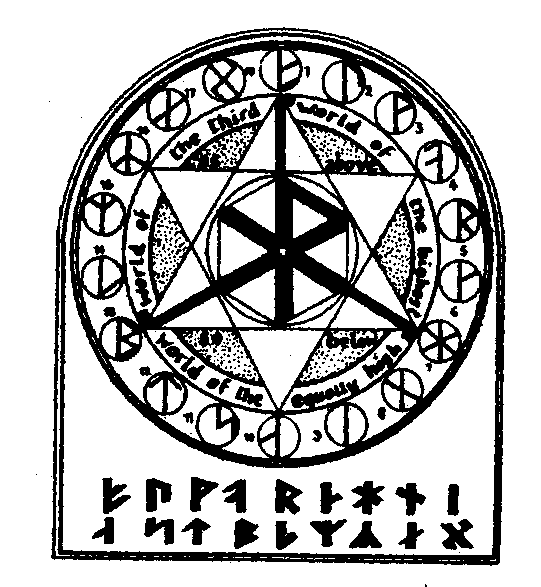
Thus, Odin discovered the principle of the runes, the principle of constructing signs that possess realizational force relative to dynamic systems.
2) what is needed to understand the runes? First, of course, inspiration — the “Odinic” power. Second, one needs to understand the forms of the runes, and to understand them in the “Odinic” spirit. Third, one must know their names and grasp what those who bestowed those names intended. The third point is highly desirable, but if the first two are present, it is not obligatory.
Another useful point for understanding the Runes, or rather for understanding their interrelations, is the idea of mutual transformation of the runes. By rearranging the elements of one rune, one can obtain another. For example, the rune Fehu can be obtained by transforming Nauthiz and Algiz; Hagalaz by superimposing two Uruz; and Ingwaz by joining either two Kenazes or parts of Jera.
Such rearrangement helps not only to trace the genealogy of runic forces but also to uncover new semantic layers in each rune.
On the “Theurgy” site, I read about techniques for conducting rune energy through gestures, dances. Shamans, to be precise, did not parody the dances of wind, beast, but tried to identify with them. An attempt to depict a sign using mudras or gestures will provide a more complete identification, resonance with the energy of the rune. This was not in tradition, but any tradition can expand, evolve. Could you write something more on this topic?
Please recommend wood for creating a set of Runes. Which species should each Att be carved from?
Ash, oak, apple tree
Based on my own experience, I believe that Runes should be made from YOUR own wood. That is, the one with which a person is aligned according to the druid calendar.
What is the purpose of applying rune drawings on the body? For example, in the form of tattoos, do the applied drawings of runes influence the being itself? Is there a point in imprinting runes carrying power on the body to gain strength, is there a danger in it?
When Runes are applied to the body as a tattoo, the object becomes a walking amulet or talisman, and over time, when the object realizes that there is no longer a need for it, unfortunately, nothing can be done; it will remain a walking amulet for the rest of its life.