
The Magus’s Patience
Since the Magus must overcome many obstacles and sometimes even hardships along his Way, it may seem that patience is one of the essential qualities for the magical traveler — patience.
However, the magical conception of patience differs significantly from the ordinary human one.
Patience is often described as enduring unpleasantness. As the saying goes, for a person patience is the ability to restrain the soul, to subject it to the demands of the intellect.
But should the Magus restrain himself? We have already said — categorically no.
Therefore the Magus’s patience is not restraint or suppression, but the ability to wait.

One of Confucius’s sayings is well known:
“Sit patiently on the riverbank, and the corpse of your enemy will float by.”
Patience is usually considered a positive human quality. But within the notion of “patience” one can distinguish two entirely different aspects. On the one hand, patience is the ability to wait without losing persistence, to continue resolutely on the Way toward one’s goal.
On the other hand, patience is often used to mean an inability to resist: bearing every insult and injury, slavishly submitting to circumstance.
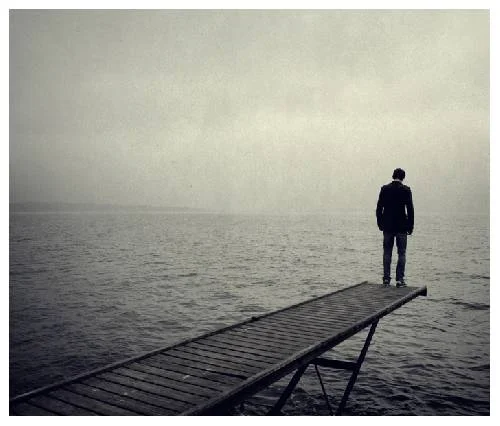
Clearly the first is a sign of strength, and the second — of weakness.
The Magus does not “endure”; he does not yield to problems. He always remains a warrior, and his life is a battle. Patience is the lot of the defeated and the captive; the Magus knows that, while he lives, he is not defeated.
For the Magus the concept of “patience” is replaced by the idea of steadfastness. The Magus is not patient, he is steadfast. This means he remains himself — a traveler on the Way from infinity to infinity — regardless of what problems and obstacles he meets on his Way.
The Magus, on the one hand, is flexible enough not to rush headlong into danger, maneuverable enough not to attempt a frontal assault on an enemy far stronger than he is; on the other hand — the Magus is utterly unwavering in his aims and intentions. Nothing, absolutely nothing, can deprive the Magus of faith in himself and confidence in his Way.
If circumstances of overwhelming force knock the Magus down, he, as soon as circumstances allow, rises again and persistently resumes his journey.

Often people consider themselves sufficiently patient, but when a fairly serious trial arrives, they immediately cry out: “That’s it — my patience has run out!” For the Magus, however, steadfastness is a personal quality called to overcome the negative external influences and inner experiences, while responding adequately and promptly to such influences and preserving his essential nature; moreover, responding in a way that contributes to the development of the mind of his own mind and those around him. Ancient wisdom declares that the true warrior is the one who can above all master himself and keep his feelings and passions under control. Precisely to keep under control, not to suppress them, because to endure means wanting to avoid, but failing to avoid. The warrior does not refrain from action out of mere stubbornness or endurance; he refrains because his desire to follow the Way is greater than the fear of defeat; we have said repeatedly: Magic is not the art of conquering, but the art of being victorious. The Magus masters himself, masters his desires, and therefore — he knows how to wait when necessary, and how to hurry when delay is intolerable.
A significant difference: ‘to endure’ and ‘to persevere’. Unwillingness or inability to resolve a situation or to escape from it contrasting with the ability to endure temporary hardships in the process and for their overcoming. One can persevere, but cannot merely endure; in a word.
In general, thank you and I agree, Enmerkar.