
The Marvels Close at Hand

It is not uncommon to hear from Magi, especially those who have come a considerable distance, the phrase: “I am no longer surprised by anything.” Yet such a viewpoint is one of the signs of stagnation of power, and therefore of a magus’s decline.
Indeed, wonder is a reaction to something new that does not fit into an established worldview. Accordingly, the ability to be astonished, the ability to notice the marvelous, is the ability to help expand the mind beyond the current system, and thus the key to successful significant qualitative leaps in growth.
In reality, the lion’s share of the efforts of the Parasites of mind is aimed precisely at teaching the mind not to be surprised. The very logic of ordinary human perception is such that any perceived object is forced into the matching template that best integrates with the cognitive system, and perception itself becomes a dreary drift of attention over homogeneous objects and forms.
Thus the mind is deprived of spontaneity, immediacy, and the liveliness of perception, and so falls into the fetters of the mundane.
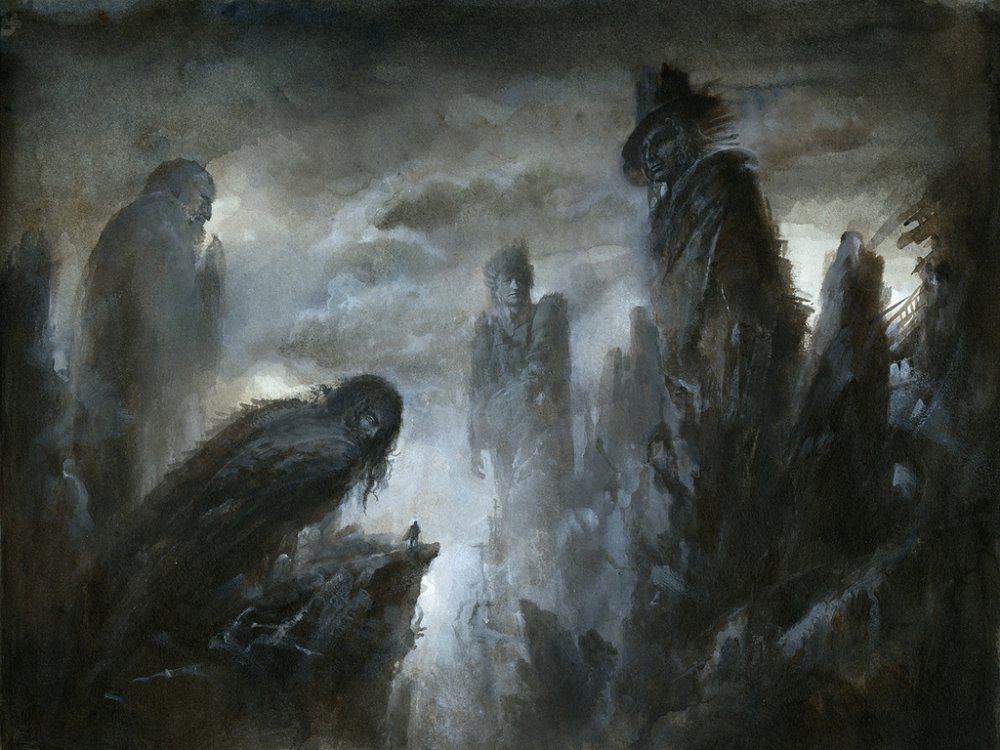
A simple example: a person walks down the street and lets their attention drift over the objects and people around them. In a large city the probability that, even during a short journey, they will encounter nonhuman entities is quite high. If the route is longer, then almost certainly they will come across objects of power, traps, and altogether unusual items from other realms of consciousness. Nevertheless, both ordinary people and magi often notice only a tiny fraction of objects that don’t fit the overall logic of the perceived scene; and a considerable number of those perceived oddities are awkwardly shoehorned into a Procrustean bed of “I didn’t have time to examine it,” “it seemed to me,” and other such tricks of the parasites of consciousness.
For a Magus it is very important to preserve lively perception and to be surprised by every object that does not fit the logic of the present moment. Such perception requires considerable effort, because it must not be allowed to become a habit, but must be kept constantly in the forefront of awareness. Yet that freshness of perception provides a successful strategy for seizing spontaneous leaps of insight of mind, and therefore for a significant increase in power.
In other words, a Magus must not be afraid to encounter the unfamiliar, must not flinch before the unusual, but must perceive the world as it deserves — with eyes wide open, always eager for new doors, opportunities and possibilities.
Thank you for the wonderful article!
Thank you, En. I was also thinking about this recently. However, I connected monotony – banality with ‘the fading of the soul’s fire’. That means ‘friends’ are causing mischief.
But I disagree. However, what does it mean to ‘be surprised’? For example, I’m inclined towards an explorer’s position: ‘Hmm, so this happens too. Let me take a look.’ Still, this is not surprise.
Thank you. The article fits very well with the current moment. But are there any distractors in the very act of surprise? Can it harm a magician?
There are as many distractors in surprise as there are in everyday life. The tendency is such that in true banality, there is almost no room for surprise. 🙁 It depends on the ‘Magical House’ of the magician, how much they can allow themselves to harm.
I wonder how to recognize non-human beings on the streets of the city since they are likely well-masked)))
Look into the eyes of the people walking beside you on the street. They have a different gaze, a different fullness and depth. Look at the sky, the flow of winds. There the sylphs dance 🙂 Look at the trees. ‘Non-human beings’ are always nearby – you just have to look, not ‘try to see.’
Recognizing the ‘human’ in oneself will allow one to recognize the non-human.