The Magus’s Laughter
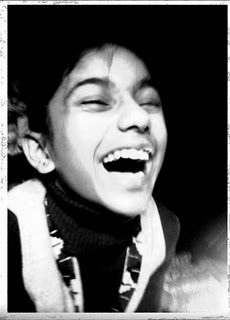
Laughter as a biological reaction is always a sign of surplus energy. As an energetic process, laughter corresponds to that excess and serves to vent it, performing a protective role, sparing the vessel that cannot contain it from destructive effects. The essence of laughter usually consists in the laugher perceiving some degree of negativity in its object, a certain “measure of evil” — that is, a lack of energy replenished by laughter. However, laughter can be not only a response to negativity but also simply an expression of power, joy, or pure pleasure. Since ancient times laughter has been credited not only with the power to increase vital forces but also with awakening them. Laughter was believed to possess the ability to rouse life in the most literal sense of the word. This applied both to human life and to the life of nature.
In other words, a person laughs in order to release an overflow of energy or simply to signal that overflow. In this context it is clear that laughter performs two functions: 1) a display of strength (which is why in films villains, before committing some atrocity, always laugh hysterically — by doing so they display their superiority; the same applies to comedy shows — they serve to create a sense of power), and 2) protection from an actual surplus of energy released from some source.
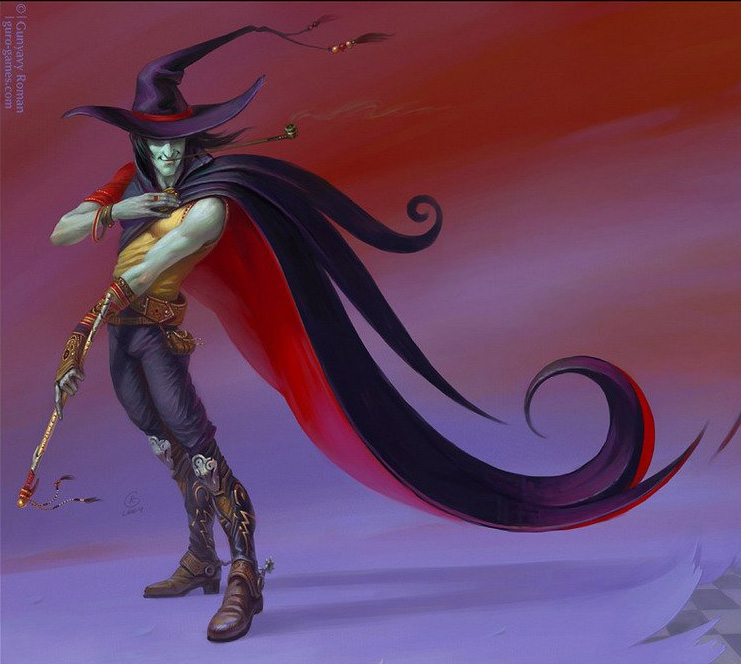
Accordingly, among the Magi, attitudes to humour clearly divide them into two groups: the first are the “demonstrative” laughers — usually laughing maliciously, whose humour only they understand — and the second are the practical laughers, who use it for its intended purpose.
At the dawn of human culture laughter was an obligatory element of certain rites — ritual laughter. To the modern eye such deliberate, artificial laughter seems “false” and invites criticism. But people did not always think so. In some cases laughter was obligatory just as in others crying was obligatory, regardless of whether the person actually felt the corresponding emotion. Such situations chiefly included Maslenitsa among the Slavs and the carnivals of Western Europe. On those days people indulged in unrestrained gluttony, drunkenness, and all manner of revelry. Laughing was mandatory, and they laughed freely and without restraint — and the laughter gave strength to the harvest, for the awakening of nature’s vital forces. People sacrificed their own strength, transferring it to nature to sustain its productive powers, and then themselves recovered slowly and painfully, experiencing withdrawal not only from the binge but also from the excess of laughter.
The “protective” function of laughter is not exhausted by the “discharging” of force; that force can be directed toward overcoming imminent danger. This laughter is closely linked to malice (ritual derision of dying, of death). Laughter appears when evil proves fundamentally surmountable, and some force, provided by laughter, is needed to overcome it. When a person perceives a flaw or hostility in an object or event, he can in his mind “complete” the “right” image of that thing, using the energy of laughter in this “completion.” Neutralized in this way, evil is “forgiven” in laughter, which yet preserves hints of the possibility of a different, perhaps not so harmless response: in a kindly smile one can discern both a shade of suffering and a warlike snarl. Leonardo da Vinci already noted this characteristic of the laugher:
“He who laughs differs from him who cries neither by the eyes, nor by the mouth, nor by the cheeks, but only by the immobile position of the eyebrows, which knit in him who cries, and rise in him who laughs.”
It is clear that for the Magus who strives to control his force, the “demonstrative,” as well as the “fertilizing,” use of laughter is entirely superfluous. At the same time, the “discharging” effect of laughter must not be excessive. Here, as in other domains, it is important to keep the threshold — on the one hand, for the Magus it is very important to possess a sense of humour, to be able to laugh at himself and at his surroundings, to be able to draw strength from laughter, but on the other hand it is important not to overdo the guffaw, not to fall into hysteria and uncontrolled loss of energy.
The presence of limits, a certain restraint and sense of proportion within which a phenomenon can be perceived as comic and beyond which laughter ceases — this is one of the achievements of spiritual discipline.
I dare to add that there are also those who derive pleasure from life, who love life, rejoice in their Path – their laughter is pure and natural. Though this does not mean they can’t use laughter as a tool :))
P.S.
A grim magician is not our ideal :))
🙂 A grim magician is not ideal at all. Sometimes it is necessary to release energy so that it doesn’t stagnate. Grumpiness is a sign either of stagnant power or its absence. Both are unsuitable for a magician. However, hysterically laughing magicians are also far from being ideal.
The other day I asked the seller for 300 grams of this and 300 grams of that. Well, as I understand it, the probability of getting such accuracy is about a millionth. But she managed, it was funny 🙂
Thank you, great article! I would never have thought that laughter is such a serious matter 🙂
What can we then say about singing?
Singing, especially in the bathroom, is even more serious
Especially – choral singing in the bathroom!
P.S.
Look for information on “primeval sounds”…