
Is the Word a Sparrow?
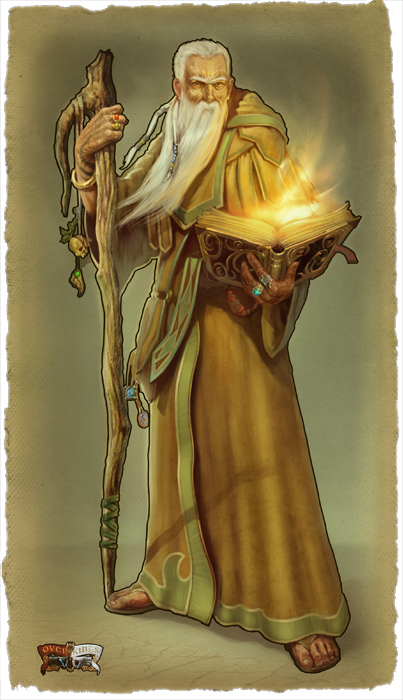
There are countless discussions about the power of words, spells and the precise verbal expression of intent. Many magical traditions and schools focus specifically on the power of the word — for example, Galdr.
Yet in everyday life people are extremely careless with words.
Who has not, after uttering a rash remark during an argument, later bitterly regretted it?
There is a special category of verbal formulas whose power is overwhelming, and whose consequences are far-reaching; treating them lightly is like digging one’s own grave, both figuratively and literally.
I refer to the so-called magical assertions, among which are oaths, blessings and curses.
In fact, it is precisely on the power of magical assertions that Galdr Magic is based; they lie at the heart of many spells, in evocation or invocation.
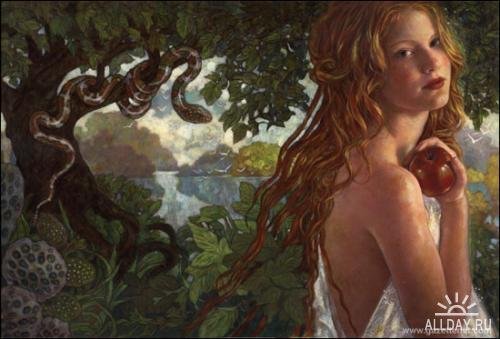
The idea that certain verbal formulations can possess greater power than ordinary words follows directly from notions about the order of creation: from ideas to objects. A word is the embodiment of thought, which in turn embodies an idea — it is analogous to the embodied object and therefore, by the law of analogies, can govern that object.
It is clear that all verbal formulations that rely on semantic content manifest only through the mind of the speaker and/or the listener. But that same power can be captured by carelessly spoken words.
The power of such assertions is already reflected in Aeschylus’s famous trilogy, the Oresteia. In those tragedies, Clytemnestra, Agamemnon, Electra and Orestes are made guilty by the gods who cursed their house (as was the house of Oedipus). Thus the characters’ behavior results from a curse, not their personal desires.
It is believed that curses are more potent — and therefore more dangerous — when pronounced by authoritative figures; for example, priests or members of the royal family; by those skilled in magic, for example witches, sorcerers and Magi; by people lacking other means of revenge, for example women (in most societies), the poor, the sick and the dying. Curses uttered on one’s deathbed possess the greatest power, since all the life force of the one who utters the curse departs with it.
But while curses or blessings are usually treated, at least to some degree, with responsibility, the third kind of assertions — oaths — are often taken casually and indiscriminately, even though their force is no less.
Not only Magi, but many thinkers and religious figures recognized the power of oaths. One of the first to oppose the oath was the ancient Jewish religious-political group of the Essenes. The Essenes recognized no oaths, and therefore Herod, upon assuming rule in Palestine, even exempted them from oath-taking. The Waldensians, the London poor, followers of a religious movement of the 12th-century in France, repudiated the oath. Quakers, Anabaptists, Mennonites and many other Christian sects likewise do not take oaths.
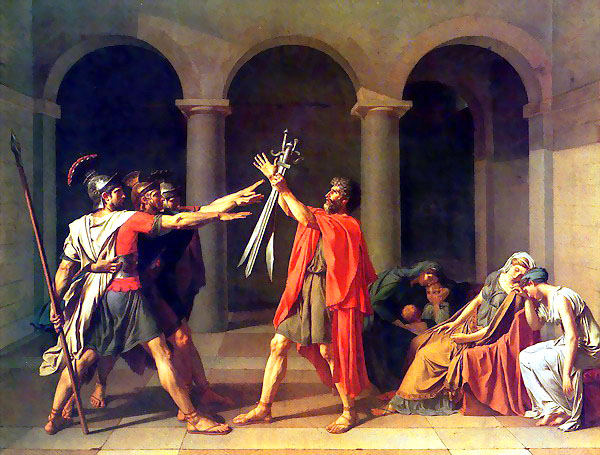
In his book “What I Believe,” L. N. Tolstoy writes
“An oath in itself may not seem criminal, but one falls under condemnation because of it, and therefore do not swear at all… never swear, to anyone, about anything. Every oath is extorted from people for evil.”
Many sages warn against taking vows. In Judaism, for one who, under pressure, made a vow, the usual remedy is to ask a rabbi with a request to be released from it.
Even promises not phrased as oaths impose many restrictions on a person. Having once said “I will never…” and then forgotten it, many are surprised why impasses arise in their lives. Yet these very impasses are the consequence of promises made to oneself (or to others).
In practice it turns out that a very large share of the problems, insurmountable obstacles and difficulties that confront travelers are connected precisely with promises they once made.
Many Magi have perished because of promises they made to spirits or demons, promises that those same demons prevented them from fulfilling.
Therefore it is very important for a Magus to understand that promises given must inevitably be fulfilled, so one should think carefully before promising anything. Oaths are best avoided altogether, since their force is more binding and breach causes greater consequences.
Can one make vows to oneself? Will this provide additional strength for changing oneself?
I don’t think this will give ‘additional strength’. Rather, this will give additional pangs of conscience when breaking such vows. It’s better not to promise oneself to do something, but just to try as hard as possible to do it.
And how can one free oneself from oaths and promises made to oneself or to others?
Just like from any knots from the past – there are various approaches for this; for example – the Circle of Veles can be a support for this.
Very relevant for legal practice.
Dear Enmerkar, you write
“Many mages died because of promises made to spirits or demons, which these same demons prevented from being fulfilled.”
I find myself in such a situation now, and I believe that the reason I came across this article at this moment in my life is not a coincidence.
Once, I too made a vow that I couldn’t keep. This has had a very strong impact on my world. It seems to have cracked, and while trying to seal it, the crack just overcomes the patch and spreads further, breaking my fate and draining my strength. Now, as I walk my Path, I feel how shattered it is. Walking it is painful and difficult. And I know that this happens because of the vow I once couldn’t keep. It’s been half a year already. I am still fighting, but it is becoming harder and harder. The further I go, the more broken my Path becomes. I used to meet travelers who walked their Path, but sooner or later they deviated from it, stopped, ceased to go, and then perished. I thought this would never happen to me. But now I feel that I really might fall into the abyss after the next step. I came here seeking advice. What can I do to rectify what I’ve done? How can I free myself from the catastrophic consequences of my broken vow? Is there a way to fix this? Please, advise me on what is best to do now.
You urgently need to reconsider your vow. For this, there has always existed, in all Traditions, the institution of ‘Debt Burners.’ But even if you do not find someone who can burn your debt, you must do it yourself. The southern quarter of the Wheel of Veles is designated, in particular, for such cases. Try to apply it to yourself.
Based on the fact that the word – whether spoken or in the form of thought, is energy, it has an impact on the manifested Universe – both the Macrocosm and the Microcosm or Psychocosmos. Can we say that the spoken word has more consequences in the Macrocosm, while the word-thought has in the Psychocosmos? What is the difference between the effect of a spoken word and that of a word-thought?
How to rid oneself of foolish promises, often to oneself, which were forgotten over the years, in the dead ends one finds oneself in?