
Intolerance as a Sign of Being a Loser
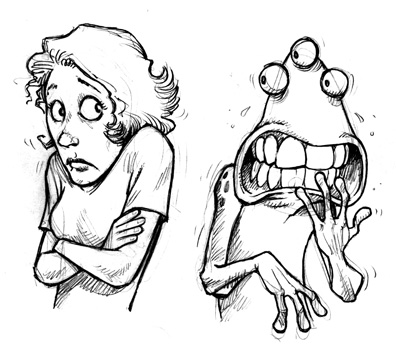
Although, over the course of civilization, a person has acquired many social traits, under stress or in real or imagined danger a primitive “fight or flight” reaction still often kicks in. The psychological conversion of fear into aggression is a well-known and universal survival mechanism in the animal kingdom.
A person expresses the preconscious layers of the psyche inherited from animals within the system of meaningful cultural signs that the mind assimilates. Irrational fear, which lies at the root of intolerance, finds expression either as direct aggression (a physical release) or in the form of prohibitions, gossip, and stories — manifestations that correspond to nonverbal aggression. Most often, the roots of intolerance lie in ignorance and fear. Individual anxiety about unfamiliar behavior is defensive in nature. A person does not know how to behave when confronted with behavior different from their own. After all, understanding and awareness require strength, and when strength is lacking, understanding also suffers, and so aggression appears.
As long as a person feels strong and confident, they are capable of open-minded thought. However, insecurity and self-doubt provoke a defensive reaction — intolerance, an insistence on one’s “rightness” and the inferiority of anyone who thinks or acts otherwise.

Everything that is different starts to seem hostile, although this hostility springs from fear, the dread of losing the last scraps of self-identity. Xenophobia is a reified, ideological illusion of outsiders and the unfamiliar, endowed with an ideological concept, arising in conscious helplessness before it — when that fantastic fear appears that frees one from any responsibility for their thinking, and in extreme states — also for their actions. The qualities of the stranger are perceived so negatively that the weak person cannot come to terms with the object of xenophobia; they seek only to destroy it. Destruction, of course, is usually only conditional, for physical destruction often requires strength that is precisely lacking. The degree of susceptibility to xenophobia depends on many personal and social circumstances.

People have a strong impulse to conform to others. More precisely, the human personality results from a compromise between the drive for assimilation — to “not stand out,” to fit into some “own” group — and the desire to express individuality so as to be noticed. Conforming to the norms of “proper” behavior is not always easy. In many cultures, there are peculiar “safety valves” into which one can release psychological tension born of a constant fear of nonconformity. Such fear is especially strong in weak people, since their weakness is itself a trait they desperately try to hide.
Xenophobia — aggressive behavior toward the “different” — alleviates anxious feelings associated with a sense of one’s own inferiority; it is an attempt to resolve an intrapersonal conflict. The harmony of relations primarily presupposes mutual respect between people. Tolerance is a consequence of equality, whereas in a state of powerlessness, when a person subconsciously senses the danger of being overwhelmed, they create hierarchies, because only such an a priori inequality — when some are “intrinsically better” than others — gives them an illusion of protection. Since xenophobia gives people a sense of comfort, it is very difficult to combat.

However, intolerance is not only a sign of powerlessness itself; it also, conversely, blocks gaining strength. A person will never fight for what they believe they already possess. As long as they consider their way the only correct one, and themselves holders of absolute truth, as long as they display their “wisdom” at every turn, they do not move.
They believe they have already achieved everything and need to strive for nothing. And standing still leads to the abyss, for, as the Duchess said in Alice in Wonderland, “even to remain in the same place you must run at full tilt.” I have often encountered people who speak at length about Ceremonial Magic but cannot read a single spell, about “Journeys between worlds” who have never gone beyond their country cottage, about the Gods who pray only to their own “genius.” And, what is especially characteristic, all these people are eager to prove they are right and to call “stupid” and “ignorant” everyone who dares to hold a different point of view. The more insistently a person clings to their single ‘rightness’, the more aggressively they attack other views, the less experience, strength, and knowledge they usually have in the field.
Broadening one’s horizons, accepting other views and opinions, is a step toward expanding awareness, and therefore toward Power. It is important, however, not to adopt a passive, uncritical submission to others’ opinions, views, and actions; not passive endurance but an active stance and a readiness to tolerate and acknowledge diversity, the multiplicity of Ways, among which there are no “true” and “false,” but Suitable or Not suitable for a particular person or group.

I generally agree with most of the thoughts in the article, but aggression and intolerance must sometimes be present when it is about preserving one’s species. Humanity is no exception. And not all races are equal; this is a fact.
The human being is selfish; it’s unlikely that anyone actually thinks about the preservation of the species or similar things when they personally exhibit aggression. This is self-justification.
I share your opinion, Enmerkar, but I see numerous distractors in the concept of tolerance. An example of this is modern Europe with its Arab problem. I respectfully regard Islam, but the ignorance that Arabs display towards European culture is simply distressing. There is a certain line when tolerance can become dangerous and grow into indiscriminate permissiveness. Although, of course, xenophobia in this situation is never the right way out. The ban on wearing hijabs, it seems to me, is a completely offensive act. In my view, the correct solution would be not to “persecute” Islamic culture, but to demand respectful treatment towards it alongside similar treatment of European culture from the Arabs.
Another extreme of tolerance is the attempt to equalize everyone culturally. Right now, the media space is filled with examples where, for instance, Christians in Europe are banned from wearing crosses at work, claiming they offend someone’s religious feelings. And all this under the guise of the same tolerance.
Unfortunately, such “rotten” tolerance is now the cause of many problems, just as “rotten” xenophobia is. The necessary path is always somewhere in the middle 🙂