
The Game of Chance
The box of lots —
a game and laughter
among brave men,
where warriors sit
in mead-halls,
happy together
At the level of the Second aett the transition from Neutrality to Receptivity gives rise to fluctuations in the surroundings.
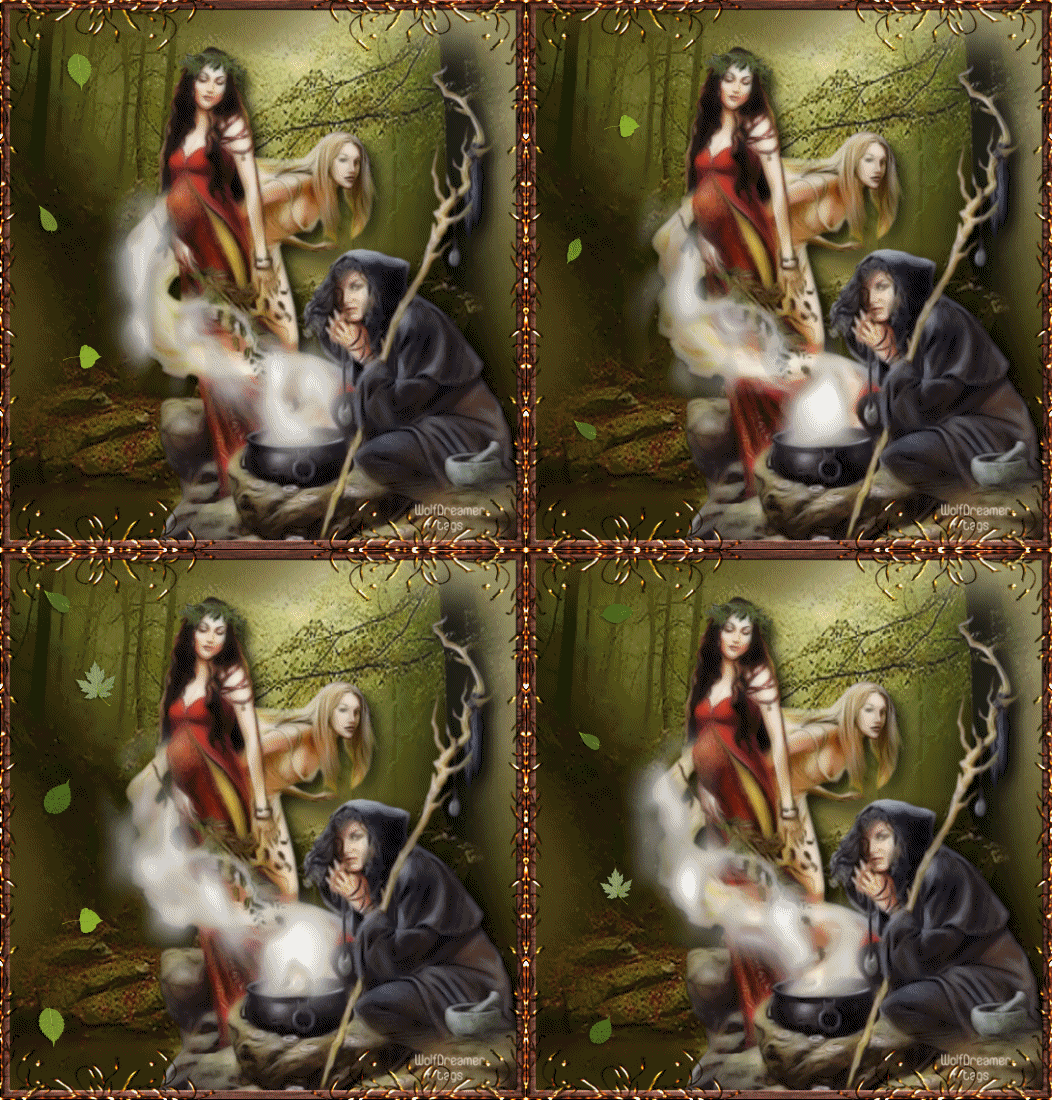
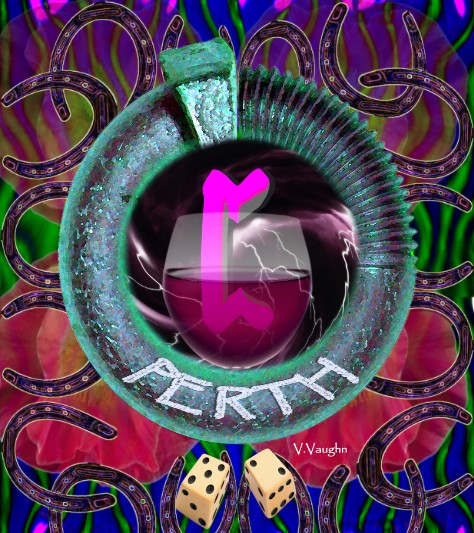
These fluctuations are a direct consequence of the intrusion of forces from the Lower World (which occurred at the stage of Eihwaz) into the Middle World and are described by the Rune Perthro (the lot or the womb, Perthro).
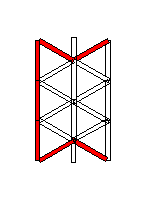
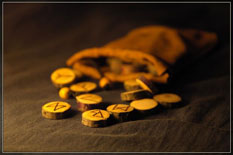
Apparently, this Rune depicts a pouch holding the runes in which the Runes are kept, placing Perthro in a special position in the runic cycle.
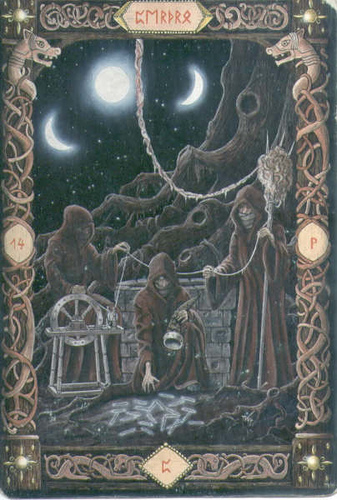
Mythologically this is described by the arrival of the Norns, which ended the Golden Age:
“On the meadow, rejoicing,
in the hall they played,
everything they had was gold, —
until there came
three giantesses,
mighty maidens
from Jotunheim”
It is well known that the Norns, having come into the Worlds of manifestation, established a twofold law: on the one hand they are masters of fate and the course of life. On the other hand, it is precisely their power that allows a person to overcome limitations.
In other words, on the one hand the Norns create the outer framework of human life:
“Wise maidens
there arose,
three from the well
beneath the lofty tree;
Urd is the name of the first,
Verdandi the second, —
they cut the runes, —
Skuld the third is named;
they judged destinies,
they chose life
for the children of men,
they prepare the lot“.
It is the knots tied by the Norns on the threads of fate that determine the key events that befall a person.
Nevertheless, fate is sometimes miraculously resisted (or, perhaps, this is simply another expression of fate).
Thus, for example, the “Saga of the People of the Salmon Valley” tells the story of a man named An:
“Night after this An groaned in his sleep, and they woke him. They asked him what he had seen in his dream. He answered:
– A terrible woman came to me and tore me from my bed. In one hand she had a large knife, and in the other a trough. She put the knife to my belly, cut it open, took out my entrails and in their place put straw. After that she went away.
Kjartan and the others laughed much at this dream and said that they would now call him An Straw-in-the-Belly. They seized him and said that they wanted to check if he had straw in his belly….
On the night after the day when the battle at Selingsdalstunga occurred, An rose, while everyone thought him dead. The people who were near the corpses were frightened, for it seemed to them that a great miracle had occurred. Then An said to them:
– I beg you in the name of God, do not fear me, for I was alive and fully conscious until the moment when I lost consciousness. Then I dreamed of that same woman as before, and it seemed she took the straw out of my belly and put my entrails back, and after that I felt well.
After that his wounds were dressed, and he healed, and from then on he was called An Straw-in-the-Belly”
Such a “protective” power, personified in the figure of the woman who appeared to An (and similar descriptions can be found in other sagas), is usually called Hamingja and signifies precisely a person’s ability to defy the natural course of things — that is, their good fortune (luck)
Hamingja denotes a person’s ability to make the Order of things yield to them, to give way.
An important distinction of Hamingja is precisely its discrete, finite nature: it can be possessed at birth or simply given as a gift; it can be transferred or gifted, or taken away in battle; it can be lost or gambled away; it can even bequeathed.
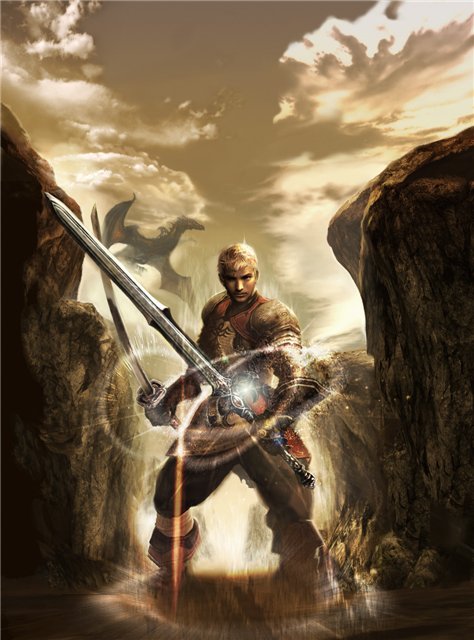
Indeed, such discreteness is characteristic of pagan myth, which, as we have seen many times, describes currents of power not as straight lines or rays but as segments, quanta endowed with a kind of self-awareness.
Thus the personal way appears as the sum of regularity and overcoming it.
It is the unity of these two aspects that is described by the Rune Perthro.
The pagan warrior on his way constantly contends with fate and luck.
Another point reflecting the same idea is the very concept of the Norns.
Very often the three Norns are equated, on the basis of formal similarity (they are women, three who spin fate), with the Greek Moirai or the Roman Parcae, readily ascribed the governance of threefold time (past, present, future), and even iconographically depicted as three women of different ages (young, mature, and old).
However, as should already be clear, the “barbarian” notion of fate (itself symbolized by the Rune Perthro) differed from the classical one precisely in its understanding of the importance of the play of chance and the idea that chance can be tipped in one’s favor.
Even the names of the Norns attest to this:
Urd – Fate, Verdandi – Becoming, and Skuld – Duty: the first ties the knots of destiny determined by birth (this is usually called, in Indian terms, “karma,” although that word is not entirely apt); the second provides for the realization of these key events (and here the very game of chance is possible, the intervention of Hamingja); and the third, expressing the “ideal” striving of the life path, its best development from the point of view of the world flow, ensures the coexistence of these two forces — inevitability and surprise.
At the same time, Skuld can both help avoid what seems inevitable (if it stands in the way of achievements, Power, and glory) and conversely pose an obstacle to Hamingja (if the best thing the hero can do is to leave the stage).
Other symbolic domains of the Rune Perthro include the notion of initiation as a leap through regularity, an unexpected renewal: one cannot predictably reach initiation; one can only prepare for it, but one can never predict when this leap will occur, or whether it will occur at all.
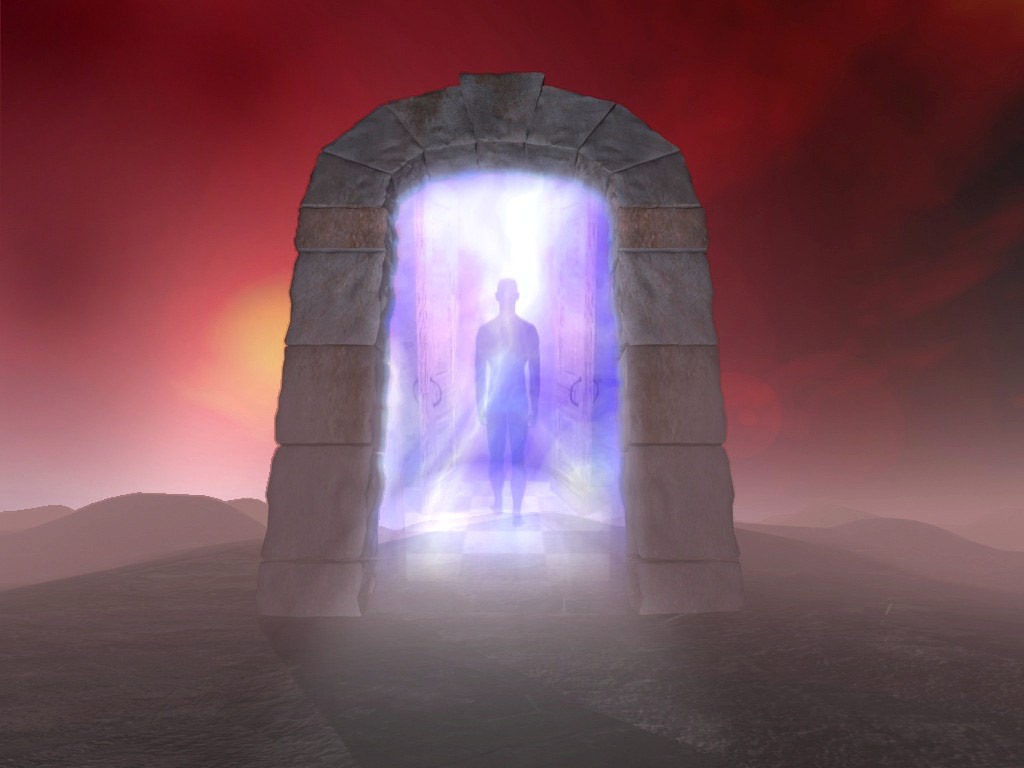
Another element of Perthro’s symbolic field is the notion of the crossroads between worlds, a place where anything is possible, since none of the worlds’ laws operate there and they find equilibrium.
Therefore Perthro is often compared to the womb, the belly, which on the one hand brings about birth, but on the other — the end (death) of intrauterine life. In this aspect Perthro corresponds to the Mother of the Aesir, Frigg, to whom “all fates are known.”
The comparison with the Mother also aligns Perthro with the Hearth, which establishes the connection between worlds.
Moreover, in Perthro’s sphere lies the faculty of intuition — likewise a leap through analysis and synthesis to direct knowledge of wholeness. Intuition can also be considered a manifestation of Hamingja in the domain of knowledge (“silent” knowledge), as the account of those influences not illuminated by judgment or intellect. The highest form of Intuition appears as insight and enlightenment, which also belong to Perthro’s sphere.
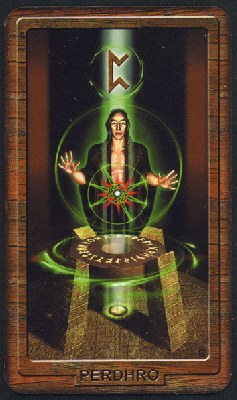
From the above it is clear that the magical application of Perthro included help in searches, as well as childbirth and fertility. Sigrdrifa, apparently, assigns Perthro to the midwifing runes precisely on the basis of this Rune’s ability to manifest events “out of nothing,” and Mimir’s head said that Perthro adorned “the Norn’s Nail.”
Graphically Perthro is compared with Berkana (in the aspect of Frigg). Perthro is the “open” Berkana. In addition, Perthro can be pictured as Jera shattered upon Isa; in this aspect Perthro represents the unity of regularity and sudden change, and also as Gebo, split in two by that same Isa.
At the same time, it is clear that misuse of Perthro is fraught with unpredictable consequences; the power of this Rune can be compared to the so-called “virtual boiling of the vacuum,” in which pairs of elementary particles/antiparticles are born, and which apparently underlies the real manifestation of the world.
It is precisely the spontaneity symbolized by Perthro that can work for or against the eril, if his power (and Hamingja) are insufficient. Therefore, when using Perthro, one must understand that the risks are great and be ready for any changes, not only those expected and desired.
I think every person has the right to choose what they prefer. Therefore, I think you made the right choice.
This rune has been something scary for me for many years. Something unconscious within me did not allow me to carve it……. However…. Everything has its Time…………….. Perhaps – Perth is the most amazing and magical rune of all the Futhark 🙂
I see in him a person calling to the heavens, sitting when there is no strength left to stand.
Now I see the ‘book of life’ from one side; a page is already written, closed, and from the other side, it is open and being written.