
Strong Signs
“You will find the runes
and comprehend the signs,
the mightiest signs,
the strongest signs,
Khroft dyed them,
and the gods created them
and Odin carved them”
(“Sayings of the High One”)
For centuries humanity has observed a striking correspondence between depicted symbols and the processes and phenomena of nature.
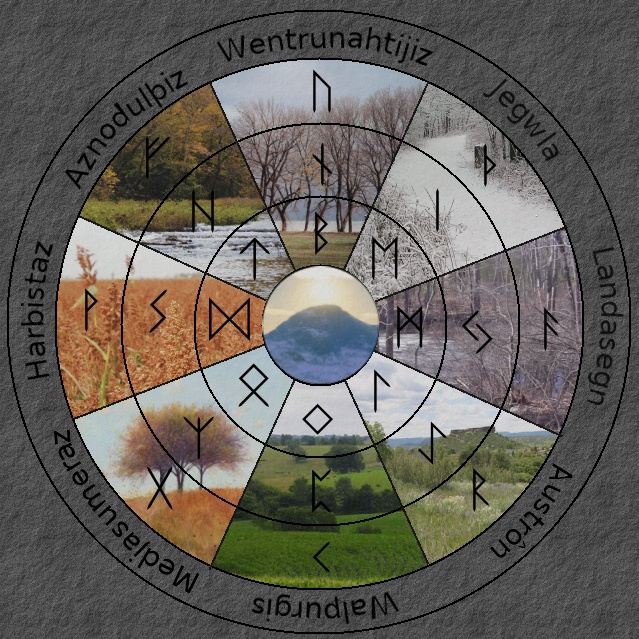
As a result, many symbolic systems arose that have influenced (and continue to influence) how we interpret events. Three such systems are well known: the Tarot system, the I Ching system, and the Runic Order. Less widely known is Ogham — the ancient Irish magical-divinatory system.
Interestingly, all three systems are widely used in divination, while the Runes also serve as a magical instrument. Moreover, it is clear that originally divination was primary in the I Ching (although Chinese divination differs substantially from European practice), whereas the Tarot served a Religious-Philosophical function, and the Runes arose specifically as a magical instrument.
Numerous analogies have been and continue to be drawn between these systems. And, as usual, the search for common ground often blinds one to essential differences.
Meanwhile, the fundamental difference is that the Major Arcana deal with static principles, whereas the Gua, Runes, and Ogham deal with dynamics.
The hexagrams of the I Ching symbolize elementary events, elementary actions, much as Dharmas in Buddhist teachings constitute the atoms of the Flow…
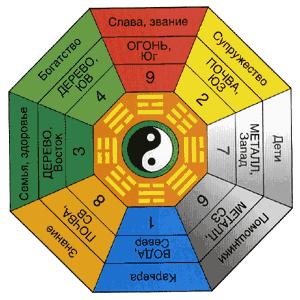
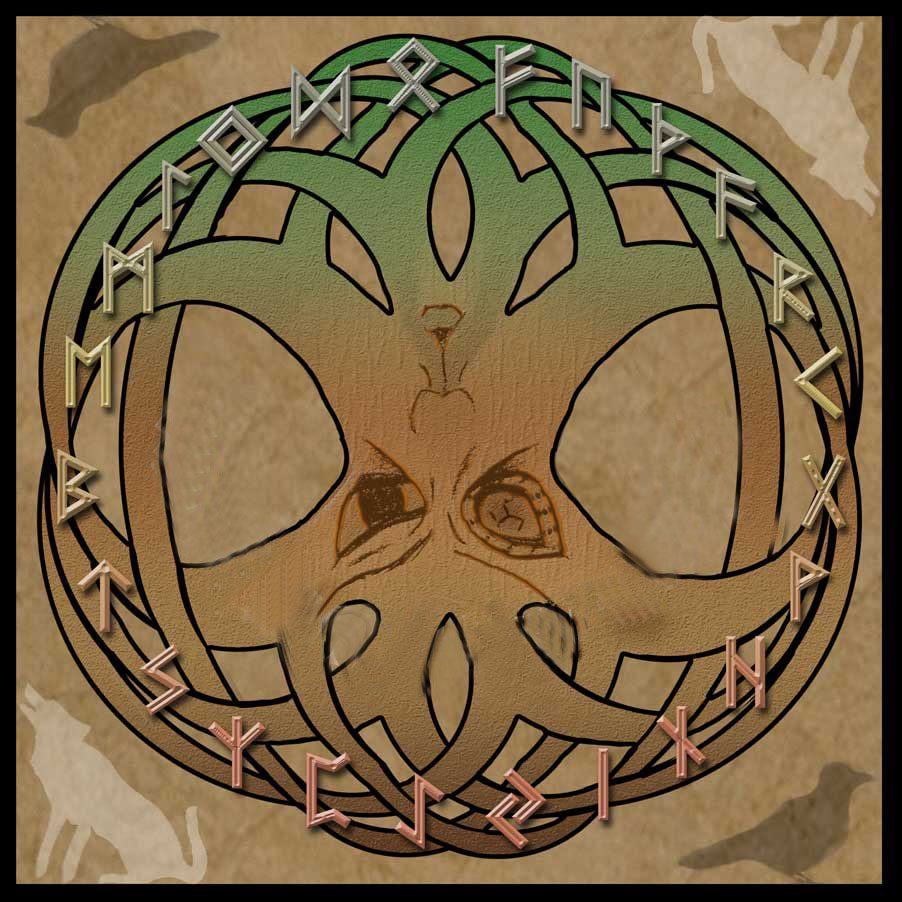
The Runes embody vectors, directions of the forces in the World Flow; the runic system goes back to ideas of the World Wheel and the World Tree with Three Roots.
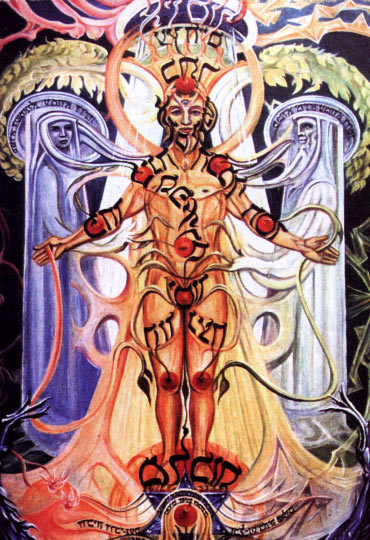
The Major Arcana of the Tarot describe the pivotal points of the cosmos, the centers of corresponding vortices that form the skeleton of the world’s vortex. They do not describe the forces’ movement themselves but only the channels (tzinoroth) through which these forces move.
Ogham describes processes of growth and the development of force, much like the growth of a tree.
It is clear that any phenomenon, any process, can be described from the standpoint of any of the mentioned systems, although that description will differ somewhat.
From the I Ching’s perspective, any phenomenon can be reduced to a set of elementary events. Father, Mother, the three Sons, and the three Daughters of the bagua actually form the spokes of the World Wheel that shape processes. The I Ching does not think in categories of entities or ideas, but in categories of functions, relations, influences. Moreover, such influences are inseparable from the perceiving subject. The Chinese sage is wise insofar as one follows the world’s spontaneous movement.
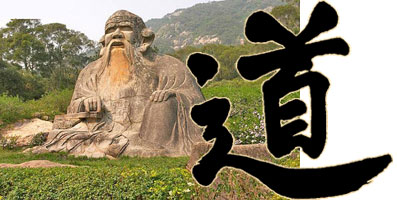
The Western world, as mentioned, prefers active intervention and transformation. The Tarot system, as an Initiatory system, is aimed primarily at the adept’s understanding of certain principles — the knowledge of which, and the ability to apply them, grants them power. However, the system itself remains distant from action. It is almost as contemplative as the I Ching.
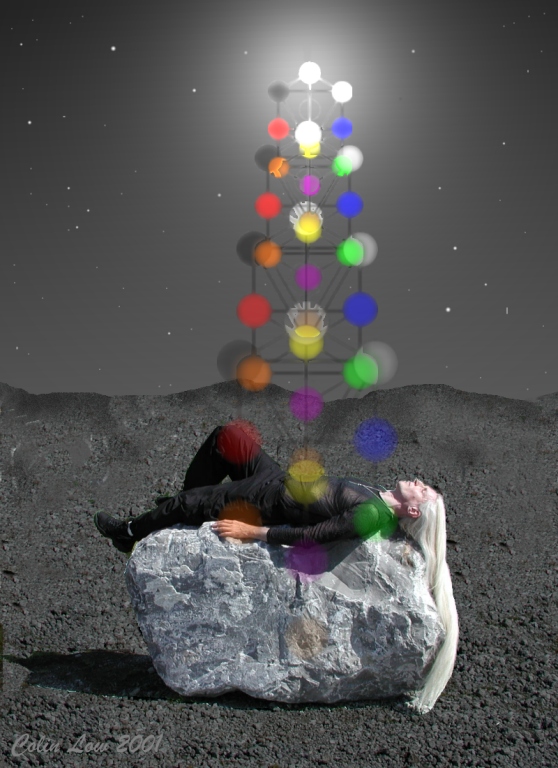
The Tree of Life (Etz Chaim), a key concept of Kabbalistic thought, lies at the foundation of the Tarot system. In that Tree, everything seems clear and yet equally distant from reality upon which, in addition to the Sefirot, the Qliphoth tree also exerts influence. Only by passing through both Trees, understanding both the obverse and the reverse of life, is it possible to attain perfect wisdom. At the same time, the Tarot system in the realm of the Minor Arcana also considers dynamic processes in terms of currents arising within the Tree of Life.
The Runic Order, as an originally magical system, aimed at transforming the surrounding world — at its transformation.
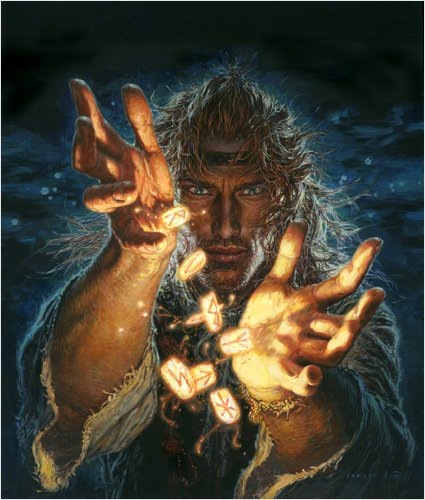
The understanding of the world that the Runes provide is purely practical. It does not present an account of the deep essence of things; it considers phenomena in the context of the world process (active existence and struggle) and the network of their interactions.
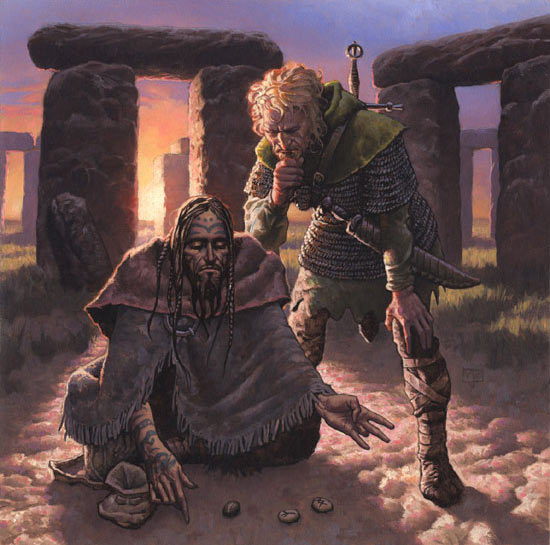
It is evident that the Runic system in this sense lies between the contemplation of chaos (Chaos was understood by the Chinese as a set of different orders) — the I Ching — and the contemplation of cosmos (the Egyptians conceived the Cosmos as a crystalline reflection of the potencies of the Absolute) — the Tarot. Ogham, as a system describing the “flow” of force — its growth and development — constitutes the fourth, “earthly” component of this ensemble of ways.
Four different systems, four different approaches, four different spirits: contemplation, growth, reflection, and quest.
A quartet of ways, a quaternary of ideas.
What will you choose? Listen to your heart.
Hello!
Yesterday I found your website. Today I decided to write when I read your latest post. Could you please tell me if you have encountered any information about a sign such as the equilateral cross in a circle?
Thank you.
Sincerely, Irina
Hello! Many people have written about the equilateral cross in a circle as a solar symbol, so what specifically interests you?
The Tree of Sefirot is a very clear structure, to some extent understandable. A certain path of evolution. However, it is not entirely clear how to pass through it. Is it possible to overlay runes on the Tree?
Yes, it is possible, and there are plenty of such experiments. However, in my opinion, such mixing of myths is unproductive.
Enmerkar, can you tell me what the phrase “clumsy use of runes can lead to…” means? Are there any rules for “skilled” use?
The study of symbolic systems of the most famous Magical Myths leads to the conclusion that there is also a fourth line: geomantic figures. They are used for both divination and realization impacts in pentacles and talismans. (That is, they are also realization symbols, unlike, for example, astrological ones, which only symbolize ideas.) What do you think can be attributed to the geomantic system?
Perhaps the tree is an analogy for the passage of abstract cores (the descent of spirit and its awareness) according to Castaneda.