
Giving as a Condition of Receiving
«A Gift for everyone —
pride and renown,
aid and worth;
for every wanderer
a livelihood; support
for those deprived of everything.»
The power born in Ansuz, which began in Raido and is expressed in Kenaz, in Gebo begins permeating other systems and radiating outward.
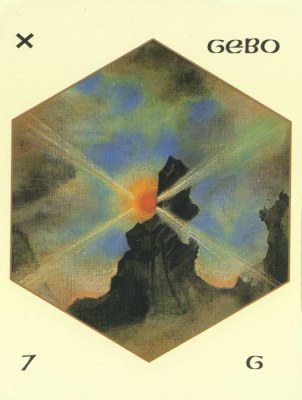
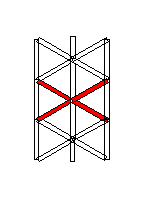
The seventh rune of the first Aett symbolizes energy exchange as the condition for a system’s stability; from this rune’s perspective, only open systems are stable.
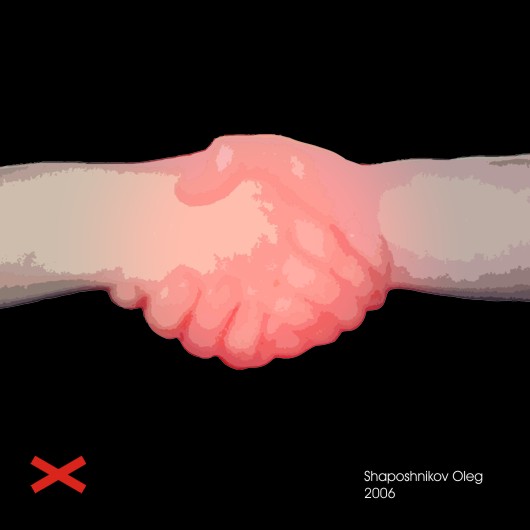
Mythologically Gebo (the Gift, sometimes Gifu, Giba) relates to the war between the Aesir and Vanir, and to the truce between them.
Another association is Odin’s sacrifice: the All-Father leaves an eye in Mimir’s well, receiving Mimir’s wisdom in return.
Both events point to the same stream of power, described by the law of Unity and the Struggle of Opposites.
Gebo’s symbolic field also includes the notion of marriage as the union of opposites, an equilibrium of wills expressed through the power of love.
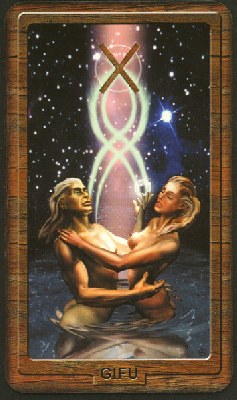
Needless to say, any process occurring in the world of open systems includes the element of Gebo — the energy that links things in the world and connects different worlds.
The war of the Aesir and the Vanir, born of imbalance among the tribes of gods, ended with their mutual balancing and an exchange of hostages: Freyr, who came to Asgard, took a key position there, while Hœnir, one of the three Aesir creators, apparently an aspect of Heimdall, upon going to Vanaheim channeled the stream of life into order. Moreover, this exchange was not without sacrifice — Mimir lost his head (his head lost its body), preventing the opposites from merging and thereby preserving a difference of potential necessary for manifestation.
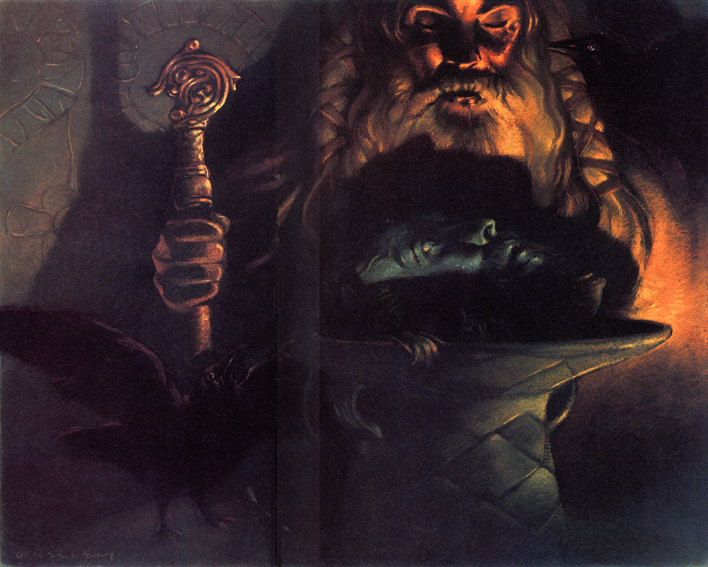
Thus the world as it is is precisely resulted from such an interaction between the Aesir and Vanir, gods of Unity and Differentiation.
Graphically, Gebo is associated with Kenaz and Nauthiz, since the unity of free wills (two Kenaz runes), embodied by Gebo, requires great and constant effort (Nauthiz).
As discussed, of the Law of Sacrifice for worlds where “everything must be paid for.” Even the All-Father Odin had to pay — he was the first to receive power and to open this path to later generations.
At the same time,
«Even if you do not pray at all,
do not sacrifice excessively;
a gift demands a response;
do not needlessly slaughter
with what is needlessly slain.
Thus Tund carved before mankind’s birth;
he was exalted when he returned.»
The law of sacrifice, if clumsily applied, becomes a way of dissipating power. We have already said that not every expenditure of power is proper use. Dissipating power leads to ‘heat death,’ to the draining of one’s being.
Therefore the negative aspect of this rune is associated with total self-sacrifice that is useless, becomes self-destruction and only feeds the earth’s worms.
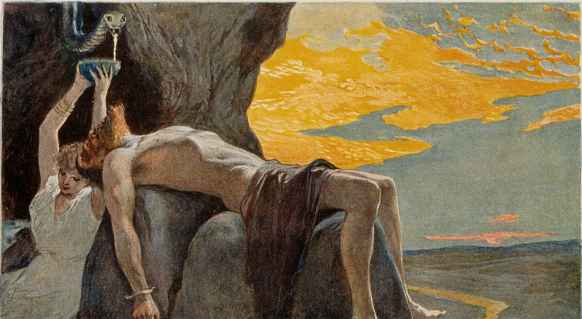
Myth describes this phenomenon as Loki’s punishment — the trickster god bound with his son’s entrails to a rock, with a venomous serpent dripping venom above him; like his offspring Fenrir — this sacrifice substitutes for and postpones the world’s death, and their release will bring ruin to gods and men.
And what about Osiris, Dionysus, Jesus? Also a complete self-sacrifice, but what are the results…..
the same results)
Hello Master! Why does the acquisition of runic power occur through the Gebo rune? I did not find or see the answer in the book. It seems that the role is more suited for Teiwaz.
Hello. Teiwaz is conquest, while Gebo is a gift. One did not conquer the runes; they obtained them by giving themselves as a sacrifice.