
Archons and the Culture of Cancellation
One of the consequences of the digitization of society and the widespread use of social networks and communication tools is a change in how aggression and suppression manifest — specifically, the spread of “digital ostracism,” or the so-called “cancel culture.”
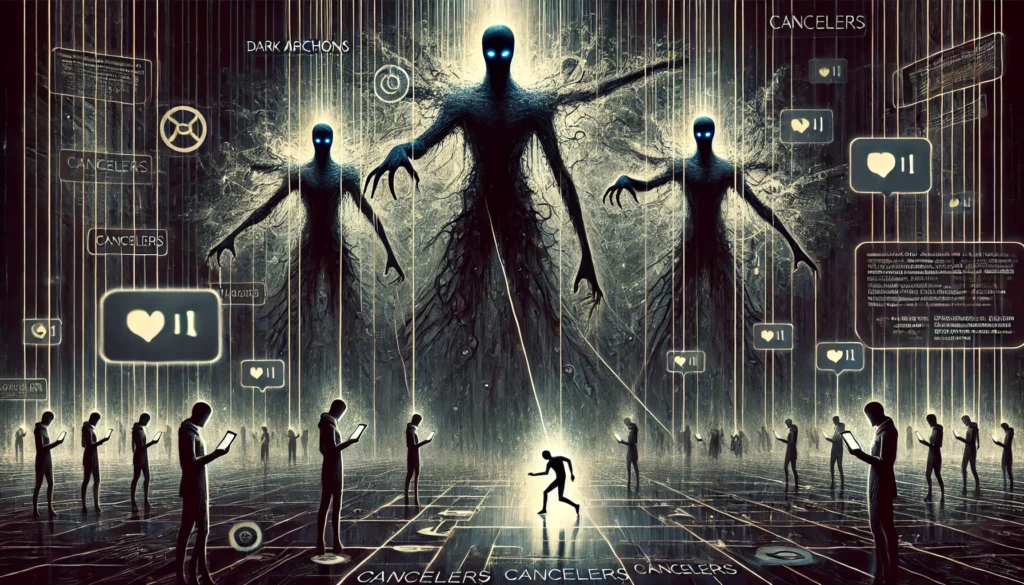
People may view this phenomenon, as well as its obvious and deep causes, differently. However, its spread quite accurately reflects that shift in the main destructors, the pathways of energy loss, which we have repeatedly noted. In particular, it is important that society, as “permitted” forms of violence, encourages hidden aggression which, first, doesn’t cause major energy releases in the persecutors, and, second, causes victims to experience suppressed will and depression — which is typical evidence of the activity of that model of destruction which the Tradition calls “archontic bonds” or “heimarmene.” Let’s examine this phenomenon in more detail.
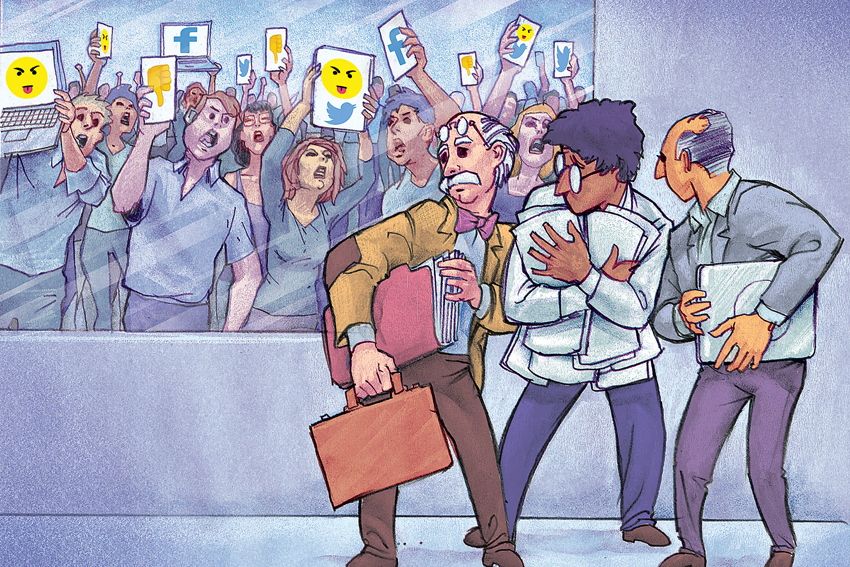
“Cancel culture” (cancel culture) is a phenomenon in modern society in which a person, an organization, or a work is subjected to public condemnation or boycott for certain actions, statements, or beliefs that are considered unacceptable or contrary to social norms, values, or morality. At the same time, accusations or condemnation are usually spread through social networks, which makes the process widely visible and fast.
Canceling is also called “mob justice,” when marginalized groups or communities, without sufficient justification, try to “punish” or “cancel” those they dislike or suspect of unacceptable actions. In doing so, the crowd often bases its conclusions on limited information — for example, on quotes taken out of context, rumors, or speculation — and marginalized groups, lacking institutional mechanisms to protect their rights, use public attention as a means of pressure and to release their own tension.
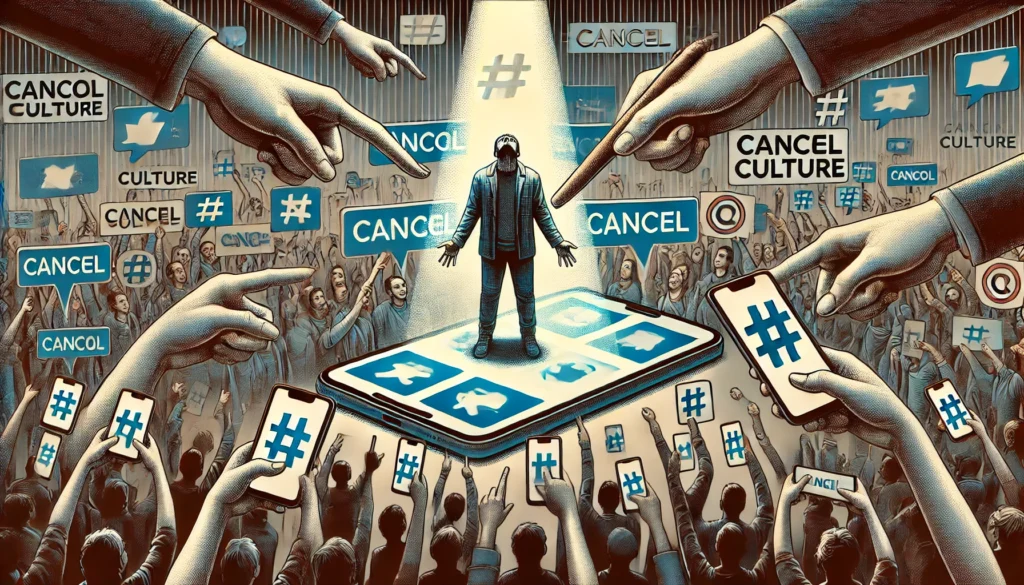
Such “oppressed” or “insufficiently realized” groups and individuals, experiencing discrimination or social pressure, usually accumulate significant stress and aggression which, nevertheless, is difficult for them to express directly.
To “release” this tension and prevent social storms, two main tendencies have developed in society — an “active-aggressive” one, often called bullying, and a passive-aggressive one (which may manifest as a boycott or “canceling”). In this, the object of bullying becomes a “scapegoat” on whom negativity is focused, helping participants avoid internal conflicts. Canceling is often accompanied by collective aggression, where each participant feels like part of a just cause, but does not realize the scale of the harm inflicted.
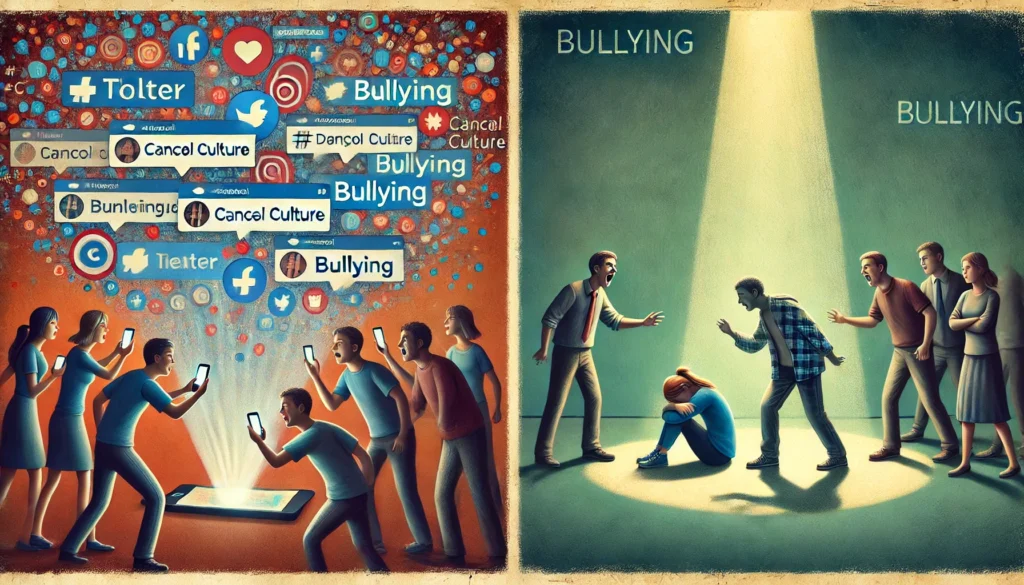
“Canceling” does not allow for dialogue or an opportunity for the victim to explain their position. The decision of the crowd has already been made, which makes this process violent by its very nature.
Therefore, it is not surprising that neither canceling nor bullying usually achieves the goal of correcting the problematic behavior against which they seem to be directed. In both cases, the emphasis more often shifts from solving the problem to the emotional satisfaction of the participants (the crowd or the aggressors), which nullifies the potential of these phenomena for constructive change.
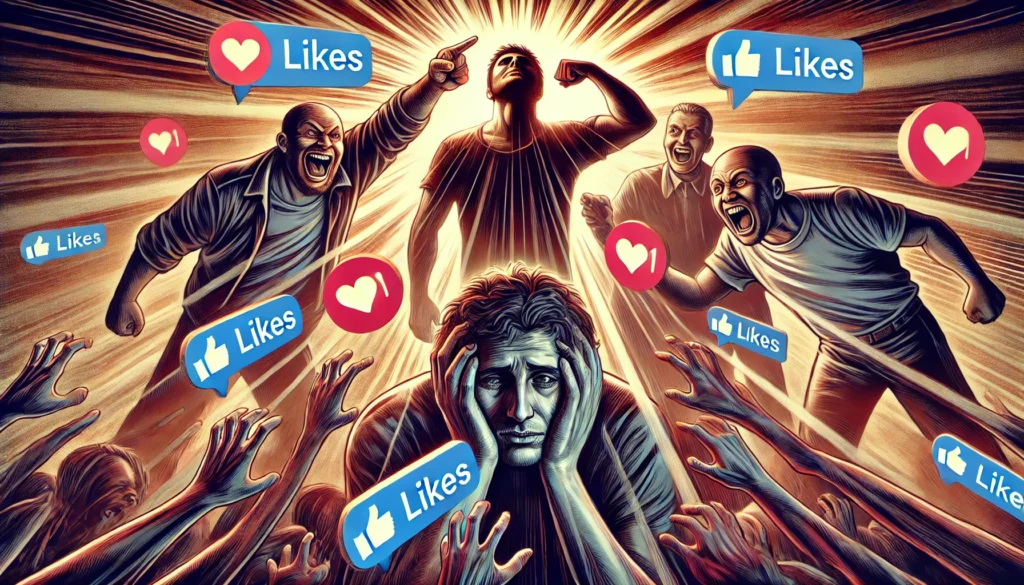
This emotional satisfaction that persecutors experience in the process of bullying or canceling has a number of reasons and levels of manifestation. The real motivation of persecutors in bullying or canceling is largely connected with the desire to reduce internal tension (stress, anger, dissatisfaction) and to receive dopamine reinforcement that arises when short-term emotional satisfaction is achieved.
Such forms of social violence give perpetrators a sense of power and control: they feel that they have power over the object of bullying or canceling, especially if their actions produce a noticeable effect (for example, humiliation, apologies, loss of reputation, withdrawal from public life). This provides the first portion of dopamine reinforcement, since people tend to strive for dominance in groups, and control over someone strengthens the sense of one’s own significance and compensates for personal shortcomings or a feeling of powerlessness in other aspects of life.
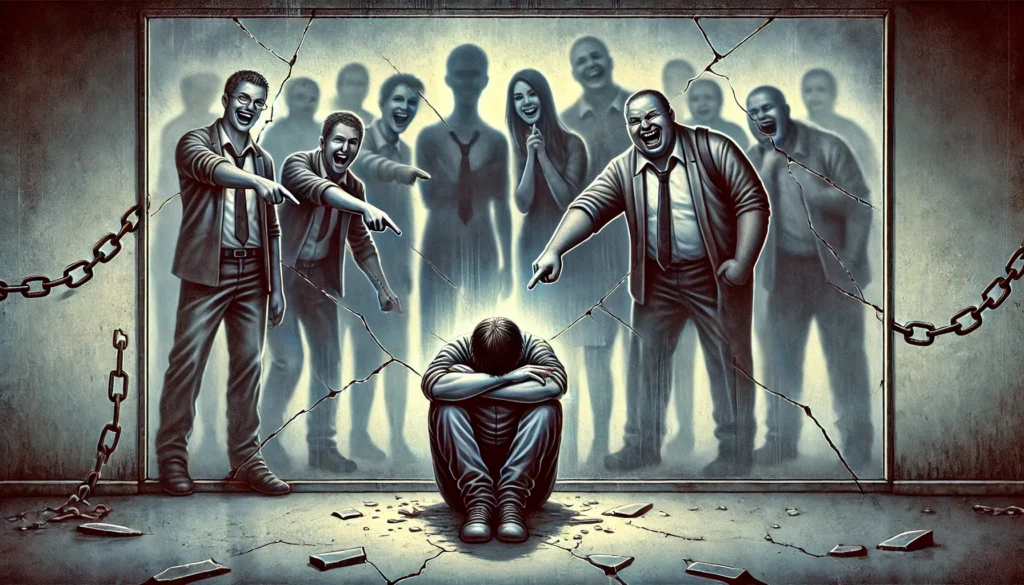
Participation in bullying or canceling reduces the feeling of social isolation, since it unites people into a kind of community, creating a “we” against “him/her.” This develops the illusion of belonging to a group and strengthens social ties within the collective. At the same time, persecutors enjoy the feeling of group support, especially if they believe their actions are “right” or “just.” In addition, such collective behavior reduces personal responsibility, which makes it possible to act without much guilt.
An important “dopamine-generating” aspect is also the feeling of moral superiority: persecutors proclaim themselves “guardians of justice,” who uncover mistakes, punish the “guilty,” and fight for truth. This feeling creates inner comfort; it seems to a person that their actions are justified, or even inspired by higher principles. This enhances self-respect and satisfaction with oneself. And since participation in bullying or canceling is often accompanied by approval from other participants (likes, supportive comments), such recognition from the group further strengthens the sense of significance and self-confidence. In social networks, support is expressed publicly, which further increases the effect. Persecutors often believe they are participating in correcting social injustice or fighting for truth. This allows them to feel part of a “great cause,” raise self-esteem, and sense their own significance. Even if the actions are destructive, they are perceived as “just” and, in a way, even “sacred.”
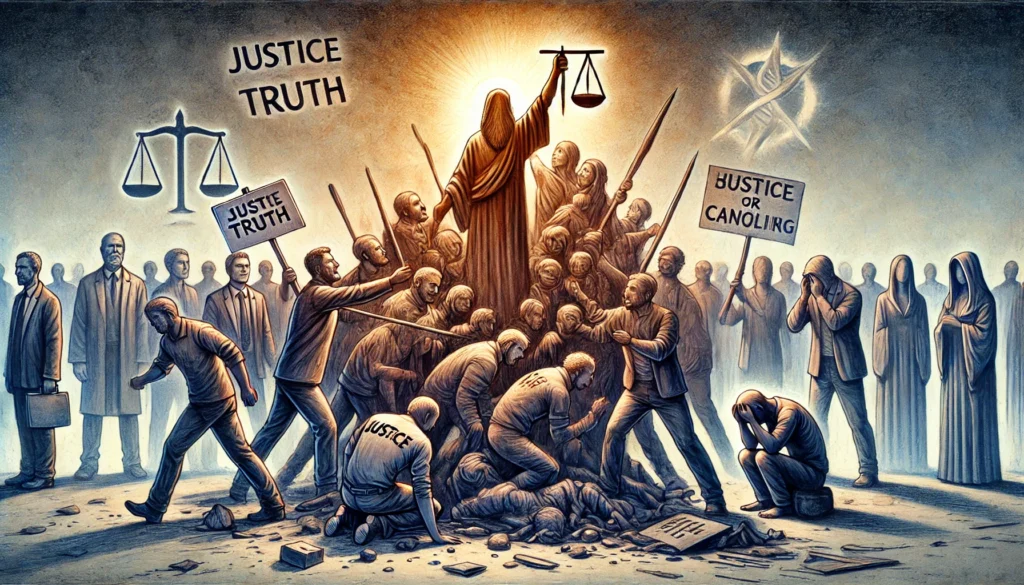
At the same time, collective participation reduces personal guilt, since responsibility is distributed among all participants; persecutors can justify their actions by saying that “everyone does it” or “I just joined in.” And the excitement and thrill associated with mass participation complement the temporary feeling of euphoria.
Historically, bullying was a much more widespread phenomenon; it arose often and naturally in small-group conditions. Canceling, as a mass social phenomenon, became widespread only in the era of global communications and digital technologies, although individual forms of public condemnation existed earlier as well. This reflects the change in destructive models that we mentioned above.
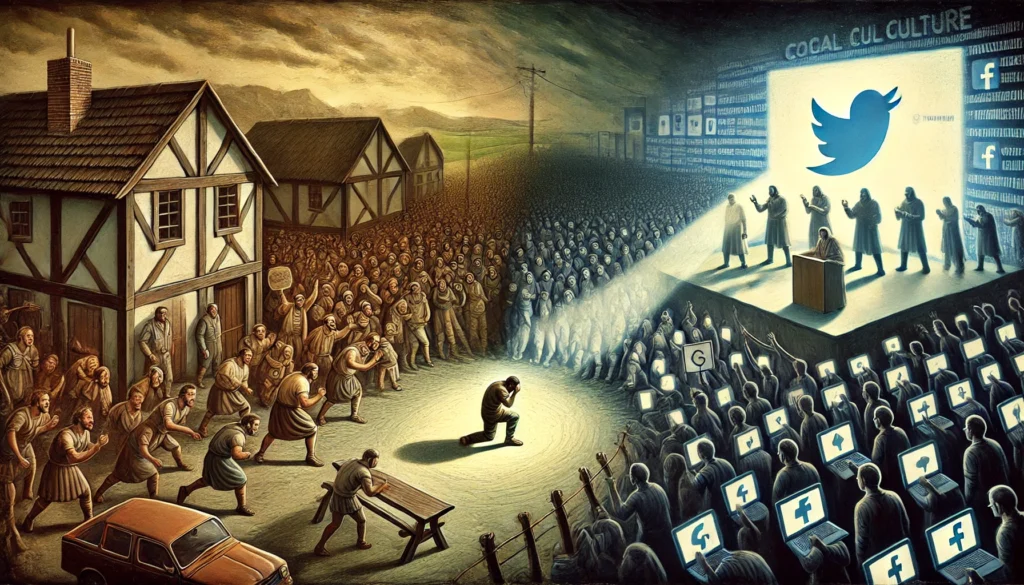
At the same time, it is easy to notice that in the case of canceling, participation feels safer and is backed by more respectable justifications, which makes it attractive for many participants. This distinguishes canceling from bullying, which is more often perceived as overtly aggressive and socially condemned behavior. Unlike bullying, where attacks occur face to face, canceling is implemented through “anonymous” or collective text, comments, or posts. This reduces emotional involvement and the sense of personal aggression.
Canceling usually appeals to prevailing social norms and values (equality, tolerance, condemnation of violence), which makes it socially acceptable and even approved. Its participants believe that they are not violating boundaries, but supporting these norms.
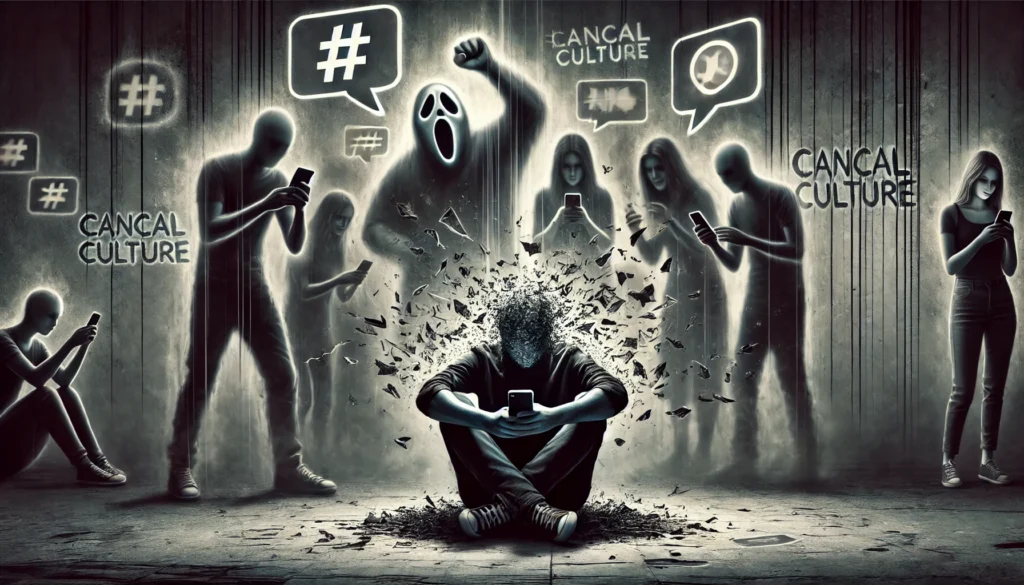
Such safety and collectivity increase the scale of canceling. What seems to participants like a “small contribution” in sum becomes a powerful destructive effect for the victim. This mass character and publicity make the consequences of “canceling” long-term and often irreversible.
Thus, canceling creates the illusion of safe participation in condemnation, reinforced by moral justifications, which makes it attractive for mass involvement. The aggression, which forms the basis of “canceling,” is covered up with respectable justifications; many participants do not realize or do not admit that their actions are a form of violence. The justifications make the behavior socially permissible and even “praiseworthy.” This makes it possible to ignore the moral and psychological consequences for the victim.
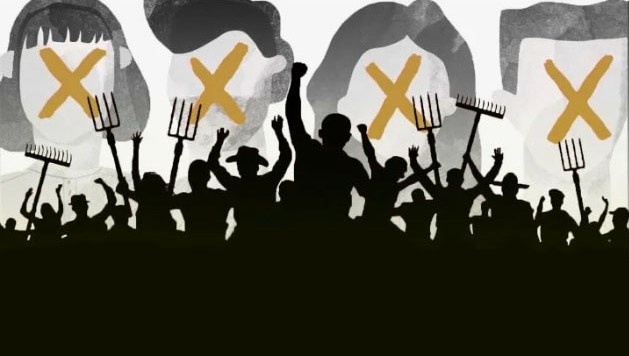
In turn, it is usually easier for the victim to cope with bullying, since it is limited to a specific environment and specific aggressors, whereas “canceling” has larger-scale and more long-term consequences, affecting the victim’s life at a global level.
And if bullying more often provokes aggression, because it forces a person to defend themselves or fight — even if it manifests destructively — then canceling, on the contrary, due to its mass character and isolation, more often causes depression, depriving a person of strength and faith in the possibility of recovery. In other words, bullying is still the same “pathology of realization of desires,” whereas canceling is a blockade of will.
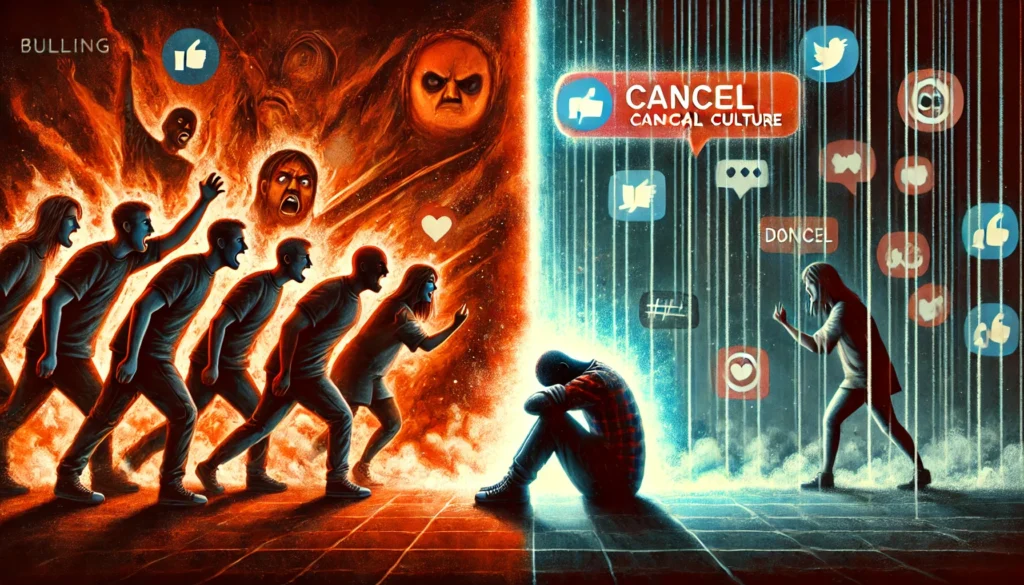
“Canceling” often leads to the loss of social support, which causes a feeling of loneliness and rejection. Negative comments and pressure from many people create in the victim a sense of total dislike and helplessness. At the same time, because of the scale and anonymity of canceling, the victim feels they cannot influence the situation, which intensifies the feeling of helplessness, while the loss of social status or work can cause shame and a loss of meaning in life. In addition, traces of canceling remain on the internet for many years, creating the feeling that “this will never end.” Accordingly, typical psychological reactions to “canceling” are feelings of powerlessness, despondency, hopelessness; self-isolation; refusal of communication and activity; lowered self-esteem and a sense of one’s own dignity; and in extreme cases — suicidal thoughts or attempts.
Accordingly, canceling is harder to overcome because it’s mass, anonymous, and public; it leaves a long-lasting trace in public perception and deprives a person of chances to effectively defend themselves or restore their reputation.
Thus, it is not difficult to notice that the real motivation of participants in any form of social violence is connected with emotional release, stress reduction, and receiving dopamine reinforcement through participation in a collective action that is publicly permitted and socially “sanctified.”
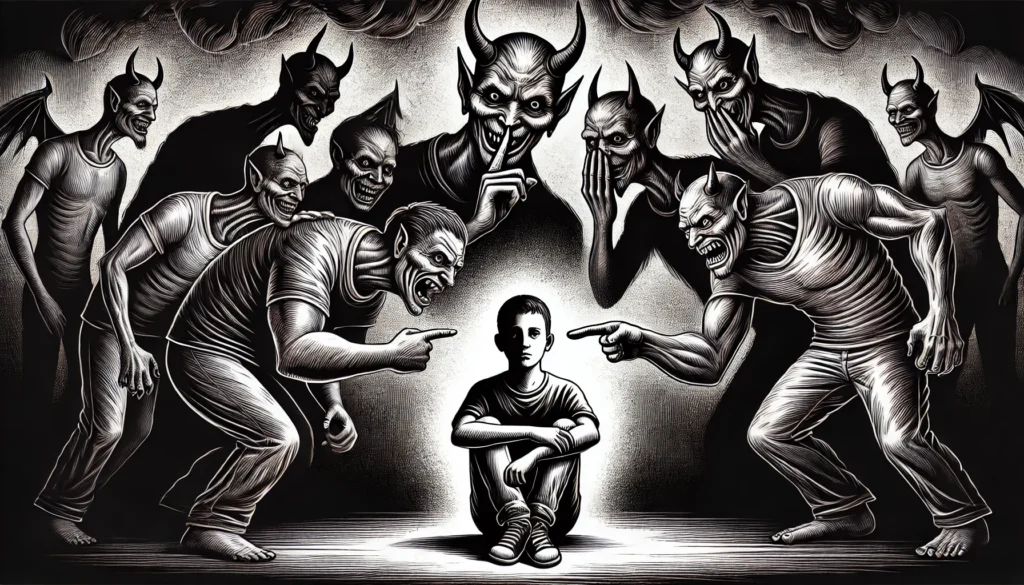
It is not surprising that in modern society canceling is becoming an increasingly widespread form of social violence, and its task becomes not justice, but aggression, isolation, and destruction of the personality. Like any violence, it destroys not only the object but also the public space, creating an atmosphere of fear, limitation, and intolerance. As a result, canceling not only fails to solve the problems declared at its “launch,” but only increases social tension, harming both the object of “canceling” and the participants themselves, who remain in a state of emotional dependence on such actions.
In other words, modern society is moving from energy “outbursts” to its “drains,” from fountains — to outflows, which, along with other manifestations of virtualization and “weakening of will” of the world, is vivid evidence of a change in the dominant destructive forces.
Thank you.
Yes, I am experiencing such a moment. Does anyone know how to transform these energies from the crowd into something more ecological?
Try to start working specifically with the most active participants in the bullying, first agreeing with them where it doesn’t feel too sensitive, give them dopamine, but carefully, stop arguing, then find common values and work on them.
I wouldn’t criticize virtualization; after all, witches were once burned at the stake, while now it seems there is less cruelty with some kind of counseling. A little about virtual capsules: perhaps when they are invented, mirror learning of neurons will become possible, meaning, for example, a person with cerebral palsy can spend many hours in a virtual capsule, and through repetition, teach their neurons to move correctly, curing the cerebral palsy. Or someone raises their intelligence level, leading in a game to having more spells in a virtual capsule, as the brain has more access to an increasing number of spells, neurons become accustomed to seeing a multitude of chains in reality, and this brain ability is retained; a person becomes smarter. Also, in games with virtual capsules, communication with aliens may become possible.