
What Makes Necromancy Appealing?
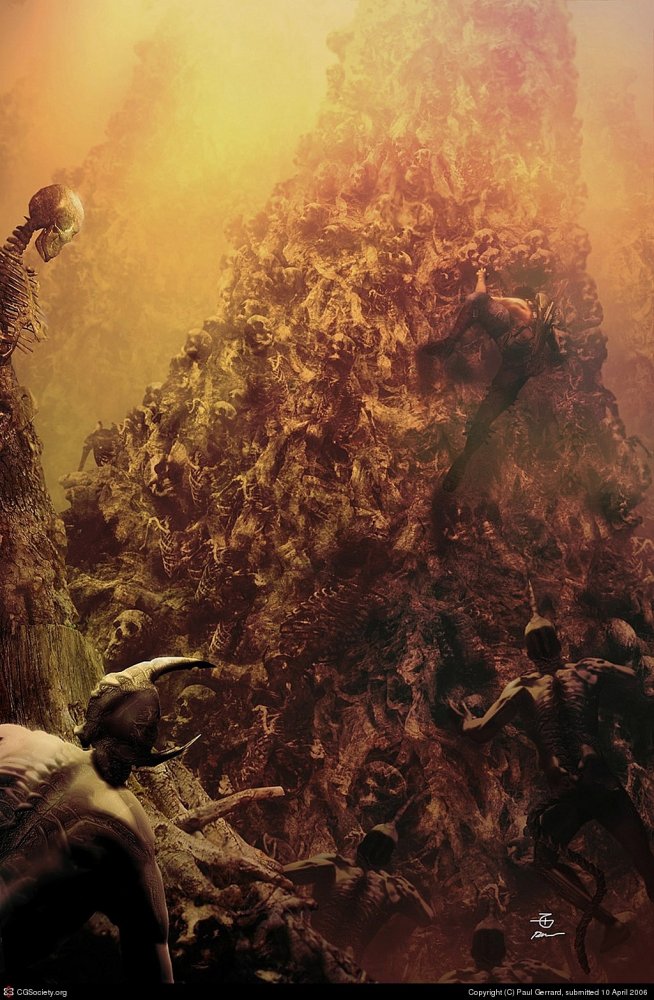
Among the various branches and currents of magic, perhaps none is so difficult for a rational mind to understand as necromancy.
On the one hand, this field provokes revulsion in some, while being irresistibly attractive to others. Even mediumistic séances of “Pushkin,” “Napoleon,” and “V. Tsoi” bear the mark of necromancy.
In the “Catholic Encyclopedia” we read:
The Church does not deny that, by special permission of God, the souls of the dead may appear to the living and communicate unknown information. But when perceived as an art and science of calling up the dead, necromancy is regarded by theologians as a realm of evil forces.
It is condemned by the Catholic Church as “communication with evil spirits,” and in Elizabethan England it was declared illegal by the Witchcraft Act of 1604. The fact that so much effort was spent combating necromancy shows how widespread this branch of magic once was.
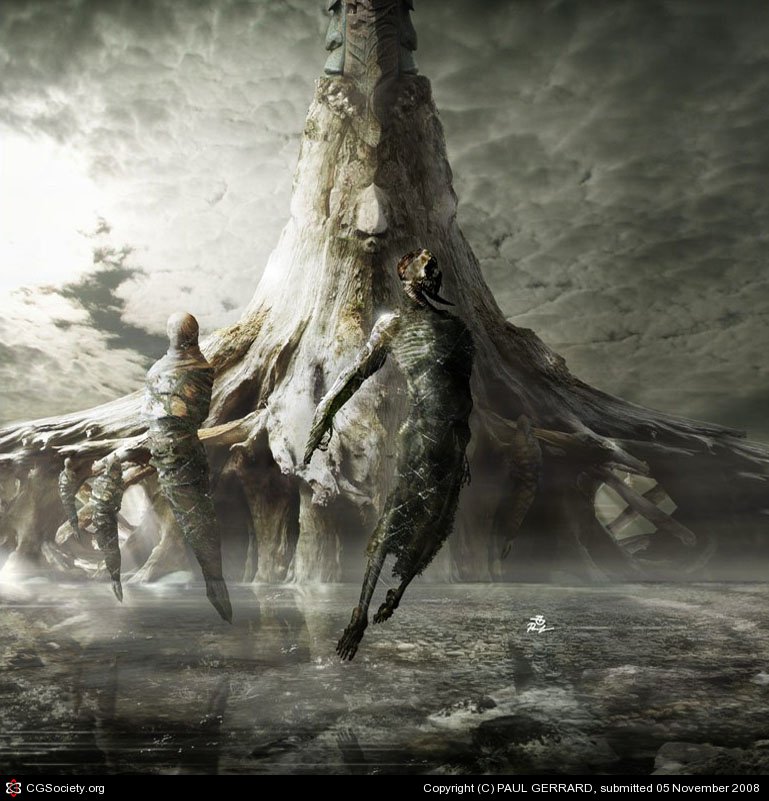
What, then, is so attractive about manipulating the residual energies of the dead?
The word “necromancy” is formed from the Greek words “nekros” (death) and “manteia” (divination). Even in Ancient Greece necromancers in a trance summoned the souls of the dead in the sanctuaries of Hades and Persephone. These sanctuaries were usually built in sacred places close to the underworld: caves, ravines, and near hot springs. King Saul, with the help of the witch, summoned from Sheol the shade of the prophet Samuel; in Book 11 of the Odyssey, Odysseus summons the spirit of the seer Tiresias. Mentions of necromancy occur in the songs of the Elder Edda, and traces of it appear in the songs of Scottish bards. In Thessaly necromancy, also known by the name sciomancy (from the Greek words skia (soul) and manteia (divination)) and psychomancy (divination of shadows or the disembodied soul), and performed by the so-called psychagogoi (summoners of shadows), even involved sacrificing living people in order to question their souls before they descended to the underworld. In our time, when the term “necromancy” has become associated only with raising the dead, the practice of summoning and “questioning” souls is sometimes called sciomancy.
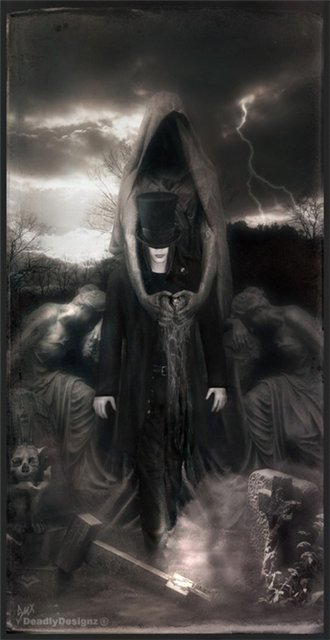
Today anyone who uses corpses or body parts to perform magical acts is called a necromancer.
Iamblichus, Porphyry, and other theurgists sharply condemned this practice, as strongly as Moses did, condemning the “necromancers” of his time to death.
Necromancy is a predominantly male pursuit, because it requires a great exertion of will: in effect, the necromancer replaces the deceased’s will with their own, forcing the partially undecomposed bodies to acquire physical manifestation.
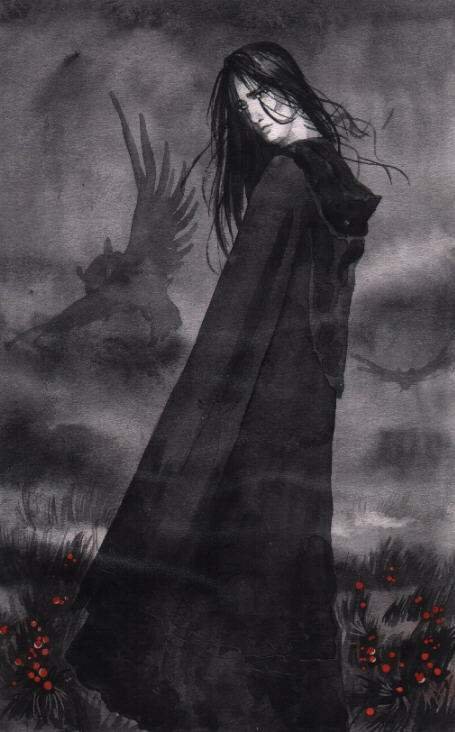
It is precisely the mystery, the power, and the knowledge inherent in necromancy that make it a way of life for those drawn to it. At the same time necromancy consumes a person completely; it is incompatible with other branches of magic, although necromancers often cooperate with magi of other branches, because the energies of death, the energies of destruction, and the reverse current with which necromancers operate are naturally opposed to direct energies used by other areas of Magic.
Necromancy is a particular worldview, a mindset. It is akin to vampirism because it is able to drain life-force from the living and partially transfer it to the dead. Necromancers perceive the world as a series of deaths, dying processes, and postmortem events. From their point of view (and in this they are right), death is what unites Light and Darkness, since both the forces of Light and the powers of Darkness are subject to death.
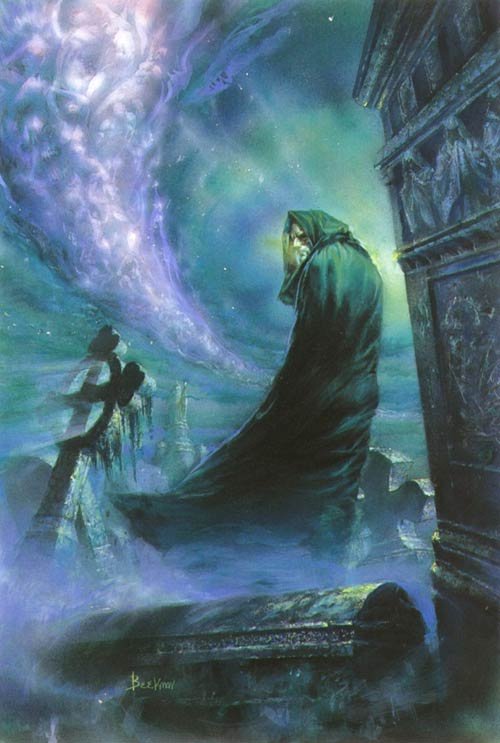
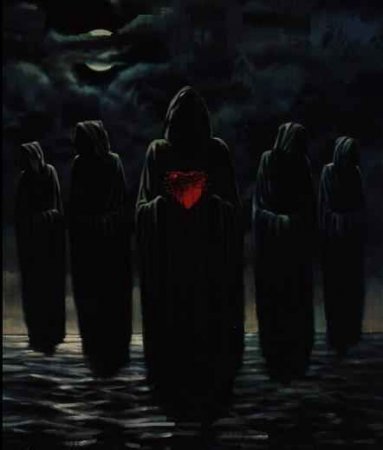
The magic of necromancers is “dead magic,” governing the element of death and dead energies. The Magic of Death is a branch of magic that studies the states of death, the worlds of the afterlife, and methods of interacting with the remains of the dead. In practicing the Magic of Death, a magus’s mind shifts toward this principle; perception of the surrounding world changes, and the world changes within the magus’s radius of power. In its day, the necromantic blood rites became notorious throughout the world among all beings and provoked hatred and fear.
The best-known primary branch is communicating with the dead and obtaining information from them, as well as various other forms of divination using a corpse. In this form, necromancy is very similar to modern spiritualism.
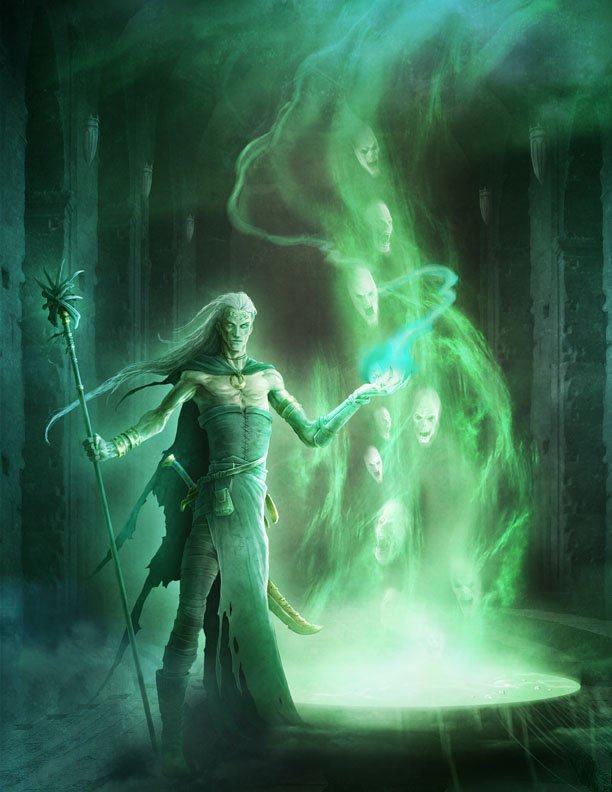
Other rituals, which would be more correctly called “necramagical,” also involve the resurrection of a corpse to life or, in most cases, the inhabitation of a body by a spirit. These rituals typically use whole bodies or body parts; the rituals typically take place in cemeteries and in vaults. If the body belongs to someone recently dead, the necromancer can force the soul to return to the body so that it will come to life and be able to speak. If the body belongs to someone who died long ago, the necromancer can call up the spirit of the deceased.
Practitioners often conflate necromancy and necramagic, since their common source — a connection with the dead — unites them.
However, necromancy has a downside. Aside from the well-known “unseemliness” of necromancy in the eyes of society, there is another point — necromancers pay for the revival of souls with their own soul.
Therefore, necromancers lack a soul in the usual sense of the word. For only someone like the dead can communicate with and command them. There are disagreements about the reasons for this absence of soul — it may be caused by spending its soul energy to empower the dead, or an original lack of soul may predispose one to necromancy.
Moreover, the necromancers’ “renunciation” of life and dedication to death can also be seen from this point of view. The result of such a phenomenon is that necromancers possess special energy and obtain it by special means. This is precisely what explains the possibility of energetic vampirism by necromancers.
I’m interested in one thing: have you heard about the necromancer who wrote three volumes about Life, Existence, and Death? I know the last volume about Death is in the Vatican, but I don’t know where the first two are; the trail stops in the Russian Federation. If you have any information about this, please write!!!
Good article! I would even say it’s awesome, but it’s not entirely precise; there are many guesses. In principle, that’s how it should be; after all, you are not a necromancer.
On the Oddity of Perception. When my grandfather died, I saw him glowing, radiant. At that time, I didn’t know that’s what a soul looked like, and for a long time, I believed that my grandfather had become a saint after death. On the day of the funeral, it was gloomy outside, and in the large room where the coffin and the people were, the atmosphere felt even sadder. I was walking from the kitchen through the hallway, thinking about my grandfather when suddenly, in my mind, I saw his beaming smile, standing there, glowing. I felt extraordinarily light and joyful. I caught myself smiling as I walked. I tried not to smile, knowing that it would seem inappropriate. As I entered the room, I immediately felt the heaviness, glancing at the stony faces of the people, as if some burden had bent some of them… “What are you doing? He is doing well there; you should be happy for him. Why all this?” I truly didn’t understand why people created this heaviness when he felt so free. But, of course, I didn’t say this out loud… I viewed it condescendingly, like one does with children “because they love,” but more because of a fear of not being normal, of stepping out of this Pierrot theater. The oddity of perception is when you don’t see the whole picture… However, what is called strange is not erroneous perception, but perception that does not align with the program of the majority.
It’s just unclear about one thing. How can a person not have a soul?) If the soul is a general super-consciousness…
The soul (if we are talking about Neshamah) is a collection of emotionally colored and solidified experiences. And yes, such a collection might not exist if a being does not want or cannot integrate such experiences.
Dear Master, what is your attitude towards purifications from curses, diseases, etc. using necromancy? I heard that magicians who consider themselves necromancers say that this is the most powerful—it is Yin energy capable of absorbing all negativity. Thank you
Theoretically, it is possible to ‘dissolve’ negative influences in necroenergy, but the problem lies in the fact that this energy is extremely resistant not only to control but even to balancing. Manifest existence is a constant struggle against decay, entropy, that is, the containment of necroenergy, and therefore, after releasing it, it is very difficult to return it to a limited channel; it spreads very easily, absorbing all order and destroying all structures.
Thank you very much for the answer.