Tarot as an Initiatory System
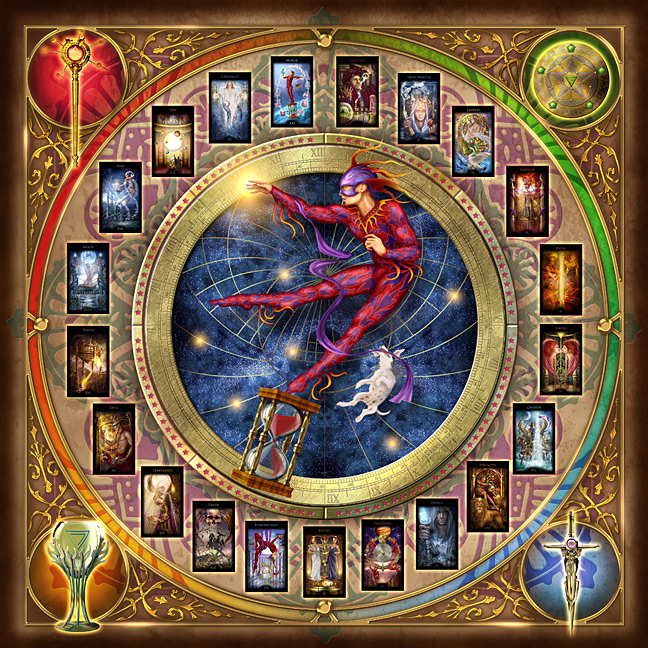
Just as the “Northern” branch of Western myth is steeped in the spirit of invocations and Rune Magic, the “Southern” branch rests, at its foundation, on the system of Tarot.
Regardless of debates about the history of this system and the times when various decks and their variants appeared, from the traditional point of view it is clear that the very spirit of the Great Chariot reaches back to ancient Egyptian conceptions (and possibly to their progenitors — the Atlanteans).
Naturally, this system has undergone considerable change down to the present day: some aspects were greatly elaborated, others reinterpreted, and others lost.
However one regards the legends of the “Labyrinth of Initiation,” whose walls, according to tradition, were the first bearers of the concept of the World Wheel and provided the images used in the hieroglyphs of the Arcana, we cannot deny that, when rightly understood, contemplated, and “lived,” the Tarot system is a powerful instrument of self-knowledge and of describing the world.
Unfortunately, many modern tarotists, focusing mainly on the divinatory functions of the Arcana (and those possibilities are certainly considerable), lose sight of Arkanom’s systemic nature, its internal wholeness and structure.
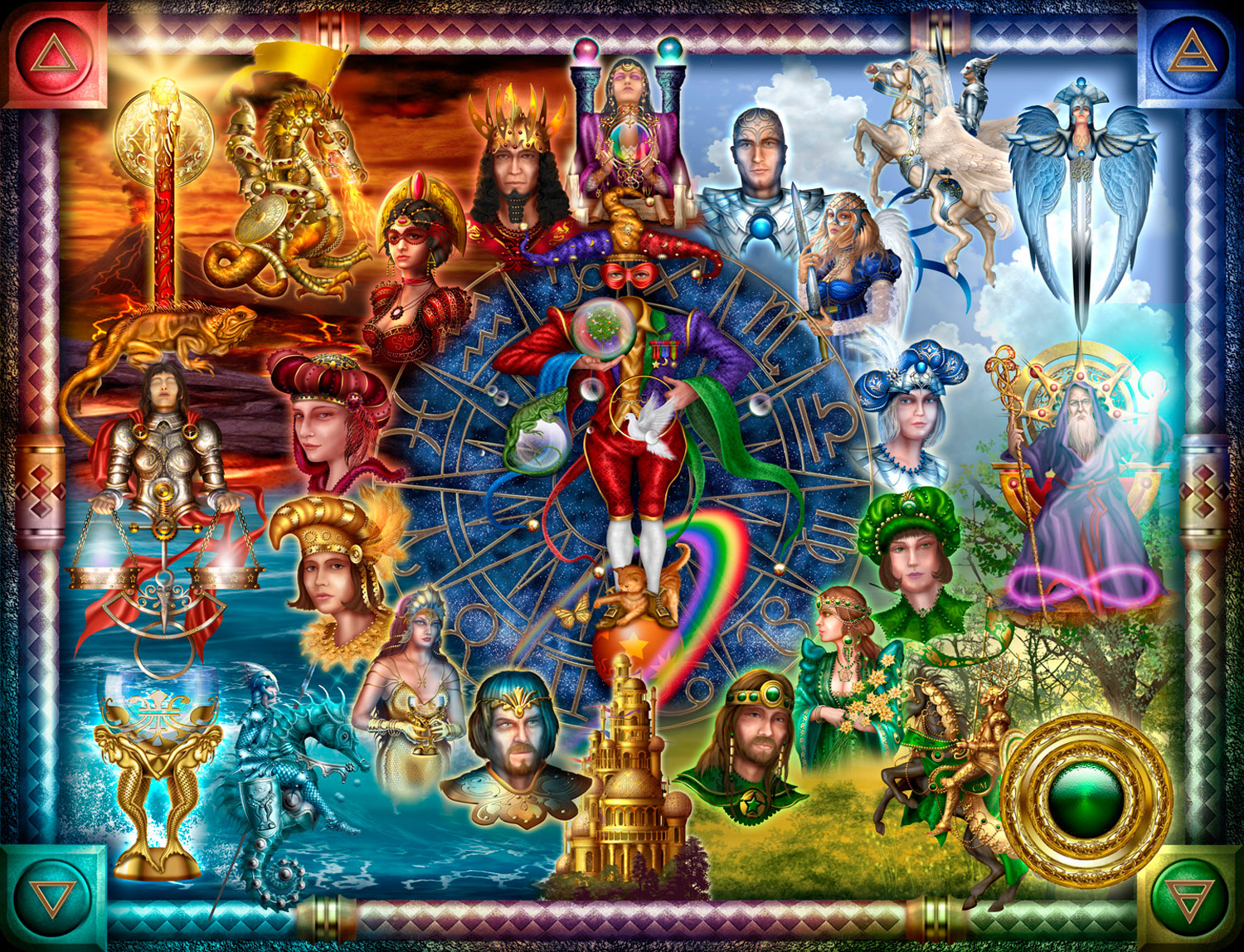
The situation is further complicated by the fact that, in its modern form, Arkanom has been “beheaded,” deprived of its “upper component,” which, according to the legends, was the theological part.
Today there are two traditional ways of understanding the portion of Arkanom that has reached us. The first way, rooted in the Sefer Yetzirah, assumes correspondence between the Major Arcana with the channels of the Tree of Life — tzinoroth — and, accordingly, with the letters of the Hebrew alphabet. The second — following the Martinists — considers Arkanom the “superposition” of two Trees: the “constitutive,” primordial one, and the “institute,” that which exists in reality, divided by the Arcana of Strength and summed in the Arcana of the Fool.
Both approaches have their own justifications and their practical and theoretical consequences.
In the case of considering Arkanom as a system of tzinoroth, however, it requires restoring a “superstructure” in the form of a tenfold pantheon, which were later abstracted into the images of the Sefirot.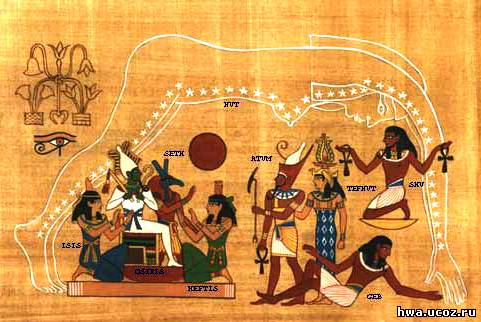
Indeed, the legends say that the Labyrinth of Initiation, besides the wall depictions — the Arcana — also contained statues of gods — the Great Ennead — plus the image of the Horus-pharaoh, the “earthly” god, which together constituted the decade; the transition between elements in that pantheon was depicted by the Arcana images. There were several variants of the Great Ennead, the best known being the Heliopolitan one, which includes Atum-Ra and four pairs of gods: Shu/Tefnut, Geb/Nut, Osiris/Isis, Set/Nephthys. The birth of Shu by Atum was symbolized by Arcana 1, the birth of Tefnut by Atum — Arcana 2, and so on. From this perspective the Major Arcana describe “acts of generation,” creative actions by which the divine powers transition into one another.
The contemporary way of reading this system is quite traditional; however, ancient Hebrew kabbalists, opposed to polytheism, replaced the images of gods with numbers — Sefirot — and thus we obtain the system of the Major Arcana in its modern form: if to the Zero (Keter) one overlays the Aleph Arcanum (Magus), one gets the One (Chokhmah). If the channel Bet is superimposed on Keter, one gets the Two (Binah), and so on. The resulting system of ten Sefirot and twenty-two tzinoroth forms the known “Thirty-Two Paths of Wisdom” (Shekhinah), which then come into dynamic interaction within the quadripolar system of the “four families” of the Minor Arcana. Thus we obtain a “three-part” system of Arkanom: a tenfold framework overlaid by twenty-two channels, further expressed in 56 formative elements. It should also be noted that if the “upper” part of the system considers a Descending current, the part of the Minor Arcana considers an Ascending one: each of the gods of the Decade is “generated” by the preceding god, whereas each successive numbered Minor Arcana is, conversely, a superstructure built upon the previous.
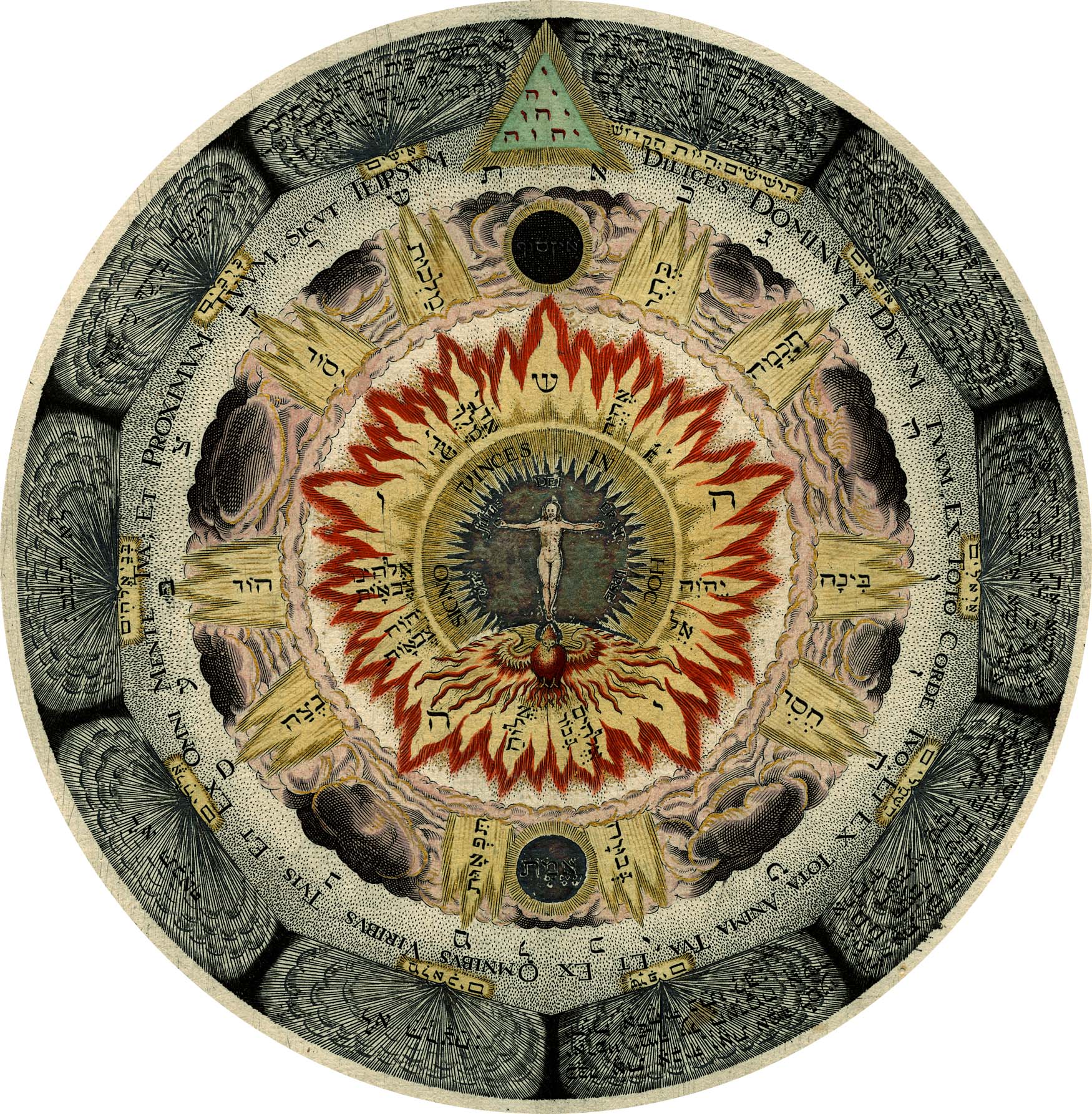
The second system, which posits a certain analogy between the First and the Twelfth, the Second and the Thirteenth, and so on, is based on the notion of an “ideal plan” of Creation, a Tree symbolized by the first ten Major Arcana, which was “distorted” by a “fall” and exists as the second series of the Major Arcana; the transition from the “lower” Tree to the “upper” occurs through the Arcana of Strength. It follows that in place of the Magus — the creator — the Hanged Man appears instead, and instead of the White Mother — Death, and so forth. Both Trees are united in the image of the “mad saint” — the spirit — the Fool, who, together with Strength, constitute the “cement” of the whole system.
In any case, by considering Arkanom systemically, a Magus obtains in this system a powerful tool for discovering new ideas and the patterns governing the psyche and macrocosm, and thus not only deepens his level of understanding but can also reach new levels of realization.
Thank you for the article, En. I hope it will initiate a cycle on Tarot in the same format as the runes you described. Creativity and inspiration.
Excellent! Wonderful information and wisdom as always!!! Thank you very much, Enmerkar. P.S. I would love even more (than your 3 most interesting articles) continuation of the topic on Tarot!
A beautiful, informative article. Thanks to such material, the ‘puzzles’ of understanding start to come together.