
Semargl, the Firstborn Svarozhich
We have already discussed that, according to the Slavic cosmogonic myth, the first creative Dyad Svarog and Lada is balanced by the counterbalancing biner Veles-Semargl.
We have already spoken about the Lord of the Threshold Veles.
Now our task is to examine the power of overcoming born of Semargl.
Sources of Slavic mythology vary greatly in their descriptions of this god.
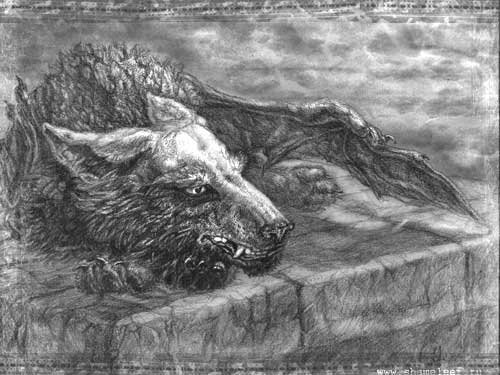
On the one hand, it seems clear that Semargl was included in Prince Vladimir’s pantheon. On the other hand, chroniclers split him into the gods Sima and Rgla (this division is still supported by many scholars today).
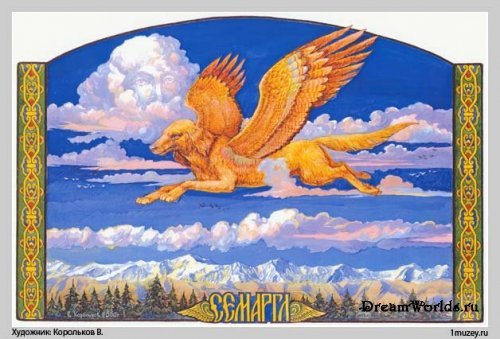
Folk songs did not preserve his name, and many researchers identified him with the Iranic-Kipchak bird Simurg.
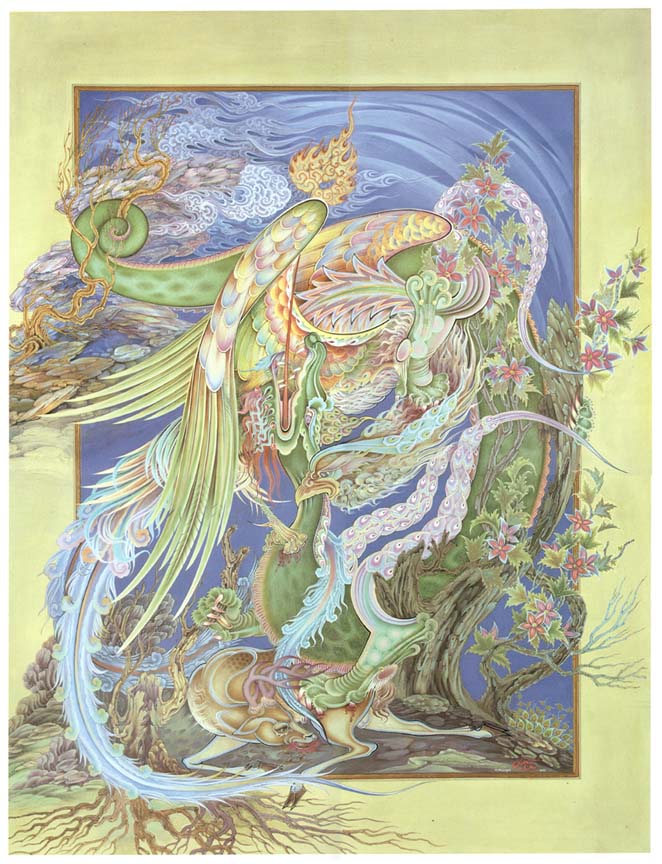
At the same time, Tripolye culture left numerous depictions of winged dogs guarding the Seed of all things.
Although traditionally, the name Semargl is traced to “Semiyary” — that is, one possessing seven powers (in the sense of the fullness of power) — even an identification of Semargl with the Simurg (Sēnmurv) does not contradict the functional interpretation.
Among the Mazdeists, the Sēnmurv is a bird guarding the Tree of Life, depicted with a head, a pair of canine forelegs, a dog’s tail, bird’s wings, and serpent scales, and often with a goatlike beard.
Iranian blades often depicted the struggle of the Simurg with a dragon, the embodiment of darkness.
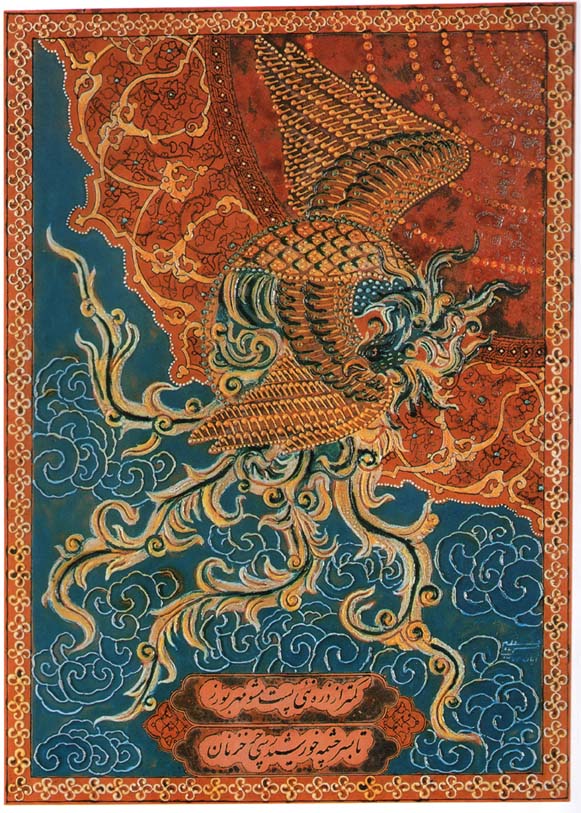
The Scythians likewise portrayed creatures similar to the Sēnmurv — griffon-hippocamps with the head and paws of a dog, wings, and a serpent body.
The Scythians generally did not draw a clear distinction between the Sēnmurv and its “younger” manifestations — griffons — and the ancient Greeks even called griffons “Zeus’s mute dogs.”
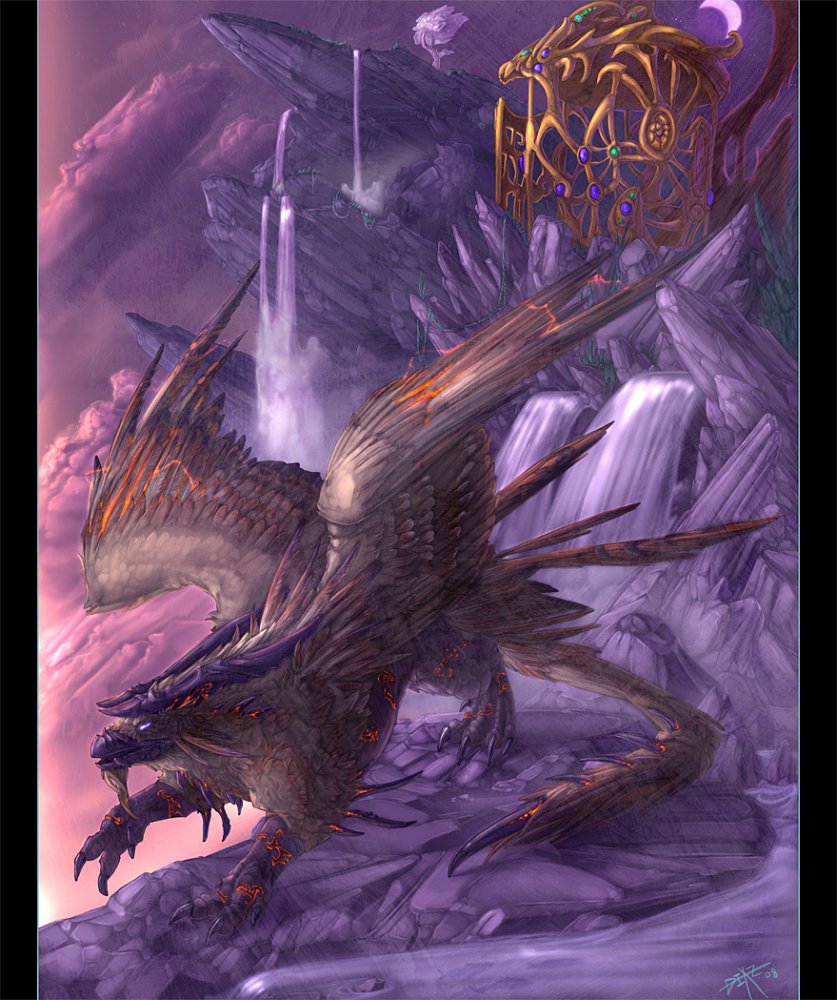
Finally, Slavic jewelry depicting the Winged Dog is abundant.
Another Slavic name for this god has survived — Pereplut, whose followers, according to ancient sources, danced while drinking from horns.
Another image associated with Semargl is the so-called Wolf Shepherd. According to legend, the Wolf Shepherd is the goat-legged and shaggy Polisun. Tales say that Polisun drives packs of hungry wolves with a whip to forage where warring peoples destroy one another. The blows of this bloody whip resound across neighboring lands.
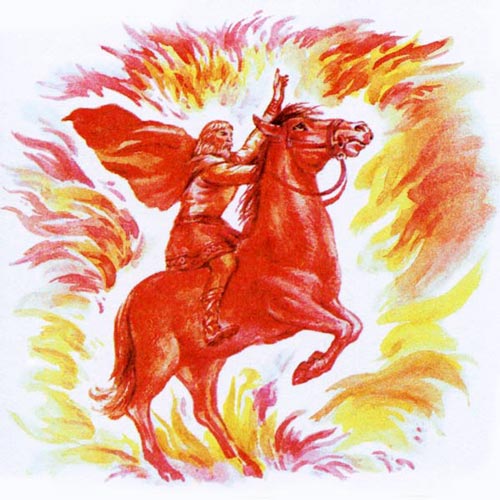
The ancient Slavs saw in him above all the lord of the Celestial Wolves, which, like hounds, take part with the Wolf Shepherd in the wild hunt and tear across the heavens. Descending to earth, the Wolf Shepherd rides a wolf, cracking his whip, and drives wolf packs ahead of him and threatens them with a club. Sometimes he approaches villages in the guise of a gray-haired man, but sometimes he himself turns into a wild beast — and then no shepherd can protect his flocks from him. In the forest, he summons wolves to his side and assigns each its prey. Whoever it may be — a sheep, a cow, a pig, a foal, or a human being — will not escape his fate, however careful one may be, for the Wolf Shepherd is relentless as Fate itself.
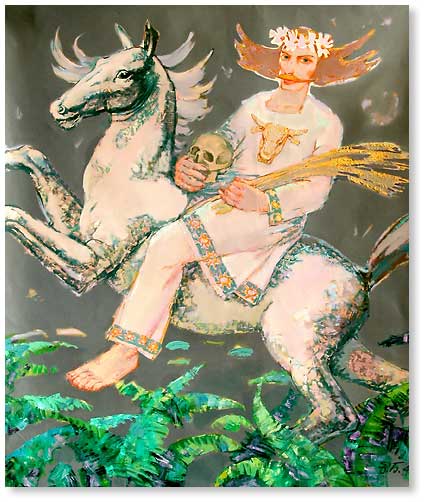
The Greeks attributed similar functions to Hermes-Cynocephalus, also regarded as the “watch-dog” of humanity, preventing predators’ attacks.
This last point once again emphasizes the importance of the image of Semargl as guardian, who, though he partially opens the Door of Worlds, does not allow everyone to use it freely.
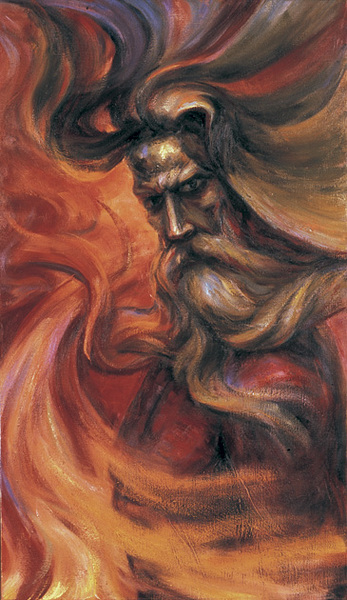
Two points show that Semargl was never a folk god — the lack of mention of him in folklore and the very name “Pereplut,” associated both with intertwining roots, the earth and fertility, and with unwanted manifestations, “trickery.” The latter brings the image of Semargl closer to the Norse Loki, but without Loki’s typical trickster motif.
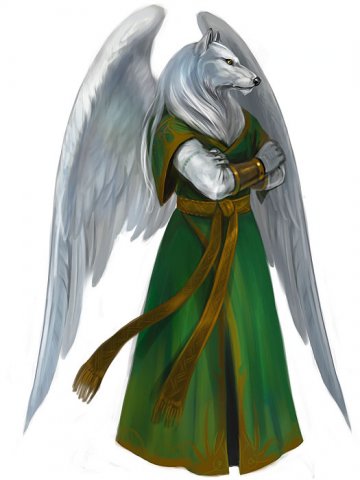
An oral tradition preserved in certain volkhv lines testifies that adherents of the Semargl cult considered him, above all, the god of the gates, uniting the worlds in the tree of life.
It is plain that such a function of Semargl places him in opposition both to Veles (in both his White and Dark aspects) and to Perun, since the latter two gods preserve the world’s stability, while Semargl prevents stagnation, ensuring the flow of power through the worlds.
The connecting aspect of Semargl allows his identification with the Fire-Svarozhich of the chronicles, yet Semargl’s Fire is above all the Fire of the Altar, which precisely opens a gap in the world’s thresholds. This aspect brings Semargl close to the supreme Scythian goddess Tabiti, the goddess of the royal hearth.
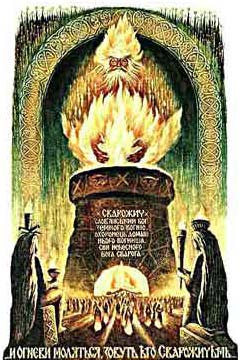
Moreover, Semargl is the god of the process of life, as whose flow runs through the worlds, connecting them.
Tradition names Semargl the consort of Night and the father of fertility deities — Kupala (the god of “copulation”) and Kostroma (the goddess of life-death).
Being the keeper of the flow of power along the world tree, Semargl, of course, embodies a particular connecting aspect of that very Tree.
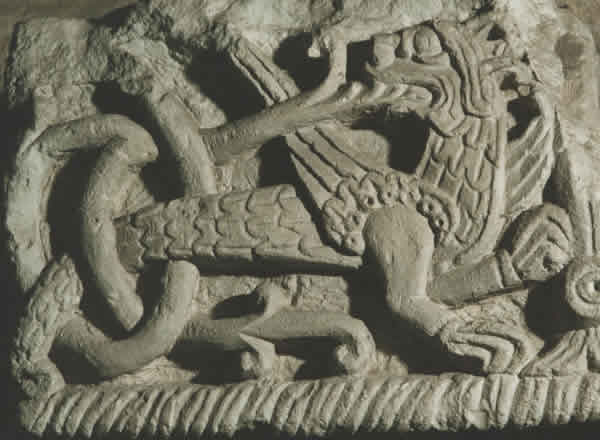
Another motif characteristic of Semargl’s power is his dragon-slaying. The struggle of the “good” and “evil” dragons is a very characteristic motif of both Scythian and Slavic visual art. The idea of the Two Serpents lies beyond our present theme; however, Semargl, as the eternal adversary of the Black Serpent, generates life force opposing death and destruction.
Thus, Semargl is the god of the linking of worlds, the god of the process of life, the god of the world’s mystery, and at the same time, a god who breaks boundaries.
I liked your blog. I am glad that over the last 6-7 years more and more in our nation has become interested in its past and culture. Addressing the creator of the blog, I can say that it seems we resemble each other externally too))
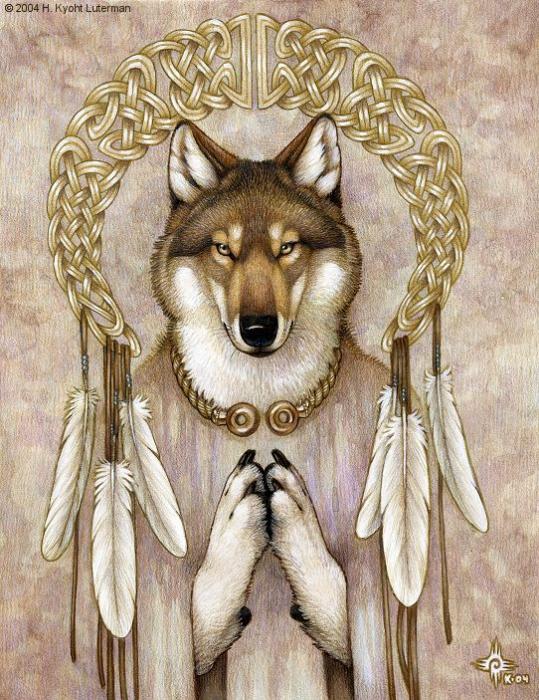
A very interesting remark about the correspondence (coexistence?) of Winged Wolves – Griffon dogs… perhaps the description of the griffon, as a beaked being, is somewhat inaccurate…
Winged doggies – golgothans. Cute.. Touch their puppies – they’ll bite you. How much do people know about those inhabiting the worlds around us and whether you need to know. You care more about consciousness.
Edited SLAVA HEAVENLY WOLF! According to the ancient Turkic and ancient Slavic calendar, the year 2012 marked the era of the Heavenly Wolf*, the progenitor of my people! The Heavenly Wolf came to Earth to destroy Evil and save the chosen – people with bright souls! And those who remain on Earth, people with dark souls, await a Terrible Judgment**! The Heavenly Wolf will take the chosen to his starry Abodes; and when the Earth is completely cleansed and reborn, He will return them to his home Planet, to create a new civilization of god-men on It! On this, His earthly mission will end, and He will return to his home Abodes to rest; and when the time comes (the Era of the Heavenly Wolf), He will again come to our aid! Glory to the Heavenly Wolf! Ramil Aznaev, White Wolf 06.11.17 * The symbol of the Heavenly Wolf is a fiery winged wolf. ** On December 1, 2021, the Fire Cleansing of the Earth will begin! THE BROTHERHOOD OF THE HEAVENLY WOLF
Recently helped restore the functioning of the Golgothans’ world. Now, in my world, one of the dogs given to me as a guardian helps me at my request.