
Children’s Magic
It is hard to find anyone who, as a child, did not take part even once — or hear of — the summoning of the “Queen of Spades,” the “red, blue, or ‘pencil’ gnome,” and so on. What happens in such cases? Are the “appearances” described by children merely products of their imagination?
The pioneer of this genre was A. L. Toporkov, who recorded accounts of the Queen of Spades and her summonings in 1980–1984 and published an article on the genre in 1992. Toporkov believes that “the Queen of Spades only gained popularity in the second half of the 1970s, primarily as a result of her summoning using a mirror,” since “from prolonged, strained staring into a mirror the participants in the summoning naturally experience visual hallucinations.” Concerning the circumstances, aims, and age composition of those taking part, the author writes the following: “They are usually held in a dark place… to ask questions and to feel fear… Those taking part are mainly school-age children…”
In gnome summonings a thread is used (“they tied a thread around the table legs, forming a circle, and tied a candy to the middle of the thread…”) and a mirror (“they took a mirror, smeared it with toothpaste and put it in a dark place, hid behind the wardrobe… came out, took the mirror, and there were marks left by the gnome (marks of little fingers)”). Often gnomes are summoned by means of food — candies, cookies, bread. To summon a specific type of gnome — the candy-loving gnome — only candies are needed. Sometimes candy wrappers (“from tastier candies”) are placed, and it is expected that candies will appear in place of the wrappers.
Children are well aware of the danger of these experiments, although their sense of danger is vague: “If she comes, you can ask her about your future, but if she doesn’t like you, she’ll strangle you. She has big claws, and she will pierce your throat,” “Draw a ladder on the mirror and put a dot next to the ladder. Place a glass of water near the mirror and put a piece of bread. Pronounce the number 666 several times in front of the mirror and go to sleep. At night the Queen of Spades will come to you and strangle you.” and so on.
The setting of the “summonings” is necessarily linked with time. It is important that the precise time required for “summonings” is usually not fixed (as with mythological characters in adult folklore, where a threshold time — midnight, noon — is invariably fixed), although one can identify several features: by day one can summon both “evil” and “good” characters, but it is believed that “evil” characters are best summoned at night, when they will certainly “come” (in this case, one can say that the whole night, not only “12 o’clock” (this way of marking a temporal boundary has been preserved, for example, in scary stories), is conceived by children as the “threshold” time). Moreover, the appearance of a mythological character is conditioned not by the time of night itself but rather by the darkness of that hour, hence the possibility of modeling a “night world” when the “summoning” takes place with the light off or in dark rooms.
Another condition necessary for the appearance of a mythological character in our world is the absence of adults, since adults are associated with the “safe” ordered world, and interaction with the “other” world is impossible in their presence. The arrival of adults breaks the contact between the two worlds.
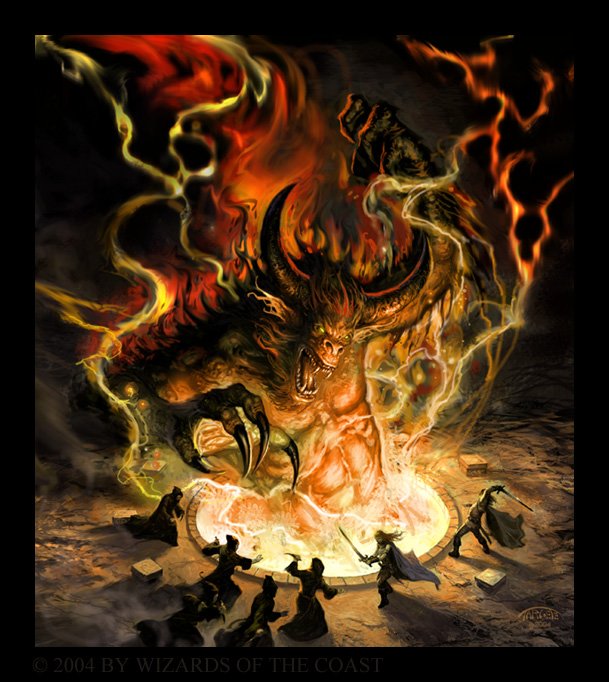
Three questions require clarification: 1) Why do children do this; 2) Why are they successful; 3) Who comes to them?
An answer to the third question will help answer the first two. There is a belief that if an infant laughs in his sleep, Lilith is playing with him. The infant must be awakened immediately; otherwise, she may torment him to death. In the 18th century, it was common in many cultures to protect young mothers and their infants with amulets against Lilith. Male infants were vulnerable in the first week of life, and girls in the first three weeks. Sometimes a magic circle with an incantation was drawn around the bed containing the names of three angels (Sanvi, Sansanvi, Semangelof), Adam and Eve, and words like “blocking Lilith” or “protecting the newborn infant from all harm.” Sometimes amulets with such inscriptions were placed in every corner and throughout the bedroom.
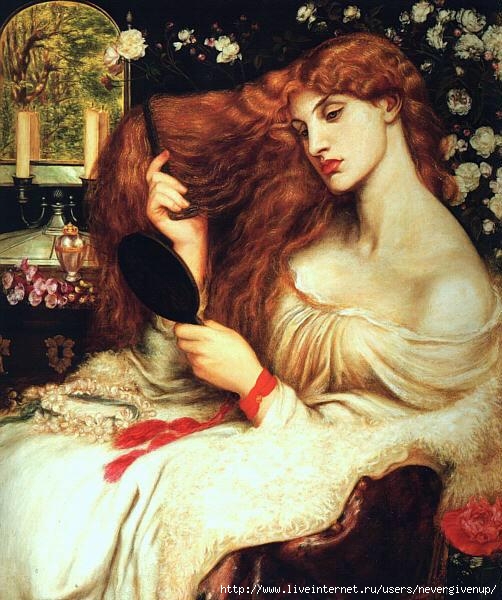
The earliest mention of Lilith goes back to the Dead Sea Scrolls. In Jewish demonology, Lilith is a principal figure; she is mentioned around 700 BCE in the Book of Isaiah. She also appears in non-canonical church texts. In the canonical Bible — the primary Aramaic source — one can encounter a reference to a treacherous demonic creature in the form of a woman or a bird, appearing only at night, named Lilith. Because the text of the Old Testament was revised, the story of Lilith was removed from those pages. According to the official version of the Old Testament, the first people were Adam and Eve. Eve became Adam’s wife; they tasted the forbidden fruit and were expelled from Paradise. But from texts forbidden by the church — ancient Hebrew texts, the Dead Sea Scrolls, the Talmud, and even some altered Gospels — one can learn another version. Eve was Adam’s second wife, and before her he had already “tasted the forbidden fruit” with his first wife Lilith. According to Jewish Tradition, having parted from Adam, Lilith became an evil demon who kills infants (this figure also exists in Arab myths). In Mesopotamia, the name referred to a nocturnal demoness who kills children and torments sleeping men (male “lilu” are also mentioned).
In the Semitic languages, particularly in Hebrew, this word is a feminine adjective meaning “nocturnal” (for example “דממה לילית” — nightly silence). Sometimes such adjectives are used as women’s names. According to another view, the name derives from the Sumerian “lil” (air, wind; spirit, ghost).
In medieval Europe, she was often depicted as the wife, lover, or grandmother of Satan. At the end of the 17th century, she was described as a sinister owl, blind by day, which sucks blood from the breasts or navels of small children or from a goat’s udder.
In ancient cultures, maturation accompanied the development of reason, so even small children (by modern standards) were under reliable protection.
In modern times, the period of childhood has been extended, so children remain connected to the spirit world for quite a long time — long enough, in fact, to be capable of calling those spirits into our world.

Thus, from the point of view of classical magical mythology, we can answer the questions posed: 1) Children feel an attraction to the invisible world, a connection to which remains fairly strong. Not yet having a Desire Body, which redistributes energy, and yet possessing the Life Body, children can be easy prey for demonic beings. These beings, of course, have devised many ways to nudge children toward opening the Veil; 2) Precisely because of the absence of all the compacting conduits, children (as well as very old people) are closely connected to the Elements (which are mistakenly called “the lower astral”), and therefore can relatively easily cause the transition and transfer of a ministering spirit into the material world. It is clear that the most successful summonings are those performed by children who have a Life Body but not yet a Desire Body, i.e. between ages 6 and 14. 3) It is precisely childhood energy that is readily accessible to demonic beings. This is especially true of unbaptized children, who lack the protection of the Christian Egregore. In pagan times, such protection took the form of amulets and spells, as well as a whole series of initiations through which the maturing child went through.
Is there any positive side to these contacts? What do the children gain in return?
Except for the experience of encountering predators.
I wonder why an infant is vulnerable specifically in the first week of life (girls—in the first three) to Lilith? What happens during this period?
This was the case five hundred years ago. Now this vulnerability lasts until the very birth of the Body of life—up to about 6 years.
Contacts are possible, but what does the child get in return? Anything, really. Can’t the one who summoned them just throw them far away from this world? – Damn, have you people ever observed children? Until about a year old, children clearly see what I visualize. That’s how I entertained my niece, and the whole topic is somewhat underdeveloped. And children gain their memory; true powers awaken in them, and eventually, they gain someone who protects them, or even a certain fate.
A child really perceives the world much wider than an adult, primarily because their worldview is not yet so rigidly formed and limited. We can only interact with what is not blocked from us by a barrier of awareness. At the same time, children are more vulnerable. Nevertheless, there are many mechanisms that protect children from what is available for their perception. First of all, this is the separation over time of the births of different conduits in different planes. By the time a child becomes a human (manifested in all planes) – around the age of 21 – and begins to attract the interest of predators – their world is already securely protected by their worldview. Therefore, there can be no talk of any ‘liberation of the child’s power’.
How can a child summon the spirit of a deceased animal?
Can a child around 13 years old become a shaman? If so, how?
Shamanism is a dangerous activity for health and life, forcibly (without inquiring about its own desires) taking over a person. A child is still not a person. They have not matured 🙂
There are certain reasons to ask for help. My daughter is not yet four years old. There is no doubt that they are predators. I don’t know how to react to some moments in her behavior and comments. Enmerkar, could you show examples of such amulets? If possible, with details on how to make them.
Is there any information about the negative consequences of ‘summoning the Queen of Spades’ and the like? Since these magical children’s practices are passed down from generation to generation, it means they are needed for children. Children love the unusual, the magical, even if it’s scary – secrets, walking in attics, basements, and trash bins, telling scary stories. All of this is part of children’s subculture. I think summoning the Queen of Spades is a fun game, but the experience of a screaming or hitting mom is a real encounter with Lilith.
So, there are three questions regarding children’s magic: 1) Why do children do this? 2) Why do they succeed? 3) Who comes to them? And even 4) Why do they remain whole and unharmed? Did I understand the answers correctly: 1) children are drawn to the world of magic, additionally, they are ‘lured’ by demons. 2) children’s barriers of awareness easily let in beings from the invisible world. 3) monsters come to them who need child energy. 4) there are ways to protect children against such monsters. After the first reading, I and judging by the first comment – not just me, got the impression that children’s magic does not bring anything good to children. I do not agree with this. You yourself said that either you are on the Path and have bumps and scars, or you safely stand still. I think, just as demons need child energy, children need experience interacting with gnomes, Queens of Spades, etc.
A screaming mother as a conduit for Lilith? Hmm…
I think you understood the answers correctly.
However, I would note that for me the question of the integrity and safety of children after the described challenges remains open. Possession has not been canceled.
To the question of usefulness and vulnerability. I assume that the author wrote in this article about the most common group of human children, whose spirit, to put it crudely, is on the same level of development as the material world of this planet, and therefore completely corresponds with the manifested form, i.e., the physical body. Such children are the majority, they possess little strength, thus are vulnerable and need protection.
However, the picture can be expanded.
This blog has a lot of information about other beings incarnating in human bodies, who pursue different goals and possess other capabilities and settings.
Then let’s remember reincarnation and that a human infant can actually be a ten-time grandfather in previous lives. Common sense suggests that in this case, the child will possess greater strength.
It is also known, for example, that ancient Slavs could consciously embody the spirits of their strong ancestors in their families to strengthen the family, of course. Perhaps even now someone knows how to do it.
The question arises: what will the relationships of such beings with the invisible world look like? The answer: the most diverse.
Some little devil child might contact the demons and become a gateway for them into the family. On the other hand, an ancestor child might just sneeze, and all predators will blow away from the house. However, it seems to me that the ancestor child will not call “gnomes” and “queen of spades”, although on the other hand, who knows.
How can a modern parent understand what kind of child they have? – the question is open. Among the Slavs, these matters were dealt with by the sorcerers. Nowadays, I don’t see many sorcerers around, and the wisdom of the existing older generation is scant while the visions are even less. The main thing here, I think, is not to indulge the child and, if you are a parent, to integrate the child into your flow and set your own rules of the game for him. This should be fair for any child.
I’ll say it as it is: demons, “other beings incarnating in human bodies” – all this is.. beyond the barrier of my consciousness, does not really exist in my Myth, to put it in local terms. I can’t say it doesn’t exist at all. Perhaps it is not present in my world, or I don’t see it. What I see and feel is that children need experiences of mystery, divinity, the magic of our world. They need journeys into the world of magic – at night, in darkness, without adults. Thus, they become older and stronger. This is part of their Path.
Yes, I remember in early childhood, around 2-3 years old, during a nighttime fever, I had the pleasure of witnessing the “Dance of the Fairies” in my room. At that time, consciousness identified them with ugly rag dolls.
Hello! Tell me, for what purpose does the Christian egregore protect children? Does it receive something in return, or is the protection an end in itself?
Hello! Of course, the egregore gets its future participants.
Thank you for the answer! But not all baptized children grow up to be Christians (in terms of adhering to religious vows). In our culture, it is customary to baptize children, and often people very far from religion do so. What is the meaning for the religious egregore of such participants?
Yes, baptized children do not always become Christians in a religious sense; however, a conscious (or subconscious) feeling of belonging to this religion (and thus to the egregore) is present in most. The egregore is a very flexible structure that uses different levels of involvement and knows how to extract benefit from them. This means that when a person in a Christian society (even in its modern form) attends church once a year, this is already “acceptable” for the egregore, just as the option of a person simply following some traditions (like coloring eggs or baking kulich for Easter) also “suits” it. So the egregore offers its support in exchange for mass participation, taking the extensive path of its expansion, sacrificing the “depth” of involvement for its “breadth.”
Wow!! how interesting!! and logical!! Thank you, dear En