
Birth and Death
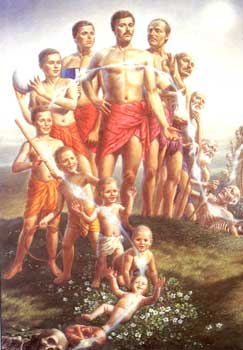 The development of the mind, both on the macrocosmic and microcosmic scales, proceeds by the successive assimilation of new elements, their synthesis, their formation of more or less stable systems (models), and by the successive replacement of these pictures.
We have already said that, as ever more elements are incorporated into an existing system, it initially expands and develops, but after a certain point it becomes apparent that the system’s capacity to include further components is exhausted, and for further development the whole system must be radically reorganized. The necessity of this reorganization is due primarily to the fact that the axis of the system itself, its organizing core, needs periodic replacement, since only a system with a limited number of elements can be built on such a particular axis.
In other words, every system has a beginning and an end, and upon reaching its developmental limit it must be dismantled so that its constituent elements can be regrouped in new combinations, available for further expansion, development, and so on.
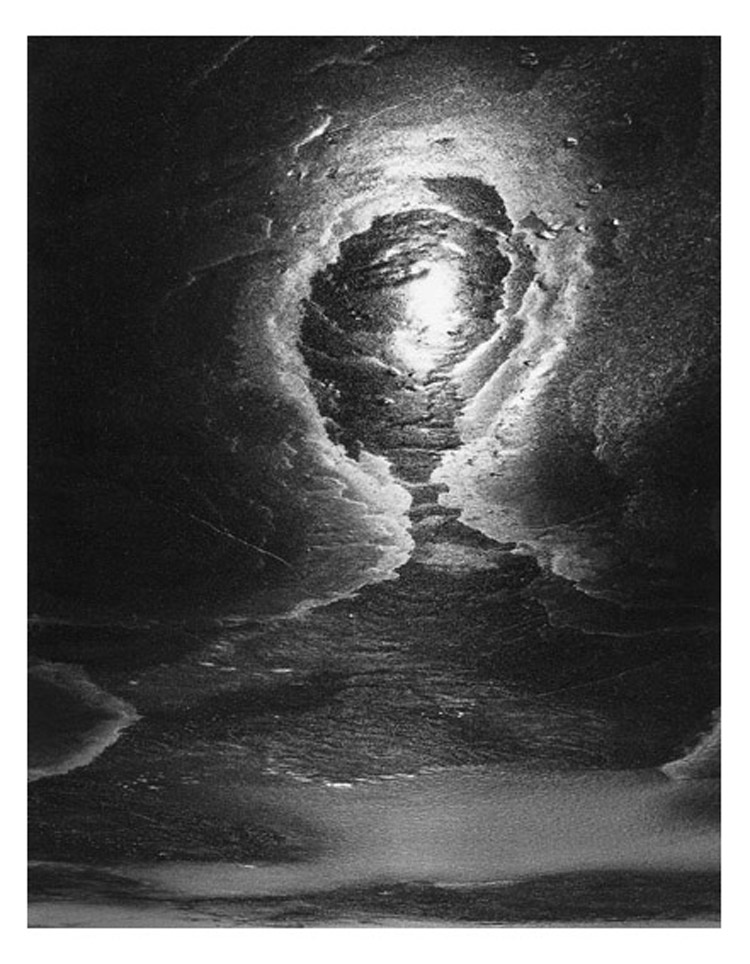
Thus, both the mind as a whole and its individual modes must periodically pass from one stationary state to another in order to ensure the continuity of their development — the realization of their potential.
Since each new system, although built on the basis of the old, has a new system-forming principle, the continuity of these systems is largely relative and conditional, and each transition of the mind from one stable state to another is, in fact, the death of the old system and the birth of a new one.
This phenomenon occurs on all levels — at the level of the individual personality, its subpersonalities, at the level of the Monad’s individuality, and, of course, at the level of the integral mind of the Great Spirit.
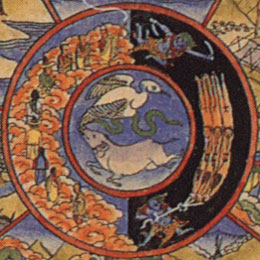
From this point of view it is clear that any death is a path to rebirth, but the new birth itself is only indirectly related to the previous form of existence.
Moreover, the period of disintegration that follows every death and precedes every birth is of extraordinary importance. It is precisely the events during this period that lead to the formation of a new system, and the kind of system that will be born depends on how those events unfold.
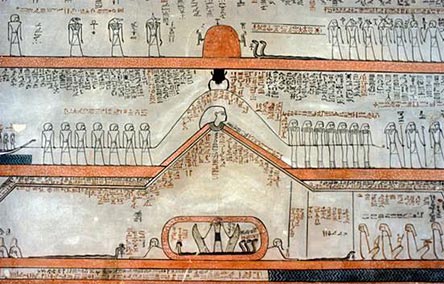
Ancient magi and mystics who studied the postmortem states at the level of an individual incarnation noted these essential elements: both the ancient Egyptian “Rau nu peret em heru” and the Tibetan “Bardo Thödol” point to the importance of properly undergoing the disintegrative processes, and to the fact that each of the states — “Bardo”, “Hall” — is itself a quasi-stationary state, and the transition from one such state to another is likewise accompanied by a period of “amnesia”, is death and birth.
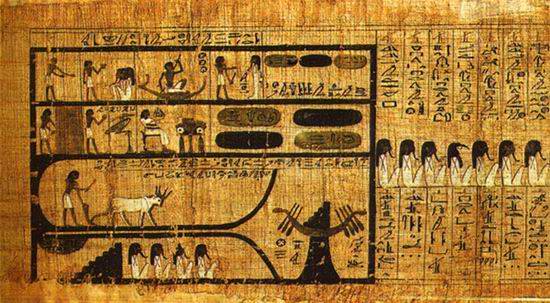
Unlike religious doctrines that present “the afterlife” as a “mechanical” continuation of embodied existence, magical and mystical systems insist on a qualitatively different level for each form of consciousness. The transition from “Bardo” to “Bardo”, as well as the journey from Gate to Gate in the Duat, is the death of one system and the birth of a new one, ultimately leading to a transition into a new stationary state — a new birth of the being. In this light it becomes clear that, from the point of view of Magic, it is more accurate to say not that “the heavy soul falls into Sheol“, but that it “is born in Sheol”, and likewise — with the blessed worlds — the soul does not “fall” into the Fields of the Blessed, but “is born” in those fields.
Such a seemingly fine distinction nevertheless has an important practical consequence — the soul born in Sheol will inevitably die there and be reborn somewhere else, just as the soul born in “Paradise” is likewise destined to die and be reborn.
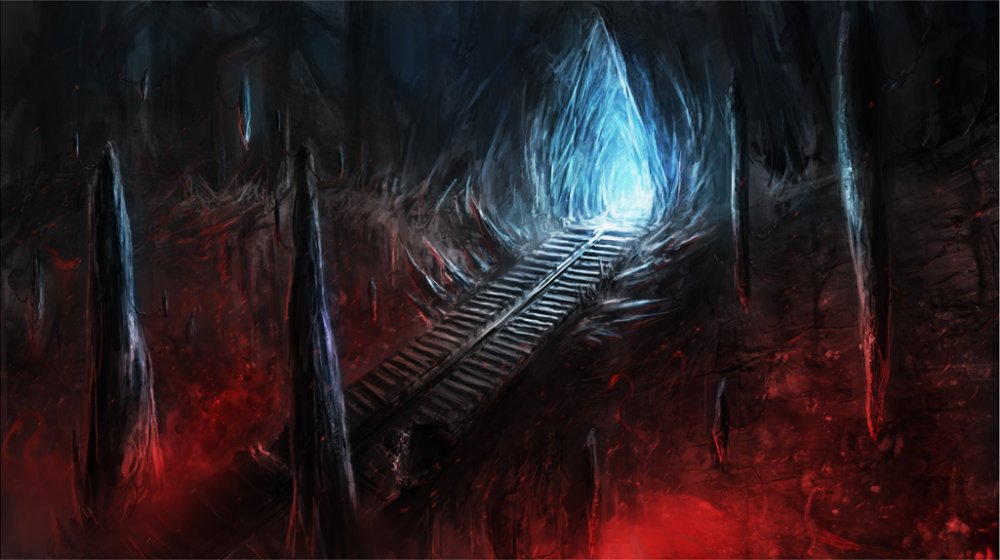
Accordingly, the attitude toward these transitions changes, and with it both unhealthy religious fanaticism and unhealthy pessimistic fatalism disappear.
Another important practical consequence of this view of the existence of the mind is the understanding that death is as necessary as birth. Indeed, it often happens that the mind is afraid to let go of an outdated system, afraid to let it die, and in doing so limits its own development.
Finally, it is very important to understand that movement occurs discontinuously, and periods of integration are followed by “dark” stages, the correct passage through which largely determines the subsequent fate of the new system.
Between death and birth, as you wrote, there is a ‘dark’ stage. Even at the level of ideas and concepts, when an old concept dies, there is a certain time before a new one is born. What do you think factors influence the duration of these dark stages?
The main factor is how stable the old system was.
Enmerkar, thank you for this article! Such articles really make one rethink certain life postulates. And, as always, the question: under what circumstances can the continuity of memory (consciousness, individuality?) be preserved in several incarnations, is it even possible?
This is only possible if the new rebirth is built on the same axis of meaning as the previous one. In turn, such a situation is possible either when the tasks of the incarnation have already been completed (what is called a Bodhisattva in the East), or when the tasks of the ‘previous incarnation’ are uncompleted and need further development. In general, such a situation is not normal and does not contribute to development, although, of course, the subjective desire for it is usually quite strong.
Does cremation somehow affect the ‘dark’ stage?
On one hand, cremation speeds up disincarnation and sometimes does not allow it to occur properly, but on the other hand, it excludes ‘reuse’ of the body and vampirism.
I’ve been pondering this question for a long time. Can engaging in conscious dreaming and ‘astral travel’, i.e., establishing and securing connections with the Between Worlds, interfere with proper disincarnation after death? Could it lead to getting stuck in the Between Worlds?
Suicide is really that bad? What risks does someone take when ending their life in this way?
“returning to unfinished tasks, compounded by a reluctance to resolve them.”
I partially remember past incarnations, but I won’t claim that they were in this world. It really significantly hinders development, but there is a way out: to put the memory of the past to the service of the future, while already adapting it to the current incarnation. Suicide is an attempt to escape from responsibility and karma, and in particularly severe cases, from complexes, nervous and mental disorders, and conscious life, one’s own path.
I somehow imagined… A novice is having an interview with a guardian angel, and the angel responds: “You just need to read a couple of prayers, and you’ll finish reincarnation, since in your past life you did almost everything to become a saint… You can rest for the rest of your life. :)”. What a fun time that will be, thinks the novice. But if you think about it, a huge responsibility will lie on him… to avoid making foolish mistakes… to not leave new unfinished tasks and unfulfilled promises. And here’s what I thought about in connection with this. Is it possible that a person is born pure? But due to incorrect upbringing and the imposition of false thinking and values, it turns out that when he reaches a certain age and understands the falsehood of this worldview, he begins, simply put, to correct his mistakes. So that by the time of transition, he can be and become exactly who he was born to be. That is, a necessary condition for a proper transition should be a certain state of the monad. And indeed, the entire complexity of a born person is to preserve their original purity until the end of their disembodiment. And magic serves as a very valuable assistant in this.
From this, I conclude. The fewer people attain this purity, the more they get stuck in this rotation, and the stronger the global predator. WOW… I just now appreciated all its power and strength.
“If life and death are fundamentally part of one, why is the value of life higher?”