
Sigils: Signatures of Spirits?
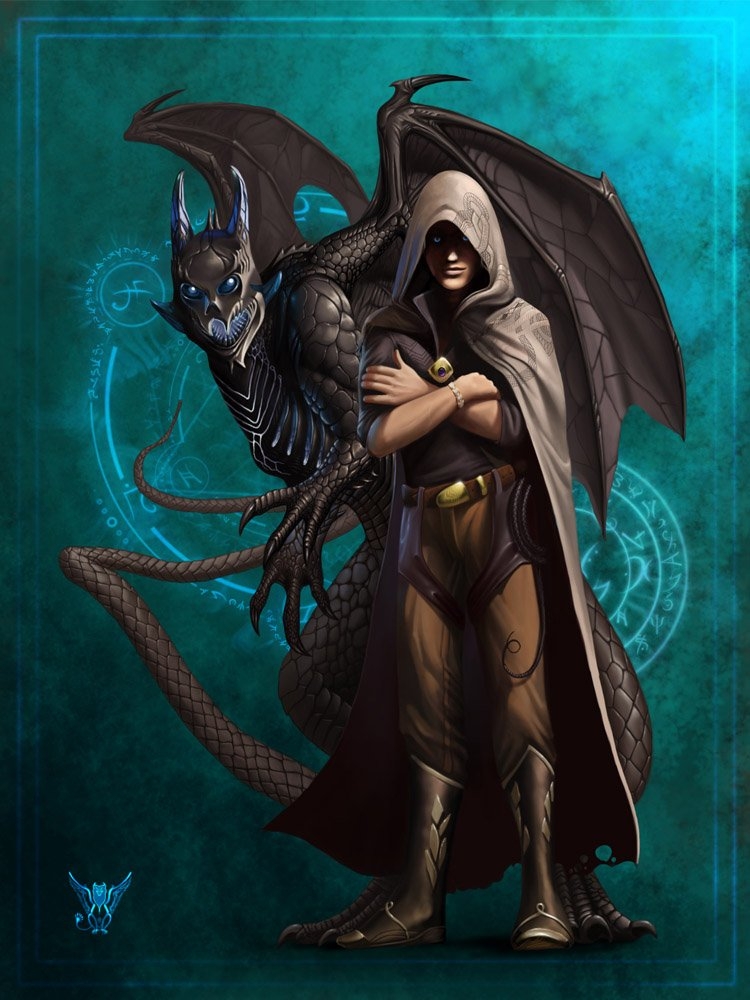
In our discussions of symbols we have already mentioned that one variety of operative symbols consists of those that bring about certain changes by the very form of their markings, drawing particular energies from the world’s store.
Included in this group are the so-called “sigils” (from the Latin sigillum, “seal”) — signs corresponding to various spirits, often read as the spirit’s “signature” certifying its “identity.” The word “sigil” also appears in Hebrew as סגולה (segulah — “a word, action, or creation of a magical effect”), since these signs have long been widely used in kabbalistic magic and Jewish mysticism. It is hard to say who borrowed the term from whom, but the word has become firmly established in tradition.
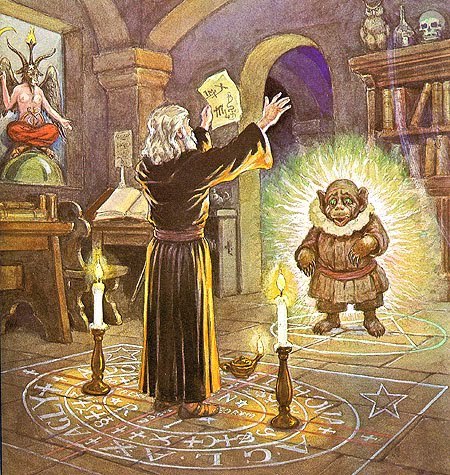
Often the spirit’s sigil, enclosed in a circle and furnished with other signs, forms the basis of the spirit’s seal — that is, a means of controlling it and restricting its freedom.
Recently, the so-called “chaos magic” movement has attempted to create and use new operative symbols which the practitioners also call “sigils”. This concept was developed by the painter and occultist Austin Osman Spare. His technique, now known as sigilization, subsequently became popular. The idea that sigils are deliberately used as magical instruments by commercial corporations (for example, in the well-known corporate emblems of Coca-Cola and McDonald’s) to gain prestige and economic power is widespread among occultists and the general public. But we will not discuss these sigils, and will treat the term’s traditional meaning.
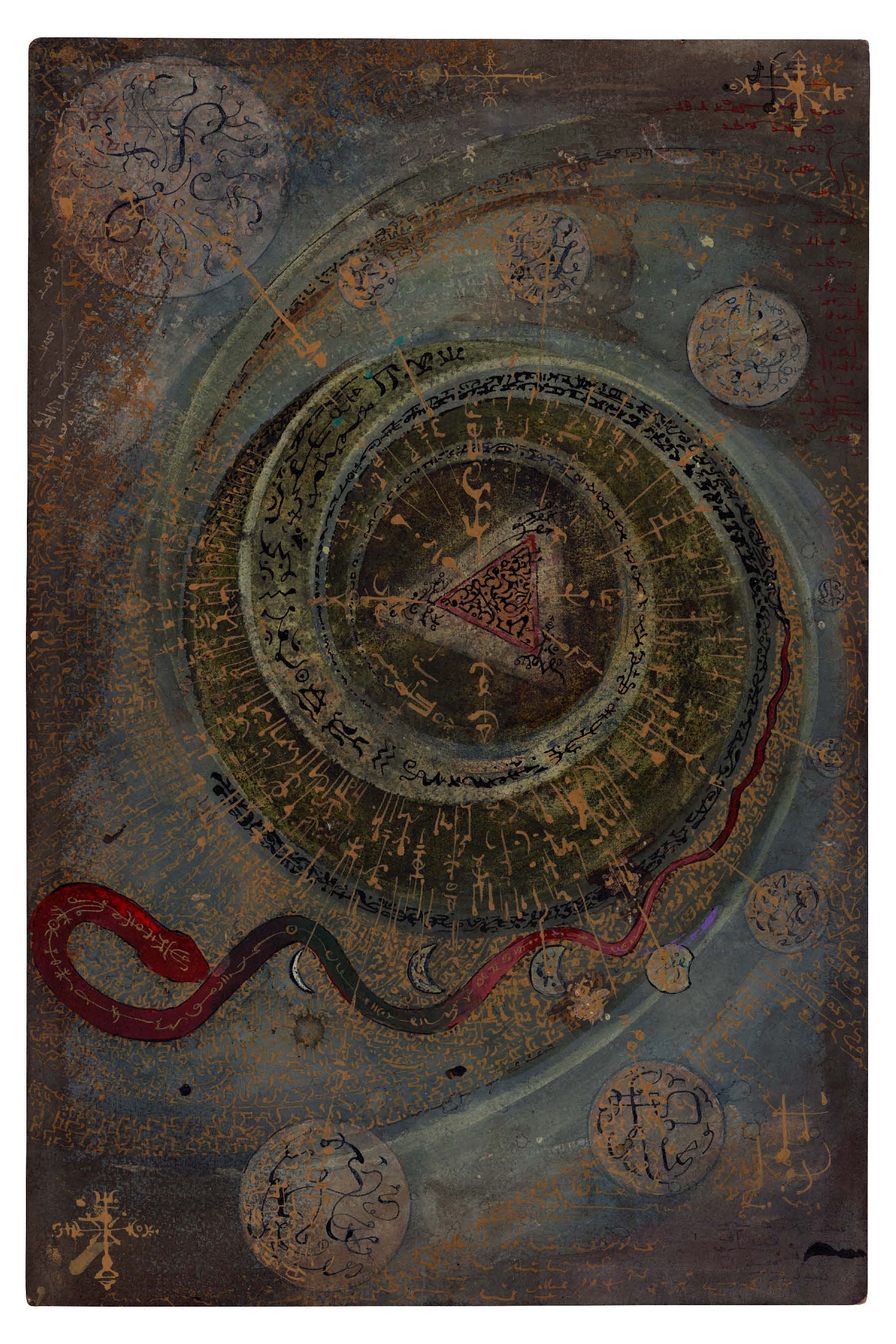
A sigil is traditionally a complex combination of specific symbols or geometric figures, each element carrying a particular meaning. Sigils may include geometric figures, astrological signs, alchemical symbols, and symbols of deities; when individual symbols are combined they may be somewhat altered, “adapting” to the overall character of the sigil. At the same time, not every composite symbol is a sigil in the strict sense.
For convenience the term “sigils” refers to signs that differ from “philosophical” symbols and pentacles in that, first, they are built on a linear principle, and, second, they do not concern abstract principles or laws but rather specific beings — spirits, angels, gods. The true, or magical, name of a person when correctly written and stylized as a sigil expresses that person’s power and can serve as a talisman in magical work.
Most famous are the sigils from medieval magical and alchemical books — the Lesser Key of Solomon (Lemegeton, Goetia), the Seals of the “Sixth” and “Seventh” Books of Moses, the Sigils of Black and White Magic, the Book of the Angel Raziel, and many others.
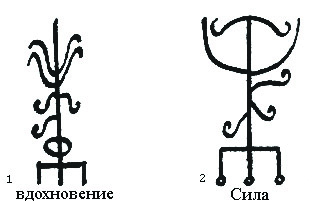
Moreover, many symbols from other traditions are also constructed according to the sigil principle. Chief among these are the Icelandic galdrastafir — stylized signs built on the basis of bind-runes.
An analysis of a sigil’s graphic construction, elements, and composition can reveal a great deal about the being to which it corresponds.
A typical example might be the sign of Astaroth we already discussed — a pentagram “squeezed” by two lines and pierced by an inverted cross. This symbol reflects Astaroth’s nature as a spirit who limits freedom, using logic (the cross of the elements) to overcome liberty (the pentagram). Similar conclusions can be drawn from other sigils.
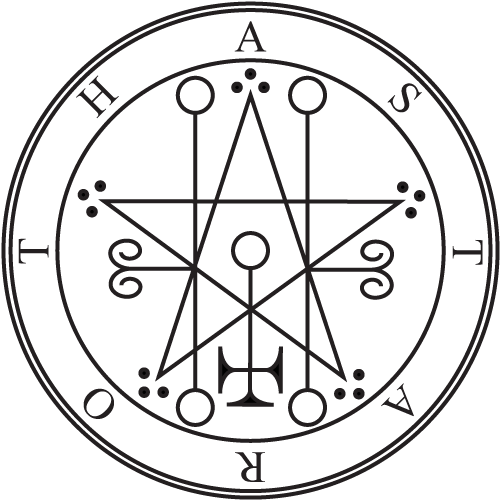
A spirit often appears with its sigil. Conversely, inscribing a sigil helps the spirit materialize. If not circled, the sigil makes control harder.
Although magi may create sigils with corresponding beings, tradition insists on thorough knowledge of the target. Furthermore, one must understand sigil construction principles, how to unite their elements into a whole, and how to stylize the image.
It seems to me that magic somewhat resembles programming. And sigils are like shortcuts 🙂 – to engage the program. And sometimes magic reminds me of translation from one language to another. One can also get stuck in translation 🙂
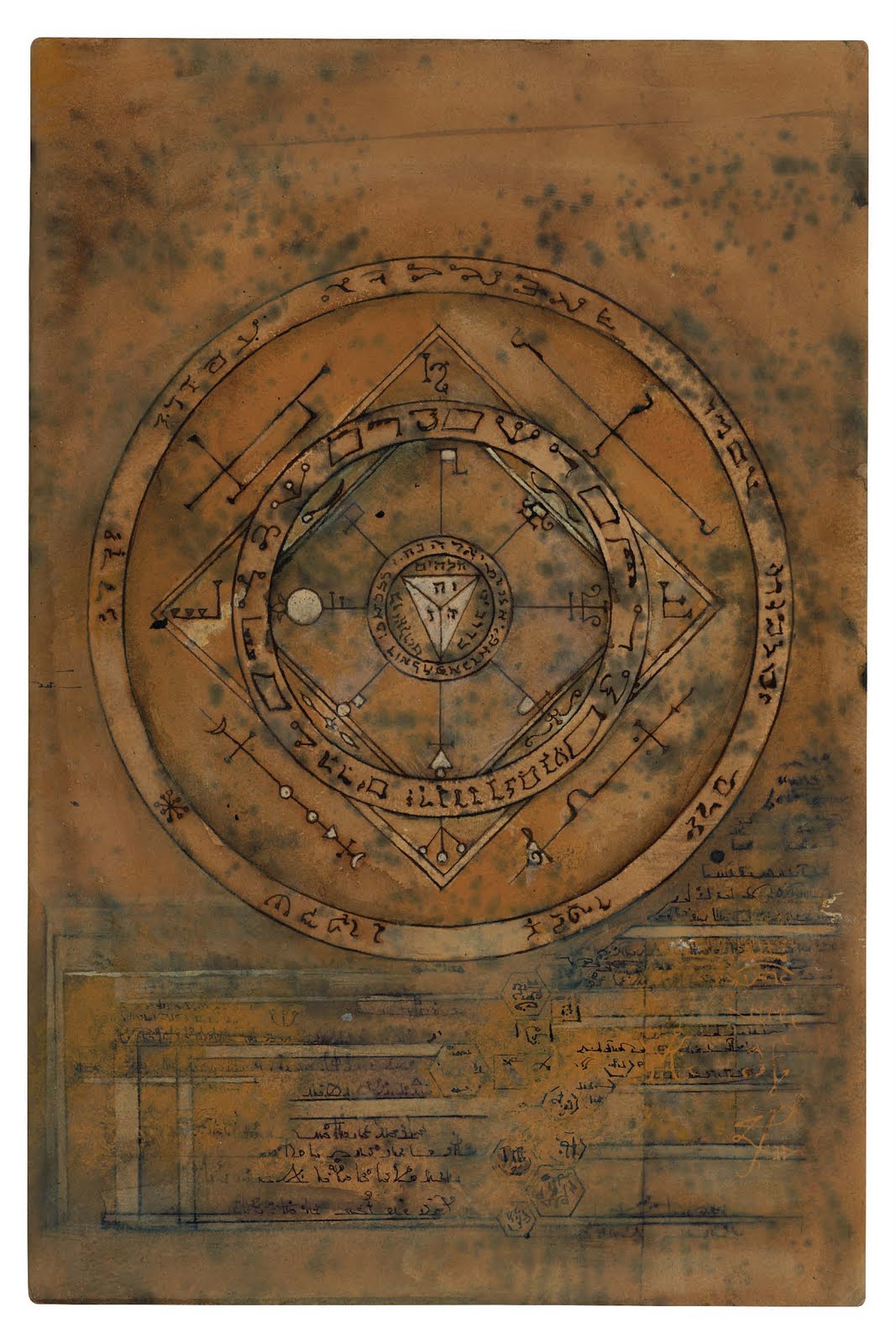
The spirit must appear in the triangle, right? But in the picture, it is in a circle, or am I misunderstanding something? Please answer.
The spirit is in the triangle. The triangle is also surrounded by a circle.
Indeed, in the second image, the triangle is surrounded by a circle. But classically, the triangle of art typically encloses a circle inscribed within it. Is this an artist’s mistake, or is there indeed such an alternative variant?
Thank you for the interesting article.