Enmerkar's Blog содержит более тысячи авторских статей эзотерической направленности.
Введите интересующий Вас запрос — и Вы найдете нужный для Вас материал

16.12.2008 / 5 comments
From the point of view of the Myth under consideration, the world process results from the mutual attraction of the poles of the Quaternary. The Active, Passive, Neutral and Receptive principles attract one another not only along the axes of polarity, but also between the quarters of the Quaternary.
READ ARTICLE
15.12.2008 / 4 comments
Since ancient times, a name has long been considered extremely important as a distinct form of existence. All nominative magic is based on manipulating names: by naming a doll after a person, voodoo practitioners gain the ability to influence that person, by giving weapons personal names they gain the ability to cause those weapons to […]
READ ARTICLE
12.12.2008 / 7 comments
It is clear that the transition from a clan-tribal organization to a state required the unification that monotheistic religion provided: it treated people as equal while also restricting expressing individuality. Conceptions of the Pravi (the Right Way, where each follows their own trail within the single great Flow) gave way to the notion of a […]
READ ARTICLE
11.12.2008 / 4 comments
Apart from the primordial Jotuns (or, for example, the Proteus and the Titans of classical mythology), in relation to whom all other gods are their children — if not by lineage then by rank — mythologies distinguish two further generations of gods. Each generation embodies a specific function the gods perform in the cosmos. As […]
READ ARTICLE
10.12.2008 / 2 comments
Just as the Maternal Principle lives in its eternal contradiction, the Paternal Principle of the cosmos manifests as a closed triad. It is commonly held that the Maternal Principle is Material while the Paternal is Spiritual. In mythological systems this is only partly true. The Paternal principle manifests as differentiated multiplicity, while the Maternal appears […]
READ ARTICLE
09.12.2008 / 5 comments
“Two mothers who gave rise to the Universes’ endless course, Two forces flowing from a source above the world, And by the power of generation who revealed to us light and darkness — We praise you! Today, amid winter, amid the howling of the gale — The Heavenly Cow and the Goat from the Depths! […]
READ ARTICLE
08.12.2008 / 12 comments
The fourth Tribe that sustains existence and the flow of life across the worlds is the Alvs. This Tribe, unlike the previous ones, is highly diverse and is divided into two peoples: the Light Alvs (more precisely, “light ones”) and the Dark Alvs (“dark ones”), although the name “Alvs” itself derives from alb — “white” […]
READ ARTICLE
07.12.2008 / 12 comments
The tribe of gods that, in Norse mythology, sustain the cosmos — the ones who create and preserve its material form — are the Vanir, the world’s sustaining powers that uphold existence. It is the Vanir who are gods in the ordinary sense. Their power is manifest in the wind’s breath and in the growth […]
READ ARTICLE
06.12.2008 / 2 comments
It is precisely the great Power of the Jotuns that, in turn, serves as a source of Wisdom for gods and humans. The three giants – Mimir, Bølthorn, and Suttung are implicated in Odin’s acquisition of wisdom. Yet none of them merely shared their wisdom, as, for example, Vafthrudnir (“Strong in Entangling”) told Odin about […]
READ ARTICLE
05.12.2008 / 6 comments
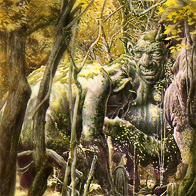
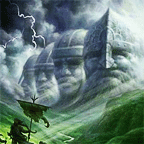
However, alongside the formative forces — the Aesir — the cosmos also includes the Eldest manifested beings, the progenitors of the gods and of Being — Jotuns. Usually Jotuns draw little attention from scholars; often there is confusion about their origins and tribes. At the same time, Eddic texts provide a clear picture of three […]
READ ARTICLE
04.12.2008 / 8 comments
The ancient Scandinavians sometimes used the term Aesir to refer to all gods in general, but in a narrower sense the name properly belonged to the tribe of Asgard, whose chief function was to maintain the world in a clearly defined state. It is precisely this differentiating role that allows the Aesir to be regarded […]
READ ARTICLE
03.12.2008 / 12 comments
Worlds of pagan myth are, first and foremost, products of the mind of their inhabitants. This is understandable: the very description of a world brings that world into being. We live amid descriptions, we work with descriptions, and we seldom stop to ask how well our descriptions correspond to the facts we observe. Therefore, by […]
READ ARTICLE
01.12.2008 / 5 comments
Sure! Please provide the HTML article you’d like me to correct.
READ ARTICLE